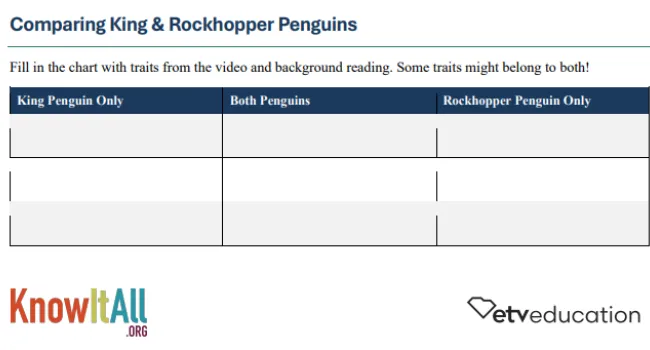
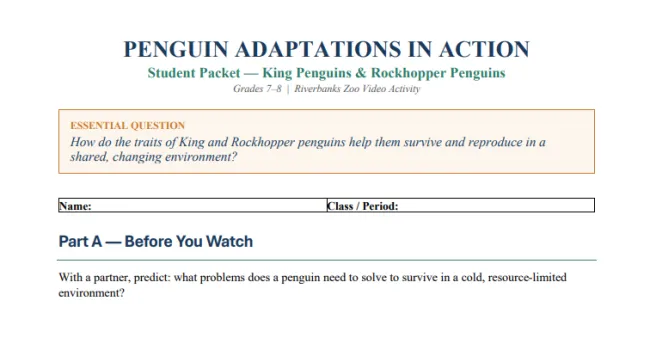
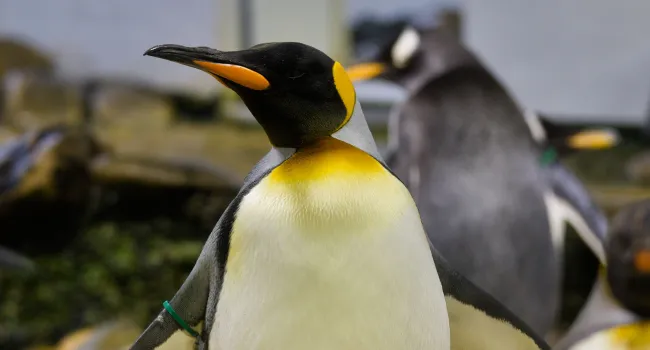
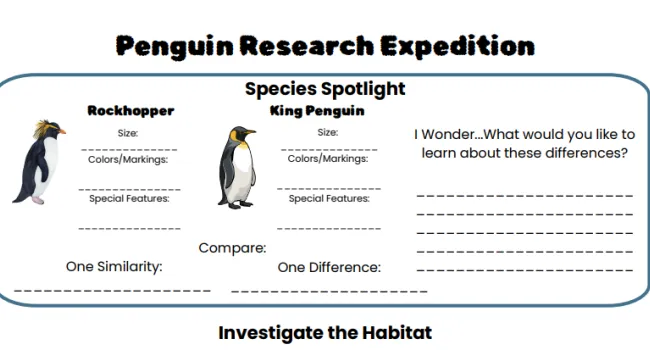
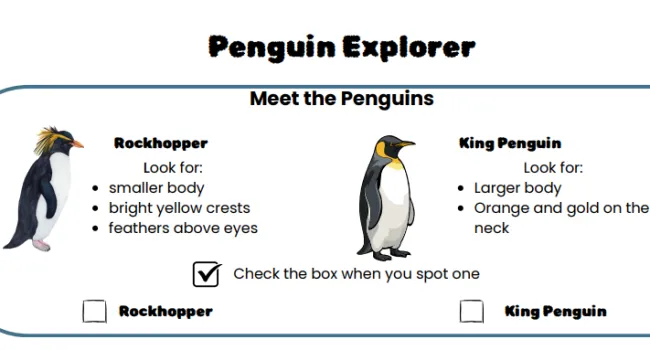
A video-companion worksheet for high school Biology students, pairing with a Riverbanks Zoo video of King and Rockhopper penguins. Students complete a guided video observation log, compare structural, behavioral, and physiological adaptations between the two species, and answer standards-aligned questions covering natural selection, group behavior, carrying capacity, and human impact on biodiversity. Includes a Biology 2 extension and a closing reflection. Aligned to South Carolina College- and Career-Ready Science Standards (Biology 1 & Biology 2).
Standards
- B-LS4-4. Construct an explanation based on evidence for how natural selection leads to adaptation of populations
- B-LS4-2 Construct an explanation based on evidence that the process of evolution primarily results from four factors: (1) the potential for a species to increase in number, (2) the heritable genetic variation of individuals in a species due to mutation and sexual reproduction, (3) competition for limited resources, and (4) the proliferation of those organisms that are better able to survive and reproduce in the environment.
- B-LS2-1. Use mathematical and/or computational representations to support explanations of biotic and abiotic factors that affect carrying capacity of ecosystems at different scales.
- B-LS2-7 Design, evaluate, and refine a solution for reducing the impacts of human activities on biodiversity and ecosystem health.
- B-LS4-5 Evaluate the evidence supporting claims that changes in environmental conditions may result in (1) increases in the number of individuals of some species, (2) the emergence of new species over time, and (3) the extinction of other species.
- B-LS2-8 Evaluate evidence for the role of group behavior on individual and species chances to survive and reproduce.
- B-LS2-6. Evaluate claims, evidence, and reasoning that the complex interactions in ecosystems maintain relatively consistent numbers and types of organisms in stable conditions but changing conditions may result in a new ecosystem.
Resources
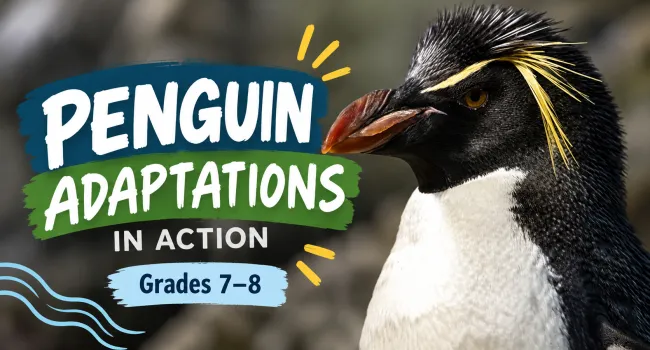
Penguin Behavior & Adaptations (Grades 9-12)
In this lesson, high school Biology students investigate how King and Rockhopper penguins have evolved different strategies for surviving in the same sub-antarctic environment. Students begin by...
View LessonPenguin | Zoo Minutes
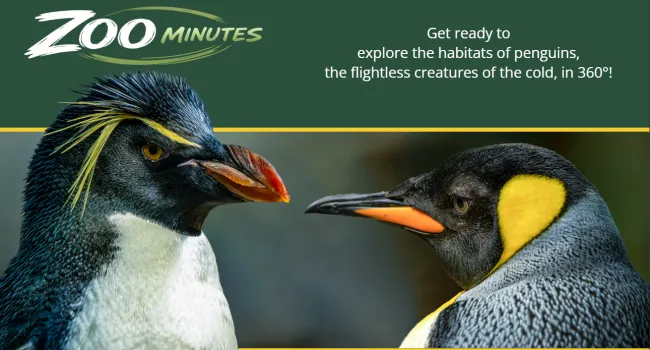
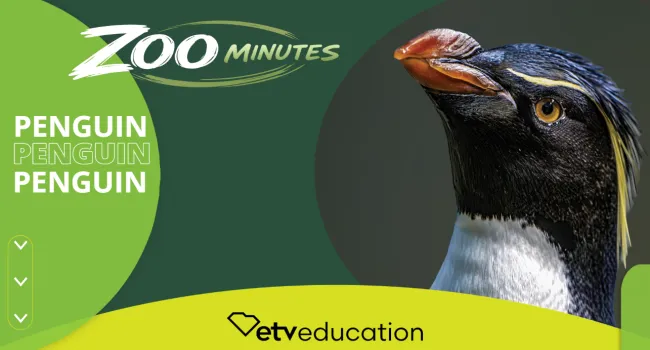
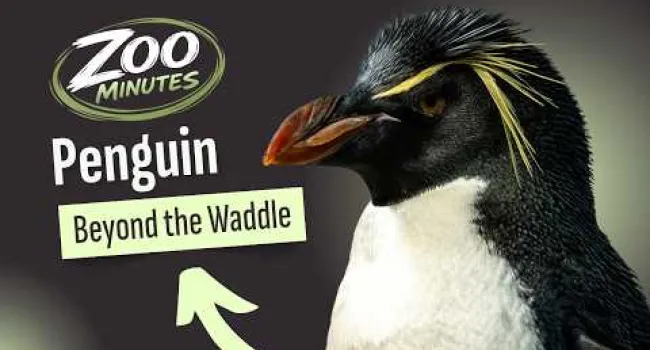
Get to know the king and southern rockhopper penguins at Riverbanks Zoo and Garden. Discover the adaptations, behaviors and animal care that help these remarkable birds thrive on land and in the water...
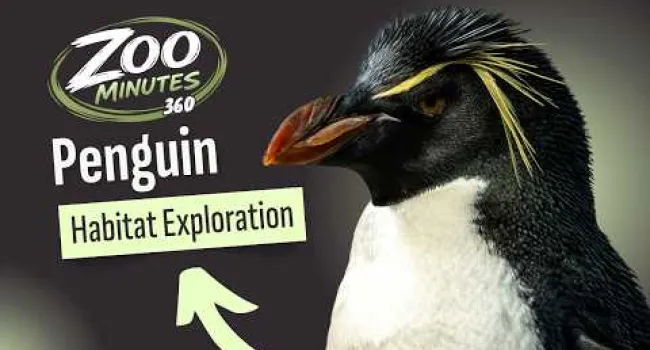
View AssetPenguin 360° | Zoo Minutes 360
Get a new perspective on penguins with a 360-degree look inside their habitat. See king and southern rockhopper penguins up close while exploring the spaces where they swim, rest and receive care...
View Asset