Becoming a Penguin Expert
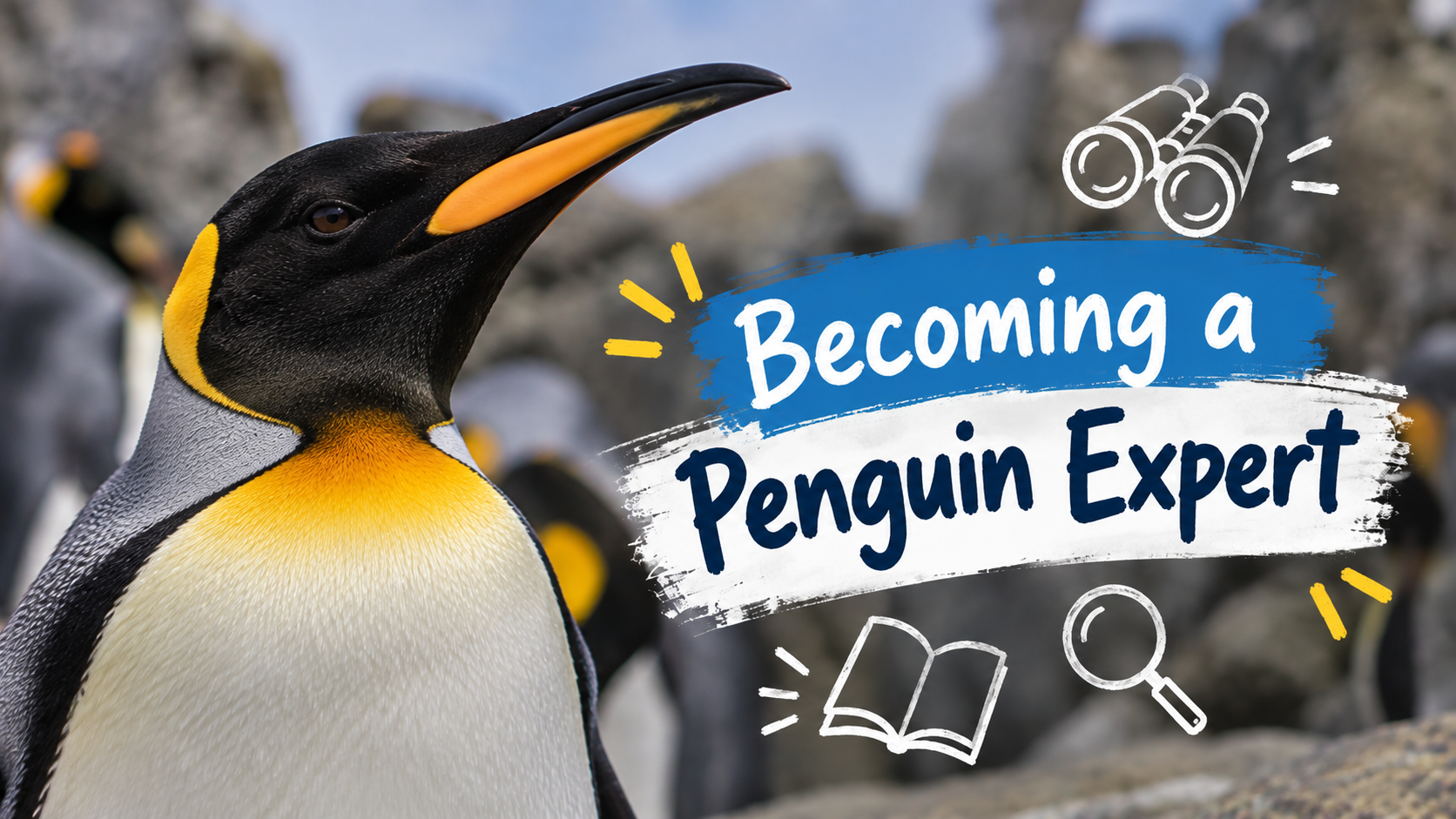
Students read informational texts and articles about penguins. While identifying key details and new vocabulary, students gather facts about penguins. Students will share their new learning and understanding through class discussions, graphic organizers, and a writing assignment.
Essential Question
How can reading and analyzing informational texts help us learn more about penguins?
Grade(s):
- 3
- 4
- 5
Subject(s):
Recommended Technology:
Smartboard or interactive whiteboard
Laptop/Computer
iPad
Other Instructional Materials or Notes:
- Chart paper
- Notebooks
- Pencils/Pens
- Markers
- Informational texts or articles about penguins
- Photographs of penguins
- Vocabulary cards
Lesson Progression
Activate Prior Knowledge:
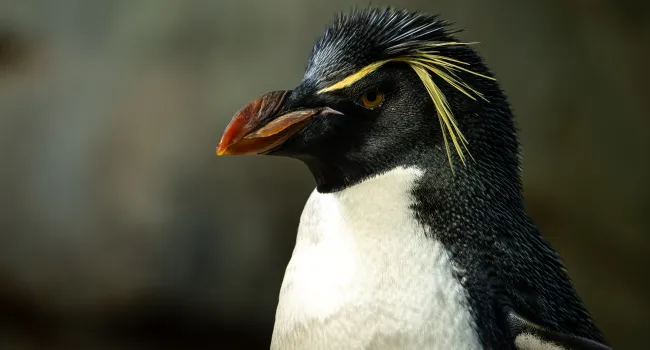
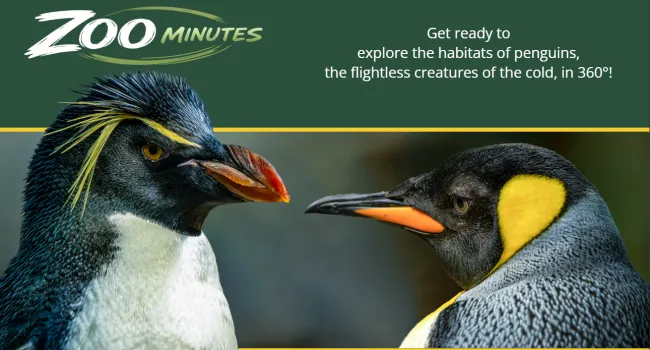
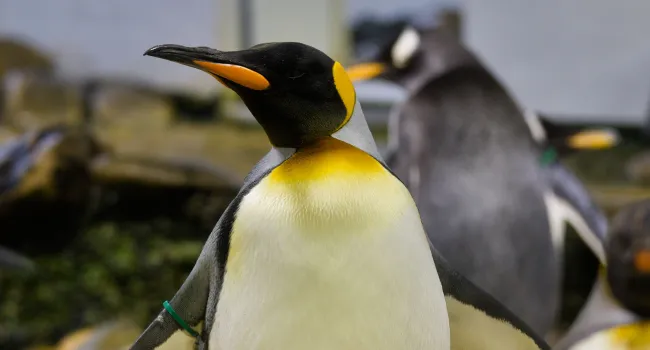
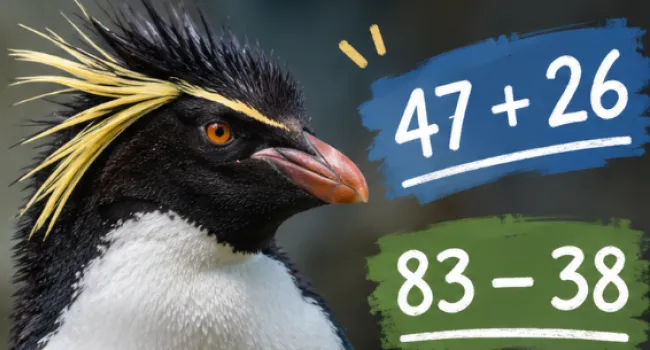
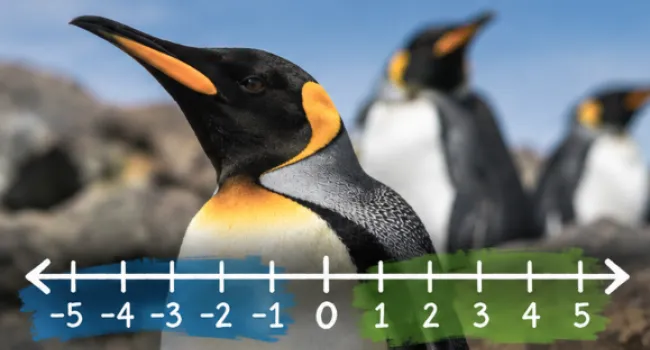
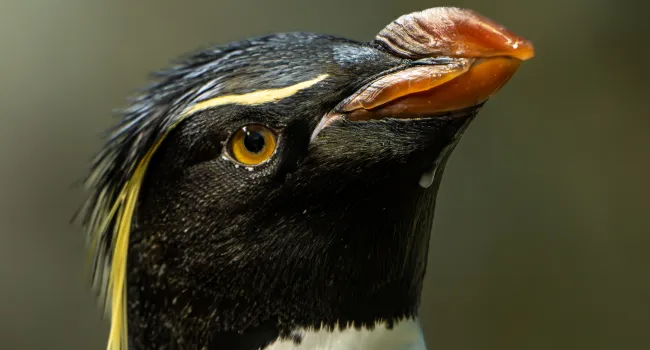
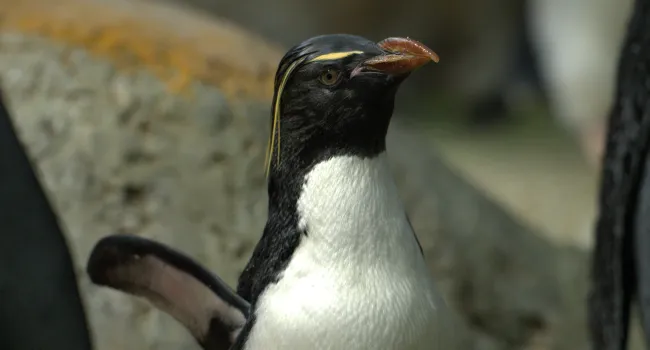
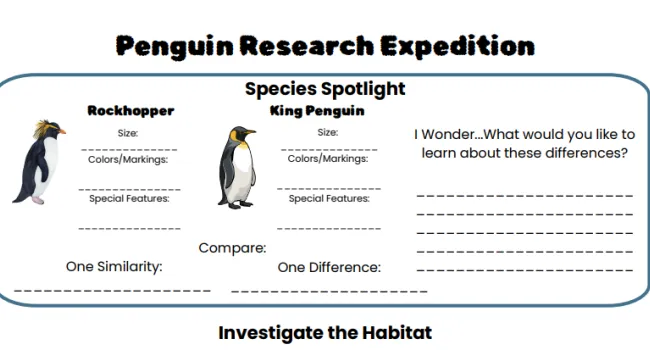
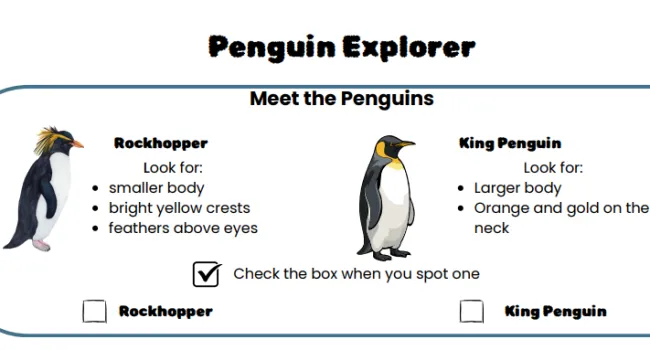
Show a pictures of both a king penguin and a rockhopper penguin. Ask students:
- What do you notice?
- What wonderings or questions do you have?
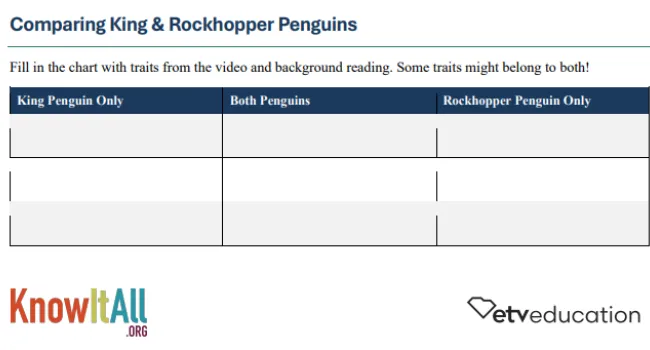
- How are king penguins and rockhopper penguins alike and different?
- What are some ways zoos protect and take care of animals?
Begin working to create a class chart about Penguins with the following headings: What do we know, What do we wonder or want to know, What did we learn? Allow students to share what they "think" they already know about penguins. Record these findings on the class chart.
Lesson/Video Introduction:
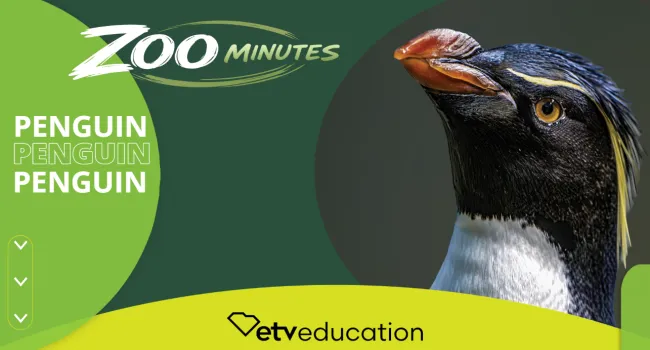
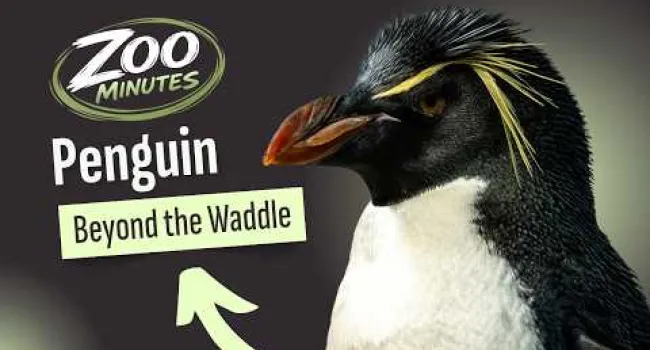
- Introduce Zoo Minutes: Penguin episode. Because this video is packed with facts, students have the opportunity to become penguin "experts."
- Share vocabulary cards with students. These are words they will encounter while viewing the video. Challenge them to identify them as they hear them in the video along with what they think they mean. These definitions will be reviewed as a class after the video.
- While the video plays, students record facts about penguins as well any questions or wonderings in their Science notebook (i.e. what they notice about penguins, their characteristics, habitat, care facts, etc.) The teacher stops at various points in the video to ask questions and/or allow students to share their thinking (i.e. Why is the penguin habitat kept at 45 degrees? Why do keepers observe penguins during feeding time?)
- Afterwards, allow time to discuss highlights from the video and revisit the chart that was started earlier, adding new information while discussing new wonderings and questions as well.
Partner Reporter Activity:
- Students work with a partner as penguin reporters. One person is the "Student Reporter" while the other is the "Penguin Expert."
- The student reporter asks questions and the penguin expert responds to the questions using information from the video, class discussions, and other informational texts that have been shared.
- Sample Questions:
- What species of penguins live at Riverbanks Zoo?
- What are some ways the Zoo team care for the penguins?
- How does the penguins habitat help it to survive?
- Sample Questions:
Assessment/Closing:
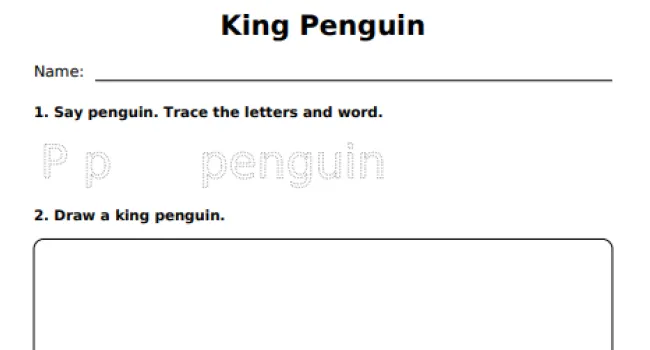
Students complete the Penguin Expert exit ticket. Students write 3 facts they learned from Zoo Minutes: Penguin and 1question they still have. This could be a springboard for deeper discussions or research.
Teacher Notes
It is recommended that the video is viewed prior to sharing with students. This will allow the teacher to identify specific places in the video where it might be beneficial to pause, ask a question, or move ahead based on the students' prior knowledge and understanding. There may also be some terms that are more difficult that need to be discussed as well.
Differentiation: Make modifications as needed to meet the individual needs of students. Ex: Provide sentence starters or question stems for students, allow students to work in pairs, small groups, etc.
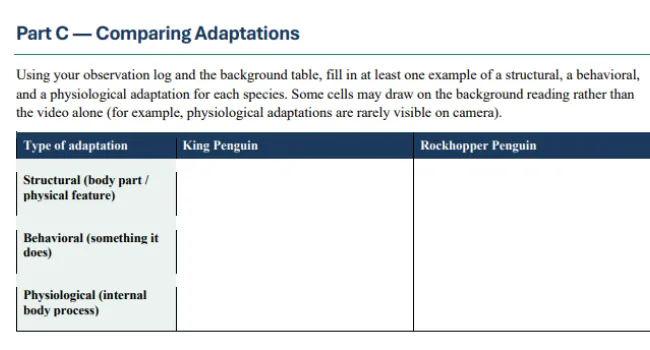
Extension: Students design a penguin habitat highlighting what they have learned about a penguin's characteristics, adaptations, and habitat. Students also include sentences that explain each feature using evidence from the informational texts or video that was shared.
Penguin 360° | Zoo Minutes 360
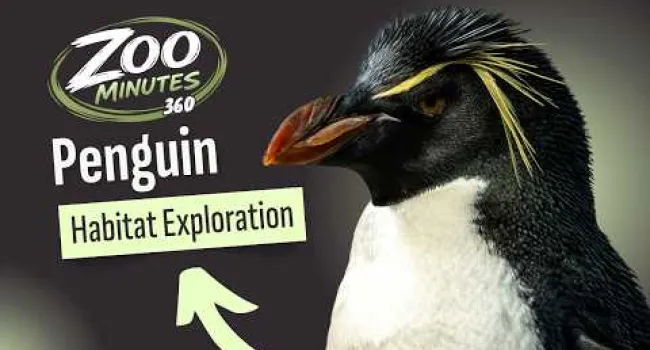
Get a new perspective on penguins with a 360-degree look inside their habitat. See king and southern rockhopper penguins up close while exploring the spaces where they swim, rest and receive care...
View AssetPenguin | Zoo Minutes
Get to know the king and southern rockhopper penguins at Riverbanks Zoo and Garden. Discover the adaptations, behaviors and animal care that help these remarkable birds thrive on land and in the water...
View AssetPenguin Books List
View ResourceVocabulary Cards
View ResourceStandards
- ELA.3.OE.5 Cite evidence to explain and justify reasoning.
- ELA.AOR.7 Determine or clarify the meaning of unknown and multiple-meaning words and phrases.
- ELA.AOR.10 Evaluate and critique multimedia presentations of a text or subject, including their impact on an audience.
- ELA.C.7 Organize and communicate ideas through a range of formats to engage a variety of audiences.
- ELA.4.OE.5 Cite evidence to explain and justify reasoning.
- ELA.AOR.7 Determine or clarify the meaning of unknown and multiple-meaning words and phrases.
- ELA.C.7 Organize and communicate ideas through a range of formats to engage a variety of audiences.
- ELA.5.OE.5 Cite evidence to explain and justify reasoning.
- ELA.AOR.7 Determine or clarify the meaning of unknown and multiple-meaning words and phrases.
- ELA.C.7 Organize and communicate ideas through a range of formats to engage a variety of audiences.
Assessments
Students will be assessed informally throughout the lesson through class discussions and questioning. The teacher will address and/or clear up misconceptions as needed. Students will also help complete a class anchor chart, partner reporting activity, and exit ticket that showcases what they have learned about penguins.
Student responses on the class chart can be used as an informal assessment as well.