Penguin Pals - Meet King & Rockhopper Penguins (K-1)
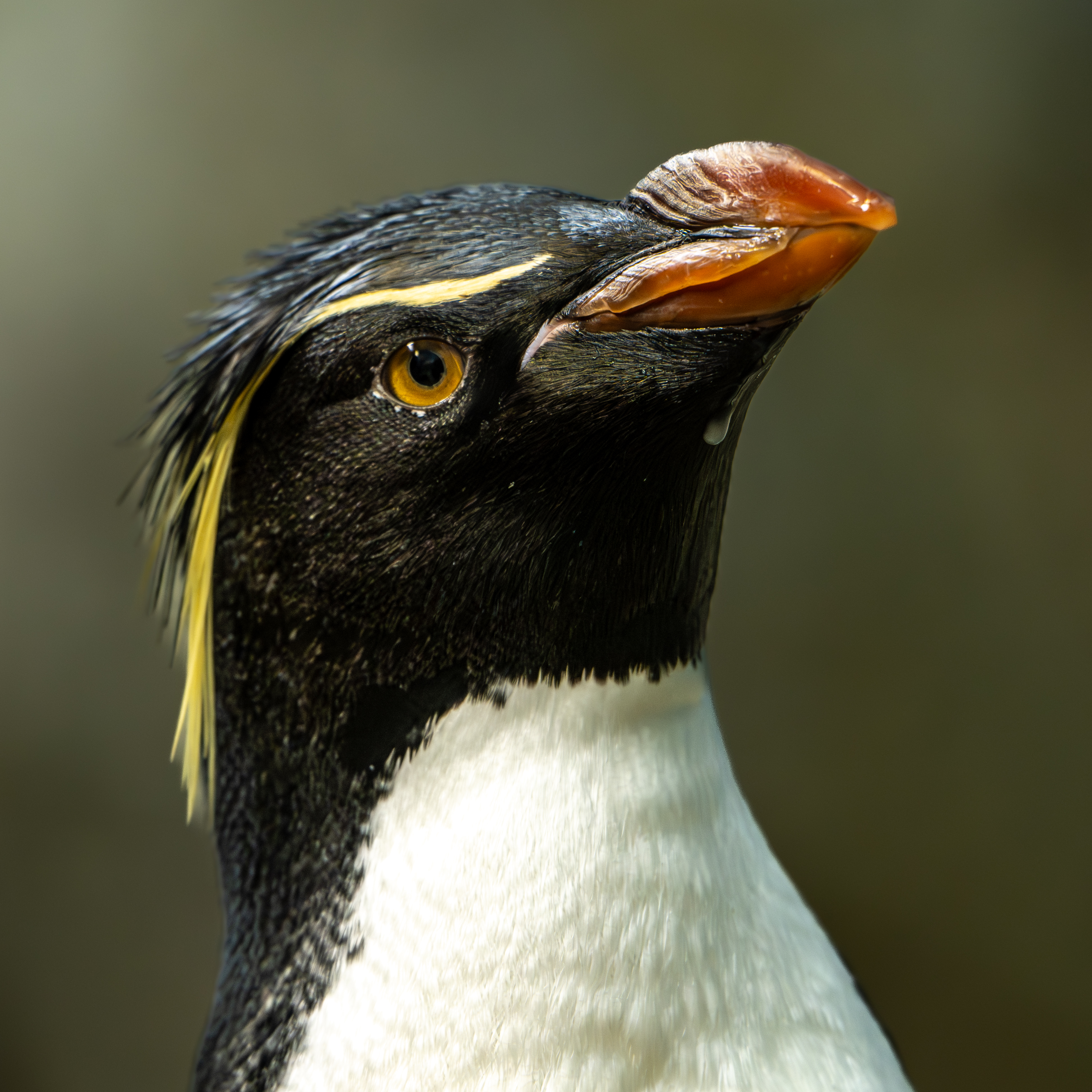
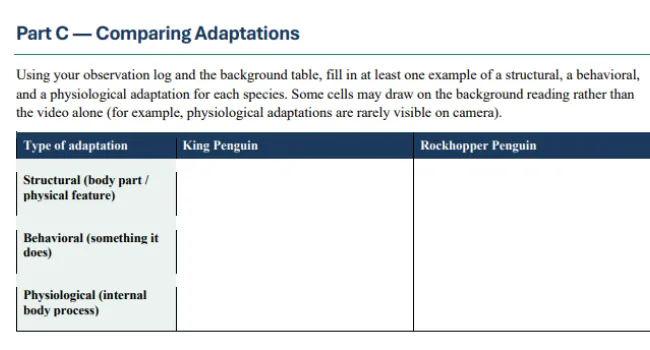
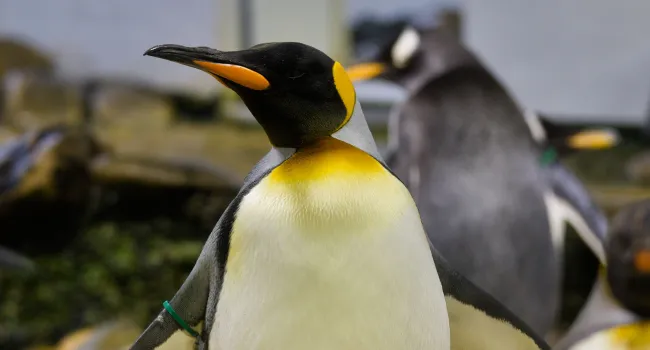
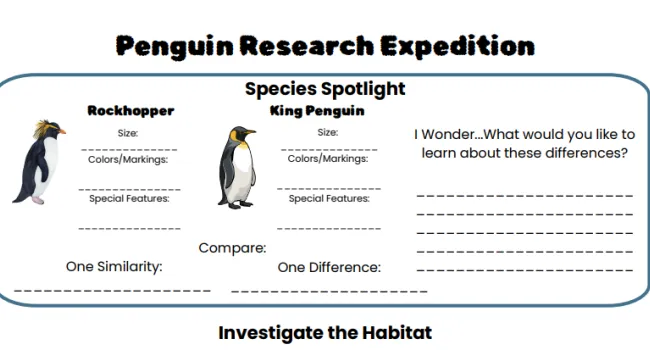
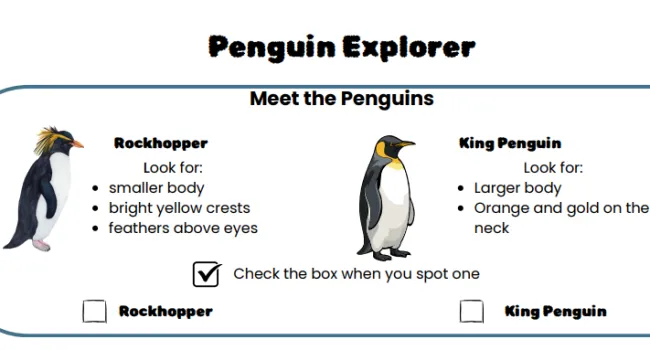
In this lesson, K–1 students investigate how a penguin's body helps it live in a cold, ocean-side home. Students begin by naming what all animals need to survive, then watch a short video of King and Rockhopper penguins at Riverbanks Zoo. While watching, they check off behaviors they see, such as swimming, diving, and caring for an egg. Afterward, students match penguin body parts to the jobs they do and make a simple side-by-side comparison of the two species, such as size and feather color. The lesson closes with students drawing a penguin doing one behavior from the video and explaining to a partner why it helps the penguin. The lesson fits a single 25–30 minute class period and requires no materials beyond the video and student packet.
Essential Question
How does a penguin's body help it get what it needs to live?
Grade(s):
- Kindergarten
- 1
Subject(s):
Recommended Technology:
- A way to play the video with sound for the whole class (interactive whiteboard, projector with speakers, or classroom TV) — essential, since this lesson is designed as a whole-group viewing experience.
- A document camera or projector, only needed if you'd like to display the student packet pages for shared/guided practice rather than having students work from individual copies.
- A device with internet access, only needed if extending the lesson with the optional class graph or a digital read-aloud pairing.
Other Instructional Materials or Notes:
- One printed copy of the student packet per student (or per pair, for Kindergarten).
- Crayons or colored pencils for the Draw & Tell activity.
- Chart paper or a whiteboard for the "What do animals need?" class brainstorm.
- Optional: print or cut out simple penguin body-part picture cards (feathers, flippers, feet, beak) for a hands-on sorting version of the matching activity.
Lesson Progression
| Time | Segment | What Happens |
|---|---|---|
| 5 min | Warm-Up | Class brainstorm: "What do YOU need to live and grow?" (food, water, air, a safe place to sleep). |
| 10 min | Watch & Talk | Play the video. Pause once or twice to ask: "What is the penguin doing? Why do you think it does that?" |
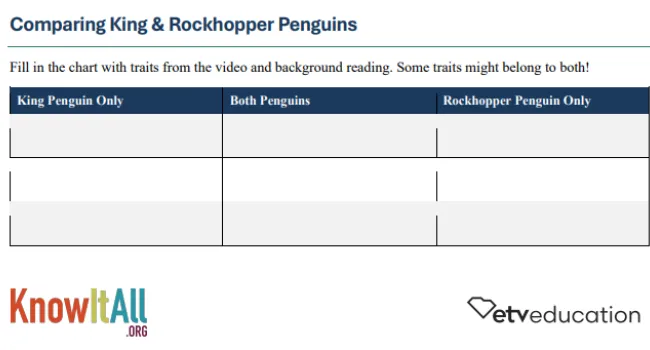
| 10 min | Activity | Students match penguin body parts to jobs, circle what penguins need to survive, and compare King vs. Rockhopper using the simple chart. |
| 5 min | Closing | Students draw a penguin doing one behavior from the video and tell a partner why it helps the penguin. |
Activity Outline
Warm-Up (5 min): As a class, brainstorm: "What do YOU need to live and grow?" List ideas (food, water, air, a safe place to sleep). Explain that animals need many of the same things.
Watch & Talk (10 min): Play the video. Pause once or twice to ask: "What is the penguin doing? Why do you think it does that?"
Activity (10 min): Using the student packet, students match penguin body parts to the job each part does, and circle the things penguins need to survive. In pairs or as a class, compare King and Rockhopper penguins using the simple chart (bigger/smaller, feather color, where they live).
Closing (5 min): Students draw a penguin doing one behavior from the video and tell a partner why it helps the penguin.
Teacher Notes
Learning Objectives
- Name things that all animals need to survive (food, water, air, shelter).
- Describe how a penguin's body parts (feathers, flippers, feet, beak) help it get what it needs.
- Compare simple traits of King and Rockhopper penguins, such as size and color.
Teacher Notes
- Preview the video before class. It's written for a general audience and covers more scientific detail than K–2 standards require — you don't need to show every segment or teach every term. Focus on the parts that show clear behaviors (swimming, walking, feeding, egg care) and use the Key Vocabulary list to guide discussion.
- Some words in the video (e.g., "nictitating membrane," "osmoregulation," "molt") are above grade level. When these come up, just describe what's happening in simple terms — for example, "that clear covering keeps the penguin's eye safe underwater" — rather than asking students to learn the term.
- Kindergarten and Grade 1 students typically focus best in 10–15 minute stretches. Consider pausing the video partway through, or splitting the viewing across two short sessions, if attention starts to drift.
- This is a discussion-based, formative activity, not a graded assessment. The student packet works best completed with guidance — read prompts aloud, especially for Kindergarten, rather than as independent seatwork.
- For Kindergarten specifically, consider leading the body-parts matching and needs-circling as a whole-group activity, reading each answer choice aloud, rather than having students complete it independently.
- Pausing on a clear, still moment (such as the egg-balancing or a penguin entering the water) gives young learners a chance to really look and describe what they see before the video moves on.
- This lesson can be taught as a standalone unit. It does not require the Grades 3–5 version as a prerequisite or follow-up.
Differentiation
- English Language Learners: Use the video's visuals heavily; provide picture-supported vocabulary cards; allow labeling or drawing instead of full sentences.
- Struggling Students: Partner with a stronger reader; reduce the comparison chart to 2 traits; allow verbal responses.
- Students with IEPs/504 Plans: Follow all plan accommodations; break the activity into shorter chunks; offer a picture word bank for the matching task.
- Advanced Students: Add a third trait to the comparison chart; ask students to write a full sentence instead of a single word for the Draw & Tell activity.
Remediation
For students who need more support meeting the objectives:
- Reduce the number of choices: focus on 2 needs (food, water) and 2 body parts (feathers, feet) instead of the full set.
- Use physical picture cards or manipulatives for the body-parts matching instead of the written table, so students can move and sort rather than write.
- Re-watch a short clip (30–60 seconds) focused on just one behavior, pausing immediately afterward to talk about what was seen.
- Work with the student in a small group or one-on-one, breaking directions into a single step at a time.
- For the Draw & Tell closing, offer a sentence starter ("The penguin is ___. This helps it ___.") or accept a spoken answer instead of a written one.
- Allow extra processing time between the question and the expected response.
Extension
For students who show understanding early or are ready for more challenge:
- Add a third trait to the King vs. Rockhopper comparison chart, such as where each penguin lives or what it eats.
- Ask the student to write (or dictate) a full sentence explaining why a behavior helps the penguin, instead of just naming it.
- Have the student think of one more question they wonder about penguins, and draw or write it down to research later.
- Invite the student to act as a "penguin expert" helper, explaining a vocabulary word or matching answer to a partner during the whole-group activity.
Optional Extensions
- Penguin art: Build a penguin out of simple shapes, labeling each body part and its job.
- Class graph: Graph which penguin behavior from the video the class liked best (math tie-in).
- Read-aloud pairing: Pair the video with a nonfiction penguin picture book.
- Zoo connection: Plan an in-person or virtual visit to Riverbanks Zoo's penguin habitat.
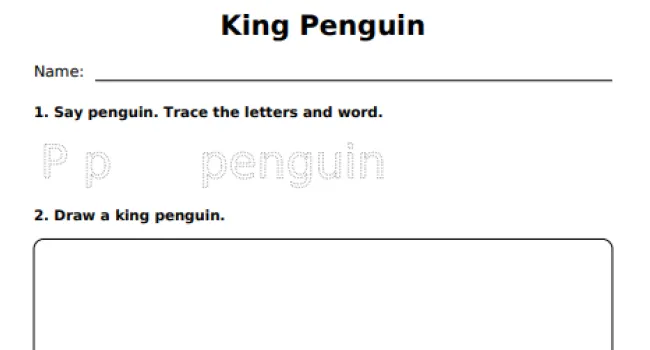
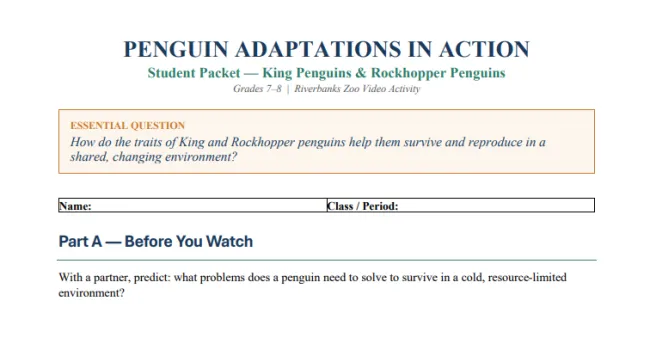
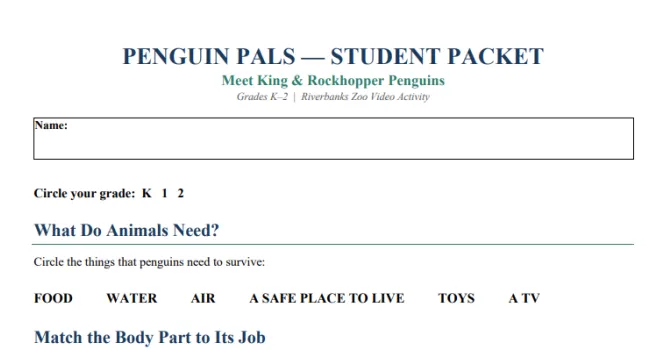
Penguin Pals - Meet King & Rockhopper Penguins - Student Packet (K-1)
This is a student packet that goes along with the "Penguin Pals - Meet King & Rockhopper Penguins (K-2)" lesson.
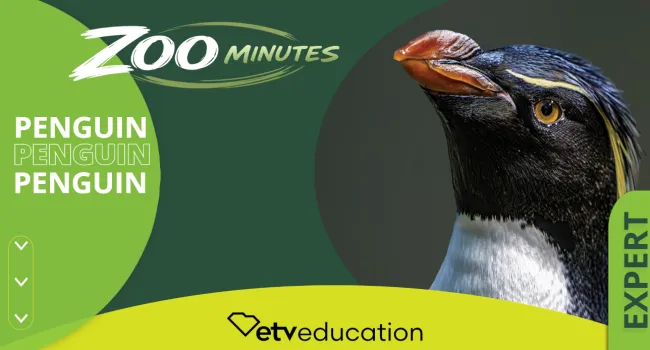
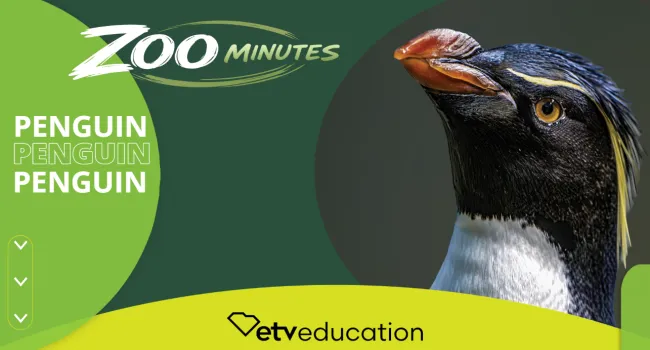
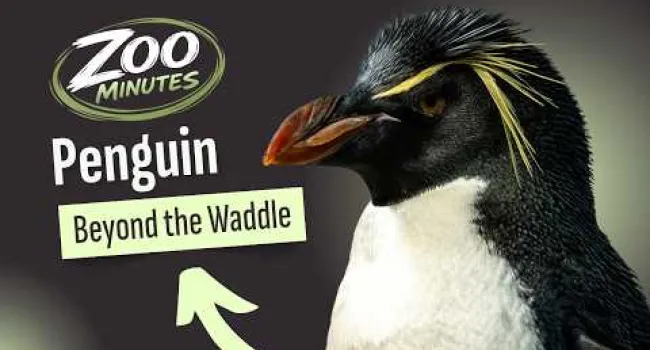
View AssetPenguin | Zoo Minutes
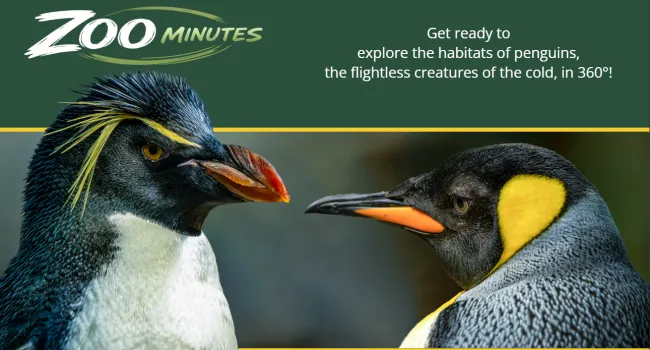
Get to know the king and southern rockhopper penguins at Riverbanks Zoo and Garden. Discover the adaptations, behaviors and animal care that help these remarkable birds thrive on land and in the water...
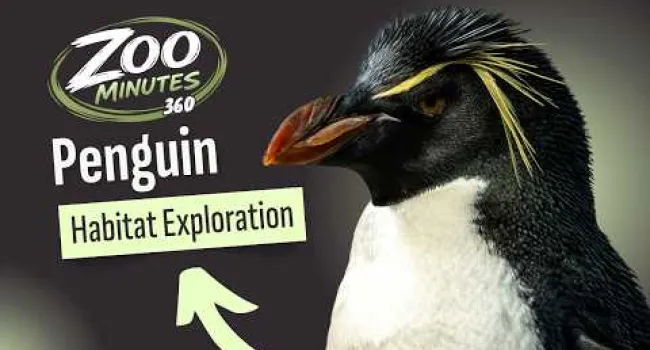
View AssetPenguin 360° | Zoo Minutes 360
Get a new perspective on penguins with a 360-degree look inside their habitat. See king and southern rockhopper penguins up close while exploring the spaces where they swim, rest and receive care...
View AssetStandards
- K-LS1-1. LS1.C: Organization for Matter and Energy Flow in Organisms
- K-ESS3-1 Use a model to represent the relationship between the needs of different plants or animals (including humans) and the places they live.
- 1-LS1-1 Use materials to design a solution to a human problem by mimicking how plants and/or animals use their external parts to help them survive, grow, and meet their needs.
- 1-LS1-2 Obtain information from multiple sources to determine patterns in parent and offspring behavior that help offspring survive.
Assessments
Assessment
This lesson is designed for informal, formative assessment rather than formal grading. Use the checkpoints below to gauge understanding as the lesson unfolds:
Warm-Up check: During the "What do animals need?" brainstorm, listen for whether students can name at least one basic need (food, water, air, shelter).
Matching check: Circulate during the body-parts matching activity. Can the student correctly match at least 2 of the 4 body parts to their jobs, with or without support?
Comparison check: During the King vs. Rockhopper chart, can the student identify at least one difference between the two penguins (e.g., size or color)?
Closing check (Draw & Tell): Can the student name one behavior the penguin did in the video and give a plausible reason it helps the penguin — even a simple one, spoken aloud rather than written?
Simple 3-point look-for scale you can use informally while circulating:
| Level | What You'll See |
|---|---|
| Meets expectations | Names a need, matches most body parts correctly, and gives a reasonable explanation for one behavior. |
| Approaching expectations | Participates with support; matches some body parts correctly; needs prompting to explain a behavior. |
| Needs support | Requires significant prompting throughout; benefits from the Remediation strategies below. |