The Radiated Tortoise: Traits and Survival (Grades 3-4)
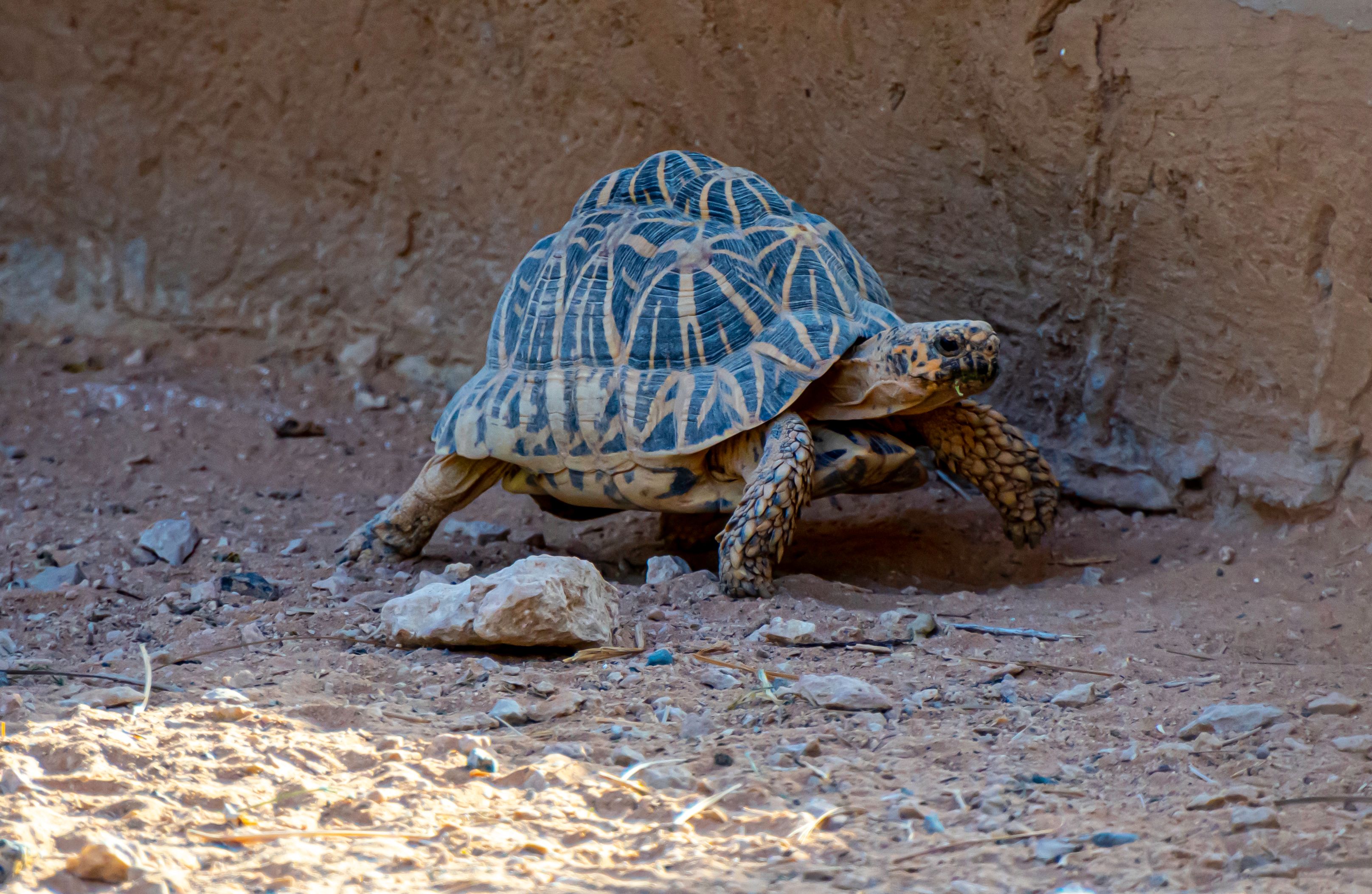
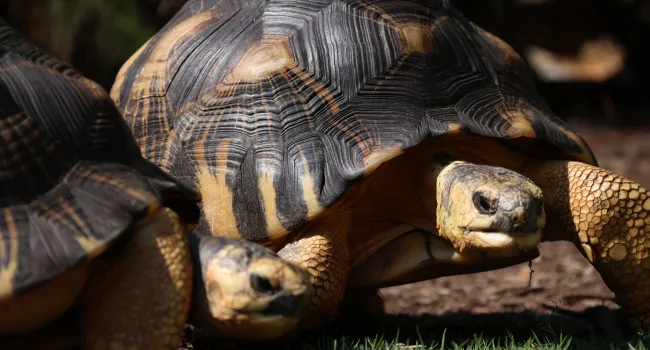
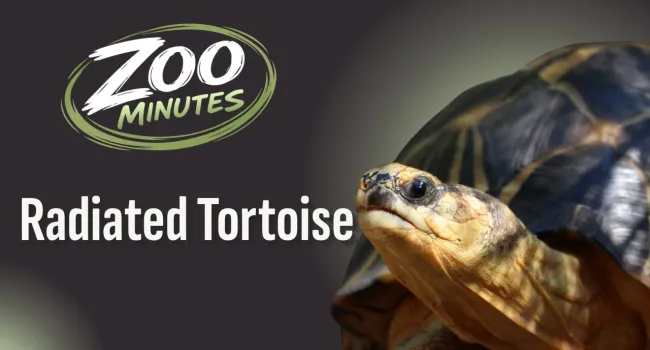
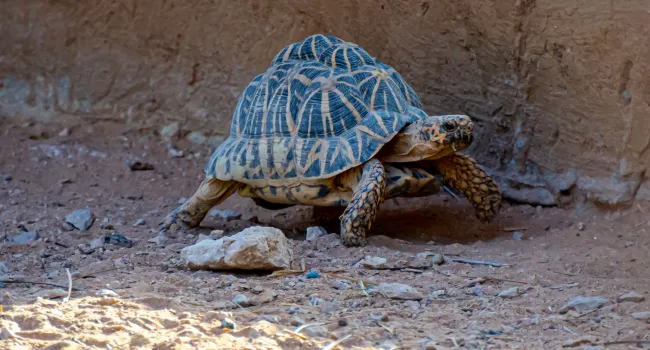
This lesson helps upper-elementary students connect a specific trait — the tortoise's radiating shell pattern — to a survival advantage (camouflage in dappled light and shadow) and introduces the idea that variation in traits can help or hurt survival depending on the environment. Students also consider the tortoise's need for both heat and shade, using it as a concrete example of an organism thriving, struggling, or failing to survive depending on habitat conditions.
Essential Question
How do an animal's traits help it survive in its habitat, and what happens when the habitat changes?
Grade(s):
- 3
- 4
Recommended Technology:
Device with internet access and a large display for whole-class video viewing
Individual devices or printed copies for the Viewing Guide and CER response
Other Instructional Materials or Notes:
Printed or digital copies of the Viewing Guide questions
CER sentence-frame handout for students who haven't practiced this writing structure before
Index cards for the Habitat Match-Up extension, pre-labeled with different habitat types
Teacher note: this lesson works well paired with a prior or follow-up unit on animal life cycles or habitats
Lesson Progression
| Time | Segment | What Happens |
| 5 min | Before Watching | Predict which pattern helps with camouflage. |
| 3 min | Vocabulary Preview | Introduce key terms. |
| 8–10 min | Viewing | Show the video; students complete the Viewing Guide. |
| 10 min | Discussion | Small groups work through discussion questions. |
| 10 min | Assessment | Students write their CER response. |
Teacher Notes
If students haven't used the CER format before, model one example response as a class before releasing them to write independently.
This lesson pairs well with a prior or follow-up unit on animal life cycles or habitats.
Watch for the misconception that camouflage means "invisible" — reinforce that it means "harder to spot," not impossible to spot.
Vocabulary
Trait – a feature of an organism, such as shell pattern or leg shape
Camouflage – coloring or patterning that helps an organism blend into its surroundings
Habitat – the specific place, with its own conditions, where an organism lives
Ectothermic – relying on the surrounding environment (not the body itself) to regulate body temperature
Thrive – to do well and grow successfully in a particular environment
Before Watching
Ask students: "If an animal needed to hide in patches of sunlight and shadow, what pattern would help it the most: solid black, solid white, or striped/spotted?" Record predictions, then tell students they'll check their thinking against a real example.
Viewing Guide
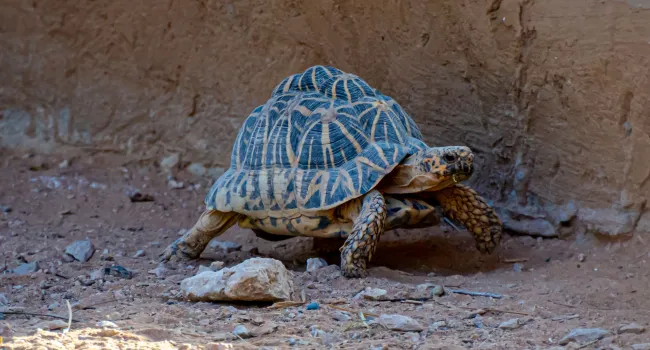
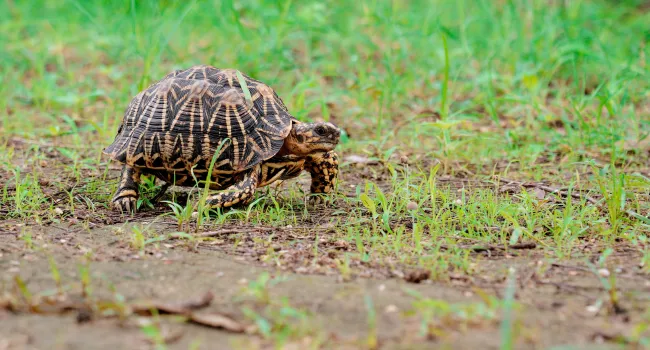
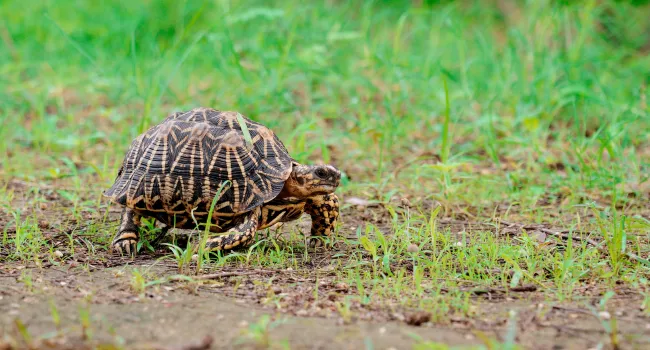
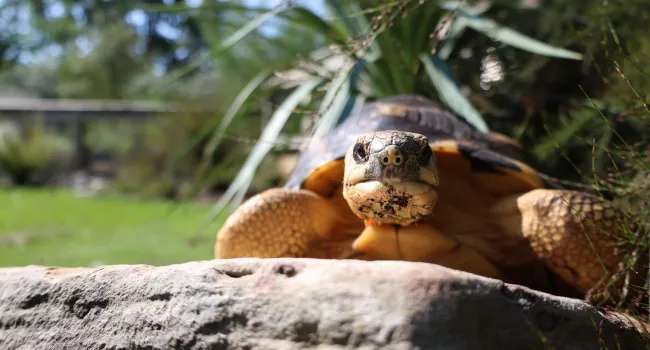
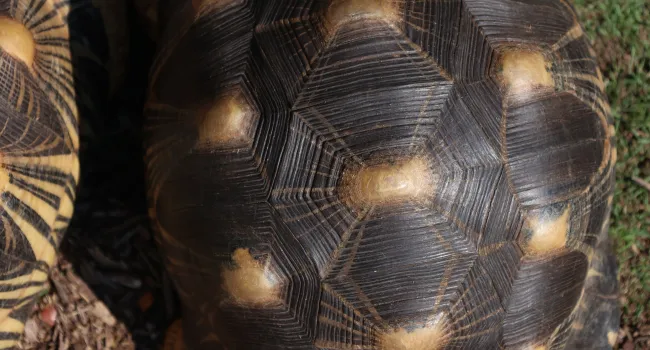
Describe the radiated tortoise's shell pattern and record one way it might help the tortoise (camouflage, temperature, etc.).
What does the video say the tortoise does on a very hot day? What does this tell you about what it needs?
What happens to the tortoise's activity level when it rains? Why might that be?
What foods does the radiated tortoise eat, both in the wild and at the zoo?
After Watching – Discussion Questions
The video says the shell's pattern can help the tortoise blend into light and shadow. Why would blending in matter for a slow-moving animal?
The tortoise needs both a heated barn and an outdoor yard at the zoo. What does this tell you about the conditions it needs to survive?
If a radiated tortoise were placed in a cold, wet climate instead of Madagascar, would you expect it to thrive, struggle, or fail to survive? Use evidence from the video to support your answer.
The video mentions three to six eggs per nest. Why might a tortoise not need to lay hundreds of eggs at once the way some other animals do?
Remediation
For students whose CER response doesn't clearly connect the shell pattern to a survival advantage, or who struggle with the thrive/struggle/fail-to-survive concept:
Re-watch just the shell-pattern segment, pausing right after the line about blending into light and shadow, and have students restate it in their own words before writing.
Provide a partially completed CER exemplar with the reasoning sentence left blank, so students practice supplying just the claim-to-evidence connection.
Rebuild the underlying concept with a simpler, familiar example first (an arctic fox's white winter coat vs. a brown summer coat) before returning to the tortoise example.
Use the Habitat Match-Up extension cards as a small-group, teacher-guided activity instead of independent work, thinking aloud through one example together before releasing students to try the rest.
Differentiation
Struggling Readers / English Language Learners
Provide a sentence frame for the CER: "I claim that ___. The video shows ___. This means that ___."
Offer a word bank with key vocabulary terms.
Allow the Viewing Guide to be completed with a partner.
Students with IEPs / 504 Plans
Allow pausing the video at key moments (shell pattern, hot-weather behavior) for extra processing time.
Offer a simplified CER frame with blanks for claim, evidence, and reasoning.
Provide extended time or a verbal response option for the CER task.
Advanced / Gifted Students
Ask students to research one other animal that uses patterning for camouflage and compare it to the radiated tortoise's strategy.
Challenge students to explain why an ectothermic animal's behavior (seeking shade vs. sun) changes throughout the day, connecting behavior to survival.
Extension
Habitat Match-Up: Give students index cards describing different habitats (desert, rainforest, tundra, wetland). Have them explain, using evidence from the video, whether a radiated tortoise would thrive, struggle, or fail to survive in each one, and why.
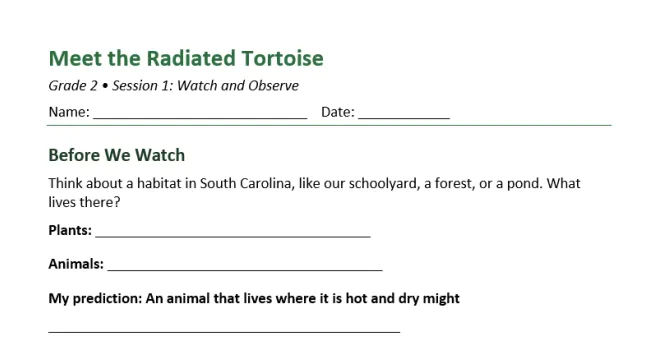
Meet the Radiated Tortoise (Grade 2)
This lesson introduces the youngest students to the idea that an animal's body parts help it survive, using the radiated tortoise's shell and legs as a simple, visual example. Students observe the...
View LessonRadiated Tortoises: Shape Attributes
View LessonThe Radiated Tortoise: Traits and Survival (Grades 3-4)
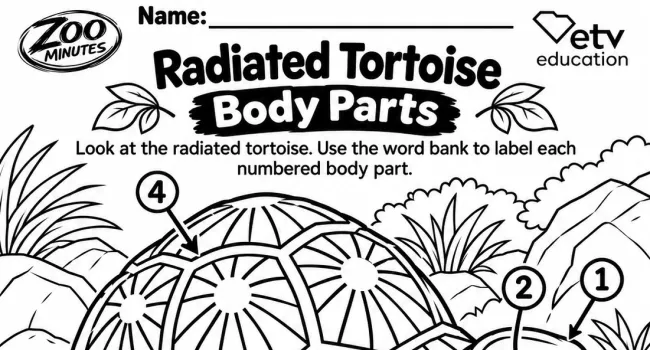
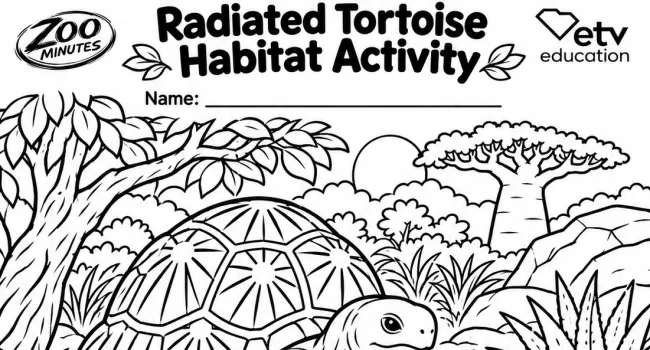
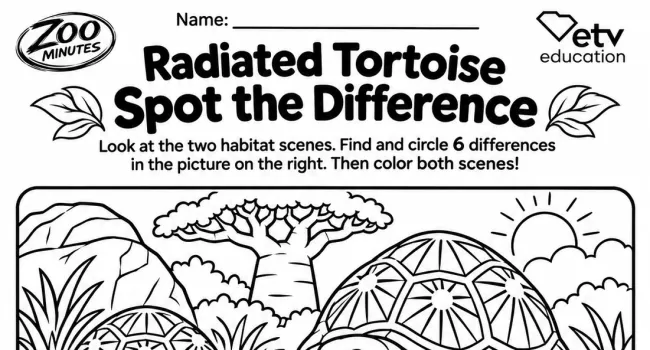
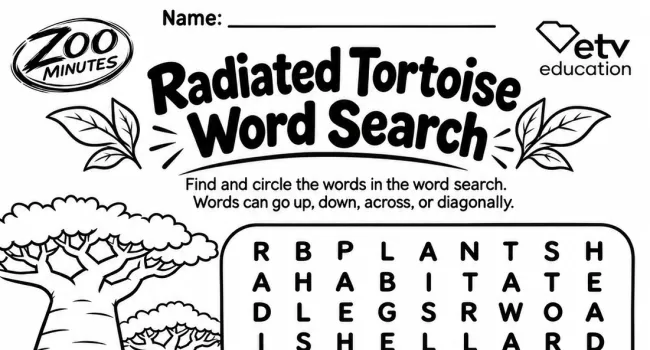
This document goes along with " The Radiated Tortoise: Traits and Survival (Grades 3-4)" lesson.
View AssetRadiated Tortoise Book List
List of fiction and nonfiction books that can be used in the classroom
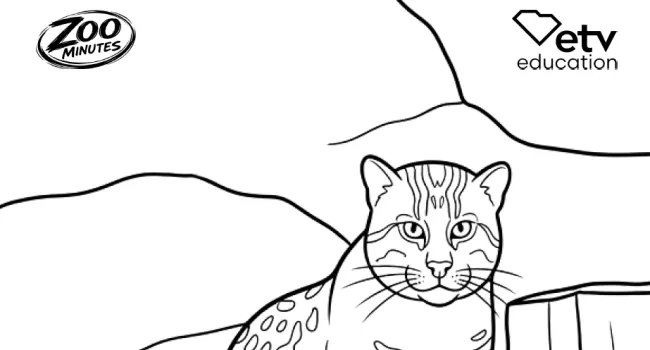
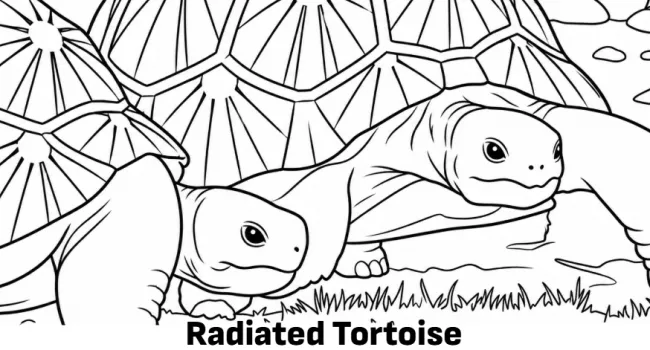
View AssetRadiated Tortoise Coloring Sheet
Bring a radiated tortoise to life with color! Discover the beautiful patterns on its shell and learn a fun fact about this remarkable species.
View AssetStandards
- 3-LS4-2. Use evidence to construct an explanation for how the variations in traits among individuals of the same species may provide advantages in surviving and producing offspring.
- 3-LS4-3. Construct an argument with evidence that in a particular habitat some organisms can thrive, struggle to survive, or fail to survive.
- 4-LS1-1. Construct an argument that plants and animals have internal and external structures that function together in a system to support survival, growth, behavior, and reproduction.
Assessments
Primary Assessment (CER Response): Have students write a short Claim-Evidence-Reasoning response to the prompt: "The radiated tortoise's shell pattern is a helpful trait for surviving in its habitat." Students state a claim, cite specific video evidence, and explain their reasoning.
Scoring Guidance: Look for a specific connection between the pattern and a survival benefit (e.g., "the golden lines help it blend into light and shadows, which is evidence in the video, so predators or the tortoise's surroundings work together to keep it hidden") rather than a vague statement like "the pattern looks nice."
Formative Check: Use completed Viewing Guides and small-group discussion participation as an informal check before the CER task.