Penguin Adaptations in Action (Grades 7 & 8)
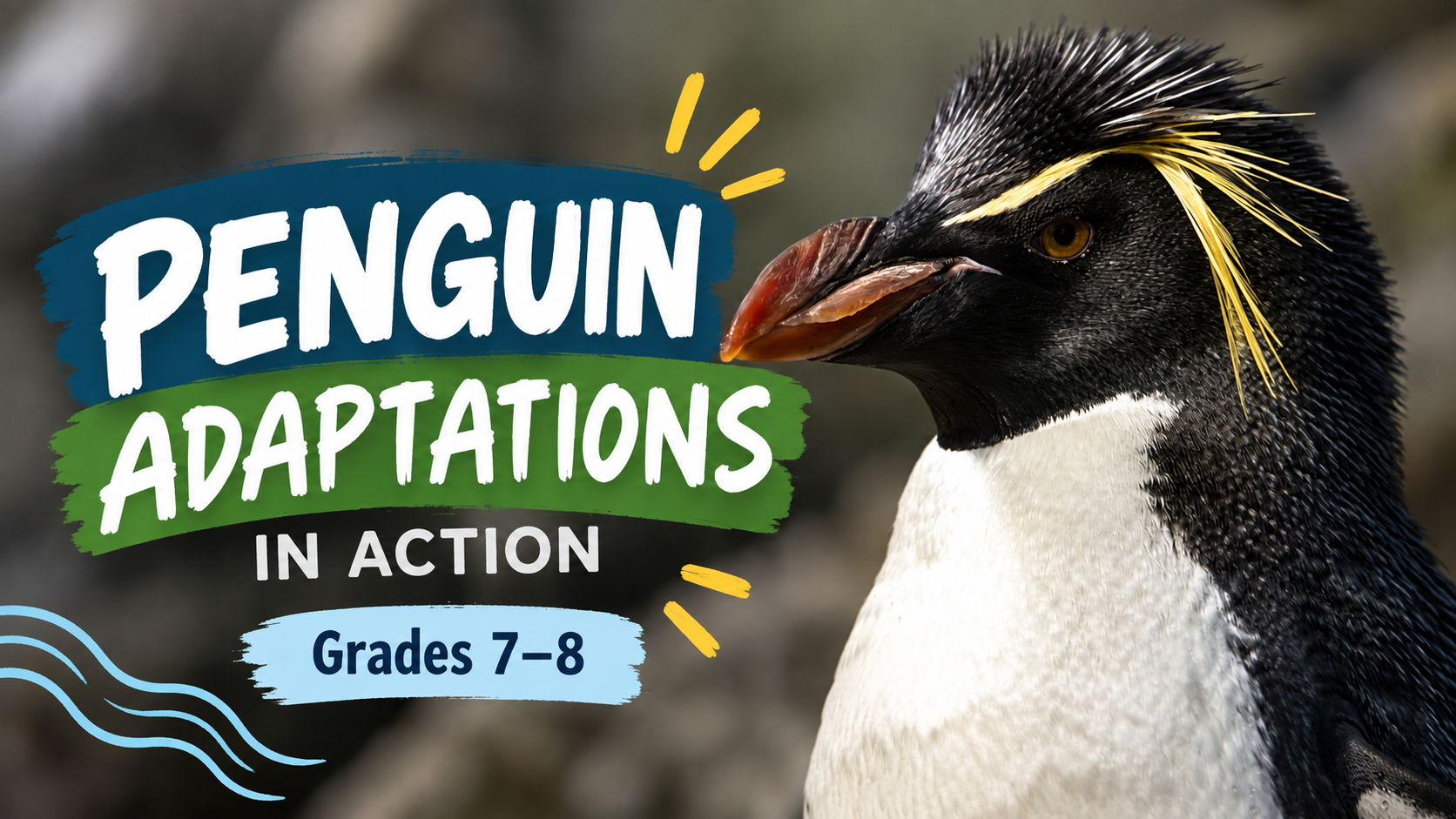
In this lesson, middle school students investigate how King and Rockhopper penguins have evolved different structural, behavioral, and physiological strategies for surviving in the same sub-Antarctic environment. Students begin by predicting the challenges of a resource-limited, cold ocean habitat, then watch a short video of both species at Riverbanks Zoo and complete a guided observation log. Working in pairs or small groups, students compare the two species' adaptations in a chart and use that evidence to reason through questions covering resource availability, species interactions, and environmental and genetic influences on growth. The lesson closes with a written reflection connecting one adaptation to the survival advantage it provides. A Grade 8 extension asks students to use proportional reasoning with a simple dataset to describe how a trait's frequency can shift in a population over time. The lesson fits a single 50–60 minute class period and requires no materials beyond the video and student packet.
Essential Question
How do the traits of King and Rockhopper penguins help them survive and reproduce in a shared, changing environment?
Grade(s):
- 7
- 8
Subject(s):
Recommended Technology:
- A way to play the video with sound for the whole class (interactive whiteboard, projector with speakers, or classroom TV).
- One device per student or pair (Chromebook, tablet, etc.), only needed if distributing the student packet digitally through a platform such as Google Classroom or Canvas.
- Spreadsheet software (Google Sheets or Excel) or a graphing calculator, only needed if extending the Grade 8 math task with real population data.
- Internet access, only needed if extending the lesson with published population datasets or a third-species research project.
Other Instructional Materials or Notes:
- One printed or digital copy of the student packet per student.
- Pencils or pens for written responses; a calculator if students want to check their proportional reasoning in the Grade 8 extension.
- Teacher note: preview the video once before class to plan pause points between segments.
- Teacher note: the Grade 8 extension (Part D) can be moved to a second class period or assigned as homework if class time is limited.
Lesson Progression
| Time | Segment | What Happens |
|---|---|---|
| 5 min | Warm-Up (Part A) | Students predict, in pairs, what problems a penguin must solve to survive in a resource-limited, cold ocean environment. |
| 10–15 min | Watch & Observe (Part B) | Play the video. Students complete the video observation log individually or in pairs, recording at least 6 specific behaviors. |
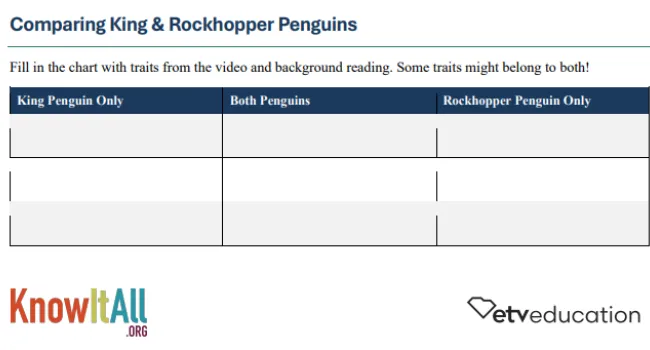
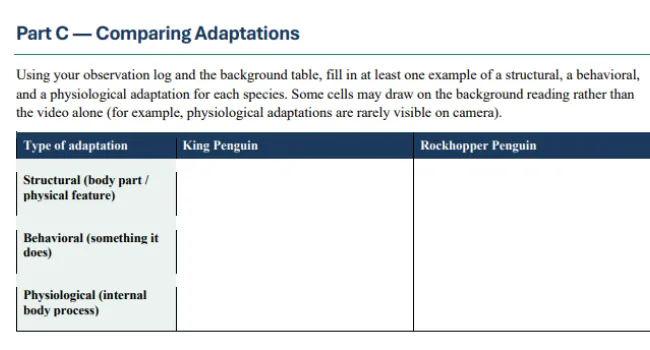
| 15 min | Compare Adaptations (Part C — chart) | In pairs or small groups, students complete the structural / behavioral / physiological adaptations chart for both species. |
| 10–15 min | Analysis Questions (Part C — Q1–3) | Students answer the three standards-tagged questions individually or in groups; teacher selects 1 to discuss as a whole class. |
| 5–10 min | Wrap-Up / Reflection | Students respond individually to the closing reflection prompt, revisiting the Essential Question. |
| +15–20 min (optional) | Grade 8 Extension (Part D) | Assign in class to Grade 8 sections, or as homework/enrichment for advanced students; introduces proportional reasoning with a simple trait-frequency dataset. |
Learning Objectives
- Describe structural, behavioral, and physiological adaptations of King and Rockhopper penguins observed in the video.
- Analyze and interpret evidence for how resource availability affects organisms and populations in an ecosystem.
- Predict patterns of interaction (such as competition) between two species that share overlapping resources or habitat.
- Explain how environmental and genetic factors can influence the growth and survival of a population.
- (Grade 8 extension) Use a simple mathematical representation to explain how natural selection can shift the traits of a population over time.
Teacher Notes
Teacher Notes
- Preview the video before class to plan natural pause points between segments (species introduction, adaptations for swimming, colony communication, behind-the-scenes care, life cycle, conservation close).
- This lesson's content is designed specifically for Grade 7–8 life science standards; no scaffolding for Grade 6 is built in.
- The Grade 8 math extension (Part D) can be skipped, simplified, or assigned as homework for classes not yet ready for proportional reasoning with population data.
- Students don't need every term from the video (e.g., osmoregulation) memorized verbatim — focus on the underlying concept (an internal process that helps the animal survive) over the vocabulary itself.
- This works well as an anchoring phenomenon to open a broader unit on adaptation, natural selection, or ecosystem interactions, not just as a standalone activity.
- This lesson can be taught as a standalone unit. It does not require the Grades 3–5 version as a prerequisite.
Student Activity Outline:
Part A — Before You Watch
With a partner, predict: what problems does a penguin need to solve to survive in a cold, resource-limited environment (finding food, avoiding competition, raising young)?
Part B — Video Observation Log
While watching, students record at least 6 specific behaviors, noting which species and what the behavior might help the penguin accomplish.
Part C — Comparing Adaptations
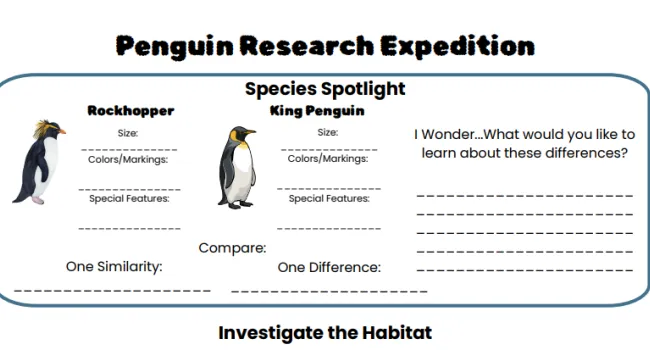
Students complete a structural / behavioral / physiological adaptations chart for King and Rockhopper penguins (see student packet), then answer analysis questions covering resource availability, species interactions, and environmental/genetic influences on growth.
Part D — Grade 8 Extension: The Math of Natural Selection
Students work with a simple hypothetical dataset (e.g., the percentage of a penguin population with a helpful trait across several generations) and use proportional reasoning to describe the trend, then explain what environmental pressure might cause it.
Differentiation
- English Language Learners: Provide a visual vocabulary card set; allow the observation log to be completed in short phrases; pair with a bilingual peer.
- Struggling Students: Provide a partially completed adaptations chart as a scaffold; reduce the analysis questions to 2–3 core items.
- Students with IEPs/504 Plans: Follow all plan accommodations; break the activity into shorter, separately timed segments; offer a graphic organizer version of the adaptations chart.
- Advanced Students: Assign the full Grade 8 math extension; have students research real King and Rockhopper population data and graph the trend themselves.
Remediation
For students who need more support meeting the objectives:
- Provide a partially completed adaptations chart with one example already filled in per category as a scaffold.
- Reduce the analysis questions to 1–2 core items, focusing on the standard most relevant to your class.
- Provide sentence frames for each question type (e.g., "This is a ___ adaptation because ___.").
- Pre-teach key vocabulary using still images or short clips from the video before watching it in full.
- Allow oral or small-group collaborative responses instead of independent written responses.
- Re-watch a short clip tied to a single adaptation before asking students to complete that row of the chart.
- Pair struggling students with a stronger peer for the observation log and adaptations chart.
Optional Extensions
- In-person or virtual field trip to Riverbanks Zoo's penguin habitat for extended, live observation.
- Research project: assign a third penguin species and add it to the comparison chart.
- Data connection: graph real published King vs. Rockhopper population trends and discuss what might explain the pattern.
- Conservation action project: design a plan addressing one of the threats named in the video's closing narration (habitat loss, pollution, changing ocean conditions, declining food sources).
Teacher Answer Key — Sample Adaptations
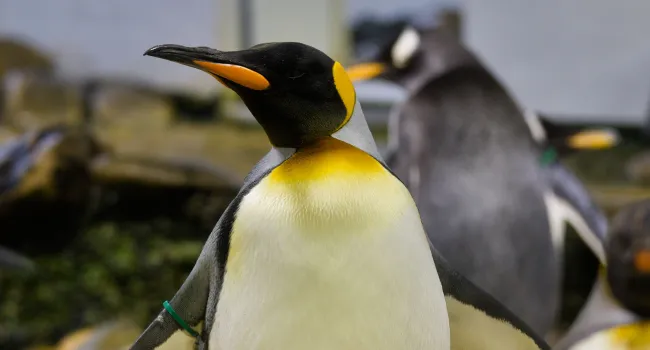
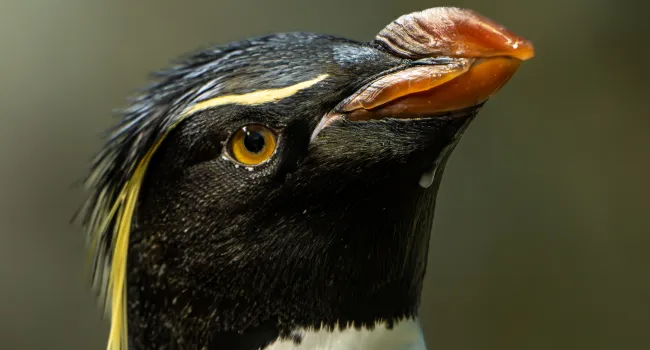
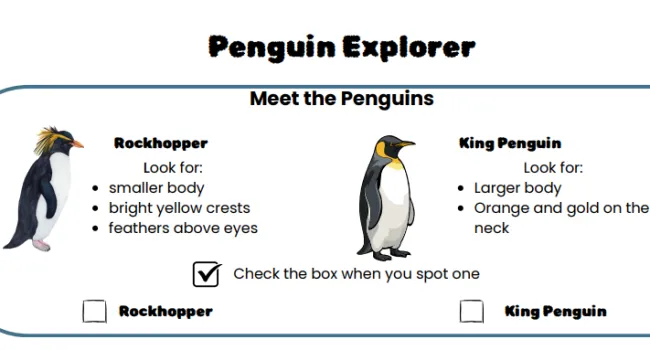
- King Penguin — Structural: fat layer and tightly packed feathers for insulation; solid, dense bones for diving; countershading for camouflage; orange/gold neck feathers for display.
- King Penguin — Behavioral: waddles (~2 mph) and can toboggan across snow/ice; balances its egg on its feet instead of nesting; uses vocal calls and body language to communicate.
- King Penguin — Physiological: salt glands remove excess salt from seawater; nictitating membrane protects the eyes underwater; undergoes a yearly catastrophic molt.
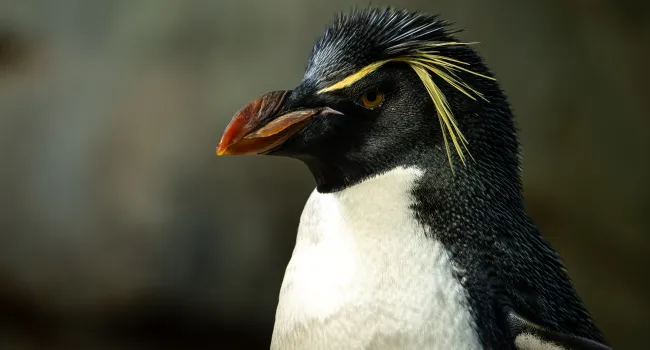
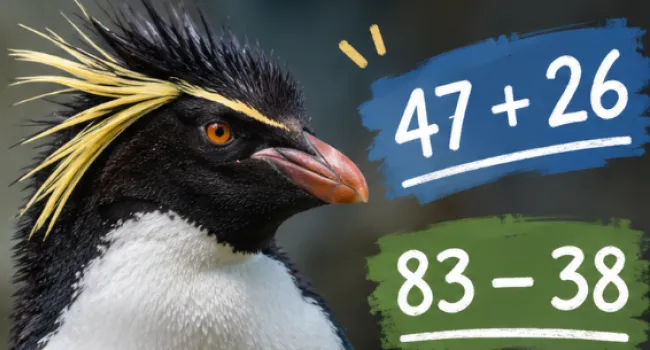
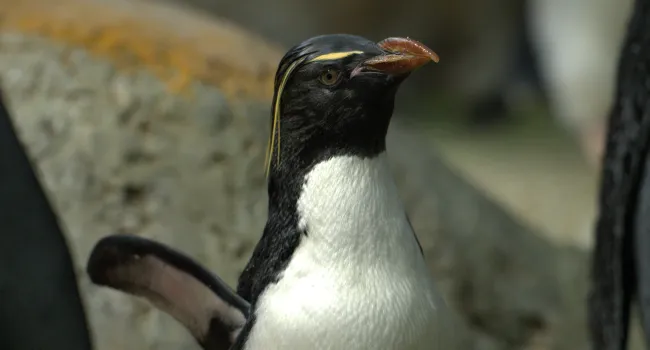
- Rockhopper Penguin — Structural: yellow crest feathers for display; same countershading and dense bones.
- Rockhopper Penguin — Behavioral: hops between rocks instead of waddling; leaps feet-first into the water and dives over 100 meters; builds a nest of grasses and stones with shared incubation.
- Rockhopper Penguin — Physiological: same salt-gland osmoregulation, nictitating membrane, and catastrophic molt as the King penguin.
Penguin | Zoo Minutes
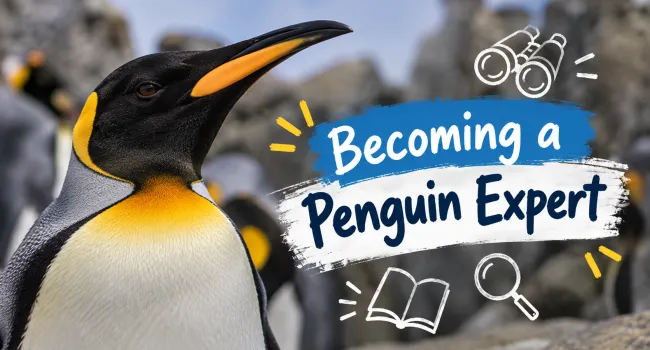
Get to know the king and southern rockhopper penguins at Riverbanks Zoo and Garden. Discover the adaptations, behaviors and animal care that help these remarkable birds thrive on land and in the water...
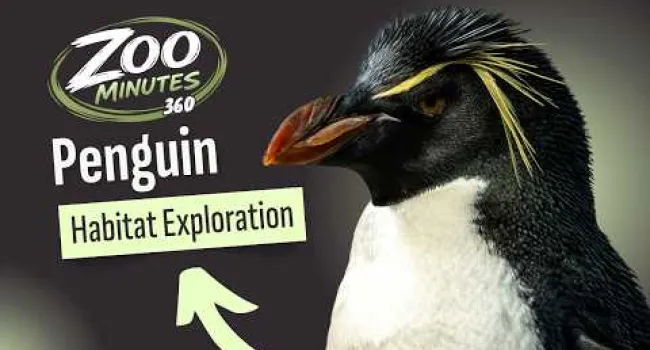
View AssetPenguin 360° | Zoo Minutes 360
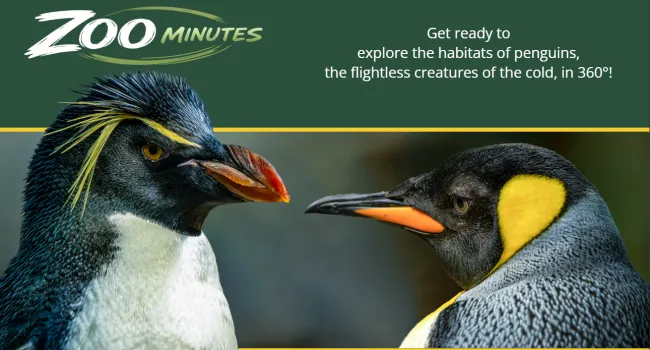
Get a new perspective on penguins with a 360-degree look inside their habitat. See king and southern rockhopper penguins up close while exploring the spaces where they swim, rest and receive care...
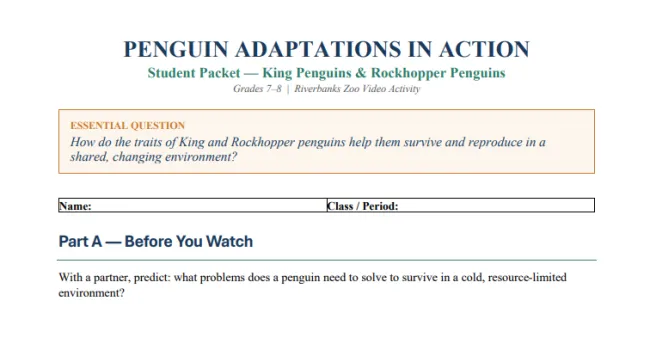
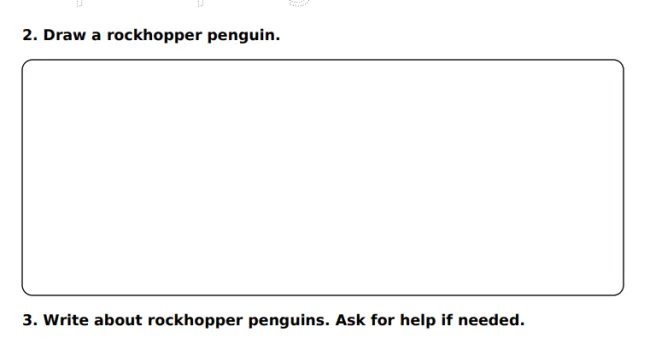
View AssetPenguin Adaptations in Action (Grades 7 & 8) Student Handout
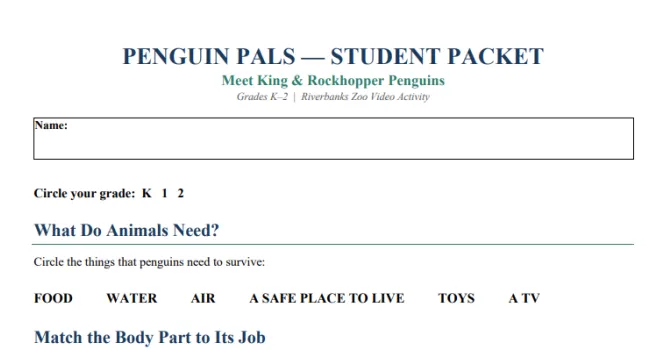
This student packet goes along with the lesson "Penguin Adaptations in Action (Grades 7 & 8)".
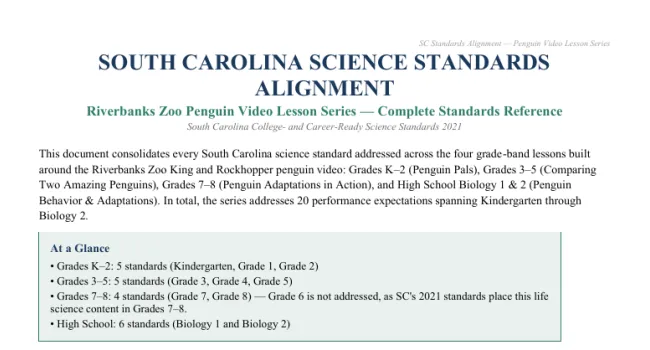
View AssetStandards
- 7-LS2-1. Analyze and interpret data to provide evidence for the effects of resource availability on organisms and populations of organisms in an ecosystem
- 7-LS2-2 Construct an explanation that predicts patterns of interactions among organisms across multiple ecosystems.
- 8-LS1-5. Construct a scientific explanation based on evidence for how environmental and genetic factors influence the growth of organisms.
- 8-LS4-6 Use mathematical representations to support explanations of how natural selection may lead to increases and decreases of specific traits in populations over time.
Assessments
Assessment
Use the checkpoints below as formative checks throughout the lesson. The analysis questions and Grade 8 extension can also be collected and scored as a short summative assessment if desired.
- Observation log check: Are students recording specific, accurate behaviors and correctly identifying which species performed them?
- Adaptations chart check: Can students correctly categorize adaptations as structural, behavioral, or physiological?
- Analysis questions (1–3) check: Do responses use evidence from the video to support reasoning about resource availability, species interactions, or environmental/genetic factors?
- Grade 8 extension (Q4) check: Can students correctly complete the proportional reasoning and connect the trend to an environmental pressure?
- Closing reflection check: Can students name one adaptation and explain its survival advantage, tying back to the Essential Question?
Simple 4-point rubric you can use to score the analysis questions or extension:
| Level | What You'll See |
|---|---|
| Exceeds | Accurately categorizes multiple adaptations, uses precise vocabulary, and reasons with specific evidence from the video. |
| Meets | Accurately categorizes most adaptations and gives a reasonable, evidence-based explanation for each question. |
| Approaching | Identifies some adaptations correctly but may confuse categories or give vague or unsupported reasoning. |
| Needs Support | Struggles to identify adaptations or connect evidence to reasoning even with prompting; benefits from the Remediation strategies below. |