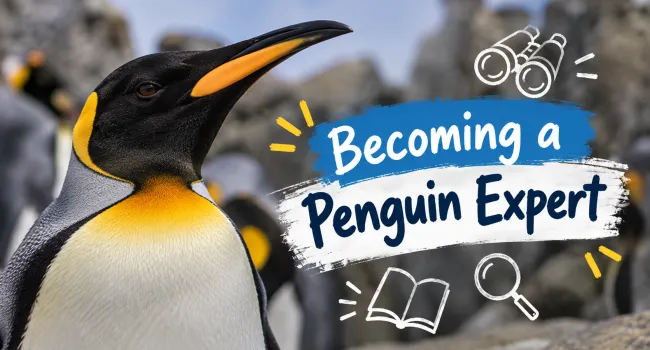
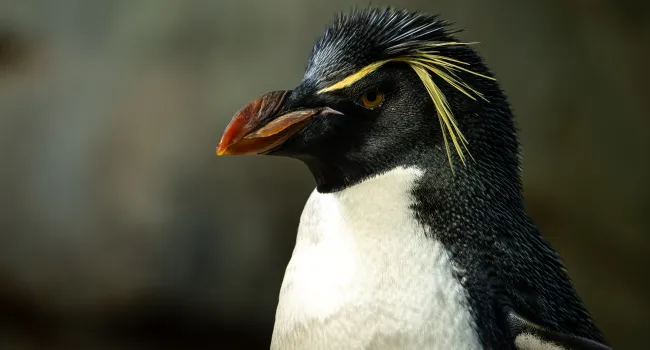
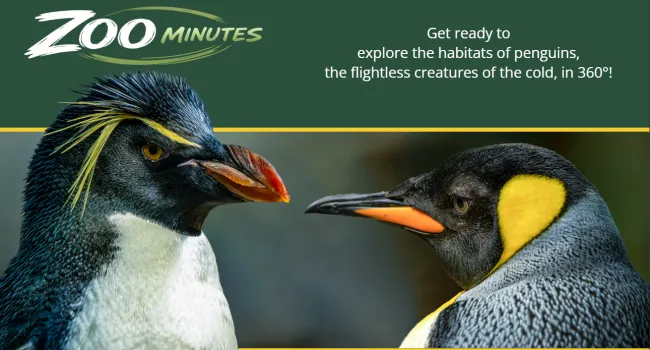
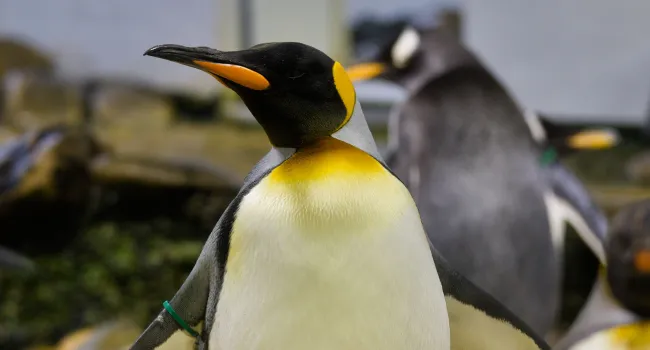
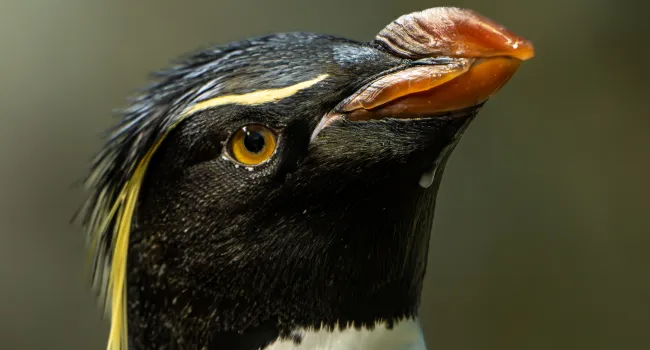
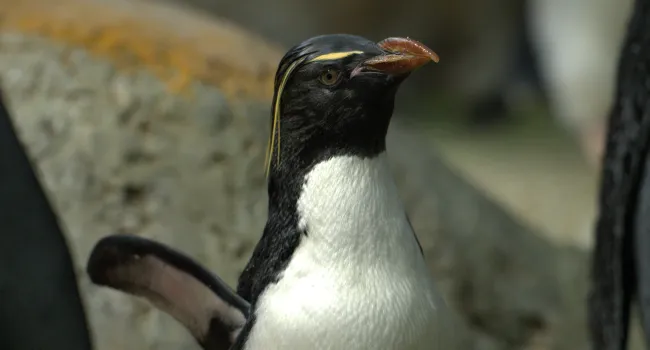
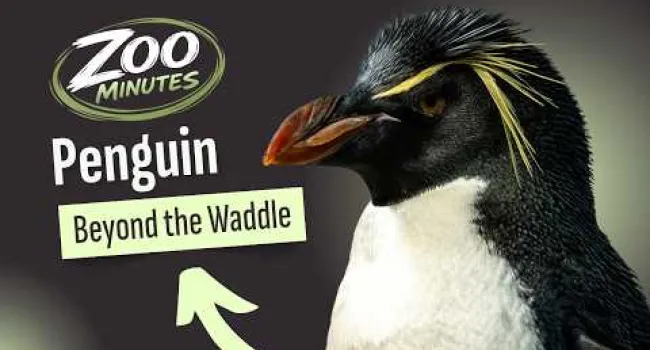
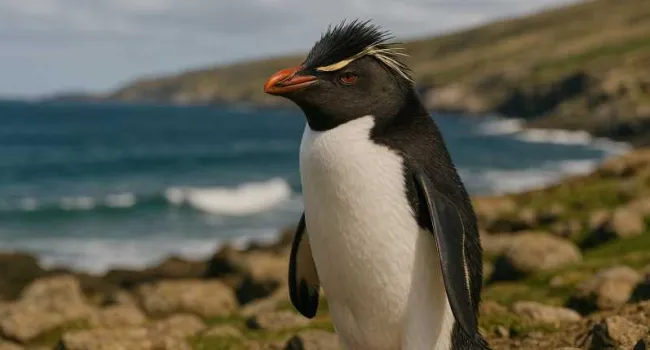
Get a new perspective on penguins with a 360-degree look inside their habitat. See king and southern rockhopper penguins up close while exploring the spaces where they swim, rest and receive care.
NOTE: To enable the 360-degree viewing inside the habitat, you must view the video via YouTube.
Click the YouTube icon at the bottom right of the video. This will open the video in YouTube in a new window. From there, press play and use your mouse to move around the habitat and zoom in on our feathered friends. Be sure to turn up your volume to learn more about the experience.
TIP: We recommend you set the YouTube player 'Quality' option to 8K in Settings.
In YouTube, hover over the video player and click the Gear icon (Settings) in the bottom right corner. Click on Quality and select 4320s/8K (or 4320p) from the list.
Get a new perspective on penguins with a 360-degree look inside their habitat. See king and southern rockhopper penguins up close while exploring the spaces where they swim, rest and receive care.
NOTE: To enable the 360-degree viewing inside the habitat, you must view the video via YouTube.
Click the YouTube icon at the bottom right of the video. This will open the video in YouTube in a new window. From there, press play and use your mouse to move around the habitat and zoom in on our feathered friends. Be sure to turn up your volume to learn more about the experience.
TIP: We recommend you set the YouTube player 'Quality' option to 8K in Settings.
In YouTube, hover over the video player and click the Gear icon (Settings) in the bottom right corner. Click on Quality and select 4320s/8K (or 4320p) from the list.
Standards
- K-LS1-1. LS1.C: Organization for Matter and Energy Flow in Organisms
- K-ESS3-1 Use a model to represent the relationship between the needs of different plants or animals (including humans) and the places they live.
- 1-LS1-1 Use materials to design a solution to a human problem by mimicking how plants and/or animals use their external parts to help them survive, grow, and meet their needs.
- 1-LS1-2 Obtain information from multiple sources to determine patterns in parent and offspring behavior that help offspring survive.
- 1-LS3-1 Make observations to support an evidence-based claim that most young are like, but not exactly like, their parents.
- 2-LS2-2. Develop a simple model that mimics the function of an animal in dispersing seeds or pollinating plants.
- 2-LS4-1. Make observations of plants and animals to compare patterns of diversity within different habitats.
- 2-ESS3-1. Design solutions to address human impacts on natural resources in the local environment.
- 3-LS1-1. Develop and use models to describe how organisms change in predictable patterns during their unique and diverse life cycles.
- 3-LS2-1 Construct an argument that some animals form groups that help members survive.
- 3-LS3-1. Analyze and interpret data to provide evidence that plants and animals have inherited traits that vary within a group of similar organisms.
- 3-LS3-2 Use evidence to support the explanation that traits can be influenced by the environment.
- 3-LS4-2. Use evidence to construct an explanation for how the variations in traits among individuals of the same species may provide advantages in surviving and producing offspring.
- 3-LS4-3. Construct an argument with evidence that in a particular habitat some organisms can thrive, struggle to survive, or fail to survive.
- 3-LS4-4. Make a claim about the effectiveness of a solution to a problem caused when the environment changes and affects organisms living there.
- 4-LS1-1. Construct an argument that plants and animals have internal and external structures that function together in a system to support survival, growth, behavior, and reproduction.
- 5-LS2 Ecosystems: Interactions, Energy, and Dynamics
- B-LS4-2 Construct an explanation based on evidence that the process of evolution primarily results from four factors: (1) the potential for a species to increase in number, (2) the heritable genetic variation of individuals in a species due to mutation and sexual reproduction, (3) competition for limited resources, and (4) the proliferation of those organisms that are better able to survive and reproduce in the environment.
- B-LS4-3. Apply concepts of statistics and probability to support explanations that organisms with an advantageous heritable trait tend to increase in proportion to organisms lacking this trait.
- B-LS4-4. Construct an explanation based on evidence for how natural selection leads to adaptation of populations
- B-LS4-5 Evaluate the evidence supporting claims that changes in environmental conditions may result in (1) increases in the number of individuals of some species, (2) the emergence of new species over time, and (3) the extinction of other species.
- B-LS4-6 Create or revise a simulation to test a solution to mitigate adverse impacts of human activity on biodiversity.
- B-LS2-7 Design, evaluate, and refine a solution for reducing the impacts of human activities on biodiversity and ecosystem health.
Resources
Comparing Two Amazing Penguins (Grades 3 - 5)
In this lesson, grades 3–5 students investigate how King and Rockhopper penguins' different traits each help them survive in a shared, sub-Antarctic environment. Students begin with a prediction about...
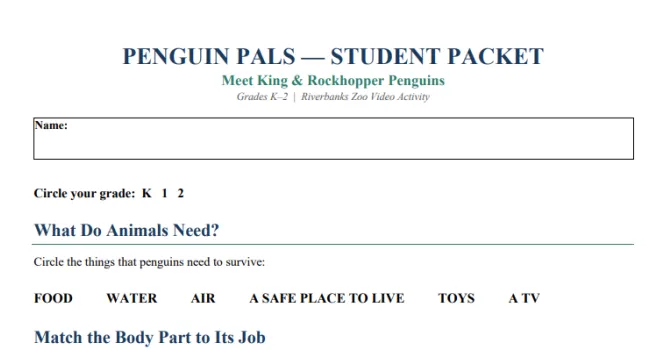
View LessonPenguin Pals - Meet King & Rockhopper Penguins (K-1)
In this lesson, K–1 students investigate how a penguin's body helps it live in a cold, ocean-side home. Students begin by naming what all animals need to survive, then watch a short video of King and...
View LessonPenguin Behavior & Adaptations (Grades 9-12)
In this lesson, high school Biology students investigate how King and Rockhopper penguins have evolved different strategies for surviving in the same sub-antarctic environment. Students begin by...
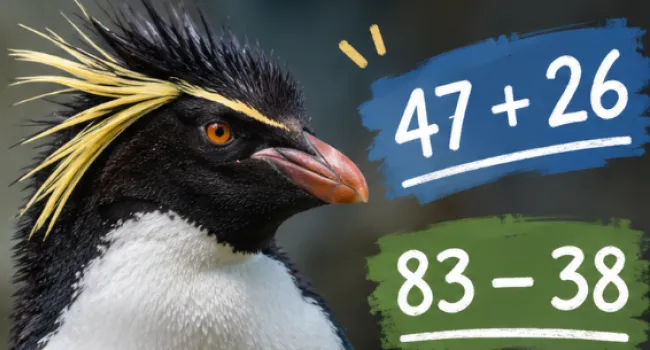
View LessonPenguin Math: Double-Digit Addition & Subtraction
Students take on the role of zookeepers at the Penguin Coast exhibit inside the Birdhouse at Riverbanks Zoo & Garden in Columbia, SC. Using place value strategies and base-ten blocks, students solve...
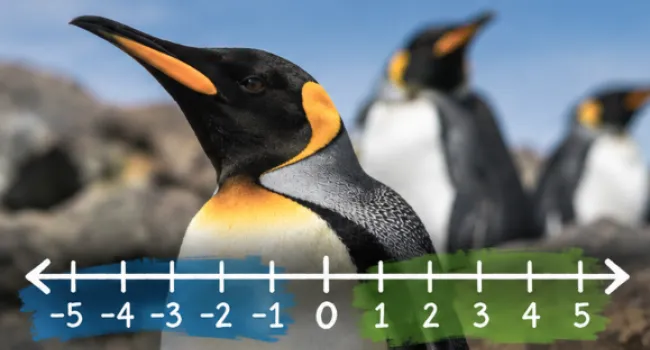
View LessonPenguin Math: Integers
In this lesson, students explore positive and negative integers by taking on the role of zookeepers tracking environmental conditions at Riverbanks Zoo's Penguin Coast exhibit. Using both horizontal...
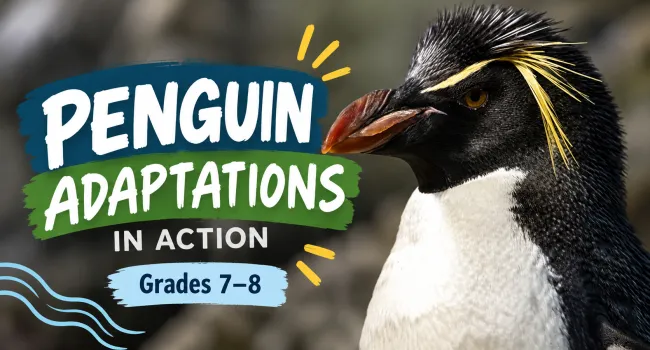
View LessonPenguin Adaptations in Action (Grades 7 & 8)
In this lesson, middle school students investigate how King and Rockhopper penguins have evolved different structural, behavioral, and physiological strategies for surviving in the same sub-Antarctic...
View LessonBecoming a Penguin Expert
Students read informational texts and articles about penguins. While identifying key details and new vocabulary, students gather facts about penguins. Students will share their new learning and...
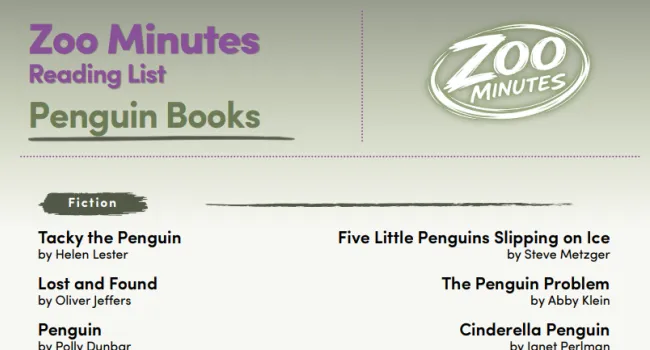
View LessonPenguin | Zoo Minutes
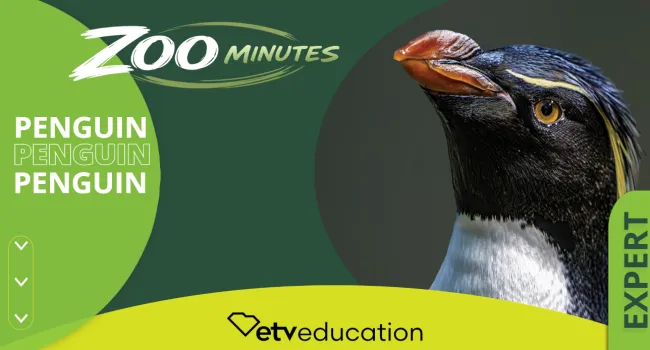
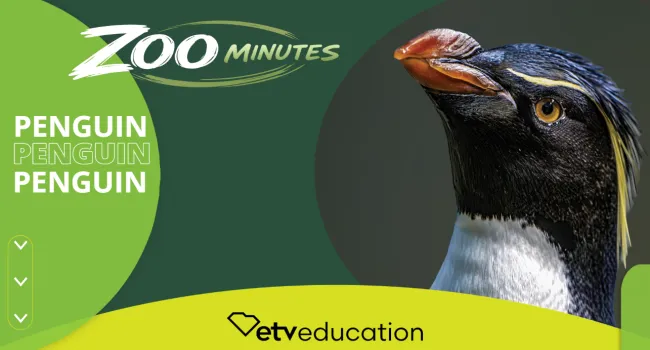
Get to know the king and southern rockhopper penguins at Riverbanks Zoo and Garden. Discover the adaptations, behaviors and animal care that help these remarkable birds thrive on land and in the water...
View AssetPenguin Behavior & Adaptations (9-12) - Student Packet
A video-companion worksheet for high school Biology students, pairing with a Riverbanks Zoo video of King and Rockhopper penguins. Students complete a guided video observation log, compare structural...
View AssetPenguin Adaptations in Action (Grades 7 & 8) Student Handout
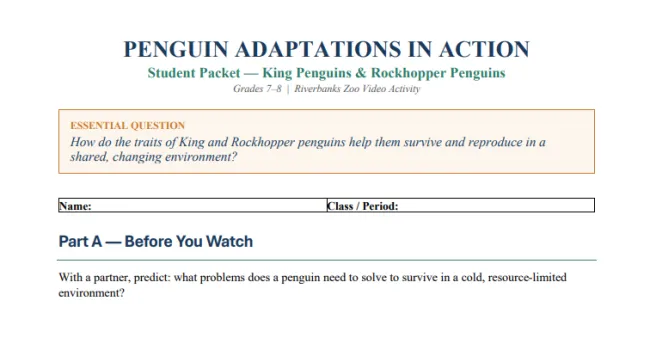
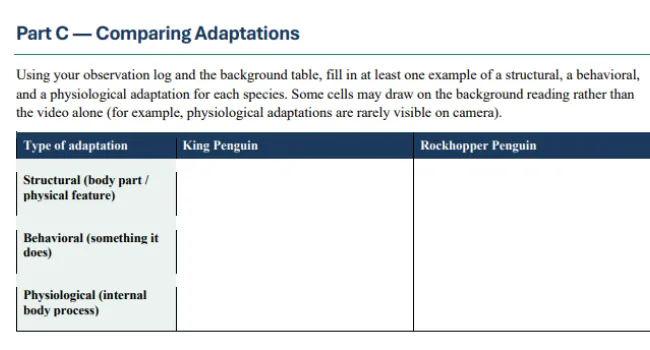
This student packet goes along with the lesson "Penguin Adaptations in Action (Grades 7 & 8)".
View AssetPenguin Pals - Meet King & Rockhopper Penguins (K-2)
This packet goes along with the video lesson "Penguin Pals - Meet King & Rockhopper Penguins (K-2)".
View AssetPenguin Pals - Meet King & Rockhopper Penguins - Student Packet (K-1)
This is a student packet that goes along with the "Penguin Pals - Meet King & Rockhopper Penguins (K-2)" lesson.
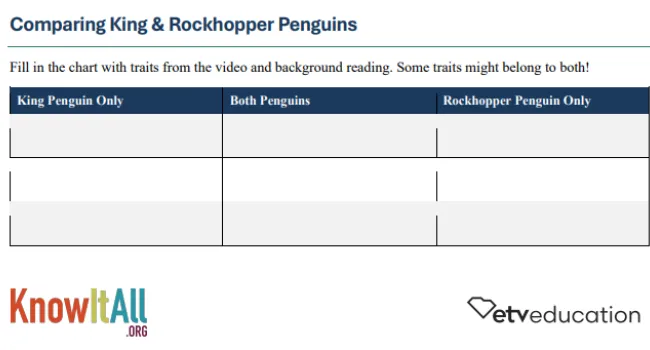
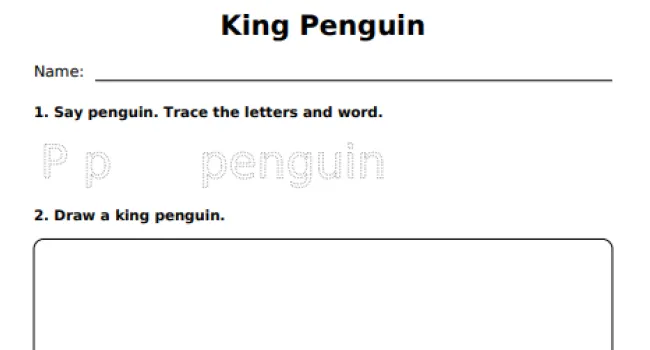
View AssetComparing Two Amazing Penguins Handout (Grades 3-5)
This student handout goes with the "Comparing Two Amazing Penguins (Grades 3-5)" lesson.
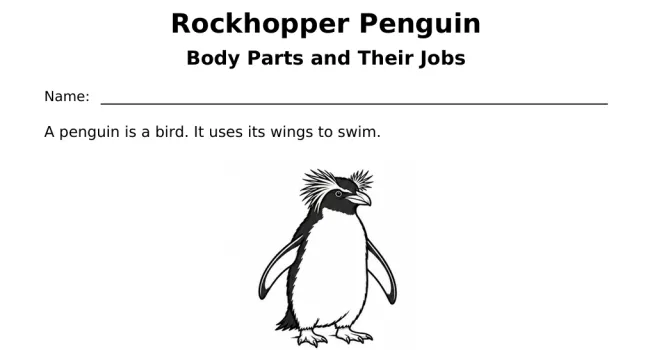
View AssetRockhopper Penguin Coloring Sheet
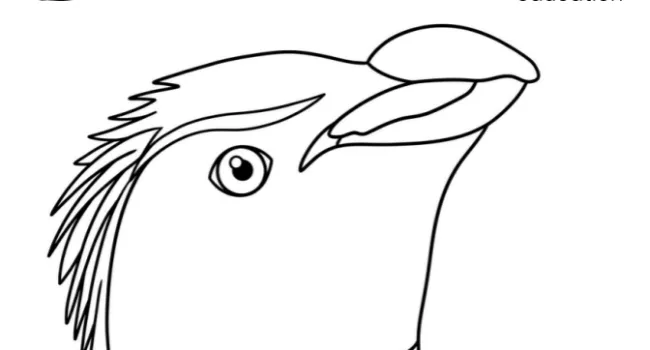
Color a southern rockhopper penguin and learn a fun fact about these energetic birds, including how they hop across rocky terrain with both feet together.
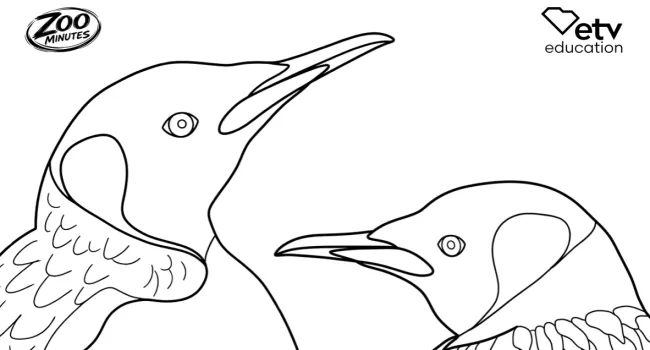
View AssetKing Penguin Coloring Sheet
Color a king penguin and discover a fun fact about one of the world’s largest penguin species, which can stand about 3 feet tall.
View AssetPenguin Research Guide 3-5
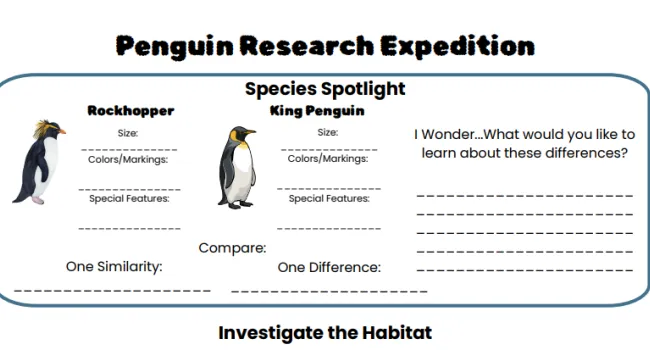
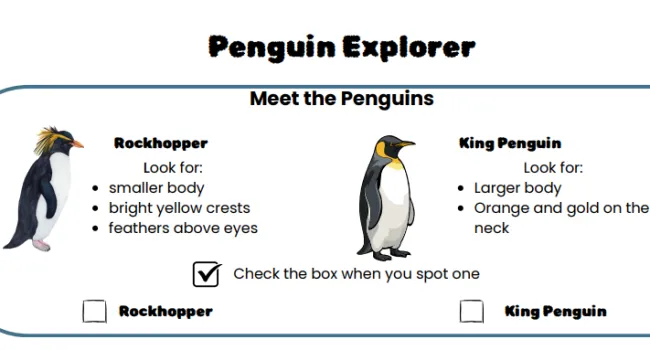
This penguin research guide is intended for grades 3-5 to use while exploring penguins and their habitats.
View AssetPenguin Research Guide K-2
This Penguin Research guide is for K-2 students as they explore Penguins and their habitat.
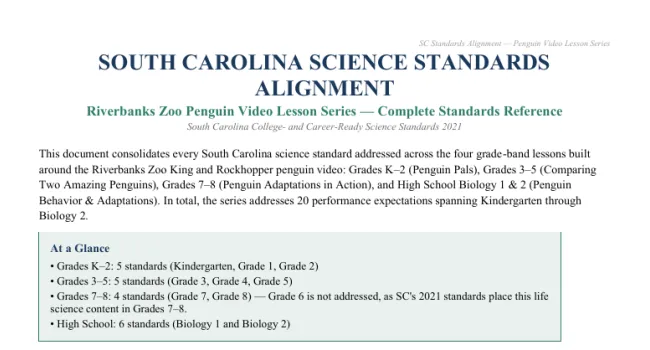
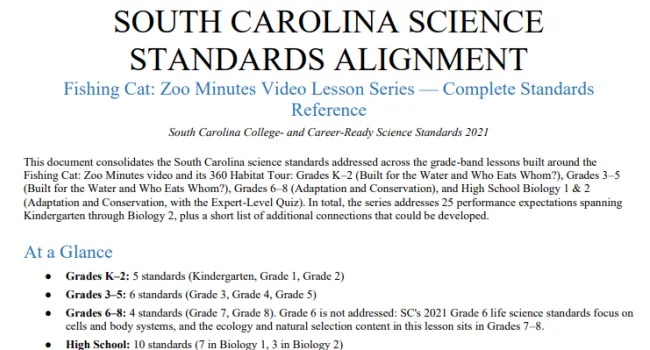
View AssetRiverbanks Zoo Penguin Video Lesson Series — Complete Standards Reference
A complete list of standards referenced in the penguin lesson series
View Asset