Scale Factor in Nature—Radiated Tortoise Shells & Scutes
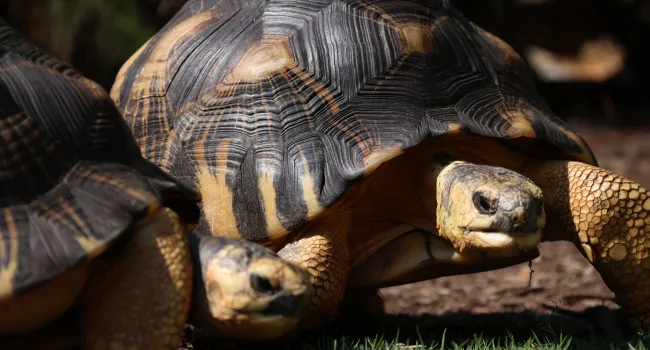
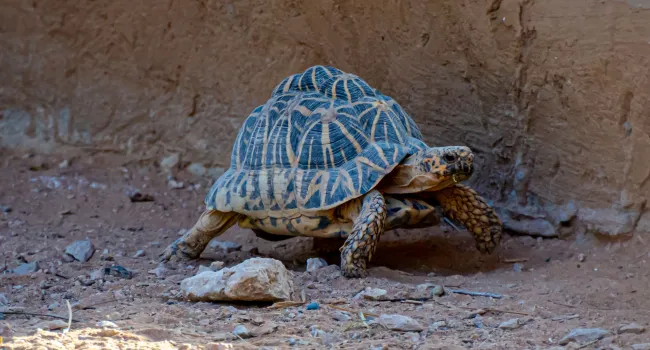
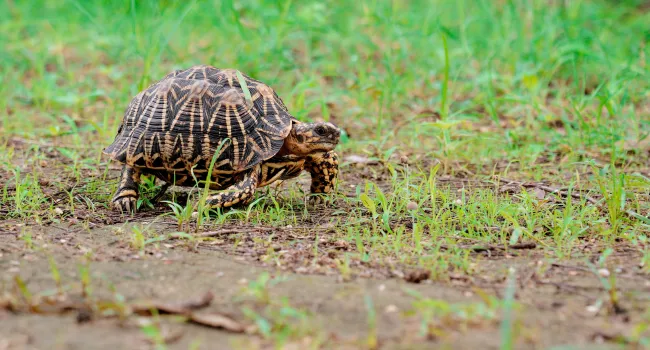
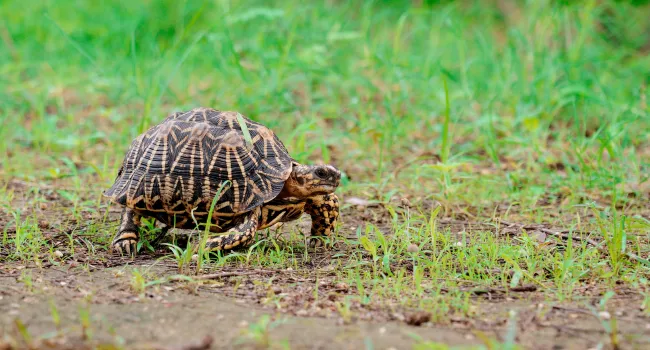
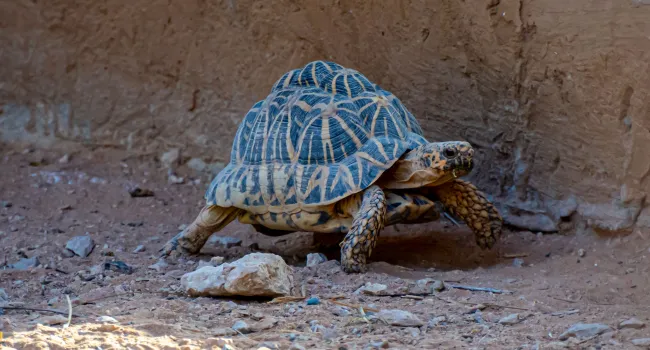
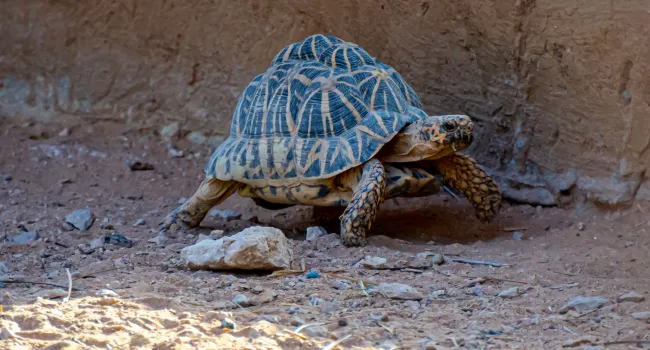
In this lesson, students explore proportional relationships and scale factor by analyzing the geometric features of the Radiated tortoise using multimedia assets from KnowItAll.org. Students compare the scaled dimensions of hexagonal scutes on a tortoise's shell to the smaller scaled polygons found on its limbs to calculate scale factors and missing real-world measurements.
Essential Question
How can we use scale factor to mathematically model and compare geometric proportional relationships found across living structures in nature?
Lesson Progression
1. Hook & Media Engagement (10 Minutes)
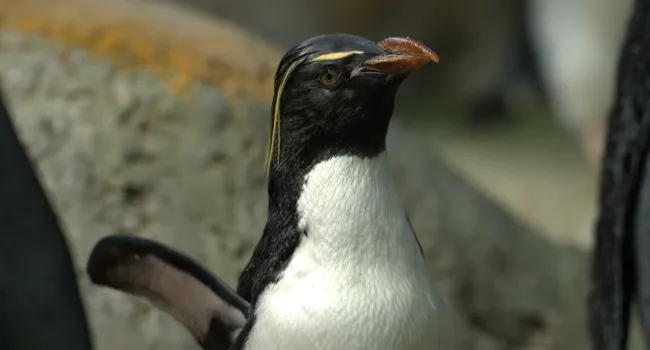
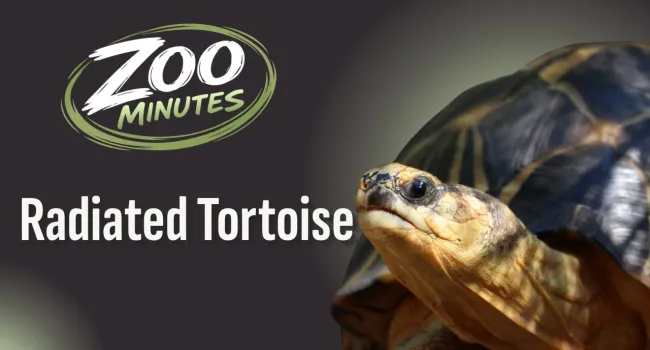
Video Stream: Project the Zoo Minutes: Radiated Tortoise video segment from KnowItAll.org (linked in the resources tab).
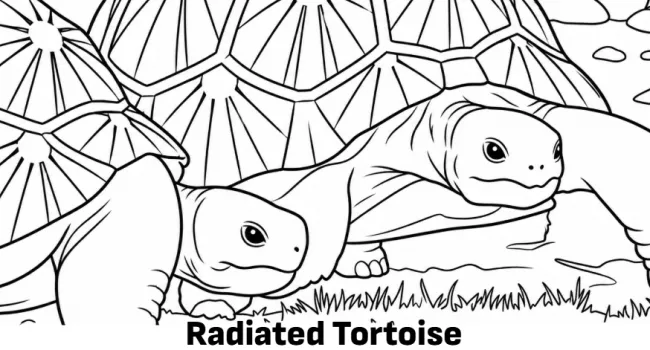
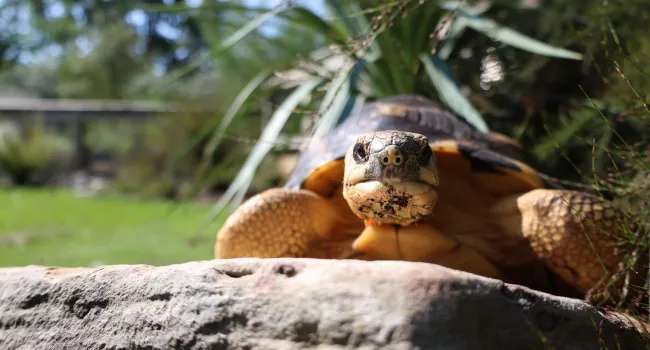
Observation Focus: Instruct students to observe the geometric patterns on the tortoise’s carapace (shell scutes) compared to the smaller, protective polygonal scales on its limbs and flippers.
Discussion Prompt: "The polygons on the shell and the scales on the flippers share similar geometric structures, but they differ in size. How can we express the exact mathematical relationship between their dimensions?"
2. Direct Instruction: Understanding Scale Factor (15 Minutes)
Defining Scale Factor: Explain that when two geometric figures are similar, their corresponding side lengths are proportional.
The Formula: The scale factor (k) is the multiplier used to enlarge or reduce a figure.
Scale Factor(k) = Corresponding Length in Copy/Corresponding Length in OriginalKey Concept Breakdown:
If k > 1, the copy is an enlargement.
If 0 < k < 1, the copy is a reduction.
Board Model Example:
Suppose a hexagonal scute on the shell has a side length of 15cm, and a similar hexagonal scale on the flipper has a corresponding side length of 3cm.
Scale factor from shell to flipper (reduction):
k = 3cm/15cm =1/5 = 0.2Scale factor from flipper to shell (enlargement):
k = 15cm/3cm = 5
3. Guided & Partner Practice (20 Minutes)
Students complete Section 1 of the accompanying worksheet in pairs, analyzing diagrams comparing shell scutes to flipper scales.
4. Exit Ticket & Summary (5 Minutes)
A zoologist is studying a young Radiated tortoise. A hexagonal scute on its shell has a perimeter of 31 1/2cm. A similar hexagonal scale on the tortoise’s front flipper has a side length that is scaled down by a factor of k = 2/9 relative to the shell scute.
Calculate the exact side length of the scale on the tortoise's flipper. Show all work, including fractional setups.
Key: Step 1 (Find original side length of regular shell scute) = 5 1/4, then Step 2 (Apply scale factor) = 1 1/6cm
Teacher Notes
Differentiation: Provide pre-labeled "Original" vs. "New" graphic organizers to prevent students from inverting the ratio fraction. Supply grid paper with pre-drawn polygons so students can physically count grid units to determine scale factor before applying algebraic multiplication.
Extension: Area Scale Factor Challenge: Challenge students to calculate how changing the linear scale factor (k) impacts the surface area of the scute versus the scale, discovering that the area changes by a factor of k^2.
Standards
Assessments
Use the performance task linked in the resources tab to assess student learning outcomes.