Radiated Tortoise — Adaptation and Conservation (Grades 7-8)
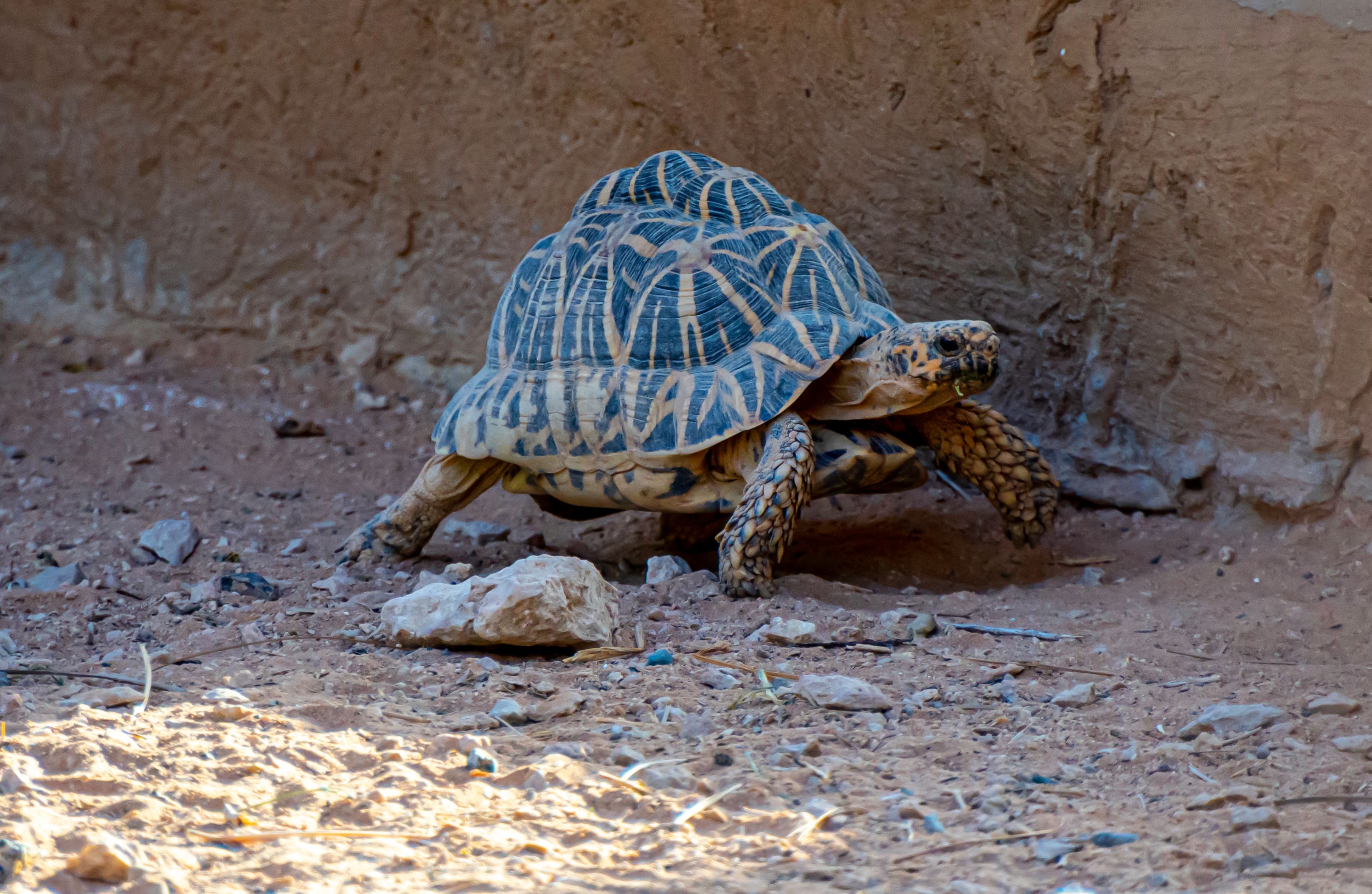
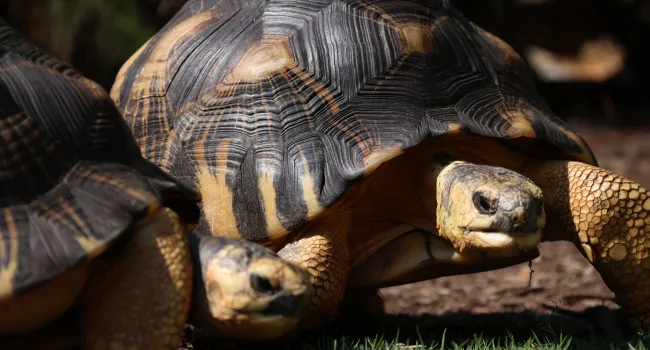
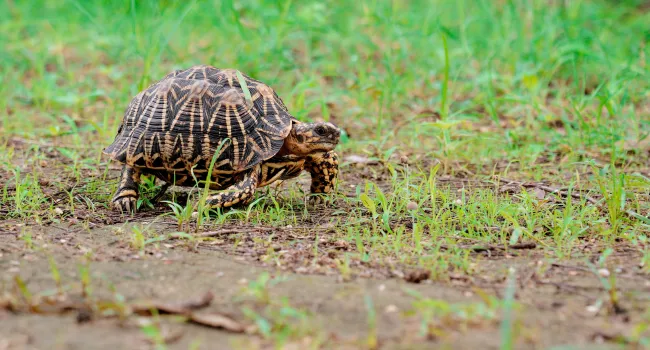
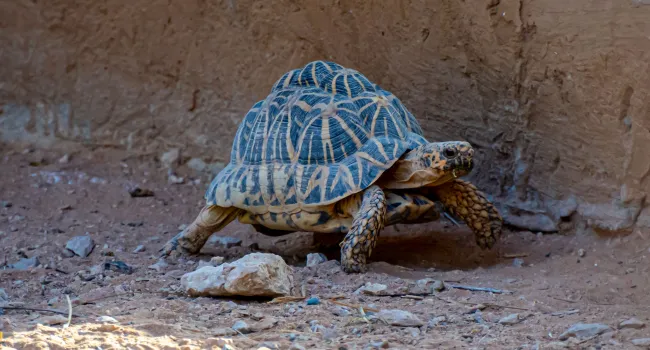
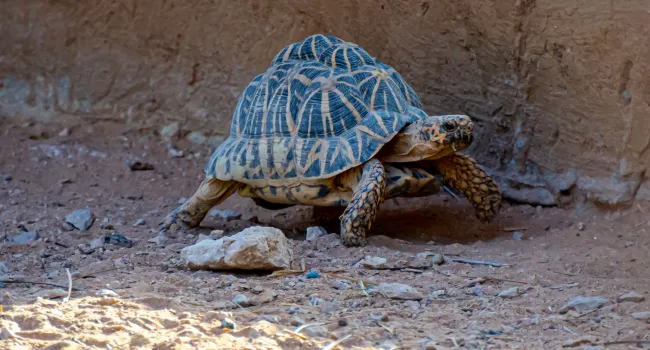
This lesson introduces middle school students to the connection between genetic variation, survival probability, and conservation, using the radiated tortoise as a case study. Students watch the video to identify structural and behavioral traits (shell pattern, ectothermic behavior, nesting behavior), consider how resource availability (food, shade, heat) shapes where the species can live, and learn about the tortoise's critically endangered status and the role of zoo breeding programs in protecting it. Through guided discussion, students connect these observations to core evolution and ecosystem concepts, then apply their understanding in a short CER writing task.

Duration
1-2 hours
Lesson Type
Traditional Lesson

Essential Question

How do genetic variation and resource availability affect a species' survival, and why do some species need human-managed conservation programs to avoid extinction?

Grade(s):

  • 7
  • 8

Other Instructional Materials or Notes:

  • Printed or digital copies of the Viewing Guide questions

  • CER graphic organizer or sentence starters for students who haven't practiced this writing structure before

  • List of pre-approved sources for the Research Guide if you want to control source quality

  • Teacher note: this lesson references real conservation programs (SAFE, SSPs) — framing this as a current, real-world effort rather than a hypothetical tends to increase engagement

Lesson Progression

Lesson Progression

TimeSegmentWhat Happens
5 minBefore WatchingStudents predict survival needs and predator-avoidance strategies. Record predictions.
3 minVocabulary PreviewBriefly introduce key terms so students recognize them during viewing.
8–10 minViewingShow the video. Students complete the Viewing Guide as they watch.
10 minDiscussionIn pairs or small groups, students work through the After Watching discussion questions, then share out briefly.
10 minAssessmentStudents independently write their CER response.
Remaining time / Day 2Research Guide (if included)Students select one prompt, gather sources, and prepare a short response.
Extension (optional)Design-a-Conservation-PlanStudents design a conservation plan for a different reptile species.

Teacher Notes

  • The core loop (Before Watching → viewing → discussion → CER) fits comfortably in one period. Treat the Research Guide and Extension as homework or a second-day activity unless working with a longer block schedule.

  • This lesson assumes some baseline familiarity with "natural selection" and "genetic variation" from prior units; briefly check for this before starting.

  • Watch for the common misconception that camouflage traits are "chosen" by the animal rather than a result of genetic variation and differential survival over generations.

  • If students have not used the CER format before, model one example response as a class before releasing them to write independently.

Remediation

  • For students whose CER response doesn't connect trait variation to survival probability, or who mix up how genetic diversity relates to conservation:

  • Provide a graphic organizer with guided fill-in boxes (trait → variation → survival advantage → increased frequency over generations) using the tortoise example, before students write or revise their CER.

  • Re-teach the concept of genetic diversity using a simple, hands-on population simulation (e.g., colored beads or cards representing a gene pool) before returning to the tortoise/SSP example.

  • Pair struggling students with a partner to complete Research Guide Prompt 2 (studbooks) collaboratively, with brief teacher check-ins, rather than working independently.

  • Revisit a strong CER exemplar as a class, annotating aloud what makes the reasoning specific and evidence-based versus vague, before students revise their own response.

Differentiation

Struggling Readers / English Language Learners

  • Pre-teach vocabulary using visuals or short video clips before the lesson begins.

  • Provide a graphic organizer for the Viewing Guide (trait → function boxes).

  • Offer sentence starters and a word bank for the CER response.

  • Pair with a partner for the Research Guide, and allow responses to be given verbally.

Students with IEPs / 504 Plans

  • Allow the video to be paused at key moments (shell pattern, hot-weather behavior) for extra processing time.

  • Provide extended time for the CER writing task, or allow a verbal response captured by a paraprofessional.

  • Offer a simplified CER sentence frame with blanks for claim, evidence, and reasoning.

  • Provide preferential seating near the screen and speakers.

Advanced / Gifted Students

  • Require two Research Guide prompts instead of one, with a comparison across sources.

  • Push discussion further by having students explicitly describe the full natural selection sequence: genetic variation → survival/reproductive advantage → increased trait frequency over generations.

  • Offer an independent extension: research a real AZA studbook for a tortoise or turtle species and summarize how genetic management decisions are made.

Extension

Design-a-Conservation-Plan Challenge: Have students design a hypothetical conservation plan for a different critically endangered reptile of their choice, identifying at least three design features (breeding management, habitat protection, anti-poaching measures) and justifying each with evidence about the species' specific threats. This reinforces the trait-variation-to-survival concept and the role of human intervention by having students apply it to a new organism.

Suggested Additional Reading

  • Endangered Animals (DK Eyewitness Books) by Ben Hoare — an illustrated overview of biodiversity, extinction threats, and conservation efforts across many species; good general background for the Research Guide.

  • Kakapo Rescue: Saving the World's Strangest Parrot by Sy Montgomery (Scientists in the Field series) — a real-world account of a critically endangered species conservation and breeding effort, a strong parallel to the radiated tortoise's Species Survival Plan.

  • Untamed: The Wild Life of Jane Goodall by Anita Silvey — a middle-grade biography of a leading conservation scientist; useful for connecting this lesson to careers in conservation biology.

  • Note: preview each title for reading level and classroom fit; the Sy Montgomery title in particular includes some advanced vocabulary.

Scale Factor in Nature—Radiated Tortoise Shells & Scutes

In this lesson, students explore proportional relationships and scale factor by analyzing the geometric features of the Radiated tortoise using multimedia assets from KnowItAll.org. Students compare...

View Lesson

Radiated Tortoise — Adaptation and Conservation (Grades 7-8)

This handout goes with the Radiated Tortoise — Adaptation and Conservation (Grades 7-8) lesson.

View Asset

Radiated Tortoise Book List

List of fiction and nonfiction books that can be used in the classroom

View Asset

Assessments

Primary Assessment (CER Response): Have students write a short Claim-Evidence-Reasoning response to the prompt: "Variation in shell pattern among radiated tortoises could affect an individual's probability of survival." Students state a claim, cite specific video evidence, and explain the reasoning connecting trait variation to survival probability.

Scoring Guidance: Look for a specific, accurate connection between trait variation and survival probability (e.g., "tortoises with patterns that better match light and shadow may be harder for predators to spot, increasing their chance of surviving to reproduce") rather than a general statement (e.g., "the pattern helps it survive").

Formative Check: Use completed Viewing Guides and small-group discussion participation as an informal, ongoing check for understanding before students begin the CER task.
More in this Series

Zoo Minutes

Becoming a Penguin Expert

Lesson

Grades

  • 3
  • 4
  • 5
Becoming a Penguin Expert

Students read informational texts and articles about penguins. While identifying key details and new vocabulary, students gather facts about penguins. Students will share their new learning and...
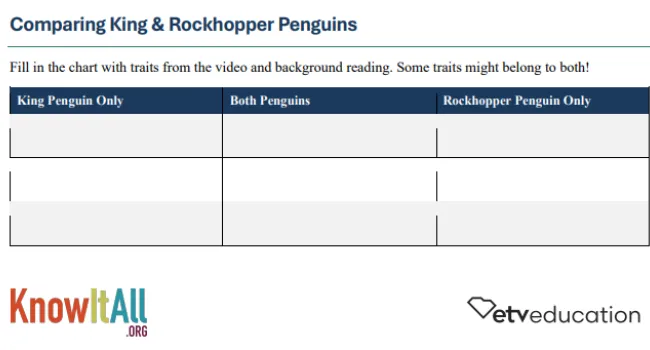
Comparing Two Amazing Penguins (Grades 3 - 5)

Lesson

Grades

  • 3
  • 4
  • 5
Comparing Two Amazing Penguins (Grades 3 - 5)

In this lesson, grades 3–5 students investigate how King and Rockhopper penguins' different traits each help them survive in a shared, sub-Antarctic environment. Students begin with a prediction about...

 Fishing Cat 360° | Zoo Minutes 360

Video

Grades

  • Pre K
  • Kindergarten
  • 1
  • 2
  • 3
  • 4
  • 5
  • 6
  • 7
  • 8
  • 9
  • 10
  • 11
  • 12
  • Higher Education
Fishing Cat 360° | Zoo Minutes 360
Explore the fishing cat habitat through immersive 360° video. Freely move around the habitat and explore from every angle while getting a closer look at spaces for swimming, climbing, exploring and...
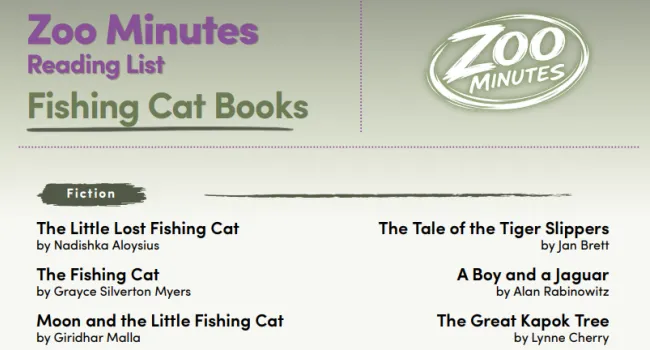
Fishing Cat Book List

Document

Grades

  • Pre K
  • Kindergarten
  • 1
  • 2
  • 3
  • 4
  • 5
  • 6
Fishing Cat Book List
List of fiction and nonfiction books related to fishing cats.
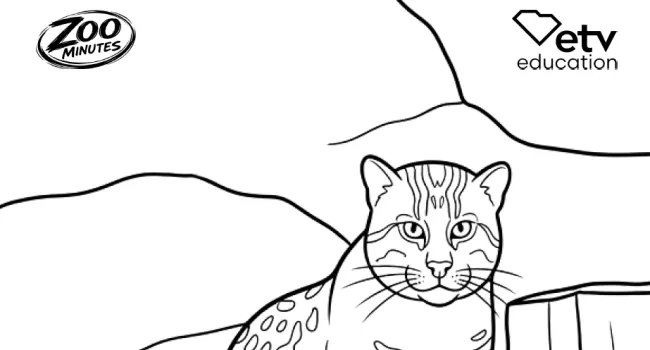
Fishing Cat Coloring Sheet

Document

Grades

  • Pre K
  • Kindergarten
  • 1
  • 2
Fishing Cat Coloring Sheet
Color a fishing cat and discover what makes this water-loving feline unique.
Fishing Cat Data Dive (Gr 3)

Lesson

Grades

  • 3
Fishing Cat Data Dive (Gr 3)

In this hands-on, zoo-themed math lesson, students will analyze and interpret four distinct data representations—a dot plot, a data table, a scaled picture graph, and a bar graph—focusing on the...

Fishing Cat Early Writing

Document

Grades

  • Pre K
  • Kindergarten
Fishing Cat Early Writing
Practice early writing skills with this Zoo Minutes activity page. Learners trace letters and the words “fishing cat,” draw a fishing cat, and share what they know through writing or dictation.
Fishing Cat Expert Quiz | Zoo Minutes

Interactive

Grades

  • 6
  • 7
  • 8
  • 9
  • 10
  • 11
  • 12
  • Higher Education
Fishing Cat Expert Quiz | Zoo Minutes
Take your knowledge further with questions aligned to South Carolina high school science standards. Apply what you know about adaptations, genetics, populations and conservation to explore the science...
Fishing Cat Ratios, Rates, & Unit Rates (Gr 6)

Lesson

Grades

  • 6
Fishing Cat Ratios, Rates, & Unit Rates (Gr 6)

Students investigate the foraging efficiency and diet of the fishing cat ( Prionailurus viverrinus) using real-world observational data inspired by SCETV's Zoo Minutes. By analyzing hunting success...

Fishing Cat Trivia Quiz | Zoo Minutes

Interactive

Grades

  • Kindergarten
  • 1
  • 2
  • 3
  • 4
  • 5
  • 6
  • 7
  • 8
  • 9
  • 10
  • 11
  • 12
Fishing Cat Trivia Quiz | Zoo Minutes
Put your fishing cat knowledge to the test! Explore what you learned about fishing cat adaptations, behaviors, habitat and conservation.
 Fishing Cat | Zoo Minutes

Video

Grades

  • Pre K
  • Kindergarten
  • 1
  • 2
  • 3
  • 4
  • 5
  • 6
  • 7
  • 8
  • 9
  • 10
  • 11
  • 12
Fishing Cat | Zoo Minutes
Meet Kayuma, a fishing cat whose story at Riverbanks Zoo and Garden is part of a much larger effort to protect his species. Discover the adaptations that make fishing cats at home around water and how...
Inside the Penguin Habitat | Zoo Minutes

Interactive

Grades

  • Pre K
  • Kindergarten
  • 1
  • 2
  • 3
  • 4
  • 5
  • 6
  • 7
  • 8
  • 9
  • 10
  • 11
  • 12
Inside the Penguin Habitat | Zoo Minutes
Explore the penguin habitat in 360 degrees. Discover interactive hotspots featuring feeding, vocalizations, nesting, identification bands, habitat features and more.
King Penguin Coloring Sheet

Document

Grades

  • Pre K
  • Kindergarten
  • 1
  • 2
King Penguin Coloring Sheet
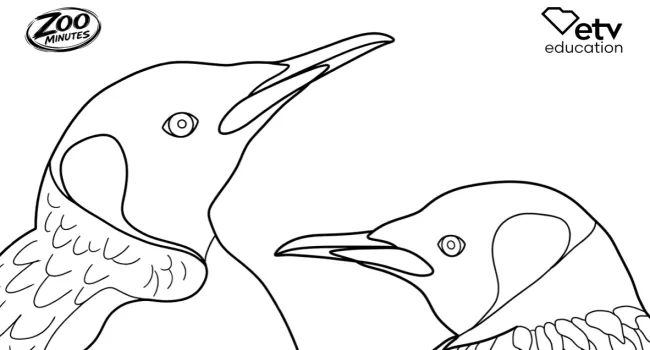
Color a king penguin and discover a fun fact about one of the world’s largest penguin species, which can stand about 3 feet tall.
King Penguin: Trace, Draw, and Write | Zoo Minutes

Document

Grades

  • Pre K
  • Kindergarten
King Penguin: Trace, Draw, and Write | Zoo Minutes
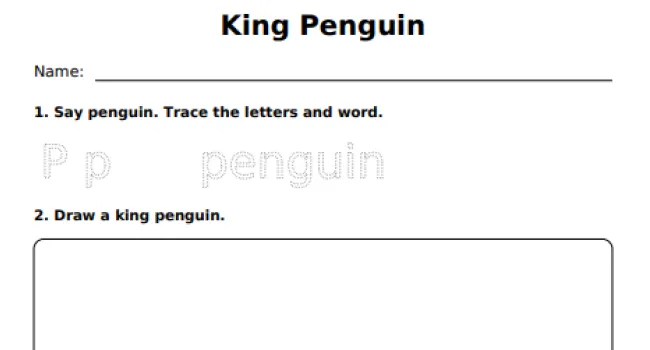
Practice early writing skills with this Zoo Minutes activity page. Learners trace letters and the word “penguin,” draw a king penguin, and share what they know through writing or dictation.
Meet the Radiated Tortoise (Grade 2)

Lesson

Grades

  • 2
Meet the Radiated Tortoise (Grade 2)

This lesson introduces the youngest students to the idea that an animal's body parts help it survive, using the radiated tortoise's shell and legs as a simple, visual example. Students observe the...

 Penguin 360° | Zoo Minutes 360

Video

Grades

  • Pre K
  • Kindergarten
  • 1
  • 2
  • 3
  • 4
  • 5
  • 6
  • 7
  • 8
  • 9
  • 10
  • 11
  • 12
Penguin 360° | Zoo Minutes 360
Get a new perspective on penguins with a 360-degree look inside their habitat. See king and southern rockhopper penguins up close while exploring the spaces where they swim, rest and receive care...
Penguin Adaptations in Action (Grades 7 & 8)

Lesson

Grades

  • 7
  • 8
Penguin Adaptations in Action (Grades 7 & 8)

In this lesson, middle school students investigate how King and Rockhopper penguins have evolved different structural, behavioral, and physiological strategies for surviving in the same sub-Antarctic...

Penguin Behavior & Adaptations (9-12) - Student Packet

Document

Grades

  • 9
  • 10
  • 11
  • 12
Penguin Behavior & Adaptations (9-12) - Student Packet
A video-companion worksheet for high school Biology students, pairing with a Riverbanks Zoo video of King and Rockhopper penguins. Students complete a guided video observation log, compare structural...
Penguin Behavior & Adaptations (Grades 9-12)

Lesson

Grades

  • 9
  • 10
  • 11
  • 12
Penguin Behavior & Adaptations (Grades 9-12)

In this lesson, high school Biology students investigate how King and Rockhopper penguins have evolved different strategies for surviving in the same sub-antarctic environment. Students begin by...

Penguin Expert Quiz | Zoo Minutes

Interactive

Grades

  • 9
  • 10
  • 11
  • 12
Penguin Expert Quiz | Zoo Minutes
Take your penguin knowledge further with questions connected to high school science standards. Apply what you know about penguin adaptations, body systems, behavior and survival to explore the science...
Penguin Math: Double-Digit Addition & Subtraction

Lesson

Grades

  • 2
Penguin Math: Double-Digit Addition & Subtraction

Students take on the role of zookeepers at the Penguin Coast exhibit inside the Birdhouse at Riverbanks Zoo & Garden in Columbia, SC. Using place value strategies and base-ten blocks, students solve...

Penguin Math: Integers

Lesson

Grades

  • 6
Penguin Math: Integers

In this lesson, students explore positive and negative integers by taking on the role of zookeepers tracking environmental conditions at Riverbanks Zoo's Penguin Coast exhibit. Using both horizontal...

Penguin Pals - Meet King & Rockhopper Penguins (K-1)

Lesson

Grades

  • Kindergarten
  • 1
Penguin Pals - Meet King & Rockhopper Penguins (K-1)

In this lesson, K–1 students investigate how a penguin's body helps it live in a cold, ocean-side home. Students begin by naming what all animals need to survive, then watch a short video of King and...

Penguin Research Guide 3-5

Document

Grades

  • 3
  • 4
  • 5
Penguin Research Guide 3-5
This penguin research guide is intended for grades 3-5 to use while exploring penguins and their habitats.
Penguin Research Guide K-2

Document

Grades

  • Pre K
  • Kindergarten
  • 1
  • 2
Penguin Research Guide K-2
This Penguin Research guide is for K-2 students as they explore Penguins and their habitat.
Penguin Trivia Quiz | Zoo Minutes

Interactive

Grades

  • Kindergarten
  • 1
  • 2
  • 3
  • 4
  • 5
Penguin Trivia Quiz | Zoo Minutes
Put your penguin knowledge to the test! Explore what you learned about penguin adaptations, behaviors, habitats and animal care.
 Penguin | Zoo Minutes

Video

Grades

  • Pre K
  • Kindergarten
  • 1
  • 2
  • 3
  • 4
  • 5
  • 6
  • 7
  • 8
  • 9
  • 10
  • 11
  • 12
Penguin | Zoo Minutes
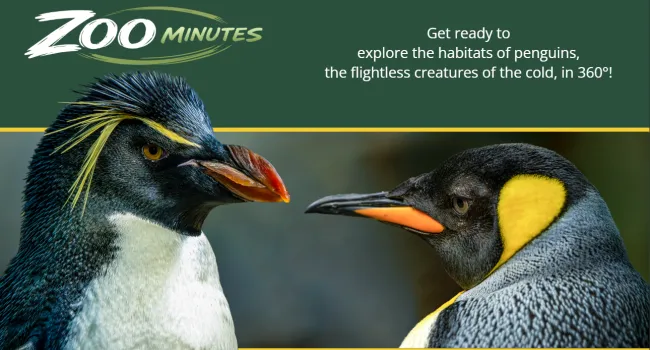
Get to know the king and southern rockhopper penguins at Riverbanks Zoo and Garden. Discover the adaptations, behaviors and animal care that help these remarkable birds thrive on land and in the water...
Radiated Tortoise Book List

Document

Grades

  • Pre K
  • Kindergarten
  • 1
  • 2
  • 3
  • 4
  • 5
  • 6
Radiated Tortoise Book List
List of fiction and nonfiction books that can be used in the classroom
Radiated Tortoise Coloring Sheet

Document

Grades

  • Pre K
  • Kindergarten
  • 1
  • 2
Radiated Tortoise Coloring Sheet
Bring a radiated tortoise to life with color! Discover the beautiful patterns on its shell and learn a fun fact about this remarkable species.
Rockhopper Penguin Coloring Sheet

Document

Grades

  • Pre K
  • Kindergarten
  • 1
  • 2
Rockhopper Penguin Coloring Sheet
Color a southern rockhopper penguin and learn a fun fact about these energetic birds, including how they hop across rocky terrain with both feet together.
Rockhopper Penguin: Trace, Draw, and Write | Zoo Minutes

Document

Grades

  • Pre K
  • Kindergarten
Rockhopper Penguin: Trace, Draw, and Write | Zoo Minutes
Practice early writing skills with this Zoo Minutes activity page. Learners trace letters and the word “penguin,” draw a rockhopper penguin, and share what they know through writing or dictation.
Penguin Book List

Document

Grades

  • Kindergarten
  • 1
  • 2
  • 3
  • 4
  • 5
Penguin Book List
Episode 1
List of fiction and nonfiction books that can be used in the classroom