Peanut Butter & Jelly Archaeology
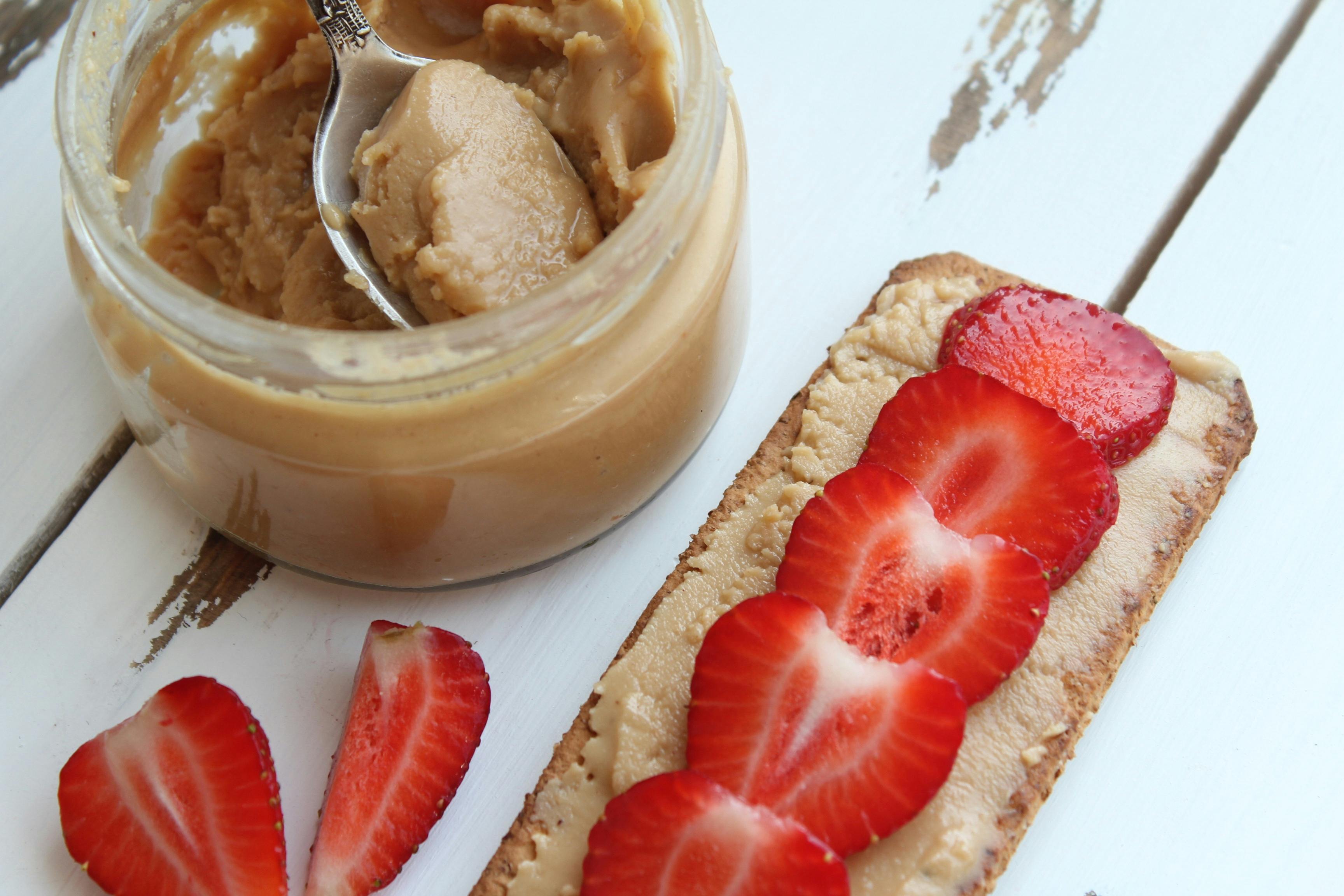
Students will examine the principle of stratigraphy by building an edible archaeological site.

Duration
Less than 1 hour
Lesson Type
Traditional Lesson

Lesson Created By: MegGaillard

Lesson Partners: South Carolina Department of Natural Resources

Collections

Essential Question

How can the layers of an edible archaeological site help us determine the order in which events happened in the past?

Grade(s):

  • 4
  • 5
  • 6
  • 8

Subject(s):

Other Instructional Materials or Notes:

  • 3 slices of bread (alternative: angel food cake)
  •  3 tablespoons of jelly or jam
  •  2 tablespoons peanut butter (alternative: cake frosting)
  • Raisins
  •  Chocolate chips
  •  Chocolate sprinkles
  •  Broken candy pieces (M&Ms are suggested)
  •  Oreos
  • Frosted Flakes
  •  Rice Krispies Bars
  •  Gummy worms
  •  Pretzel sticks
  •  2 paper plates
  •  Plastic knife
  •  Plastic spoon
  •  Large clear straw
  •  Napkins

Lesson Progression

Lesson

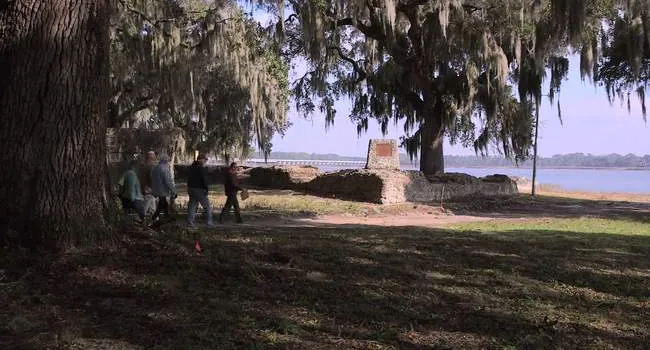
  • Give a brief history of Fort Frederick Heritage Preserve. Reference the background information in the resources section.
  • Show the Fort Frederick Archaeology documentary film (linked in the resources section).
  • Review key archaeology terminology covered in the film (shovel test, cultural material, sterile soil, excavation, artifact, curation, feature, stratigraphy, integrity, analysis).
  • Discuss the process of archaeology with the students. Reference the background information in the resources section.
  • Talk with the students about the short-term and long-term effects of weather and human activity (i.e., looting) to archaeological sites.
  • Guide students in the peanut butter and jelly archaeology activity. Tell students they are going to create an archaeological site like those excavated at Fort Frederick Heritage Preserve. Students will bury their site, excavate it, and then eat it. You can use the following narrative to guide students through the activity. Remember to reinforce archaeological concepts throughout the activity.
  • Following the activity, discuss with the students why the preservation of archaeological sites and historic structures like the ones found Fort Frederick Heritage Preserve is important, and what they can do to help with the preservation of cultural resources (i.e., historical structures, archaeological sites) in their own communities.

Narrative:

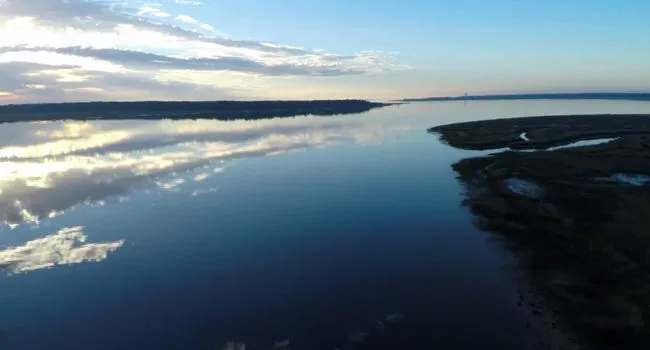
  • "Here is Fort Frederick Heritage Preserve next to the Beaufort River in South Carolina." Lay down a slice of bread.
  • "A large flood leaves a layer of mud on the property." Spread the peanut butter.
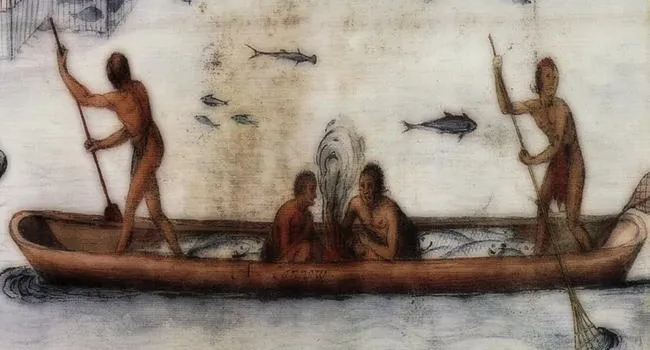
  • "Shortly after the flood, a group of Woodland Period (1000 B.C. to A.D. 1200) Native Americans camp on the preserve. It can get pretty cold at night, so they build a fire. Their fire leaves behind charcoal and rocks that crack from the heat." Arrange pieces of raisins in a circle and fill the circle with crushed Oreos.
    These people depart and through time a layer of dirt forms over the campsite. Lay down another slice of bread.
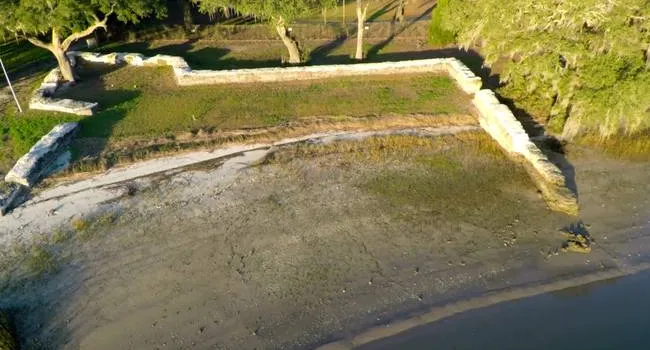
  • "In the 1700s, the British start to build Fort Frederick using tabby on the edge of the Beaufort River. Inside the fort they built barracks and a powder magazine using brick." Lay down thin layers of Rice Krispies Bars for the walls of Fort Frederick near the edge of the bread, and pieces of pretzel sticks for the outline of the barracks and powder magazine.
  • "Within a short time the British abandon the fort as it starts to fall into disrepair and the river begins to move over the eastern wall. Cover the eastern half of the fort with jelly.
  • "In 1785, the property becomes part of a plantation. Many people live on the plantation, build houses, plant fields, and deposit trash." Use pretzel sticks to make the outline of a small structure." Deposit a small pile to M&Ms (representing ceramics), Frosted Flakes (representing oyster shells) in a trash pile near the small structure.
  • "Over the next 200 years the structures associated with the plantation are destroyed and buried." Lay down a slice of bread (cut away at least ¼ of the bread to allow the fort to remain on the surface).
  • "In 1949, the U.S. Naval Hospital builds housing near the property, and builds a road and boat ramp next to Fort Frederick." Use the knife to spread a line of peanut butter across the bread to represent the road.
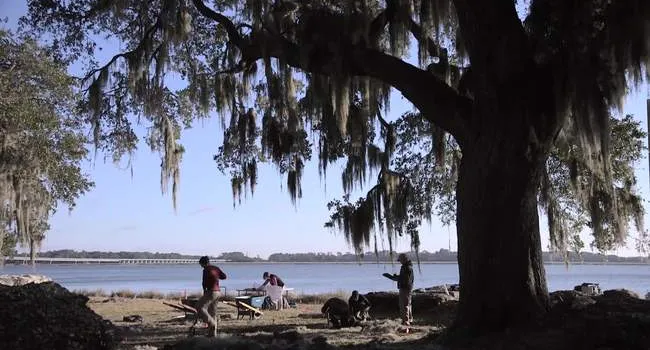
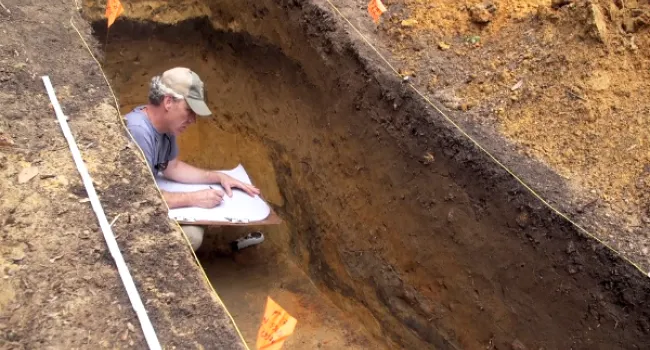
  • "In 1997, the South Carolina Department of Natural Resources acquires the property, naming it Fort Frederick Heritage Preserve. In 2014, they begin archaeological investigations of the property." Students can start systematic shovel testing of their model sites by pushing the large straws through their sandwiches.
  • "What areas during testing produced the most artifacts or features? Go back to your site and using your knife, cut in larger excavation units to reveal more of your site." Students can eat their sites (all together or layer by layer) following a discussion of the archaeological process they just modeled.

Teacher Notes

Differentiation: Instead of using a single "digging site," provide students with a larger area (tray or pan) and have them create a mini archaeological dig with multiple layers representing different periods scattered around the space. Students can then "excavate" using tools like spoons and paintbrushes, uncovering various artifacts throughout the area.

Extension: Research a specific artifact from each period and have students create edible replicas using different ingredients and techniques. OR Introduce the concept of "missing layers" in the stratigraphy. Ask students to identify areas where layers might be missing due to erosion or disturbances and discuss the impact on historical understanding.

Historical & Archaeological Background

Reference during whole class discussion.

View Resource

Assessments

Informal assessment - class discussion about why the preservation of archaeological sites and historic structures like the ones found at Fort Frederick Heritage Preserve is important. Ask what they can do to help with the preservation of cultural resources (i.e., historical structures, archaeological sites) in their own communities.

More in this Series

Inevitable Evolution of Fort Frederick

 A History of Fort Frederick | Digital Shorts

Video

Grades

  • 3
  • 4
  • 5
  • 6
  • 7
  • 8
  • 9
  • 10
  • 11
  • 12
  • Higher Education
A History of Fort Frederick | Digital Shorts
280 years ago, the colonial government in Port Royal conceded to the settlers’ demands for a new fort for protection from a Spanish incursion. Although its original mission was short-lived, in 1863...
Fort Frederick Timeline

Lesson

Grades

  • 4
  • 6
  • 8
Fort Frederick Timeline

In this lesson, students will explore the rich history of Fort Frederick Heritage Preserve by examining a documentary film, creating a visual timeline of key events, and reflecting on the significance...

Frosted Fort: Tabby Construction

Lesson

Grades

  • 4
  • 6
  • 8
Frosted Fort: Tabby Construction

Students will learn about Fort Frederick's history, built by the British with a unique tabby material, and then engage in a hands-on activity to explore the challenges and importance of this...

Heritage Tourism: Explore Local Culture

Lesson

Grades

  • 6
  • 7
  • 8
Heritage Tourism: Explore Local Culture

This lesson explores heritage tourism, how it can preserve historical sites like Fort Frederick, and challenges students to brainstorm creative ways to promote such locations for future generations...

Fort Frederick, Chapter 5
   - Episode 5 SCDNR Public Outreach | Digital Shorts

Video

Grades

  • 3
  • 4
  • 5
  • 6
  • 7
  • 8
  • 9
  • 10
  • 11
  • 12
  • Higher Education
SCDNR Public Outreach | Digital Shorts
Engaging the public in archaeology around South Carolina is a key mission for SCDNR and archaeologists everywhere.
 Fort Frederick, Chapter 1 1

Video

Grades

  • 3
  • 4
  • 5
  • 6
  • 7
  • 8
  • 9
  • 10
  • 11
  • 12
  • Higher Education
Fort Frederick, Chapter 1
Episode 1
Port Royal Sound has unique characteristics that make it the epicenter for some of the most important events in American History. Fort Frederick saw its share. An archaeological survey begins.
 Fort Frederick, Chapter 2 2

Video

Grades

  • 3
  • 4
  • 5
  • 6
  • 7
  • 8
  • 9
  • 10
  • 11
  • 12
  • Higher Education
Fort Frederick, Chapter 2
Episode 2
Ancient American Indians were the first occupiers of Port Royal. The plan for a large archaeological expedition are finalized.
 Fort Frederick, Chapter 3 3

Video

Grades

  • 3
  • 4
  • 5
  • 6
  • 7
  • 8
  • 9
  • 10
  • 11
  • 12
  • Higher Education
Fort Frederick, Chapter 3
Episode 3
The Colonials arrive in Port Royal and the Crown allocates funds for a fort.
 Fort Frederick, Chapter 4 4

Video

Grades

  • 3
  • 4
  • 5
  • 6
  • 7
  • 8
  • 9
  • 10
  • 11
  • 12
  • Higher Education
Fort Frederick, Chapter 4
Episode 4
Time has degraded the tabby walls of the old fort. A master craftsman has the right recipe for restoration.
 Fort Frederick, Chapter 5 5

Video

Grades

  • 3
  • 4
  • 5
  • 6
  • 7
  • 8
  • 9
  • 10
  • 11
  • 12
  • Higher Education
Fort Frederick, Chapter 5
Episode 5
The fort holds clues to the lives of the enslaved men, women and children who built the South.
 Fort Frederick, Chapter 6 6

Video

Grades

  • 3
  • 4
  • 5
  • 6
  • 7
  • 8
  • 9
  • 10
  • 11
  • 12
  • Higher Education
Fort Frederick, Chapter 6
Episode 6
War and emancipation. The Port Royal Experiment begins.
 Fort Frederick, Chapter 7 7

Video

Grades

  • 3
  • 4
  • 5
  • 6
  • 7
  • 8
  • 9
  • 10
  • 11
  • 12
  • Higher Education
Fort Frederick, Chapter 7
Episode 7
The enslaved are freed. Old Fort Frederick becomes the site of one of the most important moments in American history. Quotations from historians featured in this segment include: "Miss Laura Towne...
Fort Frederick, Chapter 5
   - Episode 5 Fort Frederick, Chapter 8 8

Video

Grades

  • 3
  • 4
  • 5
  • 6
  • 7
  • 8
  • 9
  • 10
  • 11
  • 12
  • Higher Education
Fort Frederick, Chapter 8
Episode 8
Archaeology at Fort Frederick reaches full speed as the public is engaged in the project.
Fort Frederick, Chapter 5
   - Episode 5 Fort Frederick, Chapter 9 9

Video

Grades

  • 3
  • 4
  • 5
  • 6
  • 7
  • 8
  • 9
  • 10
  • 11
  • 12
  • Higher Education
Fort Frederick, Chapter 9
Episode 9
The crumbling tabby of Fort Frederick will stand for another generation, now as a focus of Beaufort’s Reconstruction Era National Park.

Heritage Trust

Archaeo-Tech: Atlatl Physics

Lesson

Grades

  • 4
  • 6
  • 8
Archaeo-Tech: Atlatl Physics

Students learn about the atlatl, a prehistoric throwing tool that uses leverage, then build and test replicas to measure the increase in throwing distance compared to throwing by hand. They discuss...

Archaeo-Tech: Documenting an Archaeological Site

Lesson

Grades

  • 6
  • 7
Archaeo-Tech: Documenting an Archaeological Site

Students become archaeologists for a day, creating scaled drawings of a mock excavation unit to document its features and artifacts. Through this activity, they explore the importance of accurate...

Archaeo-Tech: Geophysics

Lesson

Grades

  • 4
  • 6
  • 8
  • 9
  • 10
  • 11
  • 12
Archaeo-Tech: Geophysics

Students design a mock archaeological site and simulate a survey using punch holes to represent shovel test pits. They then discuss the limitations of this method and explore how geophysics offers a...

Archaeo-Tech: Introducing Experimental Archaeology

Lesson

Grades

  • 3
  • 6
Archaeo-Tech: Introducing Experimental Archaeology

Students brainstorm examples of artifacts archaeologists might find in prehistoric South Carolina and then analyze photos of real artifacts to understand how archaeologists use them to learn about...

Archaeo-Tech: LIDAR

Lesson

Grades

  • 8
Archaeo-Tech: LIDAR

Students build a miniature landscape in a sandbox and use tools to measure elevations at various points. By converting these measurements and coloring a graph, they create a 2D elevation model similar...

Archaeo-Tech: Mollusk ID & Coloring Activity

Lesson

Grades

  • 3
  • 6
Archaeo-Tech: Mollusk ID & Coloring Activity

Students learn about mollusks, their characteristics and habitats, and how their shells provide clues to the diet of ancient hunter-gatherers who lived on the South Carolina coast thousands of years...

Archaeo-Tech: Radiocarbon Dating

Lesson

Grades

  • 9
  • 10
  • 11
  • 12
Archaeo-Tech: Radiocarbon Dating

Students explore the concept of radioactive decay and half-life through a penny-flipping activity, then learn how this principle is used in radiocarbon dating to estimate the age of ancient organic...

Archaeo-Tech: The Barrier Island

Lesson

Grades

  • 3
  • 5
  • 6
  • 8
Archaeo-Tech: The Barrier Island

Students build model beaches and use waves to simulate coastal erosion, observing how it disturbs and destroys archaeological sites. They then explore engineering solutions to reduce erosion and...

Civil War Medicine - Fact or Fiction?

Lesson

Grades

  • 8
Civil War Medicine - Fact or Fiction?

Leveraging a KWL chart, this lesson activates students' prior knowledge of Civil War medicine before delving into the history of Fort Lamar. Through analysis of primary and fictional sources, students...

Civil War Uniforms & Equipment

Lesson

Grades

  • 4
  • 5
  • 6
  • 7
  • 8
Civil War Uniforms & Equipment

Students delve into Fort Lamar's history and the Civil War through a documentary. Analyzing photographs and recreating a soldier's belongings, they explore how artifacts offer unique insights into the...

Fort Frederick Timeline

Lesson

Grades

  • 4
  • 6
  • 8
Fort Frederick Timeline

In this lesson, students will explore the rich history of Fort Frederick Heritage Preserve by examining a documentary film, creating a visual timeline of key events, and reflecting on the significance...

Fort Lamar: Ordnance- Historical Photograph Analysis

Lesson

Grades

  • 8
  • 11
Fort Lamar: Ordnance- Historical Photograph Analysis

In this lesson, students will analyze historical photographs of Fort Lamar and the Battle of Secessionville to understand the role of artillery during the Civil War. By comparing visuals with a...

Frosted Fort: Tabby Construction

Lesson

Grades

  • 4
  • 6
  • 8
Frosted Fort: Tabby Construction

Students will learn about Fort Frederick's history, built by the British with a unique tabby material, and then engage in a hands-on activity to explore the challenges and importance of this...

Heritage Tourism: Explore Local Culture

Lesson

Grades

  • 6
  • 7
  • 8
Heritage Tourism: Explore Local Culture

This lesson explores heritage tourism, how it can preserve historical sites like Fort Frederick, and challenges students to brainstorm creative ways to promote such locations for future generations...

Historical Letter Analysis

Lesson

Grades

  • 8
Historical Letter Analysis

This lesson explores Fort Lamar and the Civil War's early years, then analyzes soldier letters from the Battle of Secessionville to highlight the value of primary documents in understanding personal...

Reading Civil War Maps

Lesson

Grades

  • 4
  • 8
Reading Civil War Maps

In this lesson, students will explore the Battle of Secessionville through a documentary film and then analyze two historical maps to understand the battle's location, troop positions, and the...

Robert Smalls

Lesson

Grades

  • 8
Robert Smalls

This lesson delves into the story of Robert Smalls, a pivotal figure in the Civil War, and explores the changing role of African Americans during the conflict. Students will analyze Smalls' actions...

Salt Marsh Ecosystem

Lesson

Grades

  • 5
  • 6
  • 7
  • 8
Salt Marsh Ecosystem

This lesson will explore the Civil War battle of Secessionville and its connection to the unique ecosystem of the Carolina coast's salt marshes. Students will analyze the importance of these marshes...