
Lesson
Grades
- 3
- 4
- 5
- 6
- 7
- 8
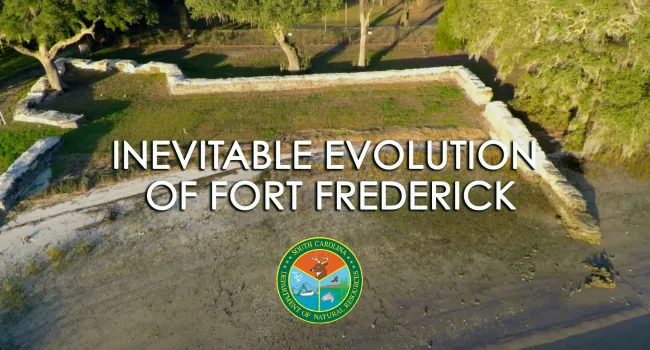
Students will design their own fort and identify its parts using colonial forts from South Carolina as models.
Our mission is to serve as the principal advocate for and steward of South Carolina’s natural resources.
Investigating the Ring People in the coastal zone requires scientists of many disciplines. The technology of archaeology goes far beyond shovels.

For over 50 years, SCDNR’s Heritage Trust Program has preserved and protected natural and cultural properties across South Carolina. Whether you are a South Carolina resident or visiting our beautiful state, take...
Lesson
Grades
Students will design their own fort and identify its parts using colonial forts from South Carolina as models.

Lesson
Grades
Rice is the most consumed grain in the world, feeding more than 3 billion people every day. Students will learn about rice’s diversity and trace its history from its domestication in China 12,000...

Lesson
Grades
This lesson plan covers the topic of Black refugee settlements (otherwise known as contraband camps) in the American Civil War. In this lesson, students will learn how hundreds of thousands of runaway...

Lesson
Grades
Pottery is one of the most common types of artifacts found in the archaeological record. Students will learn how and why archaeologists study pottery and explore how pottery, along with other objects...

Lesson
Grades
This lesson plan explores how archaeologists study and classify projectile points (commonly referred to as arrowheads) into different “types” to learn about past people and cultures. After learning...

Lesson
Grades
This lesson plan is intended to introduce students to critical cartography, a subfield of geography that recognizes maps as inherently political objects subject to bias and hidden meaning. In this...

Lesson
Grades
Students will learn how maps are important primary resources for studying the past and how archaeologists can use historical maps to locate archaeological sites. This lesson plan covers how maps are...

Lesson
Grades
In this lesson plan, students will learn about the unique and complicated threat coastal erosion, sea level rise, and climate change poses to cultural sites. Students will examine how maritime...

Lesson
Grades
This lesson uses tabby, a historical building material local to coastal South Carolina, Georgia, and Florida, to explore chemical reactions, changes in the state of matter during chemical reactions...

Lesson
Grades
Students will explore the unique features and characteristics of South Carolina’s five landform regions: the Coastal Zone, the Coastal Plain (divided between the Inner and Outer Coastal Plain), the...