Civil War Uniforms & Equipment

Students delve into Fort Lamar's history and the Civil War through a documentary. Analyzing photographs and recreating a soldier's belongings, they explore how artifacts offer unique insights into the daily lives of soldiers beyond traditional historical sources.
Lesson Created By: MegGaillard
Lesson Partners: South Carolina Department of Natural Resources
Essential Question
How can analyzing artifacts, like personal belongings, provide historians with insights into the daily lives and experiences of individuals from the past, beyond what can be learned from traditional historical sources?
Grade(s):
- 4
- 5
- 6
- 7
- 8
Subject(s):
Recommended Technology:
Other Instructional Materials or Notes:
- “Civil War Uniform & Equipment Activity” Handouts (1 per student).
- Opaque envelopes containing the cut out set of cards (1 envelope & set of
artifacts for every 3-4 students)
Lesson Progression
1. Before class begins, prepare the envelopes and items. There should be one envelope containing all twenty items for every 3-4 students.
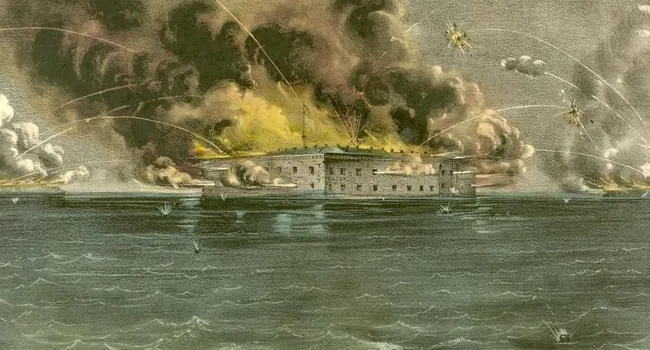
2. Give a brief history of Fort Lamar and the Battle of Secessionville.
3. Show the documentary film The Planter at the Gate.
4. Distribute the handout.
5. Ask your students how a historian might be able to learn about the past. Possible answers include diaries, photographs, recordings, etc. Discuss with your students how a person’s clothing and personal belongings can also tell us a lot about the past.
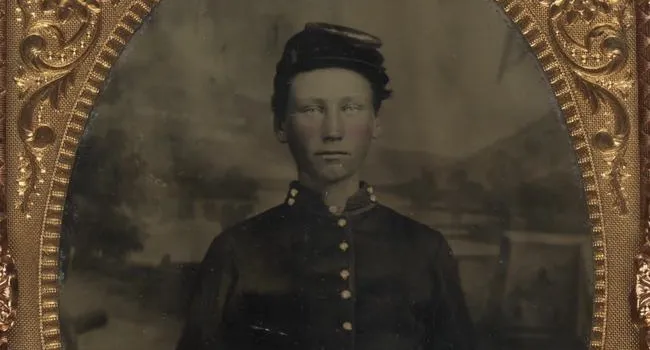
6. Divide the students into small groups. Ask your students to look closely at the uniforms the people are wearing in the photographs, noting any small details and differences.
7. Turn your students’ attentions to Part 1 of the handout. Students may brainstorm as a group to come up with answers to the questions. After all the groups have finished answering the questions, lead a class discussion on the photographs and have students share their answers.
8. Next, distribute to each group the envelopes containing the slips of paper that depict a soldier’s personal items and equipment.
9. Before opening the envelopes, have your students create a list on their handout of items they think a soldier in the Civil War would carry with them.
10. After students create their list, have them open their envelope and inspect the items inside.
11. Have your students compare the items in the envelope to the items on their list. As a class, discuss some of the items in the envelope, clarifying any items the students are unfamiliar with.
12. Have your students work in groups to classify each item from the envelope as either an item necessary for survival, or as an item used for comfort or entertainment. Students should share their reasoning behind how they classified certain items.
13. Guide your students through questions 4 & 5 for Part 2, using the questions as opportunities for discussion.
14. Once students have finished the questions for Part 2, have them return the paper slips to the envelope.
15. End the lesson by discussing the daily lives of soldiers in the Civil War. Ask your students what items they would bring with them if they were a Civil War soldier.
Teacher Notes
Differentiation: Provide a word bank with potential answers for the questions on the handout (Part 1 & 2). This will help struggling students brainstorm and participate more actively in the discussions. Include both basic terms (e.g., clothing, food) and more specific vocabulary related to Civil War soldiers (e.g., knapsack, mess kit).
Extension: Challenge students to research a specific Civil War soldier and analyze primary sources, like letters, diaries, or photographs, to create a detailed profile of that soldier's daily life. They can present their findings to the class, highlighting the unique insights these primary sources offer into the soldier's experiences and motivations.
Historical Background Information
Reference during whole group discussion portion of the lesson.
View ResourcePlanter at the Gate
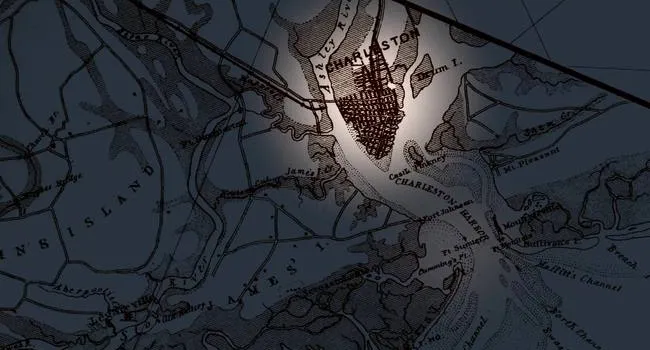
June, 1862. Capturing Charleston, the gateway to the South, would cripple the Confederacy. Impatient with their Naval blockade of the Holy City, the Union Army decided to go for the back door. One man, Thomas Gresham Lamar, held the keys.
View ResourceStandards
- 4.4.CO Compare the economic and political causes of the Civil War.
- 4.4.CC Identify and evaluate the economic, political, and social changes experienced throughout the Civil War.
- 8.3.CE Examine consequences of the major Civil War military strategies.
- This indicator was designed to encourage inquiry into the Civil War focusing on the impacts of military strategies and major turning points on South Carolina and the U.S.
- 8.3.CC Analyze debates and efforts to recognize the natural rights of marginalized groups during the period of expansion and sectionalism.
- This indicator was designed to encourage inquiry into the continuities and changes of the experiences of marginalized groups such as African Americans, Native Americans and women, as the U.S. expanded westward and grappled with the development of new states.
- 8.3.E Utilize a variety of primary and secondary sources to analyze multiple perspectives on the effects of the Civil War within South Carolina and the United States.
- RI.MC.7 Research events, topics, ideas, or concepts through multiple media, formats, and in visual, auditory, and kinesthetic modalities.
- W.RC.6 Write independently, legibly, and routinely for a variety of tasks, purposes, and audiences over short and extended time frames.
- C Communication
- USHC.2.P Summarize the impact of technological changes and social developments on the U.S., including the Civil War, during the period 1815–1865.
- This indicator was developed to encourage inquiry into how technology fostered the growth of the cotton industry, the factory system, and urban centers. In addition, this indicator facilitates inquiry into how the Abolitionist Movement and Women's Rights Movements encouraged reforms.
Assessments
Use the Civil War Uniforms & Equipment Activity linked in the resources section to assess student learning outcomes.