Frosted Fort: Tabby Construction

Students will learn about Fort Frederick's history, built by the British with a unique tabby material, and then engage in a hands-on activity to explore the challenges and importance of this construction method.
Lesson Created By: MegGaillard
Lesson Partners: South Carolina Department of Natural Resources
Essential Question
How did the limitations of local materials influence the construction techniques used at Fort Frederick Heritage Preserve?
Grade(s):
- 4
- 6
- 8
Subject(s):
Recommended Technology:
Other Instructional Materials or Notes:
Materials
- Fort Frederick Tabby documentary (optional to view other documentaries in the Fort Frederick series)
- Frosted Fort: Tabby Construction Worksheet
- Frosted Flakes or Rice Krispies bars recipe (linked in resources tab)
- Frosted Flakes or Rice Krispies bars ingredients
- One paper plate per student
Lesson Progression
Lesson
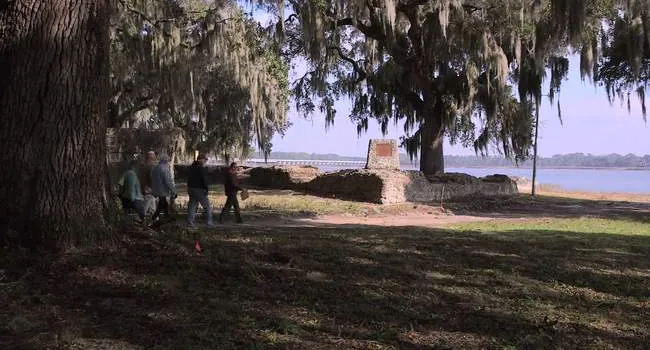
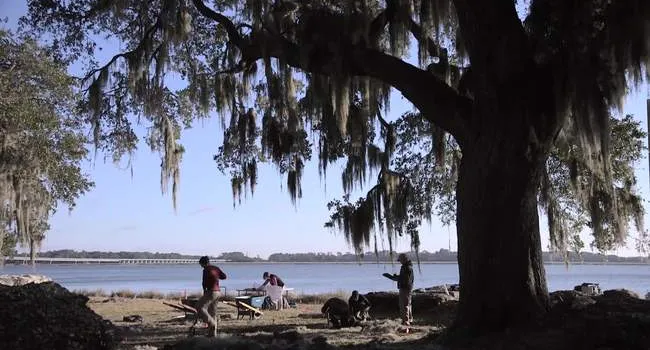
- Give a brief history of Fort Frederick Heritage Preserve. Reference historical background information linked in the resources tab.
- Show the Fort Frederick Tabby documentary film. (linked in the resources tab)
- Talk with the students about the process of making tabby.
- Distribute the plates, Frosted Flakes or Rice Krispies bars. Brainstorm with the students about how they would construct a structure if all they had available to them were local materials (i.e., clay, sand, water, stones, shells, trees). What could they make - bricks, stone walls, tabby, or wooden palisades?
- Using an item familiar to the students, Frosted Flakes or Rice Krispies, talk with the students about how these are similar and different to the oyster shells used to construct Fort Frederick. Is the frosting on the flakes similar to the sand in the tabby mixture of the fort?
What else is needed for the flakes or krispies to stick together? Marshmallows and butter take the place of sand, lime and water as bonding materials in this activity. - Talk with the students about different bonding materials they might use and the long-term effects of weather on the bars. If we put this bar in the sun or the rain or next to a river what will happen to it? Talk about the short-term and long-term effects of weather and human activity to historical structures like Fort Frederick.
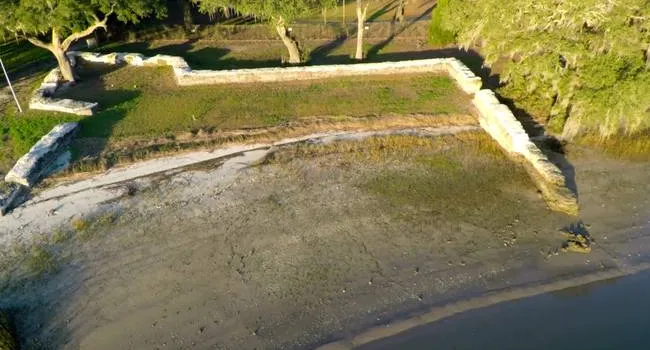
- Students can now make the bars in the outline of Fort Frederick or another historical tabby structure. Experiment with adding a second layer of tabby. What are the challenges to get the layers to stay in place? What are possible solutions? Would the same challenges exist if making real tabby? Not only do layers of tabby have to hold together individually, each layer has to bond with the layer below and above it to create a solid structure.
- Have students place their tabby structures on the spaces provided on the Frosted Fort: Tabby Construction Worksheet and draw the footprint of their structures. Repeat this process following deconstruction (see optional step 13 below). Mathematically compare and contrast the two footprints. Students can measure their structures using the U.S. Customary System, Metric System, or both.
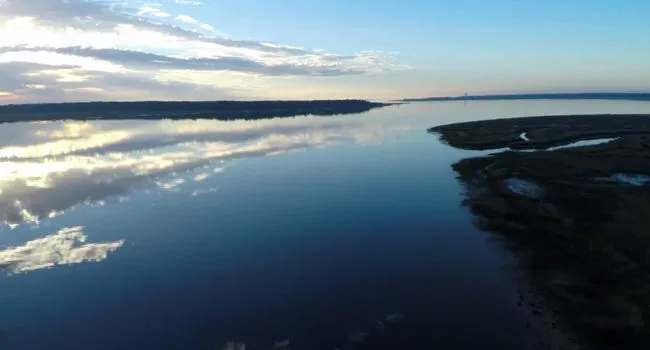
- If time permits, allow students to deconstruct their tabby structures by eating away at the structure in the way natural erosion or human activity does. Half of Fort Frederick has washed away due to the meandering of the Beaufort River. Rain and other natural factors have also deteriorated the fort, while human activity such as looting also damages the fort's historical and structural integrity.
- Discuss with the students why the preservation of historical structures like Fort Frederick is important, and what they can do to help with the preservation of cultural resources (i.e., historical structures, archaeological sites) in their own communities.
Teacher Notes
Differentiation: For the "Frosted Fort: Tabby Construction Worksheet," provide a pre-drawn outline of Fort Frederick for struggling students to build their tabby structure on. This eliminates the need for them to draw the footprint themselves. OR Offer a simplified version of the worksheet that focuses on comparing the footprint of their structure before and after deconstruction (e.g., larger vs. smaller) instead of requiring specific measurements.
Extension: Research the specific recipe used for tabby concrete and compare it to the ingredients used in the classroom activity (Frosted Flakes, marshmallows, butter). Discuss the scientific properties that make tabby a durable building material. OR Design and construct a more complex tabby structure, incorporating additional features like walls, bastions (defensive corners), or a powder magazine.
Fort Frederick Tabby Restoration Video
In 2014, restoration of Fort Frederick took place using a historic tabby formula. Tabby was the concrete of 18th century coastal Carolina. Making tabby is nearly a lost art, but is kept alive today by a master craftsman.
View ResourceStandards
- 4.1.CC Identify patterns of change and continuity in the development of economic systems in British North America.
- 6.3.CO Compare European motivations for exploration and settlement.
- This indicator was developed to encourage inquiry into European motivations for exploration and settlement as a result of the closing of the Silk Road. This indicator was also written to foster inquiry into the development of the Atlantic World, and the resulting economic, political, and social transformations in European, American, and African societies.
- 8.1.CO Compare the three British North American colonial regions economically, politically, socially, and in regard to labor development.
- This indicator was developed to encourage inquiry into how the three British colonial regions developed in terms of their culture, economies, geography, and labor. The indicator was also developed to encourage inquiry into the unique story of the development of South Carolina.
Assessments
Use student accountability worksheets linked in the resources section to assess student understanding.