Archaeo-Tech: Atlatl Physics

Students learn about the atlatl, a prehistoric throwing tool that uses leverage, then build and test replicas to measure the increase in throwing distance compared to throwing by hand. They discuss the atlatl's impact on hunting effectiveness and potentially on Stone Age human development.
Lesson Created By: MegGaillard
Lesson Partners: South Carolina Department of Natural Resources
Essential Question
How did the invention and use of the atlatl, a simple machine, revolutionize hunting practices and potentially influence human development in the Stone Age?
Grade(s):
- 4
- 6
- 8
Subject(s):
Recommended Technology:
Other Instructional Materials or Notes:
Materials
• Activity Handout (1 per student)
• Clipboards (1 per student)
• Measuring tapes (1 per group)
• Stopwatches (1 per group)
• Calculators
• Electronic Scale (1 per group)
• Orange safety cones
• Pin Flags
• Replica atlatls & darts (1 atlatl and at least one dart per group of students. It is recommended to have several darts per group)
o Atlatl & Dart Materials (From “Making an Atlatl” by the Montana Historical Society, instructions available in the resources tab)
5/8” diameter, 48” long wooden dowel
Duct Tape (preferably in a color that is not gray)
Scissors
1” diameter, 48” long piece of scrap wood
Hammer
1” Nail
80 grit sandpaper
o Another good but slightly more complicated atlatl guide is “How to Make an Atlatl and a Dart” by the Florida Public Archaeology Network, available in the resources tab.
- Markers or other supplies to decorate the atlatls and darts.
Lesson Progression
1. Begin the lesson with a quick definition and discussion on simple machines. Ask your students if they can name the six basic types of simple machines (lever, wheel and axle, wedge, inclined plane, pulley, and screw). Tell your students that humans have used simple machines to make work easier for a long time, even as far back as the stone age. In prehistoric times, humans used natural materials, like wood, stone, bone, shell, and other materials to create tools that aided in everyday life.
2. Show your students the Archaeo-Tech: Atlatl video (linked in the resources tab).
3. Discuss the video with your students. Ask your students what kind of simple machine an atlatl is (it is a lever, specifically a third-class lever).
4. Next, tell your students that they will be building and testing their own replica atlatls. Divide your class into groups (six to eight students per group) and distribute the atlatl supplies. Print off and distribute the building instructions for the atlatl design you decided to use for this activity or post the instructions on the board. You may also want to demonstrate to your students how to build an atlatl before they attempt building one for themselves.
a. Alternatively, for younger grades and/or to save time, you can build the atlatls and darts yourself before starting the lesson.
b. Or, if using a dog ball thrower for the activity instead of a replica atlatl, explain to your students how throwing a ball with the thrower is similar to throwing a dart with an atlatl.
5. Have your students create their atlatls and darts. Students may need to wear safety goggles and lab aprons, depending on the materials and construction methods used. Assist students in the construction process when necessary. Allow groups to personally decorate their atlatls and darts using markers or other art materials when finished (this will help students quickly identify their darts when conducting the activity in the field). It is likely that this step will take the remaining class time. If using ball throwers or if you created the atlatls and darts before the lesson, skip this step.
6. Create the test range for the atlatl activity. It is recommended to do this step before class. The range should be set up in a location where there is zero chance of injuring bystanders. Use orange safety cones to denote the range’s baseline. Then, using a tape measure and pin
flags, mark the range in meter intervals, up to 40 meters. Write the distance from the baseline on the pin flags. You can adjust the size of your range, interval between pin flags, or system of measurement, but it is important that your students can accurately measure the distances the darts (or tennis balls) are thrown.
7. In the classroom, distribute to each student a clip board with the activity handout. Have your students read the introduction and activity procedure before beginning the activity.
8. Distribute the activity materials. Have your students find the mass of their atlatl dart or tennis ball and record the information on their handout.
9. Take your class to the test range. Tell your students that they will first record the distances thrown by hand. Space the groups out and have each group form a single file line a safe distance from the baseline (the orange cones).
a. When everyone is ready, have each group send the first person in line to the base line to throw their dart (or tennis ball) by hand. The second student in line will be the timer. The timer will watch the thrower and start the stopwatch as soon as the dart or ball leaves the thrower’s hand and stop the watch as soon as the object hits the ground. The timer will give the thrower their time to record on their handout.
b. When the range is safe, have the thrower measure and record the approximate distance thrown and collect the dart. The thrower will move to the back of the line and the second student (the timer) will become the new thrower. The third student in line will become the new timer. Cycle through this process until every member of the group has had a chance to throw the dart or ball by hand.
c. Repeat this process two more times so everyone has had three freehand throws.
10. When everyone is finished collecting their data, instruct your students that they will repeat the same process but this time using an atlatl. Demonstrate to your students how to throw a dart using an atlatl and stress the importance of safety when using the atlatl. It is recommended to give everyone a practice round before recording any data.
11. Repeat Step 9 with the atlatl. When everyone is finished throwing and recording, collect your materials and return to the classroom.
12. Back in the classroom, have your students find their individual and group averages for time and distance thrown for both tables. Compare the group averages for time and distance thrown by freehand to the group averages for time and distance thrown by atlatl. What is the difference between these averages? Which average is higher? Why? If students had a hard time throwing with the atlatl, stress that properly using an atlatl takes practice. Using their collected data and observations, have your students answer the “Questions & Calculations” section on their handout.
13. When students are finished with their calculations, discuss the “Questions for Discussion” on the handout together as a class. Have your students write their answers in the space provided on the handout.
14. For advanced physics classes, the activity can be expanded to discuss the motion of a two- dimensional projectile. Additional formulas, background information, and data will need to be provided by the teacher.
Teacher Notes
differentiation: Instead of delving into complex calculations, emphasize the key concept that the atlatl increases throwing distance compared to throwing by hand. Use visuals like bar charts to represent their data and discuss the observable difference in throwing distances.
extension: Provide students with resources showcasing variations in atlatl design from different cultures and time periods. Have them brainstorm potential modifications to their replica atlatls based on these variations. They can consider factors like material choices, length and weight of the throwing arm, and the design of the dart cup (where the dart rests).
The Atlatl | Archaeo-Tech | SCDNR
4,00 thousand years ago an ancient device, the atlatl, propelled spears with great accuracy and speed.
View AssetLiDAR | Archaeo-Tech | SCDNR
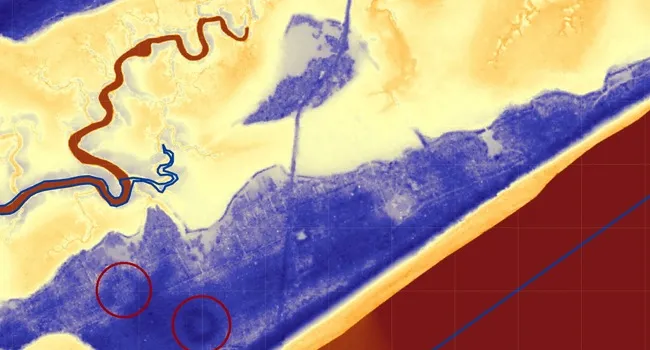
An aerial 3D laser scanning system detects two mysterious circles on Pockoy Island.
View AssetGeophysics | Archaeo-Tech | SCDNR
Archaeologists survey an early Spanish settlement on Parris Island using ground penetrating radar, magnetometry and resistivity.
View AssetShell Tools | Archaeo-Tech | SCDNR
An experimental archaeologist recreates the tools used by indigenous Americans in the Late Archaic period.
View AssetThe Barrier Island | Archaeo-Tech | SCDNR
The shifting sands of the barrier island hold one of the most important ecosystems on the planet.
View AssetPhotogrammetry | Archaeo-Tech | SCDNR
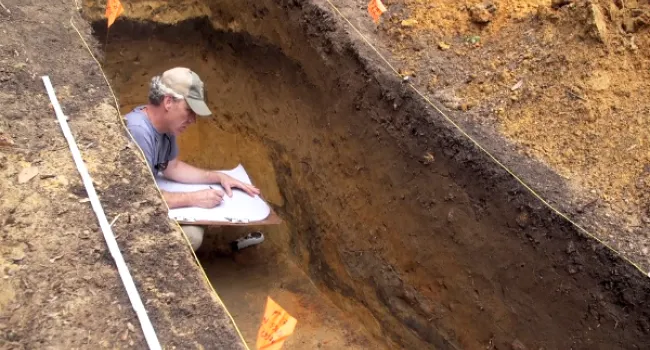
Archaeologists preserve an excavation in three dimensions using a new photographic technique.
View AssetRadiocarbon Dating | Archaeo-Tech | SCDNR
Scientists at the University of Georgia’s Center for Applied Isotope Study use an accelerator mass spectrometer to count Carbon-14 isotopes to determine the age of ancient material.
View AssetThe Atlatl Video
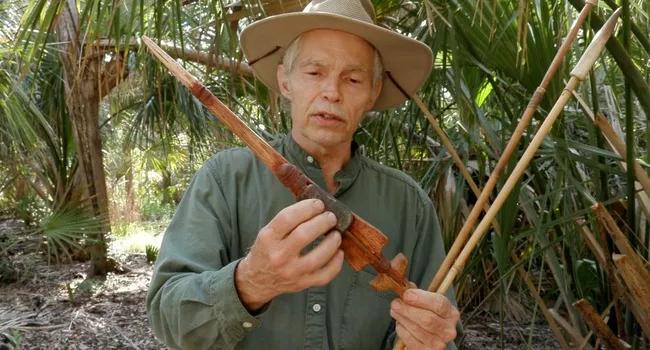
White-tailed deer was a large part of the diet 4,000 years ago on the South Carolina coast, but how would you have taken one? Learn about a hunting technology called the atlatl from experimental archaeologist Scott Jones.
View Resource“How to Make an Atlatl and a Dart” by the Florida Public Archaeology Network
Reference for preparation. Another good but slightly more complicated atlatl guide.
View ResourceStandards
- 4.1.CO Compare the interactions among cultural groups as a result of European colonization.
- 4.1.CX Contextualize the experience of Africans, Europeans, and Native Americans in South Carolina.
- 6.1.CC Analyze changes and continuities that influenced the organization and technological advancements of early and classical world civilizations.
- 8.1.CC Analyze the changes and continuities of the Native Americans' experiences prior to and as a result of settlement and colonization.
- This indicator was developed to encourage inquiry into Native American civilizations and cultures prior to European contact and their interactions with Europeans during the period of settlement and colonization, including their efforts to preserve their cultures.
Assessments
Use the Atlatl Activity Handout linked in the resources tab to assess student learning outcomes.