Fishing Cat Ratios, Rates, & Unit Rates
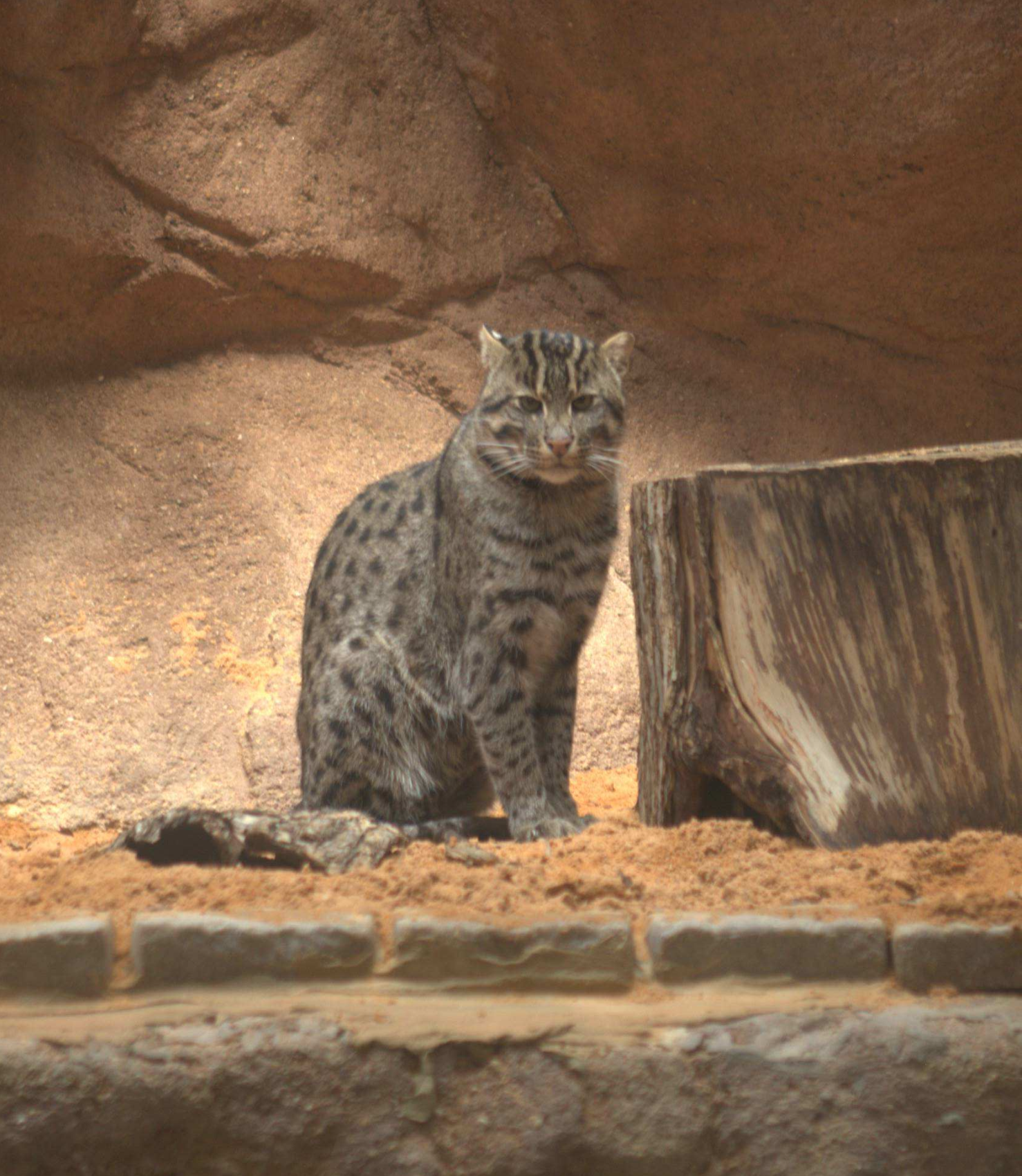
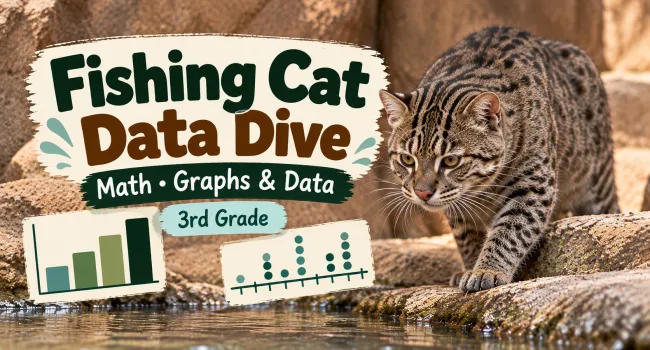
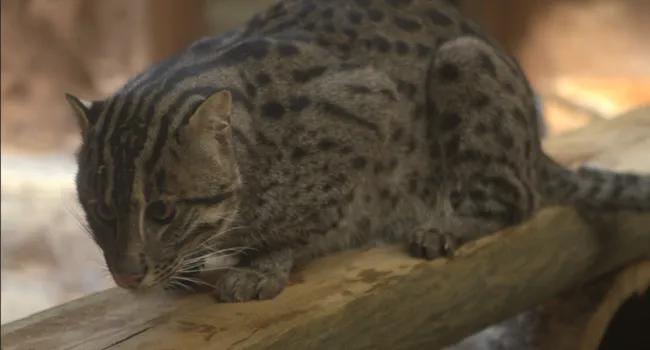
Students investigate the foraging efficiency and diet of the fishing cat (Prionailurus viverrinus) using real-world observational data inspired by SCETV's Zoo Minutes. By analyzing hunting success rates, diving frequency, and dietary ratios, students apply ratio reasoning and unit rate conversions to evaluate how physical adaptations support species survival in wetland ecosystems.
Essential Question
How can we use ratios, rates, and unit rates to model animal behavior and evaluate a fishing cat's survival efficiency in its natural habitat?
Grade(s):
- 6
Subject(s):
Recommended Technology:
Classroom projector connected to internet/audio
Other Instructional Materials or Notes:
Zoo Minutes: Fishing Cat video clip (linked in resources section)
Copies of the Student Worksheet (1 per student, linked in the resources section)
Prepare
Key Definitions (Write on Board)
Ratio: A comparison of two quantities using division (e.g., 8 catches : 12 attempts)
Unit Rate: A rate comparing a quantity to one unit of another quantity (e.g., attempts per 1 hour)
Proportional Relationship: Two equal ratios that show a constant rate of change.
Lesson Progression
1. Hook & Video Observation
Show the Zoo Minutes: Fishing Cat video clip (linked in the resources tab.
Ask students to observe physical adaptations (semi-webbed paws, hunting strategy).
Pose the opening question: "How can math help us determine if a fishing cat is an efficient hunter?"
2. Direct Instruction & Guided Modeling
Before mathematics instruction begins with examples, ensure students understand the differences between ratios, rates, unit rates, & proportional realtionships.
Key Definitions
Ratio: A comparison of two quantities using division (e.g., 8:12)
Rate: A comparison of 2 quantities that includes the descriptor (e.g., 8 catches : 12 attempts)
Unit Rate: A rate comparing a quantity to one unit of another quantity (e.g., attempts per 1 hour)
Proportional Relationship: Two equal ratios that show a constant rate of change.
Then demonstrate the 3-step problem-solving process on the board using a sample scenario:
Scenario: A cat makes 9 attempts in 30 minutes, catching 6 fish.
Step 1 (Simplify Ratio):Catches/Attempts = 6/9 = 2/3
Step 2 (Unit Rate per Hour): 30 minutes is 1/2 hour --> 9 attempts x 2 = 18 attempts/hour.
Step 3 (Multi-Step Application): 18 attempts x 2/3 success rate = 12 fish caught/hour.
Now repeat this process with an additional problem while students record the steps and calculations alongside you.
Scenario:Let's say a fishing cat at Riverbanks Zoo catches 9 fish when 11 are attempted within 2 hours. (This is a good example because it is already simplified, and will go from multiplying x 2 when dealing with 30 minutes to dividing by 2 when going from 2 hours.)
Step 1 (Simplify Ratio): Catches/Attempts = 9/11 which is already simplified.
Step 2 (Unit Rate per Hour): 2 hours is double what we need --> 11 attempts divided by 2 = 5.5 attempts per hour.
Step 3 (Multi-Step Application): 5.5 attempts per hour x 9/11 success rate = 4.5 fish caught/hour.
3. Partner Practice & Differentiation
Pass out the student performance tasks to each student (linked in the resources tab). Pair students up to complete these with their shoulder partners. Circulate while students complete the worksheet in pairs. Encourage students to reference notes, definitions on the board, previous examples, and their partners prior to intervening.
4. Closure & Exit Ticket
Review Question 1 as a class to verify unit rate conversions.
Collect worksheets for formative assessment.
Teacher Notes
Differentiation: Prompt them to draw a ratio table or double number line.
Extension: Direct them to complete Question 4 (Extension). Challenge them to calculate how many attempts a domestic cat would need to make to catch 12 fish versus a fishing cat.
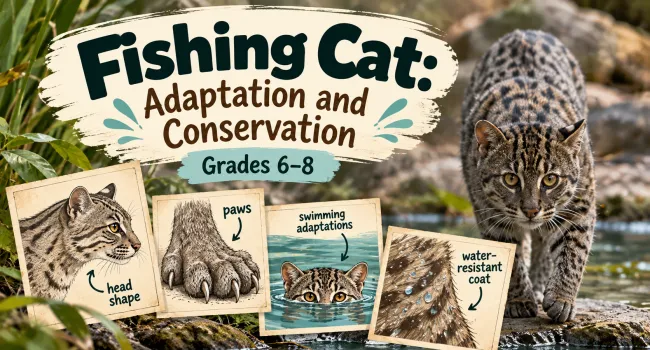
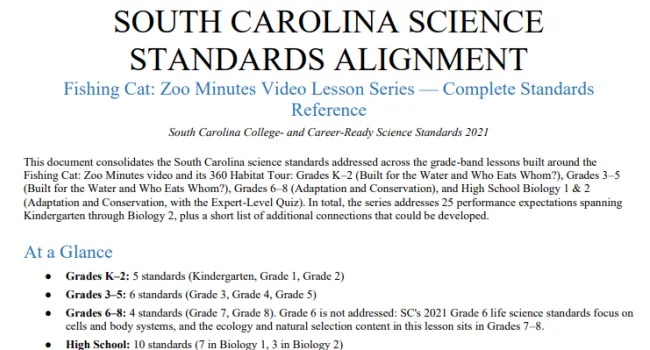
Fishing Cat: Adaptation and Conservation (Grades 6–8)
This lesson introduces middle school students to the connection between an organism's physical structures and behaviors and its ability to survive in a specific habitat, using the fishing cat as a...
View LessonStandards
Assessments
Use the student performance task linked in the resources section to assess student learning outcomes.