The video location is at the Naval Polaris Missile Base in North Charleston. This is the largest submarine base on the east coast today. Learn about the sinking of the U.S.S. Housatonic by the Hunley. In addition, learn the tie between the Charleston Harbor being the site of the first submarine warfare and its submarine status during this program's production (1982).
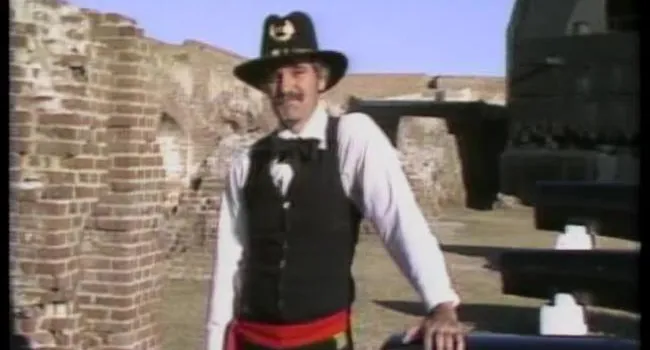
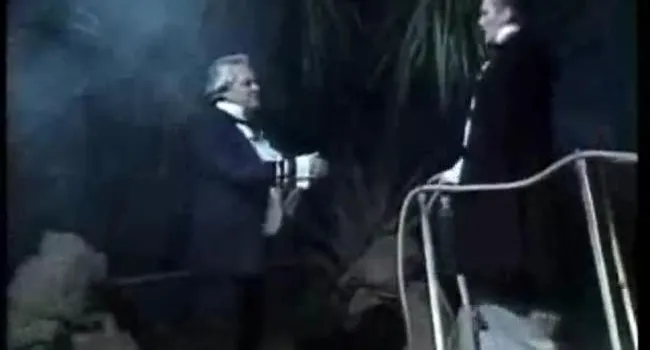
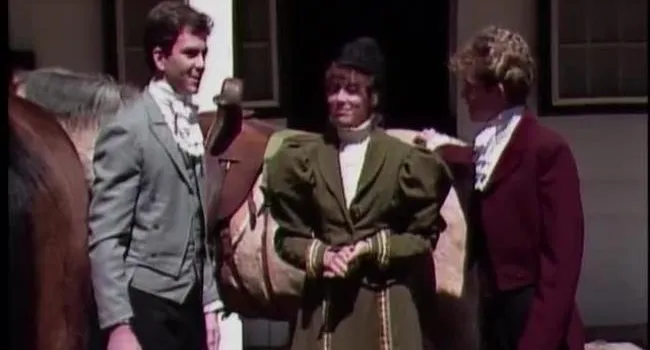
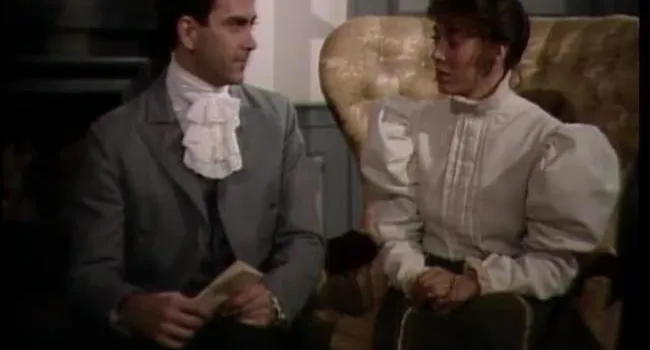
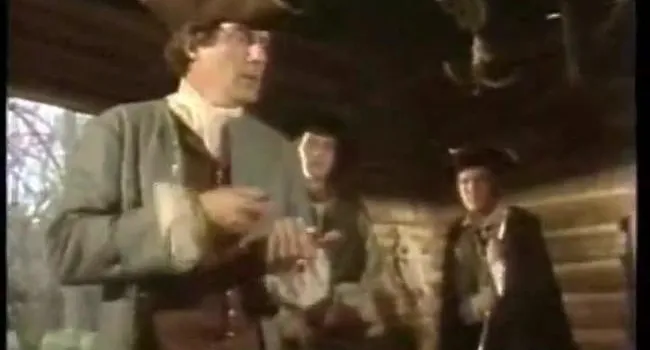
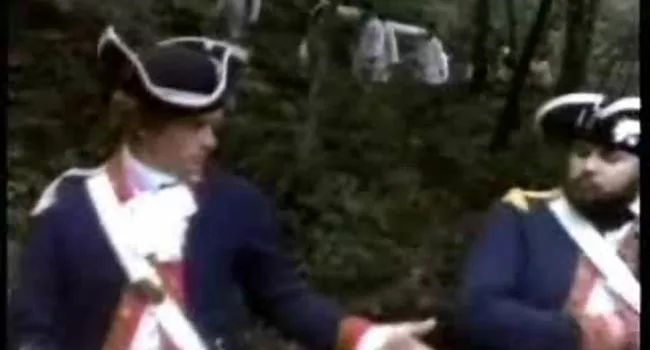
REENACTMENT: After three tragic accidents in training, General Beauregard is reluctant to again assign duty to the Hunley; however, two Confederate officers, Lieutenants Dixon and Alexander, convinced the general to allow them to secure a new crew and continue trying to break the blockade. They trained several weeks. On the night of February 17, 7864, the Hunley departs from the creek side of Sullivan's Island, through Breech Inlet, and into the waters of the Atlantic. Their target is the wooden U.S.S. Housatonic anchored two and l/2 miles off shore. The Housatonic spots the Hunley's approach too late to take decisive action. She starts her engines and backs away but this causes the two ships to collide. An explosion occurs and the Housatonic sinks in 27 feet of water. All but five of her crew survived by climbing the rigging and awaiting rescue by a sister ship.
BACKGROUND: By the middle of 1863 the Union Naval blockade of the southern coast had seriously impaired the South's ability to conduct war. With the exception of an occasional successful blockade runner, trade between the Confederacy and foreign countries had become virtually nonexistent. If the South was to have any success in the war at this point, the blockade had to be broken.
In the summer of 1863, General P. G. T. Beauregard, Commander of the Confederate Military Forces in South Carolina and Georgia, learned of an experimental torpedo boat being developed in Mobile, Alabama. This craft was unusual in that it was designed to operate below the waters surface. It was hand-powered by a crew of seven or eight operating a crank inside which turned the propeller. Originally, the craft was to pull a torpedo behind it, go under an enemy craft and have the explosive strike and sink it. This proved to be too tricky a maneuver so the torpedo was attached to a spar that was fastened to the bow of the submarine. The idea then was to ram an enemy ship leaving the torpedo inside it, quickly back away and trigger a charge.
Named for its designer and benefactor, H. L. Hunley, the submarine conducted many successful trial maneuvers in and around Charleston Harbor Those successes, however, were marred by tragedies that cost a number of lives, eventually including H. L. Hunley himself.
The Hunley was discovered on May 3, 1995. Learn more from the Project Discovery episode - The H.L. Hunley Discovered.
The video location is at the Naval Polaris Missile Base in North Charleston. This is the largest submarine base on the east coast today. Learn about the sinking of the U.S.S. Housatonic by the Hunley. In addition, learn the tie between the Charleston Harbor being the site of the first submarine warfare and its submarine status during this program's production (1982).
REENACTMENT: After three tragic accidents in training, General Beauregard is reluctant to again assign duty to the Hunley; however, two Confederate officers, Lieutenants Dixon and Alexander, convinced the general to allow them to secure a new crew and continue trying to break the blockade. They trained several weeks. On the night of February 17, 7864, the Hunley departs from the creek side of Sullivan's Island, through Breech Inlet, and into the waters of the Atlantic. Their target is the wooden U.S.S. Housatonic anchored two and l/2 miles off shore. The Housatonic spots the Hunley's approach too late to take decisive action. She starts her engines and backs away but this causes the two ships to collide. An explosion occurs and the Housatonic sinks in 27 feet of water. All but five of her crew survived by climbing the rigging and awaiting rescue by a sister ship.
BACKGROUND: By the middle of 1863 the Union Naval blockade of the southern coast had seriously impaired the South's ability to conduct war. With the exception of an occasional successful blockade runner, trade between the Confederacy and foreign countries had become virtually nonexistent. If the South was to have any success in the war at this point, the blockade had to be broken.
In the summer of 1863, General P. G. T. Beauregard, Commander of the Confederate Military Forces in South Carolina and Georgia, learned of an experimental torpedo boat being developed in Mobile, Alabama. This craft was unusual in that it was designed to operate below the waters surface. It was hand-powered by a crew of seven or eight operating a crank inside which turned the propeller. Originally, the craft was to pull a torpedo behind it, go under an enemy craft and have the explosive strike and sink it. This proved to be too tricky a maneuver so the torpedo was attached to a spar that was fastened to the bow of the submarine. The idea then was to ram an enemy ship leaving the torpedo inside it, quickly back away and trigger a charge.
Named for its designer and benefactor, H. L. Hunley, the submarine conducted many successful trial maneuvers in and around Charleston Harbor Those successes, however, were marred by tragedies that cost a number of lives, eventually including H. L. Hunley himself.
The Hunley was discovered on May 3, 1995. Learn more from the Project Discovery episode - The H.L. Hunley Discovered.
Standards
- 4.4.CE Explain the effects of military strategies utilized by the Union and the Confederacy.
- This indicator was developed to encourage inquiry into the effects of military strategies to include but not limited to : wartime technologies, the Anaconda Plan, conscription, and Sherman's March to Sea.
- 8.3.CE Examine consequences of the major Civil War military strategies.
- This indicator was designed to encourage inquiry into the Civil War focusing on the impacts of military strategies and major turning points on South Carolina and the U.S.
Resources
About Palmetto Special
This overview acquaints students and teachers with The Palmetto Special series and how to utilize the SC History content in the classroom.
View AssetAgricultural Depression | Palmetto Special
The opening and closing wraparounds take place by an old abandoned tenant farm house in Pickens County near Clemson University. Here the host establishes the location and story line. The Reenactment...
View AssetAndrew Pickens, the Wizard Owl | Palmetto Special
The television lesson includes a segment on each man designed to give an insight into his character. Andrew Pickens had been parolled by the British in Charleston when that city was captured in May...
View AssetBurning of Columbia | Palmetto Special
The host ties the reenactment together at various intervals in the story in various spots around Columbia that are particularly associated with Sherman's invasion, such as the area across the Congaree...
View AssetCarolina Indians | Palmetto Special
The lesson consists of the host and three students visiting Keowee-Toxaway State Park in Pickens County. The story of the Cherokee is told there through drawings and artifacts in a series of display...
View AssetCarolina Style | Palmetto Special
This lesson is a brief survey of the art, architecture, literature and theatre of South Carolina. It opens with a series of skits where "comedic characters" "put down" South Carolina's interest in...
View AssetCharles Town | Palmetto Special
A dramatic sequence is included in this wraparound. It is an analogy to the eight Lords Proprietors receiving the grant of Carolina from King Charles II. Five people gather for lunch to discuss a...
View AssetCharlesfort | Palmetto Special
This episode goes from Columbia to Parris Island in Beaufort County. Parris Island today is the home of a large Marine Corps training base. There is a monument there, similar in the design to one...
View AssetDenmark Vesey's Plot | Palmetto Special
The program begins with Vesey discussing the condition of slavery with an acquaintance who is a slave Later, at a meeting, details of the plot are worked out with co-conspirators including Peter Poyas...
View AssetDr. Ron McNair Speaking at USC Commencement | Palmetto Special
As Dr Ron McNair spoke at a University of South Carolina commencement exercise, he said, "the road between South Carolina and space flight is not a very simple one, nor is it one filled with...
View AssetField to Factory | Palmetto Special
This program is based on an oral history conducted by the New Jersey Multi-Ethnic Oral History Project. The subject is a black woman who moved with her family from South Carolina to New Jersey in the...
View AssetFort Sumter | Palmetto Special
REENACTMENT: Four of the principals at Fort Sumter discuss in retrospect events that led to the "firing of the first shot of the Civil War." These people are: Major Robert Anderson; Commander of the...
View AssetFrancis Marion, the Swamp Fox | Palmetto Special
Francis Marion was involved in a number of skirmishes that caught the enemy off guard, forced them to reckon with him, thus allowing other patriot forces to conduct their missions with greater success...
View AssetGovernor Robert Johnson | Palmetto Special
REENACTMENT: The reenactment begins with Simpson, an aide to Governor Robert Johnson, lamenting the death of the Governor. Through flashbacks we see Simpson and Johnson at crucial times during the...
View AssetGullah Culture | The Palmetto Special
With bridges from the islands to the mainland, the advent of radio and television, and the simple passage of time, this unique culture and language has been eroding. Ron and Natalie Daise of Beaufort...
View Asset