Burning of Columbia | Palmetto Special

Kaltura

The host ties the reenactment together at various intervals in the story in various spots around Columbia that are particularly associated with Sherman's invasion, such as the area across the Congaree River where Mayor Goodwyn surrendered the city to General Sherman; the ruins of Millwood, Wade Hampton's old home on the eastern side of Columbia, and the former home of Emma LeConte on the University of South Carolina Campus.

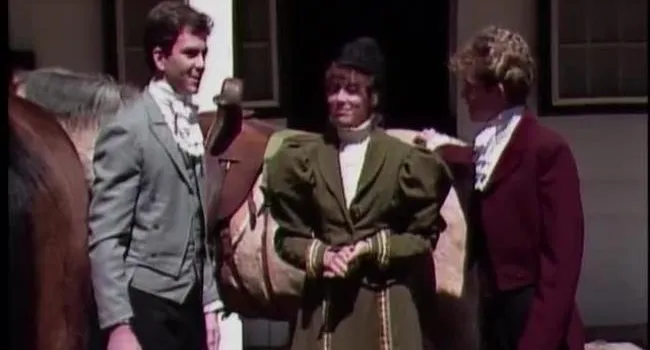
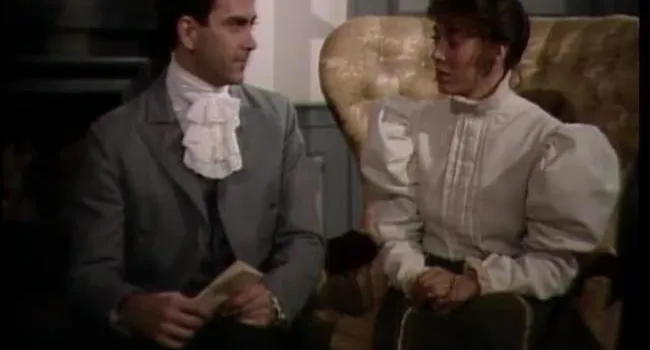
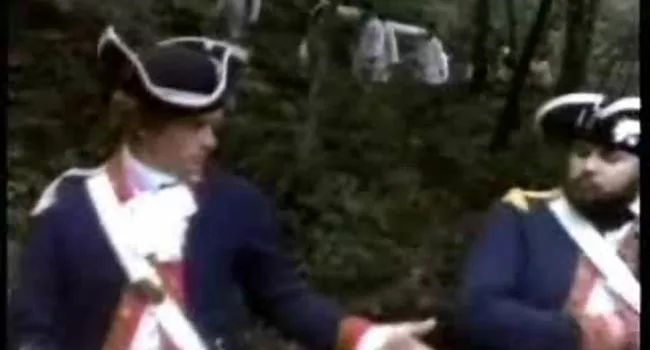
REENACTMENT: Emma LeConte was a precocious seventeen-year-old girl when Sherman occupied the city. Her father was a professor at the South Carolina College (now the University of South Carolina). She kept a diary for several months chronicling the approach, occupation and burning of the city of Columbia by General Sherman's troops. The reenactment is based on excerpts from her diary.

BACKGROUND: The Union victories at Vicksburg and Gettysburg introduced the final phase of the Civil War. In March 1864, Grant assumed General Command of the Union Armies. He took personal command of the Army of the Potomac and began to move slowly, but relentlessly, against Lee's smaller army At the same time, General William T. Sherman moved south and east from Chattanooga, Tennessee into Georgia. On September 2, 1864 Atlanta burned.

After leaving Atlanta in ruins, Sherman's march through Georgia to the sea further fragmented the South, which had already been split vertically by Union victr:ries in the river valleys of the West. Sherman pursued a policy of destroying factories, warehouses, bridges, railroads and anything else that might contribute to the Confederate cause while his troops "lived off the land." Sherman's Army spent the Christmas holidays in Savannah By January 1865, rumors of impending doom for Columbia were circulating in the capital city. There were questions as to whether Columbia or Charleston would be his major target.

In early January 1865, Sherman received Grant's approval of his plans to occupy Columbia. In all, approximately 58,000 men began to march from Savannah to Columbia. There was confusion among the Confederates as to his route, but by the first of February it was clear that Columbia was the projected target. He approached the city from Savannah in two flanks The town of Barnwell was burned as was part of Orangeburg and Winnsboro.

There were skirmishes at Blackville, Williston and Aiken. Hatred for South Carolina as the leader in secession caused even more general burning and plundering than in Georgia. By the night of February 15, only fifteen days after the invasion of South Carolina had begun in earnest, the Union Army was within about four miles of Columbia. On February 16, Sherman issued Special Field Order No. 26 giving instructions for the occupation of Columbia. For all practical purposes, the war was over and had been so for many months. The South was devastated. The Confederate forces in South Carolina were no match for Sherman's troops.

Upon his approach, Columbia's Mayor Goodwyn surrendered the city. Many of the city's inhabitants and most of the military had fled days earlier. Many federal troops ran rampant, drunk and uncontrolled while others tried to maintain order. Panic and confusion, however, reigned. Bales of cotton, intended to be removed from the city, were left in the streets by the fleeing Confederates. By the early morning hours of February 17, much of the city was in flames The fire raged in Columbia for five hours, accompanied by a riot that had built steadily in confusion and intensity so that most control was lost over the city. By Friday morning, February 18, 1865, over one third of the city lay in black, burnt ruins.

There has been much written about the burning of the city of Columbia, and who in fact was actually responsible for the conflagration. There are those who contend that hasty and unwise decisions by General Hampton, et al, left the city in a r.ulnerable position for Sherman's entry, while others support the view that General Sherman entered the city with the intention of destroying it or at least with the knowledge that his troops harbored strong feelings against South Carolina and Columbia and that he made little or no effort to control them once they arrived, thus allowing the city to burn.

The host ties the reenactment together at various intervals in the story in various spots around Columbia that are particularly associated with Sherman's invasion, such as the area across the Congaree River where Mayor Goodwyn surrendered the city to General Sherman; the ruins of Millwood, Wade Hampton's old home on the eastern side of Columbia, and the former home of Emma LeConte on the University of South Carolina Campus.

REENACTMENT: Emma LeConte was a precocious seventeen-year-old girl when Sherman occupied the city. Her father was a professor at the South Carolina College (now the University of South Carolina). She kept a diary for several months chronicling the approach, occupation and burning of the city of Columbia by General Sherman's troops. The reenactment is based on excerpts from her diary.

BACKGROUND: The Union victories at Vicksburg and Gettysburg introduced the final phase of the Civil War. In March 1864, Grant assumed General Command of the Union Armies. He took personal command of the Army of the Potomac and began to move slowly, but relentlessly, against Lee's smaller army At the same time, General William T. Sherman moved south and east from Chattanooga, Tennessee into Georgia. On September 2, 1864 Atlanta burned.

After leaving Atlanta in ruins, Sherman's march through Georgia to the sea further fragmented the South, which had already been split vertically by Union victr:ries in the river valleys of the West. Sherman pursued a policy of destroying factories, warehouses, bridges, railroads and anything else that might contribute to the Confederate cause while his troops "lived off the land." Sherman's Army spent the Christmas holidays in Savannah By January 1865, rumors of impending doom for Columbia were circulating in the capital city. There were questions as to whether Columbia or Charleston would be his major target.

In early January 1865, Sherman received Grant's approval of his plans to occupy Columbia. In all, approximately 58,000 men began to march from Savannah to Columbia. There was confusion among the Confederates as to his route, but by the first of February it was clear that Columbia was the projected target. He approached the city from Savannah in two flanks The town of Barnwell was burned as was part of Orangeburg and Winnsboro.

There were skirmishes at Blackville, Williston and Aiken. Hatred for South Carolina as the leader in secession caused even more general burning and plundering than in Georgia. By the night of February 15, only fifteen days after the invasion of South Carolina had begun in earnest, the Union Army was within about four miles of Columbia. On February 16, Sherman issued Special Field Order No. 26 giving instructions for the occupation of Columbia. For all practical purposes, the war was over and had been so for many months. The South was devastated. The Confederate forces in South Carolina were no match for Sherman's troops.

Upon his approach, Columbia's Mayor Goodwyn surrendered the city. Many of the city's inhabitants and most of the military had fled days earlier. Many federal troops ran rampant, drunk and uncontrolled while others tried to maintain order. Panic and confusion, however, reigned. Bales of cotton, intended to be removed from the city, were left in the streets by the fleeing Confederates. By the early morning hours of February 17, much of the city was in flames The fire raged in Columbia for five hours, accompanied by a riot that had built steadily in confusion and intensity so that most control was lost over the city. By Friday morning, February 18, 1865, over one third of the city lay in black, burnt ruins.

There has been much written about the burning of the city of Columbia, and who in fact was actually responsible for the conflagration. There are those who contend that hasty and unwise decisions by General Hampton, et al, left the city in a r.ulnerable position for Sherman's entry, while others support the view that General Sherman entered the city with the intention of destroying it or at least with the knowledge that his troops harbored strong feelings against South Carolina and Columbia and that he made little or no effort to control them once they arrived, thus allowing the city to burn.

More in this Series

Palmetto Special

Governor Robert Johnson | Palmetto Special About Palmetto Special

Video

About Palmetto Special
This overview acquaints students and teachers with The Palmetto Special series and how to utilize the SC History content in the classroom.
 Agricultural Depression | Palmetto Special

Video

Grades

  • 4
  • 5
  • 8
Agricultural Depression | Palmetto Special
The opening and closing wraparounds take place by an old abandoned tenant farm house in Pickens County near Clemson University. Here the host establishes the location and story line. The Reenactment...
Dr. Ron McNair Speaking at USC Commencement | Palmetto Special Andrew Pickens, the Wizard Owl | Palmetto Special

Video

Grades

  • 4
  • 8
Andrew Pickens, the Wizard Owl | Palmetto Special
The television lesson includes a segment on each man designed to give an insight into his character. Andrew Pickens had been parolled by the British in Charleston when that city was captured in May...
Governor Robert Johnson | Palmetto Special Carolina Indians  | Palmetto Special

Video

Grades

  • 3
  • 4
  • 5
  • 6
  • 7
  • 8
Carolina Indians | Palmetto Special
The lesson consists of the host and three students visiting Keowee-Toxaway State Park in Pickens County. The story of the Cherokee is told there through drawings and artifacts in a series of display...
John C. Calhoun | Palmetto Special Carolina Style | Palmetto Special

Video

Grades

  • 3
  • 4
  • 5
Carolina Style | Palmetto Special
This lesson is a brief survey of the art, architecture, literature and theatre of South Carolina. It opens with a series of skits where "comedic characters" "put down" South Carolina's interest in...
John C. Calhoun | Palmetto Special Charles Town | Palmetto Special

Video

Grades

  • 3
  • 4
  • 5
  • 6
  • 7
  • 8
Charles Town | Palmetto Special
A dramatic sequence is included in this wraparound. It is an analogy to the eight Lords Proprietors receiving the grant of Carolina from King Charles II. Five people gather for lunch to discuss a...
Andrew Pickens, the Wizard Owl | Palmetto Special Charlesfort | Palmetto Special

Video

Grades

  • 4
  • 8
Charlesfort | Palmetto Special
This episode goes from Columbia to Parris Island in Beaufort County. Parris Island today is the home of a large Marine Corps training base. There is a monument there, similar in the design to one...
Governor Robert Johnson | Palmetto Special Denmark Vesey's Plot | Palmetto Special

Video

Grades

  • 4
  • 8
Denmark Vesey's Plot | Palmetto Special
The program begins with Vesey discussing the condition of slavery with an acquaintance who is a slave Later, at a meeting, details of the plot are worked out with co-conspirators including Peter Poyas...
John C. Calhoun | Palmetto Special Field to Factory | Palmetto Special

Video

Grades

  • 5
  • 8
Field to Factory | Palmetto Special
This program is based on an oral history conducted by the New Jersey Multi-Ethnic Oral History Project. The subject is a black woman who moved with her family from South Carolina to New Jersey in the...
Governor Robert Johnson | Palmetto Special Fort Sumter | Palmetto Special

Video

Grades

  • 4
  • 8
Fort Sumter | Palmetto Special
REENACTMENT: Four of the principals at Fort Sumter discuss in retrospect events that led to the "firing of the first shot of the Civil War." These people are: Major Robert Anderson; Commander of the...
Governor Robert Johnson | Palmetto Special Francis Marion, the Swamp Fox | Palmetto Special

Video

Grades

  • 4
  • 8
Francis Marion, the Swamp Fox | Palmetto Special
Francis Marion was involved in a number of skirmishes that caught the enemy off guard, forced them to reckon with him, thus allowing other patriot forces to conduct their missions with greater success...
The Legend of Isaqueena | Palmetto Special Governor Robert Johnson | Palmetto Special

Video

Grades

  • 3
  • 4
  • 5
Governor Robert Johnson | Palmetto Special
REENACTMENT: The reenactment begins with Simpson, an aide to Governor Robert Johnson, lamenting the death of the Governor. Through flashbacks we see Simpson and Johnson at crucial times during the...
Governor Robert Johnson | Palmetto Special Gullah Culture

Video

Grades

  • 4
  • 8
Gullah Culture
Ron and Natalie Daise of Beaufort, South Carolina, share Negro Spirituals during their Gullah-based performance. This was excerpted from the full show, Gullah Culture.
 Gullah Culture

Video

Grades

  • 4
  • 8
Gullah Culture
This is an excerpt from the full episode, Gullah Culture. Ron Daise shares the story, "Bring My Clock Back."
John C. Calhoun | Palmetto Special Gullah Culture | The Palmetto Special

Video

Grades

  • 4
  • 8
Gullah Culture | The Palmetto Special
With bridges from the islands to the mainland, the advent of radio and television, and the simple passage of time, this unique culture and language has been eroding. Ron and Natalie Daise of Beaufort...
Andrew Pickens, the Wizard Owl | Palmetto Special Industrialization

Video

Grades

  • 5
  • 8
Industrialization
A dramatic scene follows with William Gregg discussing the virtues of a diversified economy in South Carolina with friends of his. Then he happens upon a young man playing hooky at a pond near the...
Governor Robert Johnson | Palmetto Special Industrialization | Palmetto Special

Video

Grades

  • 5
  • 8
Industrialization | Palmetto Special
The lesson begins at the Wilson Tennis Ball factory in Fountain Inn. Here we see a montage in the process of making tennis balls The host then mentions that there are many other products made in the...
John C. Calhoun | Palmetto Special James F. Byrnes | Palmetto Special

Video

Grades

  • 5
  • 6
  • 8
James F. Byrnes | Palmetto Special
This lesson consists of film and videotapes taken from events in Mr. Byrnes' career. We are fortunate in this program that we can actually see and hear Mr. Byrnes himself. The news films were...
Governor Robert Johnson | Palmetto Special Jehu Jones | Palmetto Special

Video

Grades

  • 3
  • 4
  • 5
Jehu Jones | Palmetto Special
The lesson contains scenes with two of Jones' more prominent guests, portrait painter, Samuel F B Morse (later to gain fame with the telegraph and the Morse code) and famed British actor, William Kean...
 John C. Calhoun | Palmetto Special

Video

Grades

  • 4
  • 8
John C. Calhoun | Palmetto Special
"The Palmetto Special" goes to John C. Calhoun's old homeplace, Fort Hill on the Clemson campus. Four students, who also appear in the dramatic portion, tour the mansion and grounds. The conclusion of...
 Kings Mountain Bicentennial | Palmetto Special

Video

Grades

  • 4
  • 8
Kings Mountain Bicentennial | Palmetto Special
This program on the Battle of Kings Mountain follows a documentary format. It centers around the Bicentennial Celebration in September and October of 1980. The activities that were covered as a part...
Governor Robert Johnson | Palmetto Special Reconstruction | Palmetto Special

Video

Grades

  • 4
  • 8
Reconstruction | Palmetto Special
The Reconstruction period will perhaps always be one of the most controversial in South Carolina's history. In this lesson we use a number of vignettes tied together, by the host, to present various...
Governor Robert Johnson | Palmetto Special Rice Cultivation

Video

Grades

  • 4
  • 8
Rice Cultivation
Paul then leaves to check on some trucks at one of his plantations. There he visits two slaves, Tricia and John Judah, who describe for him the functional operation of the Trunk System. This was...
Governor Robert Johnson | Palmetto Special Rice Cultivation

Video

Grades

  • 3
  • 4
  • 5
  • 6
  • 7
  • 8
Rice Cultivation
The Reenactment: The opening scene is the Hot and Hot Fish Club at Waccamaw Neck, c.1850. Young Paul Weston is playing a game of billiards with Hugh Fraser and lamenting his father's recent death.They...
Governor Robert Johnson | Palmetto Special Rice Cultivation | Palmetto Special

Video

Grades

  • 4
  • 8
Rice Cultivation | Palmetto Special
Three students take a field trip in "The Palmetto Special" as it travels from Columbia to Georgetown. After a brief stop at Poinsett State Park in Sumter County, the van arrives in Georgetown where...
Governor Robert Johnson | Palmetto Special Robert Smalls | Palmetto Special

Video

Grades

  • 4
  • 8
Robert Smalls | Palmetto Special
REENACTMENT: The lesson focuses on a mission in which Robert Smalls was sent to convince President Lincoln to arm Negro troops in the South Carolina Lowcountry to fight for the Union. This is done in...
John C. Calhoun | Palmetto Special S.C. in the Space Age | Palmetto Special

Video

Grades

  • 6
  • 7
  • 8
S.C. in the Space Age | Palmetto Special
Colonel Charles Bolden is a native of Columbia, South Carolina. He was educated at W. A. Perry Junior High School and C. A. Johnson High School where his father was football coach and his mother, the...
Governor Robert Johnson | Palmetto Special S.C. Revolutionary War Leaders | Palmetto Special

Video

Grades

  • 4
  • 8
S.C. Revolutionary War Leaders | Palmetto Special
MARION, SUMTER, PICKENS Thomas Sumter, the "Gamecock," Francis Marion, the "Swamp Fox," and Andrew Pickens, the "Wizard Owl" are perhaps the best known of South Carolina's Revolutionary War leaders...
Governor Robert Johnson | Palmetto Special SC Economy | Palmetto Special

Video

Grades

  • 4
  • 8
  • 12
SC Economy | Palmetto Special
The lesson begins with a young man making an "economic decision" concerning the purchase of a pair of running shoes. The host defines economics beginning with, "Economics is that branch of the social...
 Secession, Part 1 | Palmetto Special

Video

Grades

  • 4
  • 8
  • 10
Secession, Part 1 | Palmetto Special
The program on "Secession" is divided into two parts, each approximately 18 minutes in length. The five main characters, William, Allen, Jenny, Missy, and Allen's father are fictitious. The political...
Governor Robert Johnson | Palmetto Special Secession, Part 2 | Palmetto Special

Video

Grades

  • 4
  • 8
  • 10
Secession, Part 2 | Palmetto Special
The program on "Secession" is divided into two parts, each approximately 18 minutes in length. The five main characters, William, Allen, Jenny, Missy, and Allen's father are fictitious. The political...
Governor Robert Johnson | Palmetto Special Soil Bank | Palmetto Special

Video

Grades

  • 6
  • 7
  • 8
Soil Bank | Palmetto Special
This lesson presents a dramatic episode of a fictional family living near Batesurg in Lexington County in the mid 1950's. They are having economic difficulties and make a decision to place some of...
Governor Robert Johnson | Palmetto Special Studying Local History | Palmetto Special

Video

Grades

  • 3
  • 4
  • 5
  • 6
  • 7
  • 8
Studying Local History | Palmetto Special
The opening and closing wraparounds are in front of the restored "Big Apple." Originally a synagogue, the building was sold in the 1930's to a black man and converted to a night club. Here originated...
Governor Robert Johnson | Palmetto Special The Beautiful Phantom of Daisy Bank | Palmetto Special

Video

Grades

  • 3
  • 4
  • 5
  • 6
  • 7
  • 8
The Beautiful Phantom of Daisy Bank | Palmetto Special
This prograrn was adapted from a story in the book, The Return of the Gray Man, by Julian Stevenson Bolick. It was produced on location, but not necessarily where the story supposedly takes place. No...
Governor Robert Johnson | Palmetto Special The Charleston Tea Party, 1774  | Palmetto Special

Video

Grades

  • 4
  • 8
The Charleston Tea Party, 1774 | Palmetto Special
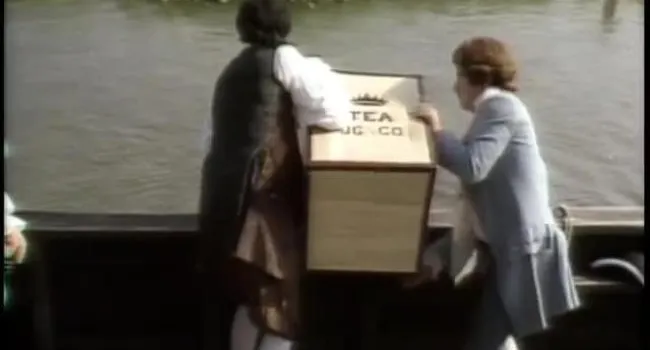
Following the Tea Act of 1773 many colonial citizens refused to pay the duty and boycotted British tea This program deals with actions taken by some citizens of Charleston in November and December...
Governor Robert Johnson | Palmetto Special The Hunley | Palmetto Special

Video

Grades

  • 4
  • 8
The Hunley | Palmetto Special
The video location is at the Naval Polaris Missile Base in North Charleston. This is the largest submarine base on the east coast today. Learn about the sinking of the U.S.S. Housatonic by the Hunley...
Governor Robert Johnson | Palmetto Special The Legend of Isaqueena | Palmetto Special

Video

Grades

  • 4
  • 8
The Legend of Isaqueena | Palmetto Special
The "Palmetto Special" leaves Columbia and travels to Spartanburg County. At the beginning of the program the Fall Line is defined, along with an introduction to the backcountry, the frontier of South...
John C. Calhoun | Palmetto Special The Regulators | Palmetto Special

Video

Grades

  • 8
The Regulators | Palmetto Special
In this section, the "Palmetto Special" leaves Columbia and travels to Spartanburg County. At the beginning of the program the Fall Line is defined, along with an introduction to the backcountry, the...
John C. Calhoun | Palmetto Special The Statehouse |  Palmetto Special

Video

Grades

  • 3
  • 4
  • 5
  • 6
  • 7
  • 8
The Statehouse | Palmetto Special
The host and several students provide the viewer a tour of the State House grounds and inside the building. The emphasis is on its history and appearance, rather than on the operation of state...
Governor Robert Johnson | Palmetto Special Thomas Sumter, The Gamecock | Palmetto Special

Video

Grades

  • 4
  • 8
Thomas Sumter, The Gamecock | Palmetto Special
At the battle of Fishdam Ford on the Broad River, Thomas Sumter had an opportunity to get personal revenge on a man who hours earlier had attempted to kill him. This segment depicts the events that...
John C. Calhoun | Palmetto Special Tillman-Gonzales Murder Trial | Palmetto Special

Video

Grades

  • 6
  • 7
  • 8
Tillman-Gonzales Murder Trial | Palmetto Special
The video take place at the corner of Main and Gervais Streets in Columbia, same site where the murder occurred. In addition, the host comes in and out of reenactment of the trial to tie the segments...
John C. Calhoun | Palmetto Special Transportation in SC | Palmetto Special

Video

Grades

  • 3
  • 4
  • 5
Transportation in SC | Palmetto Special
The lesson deals primarily with the development of roads, railroads, and canals in South Carolina. The program is in a basic documentary form and was done entirely on location. Comparisons are made to...