Archaeo-Tech: Behind the Pottery- Studying Colonoware

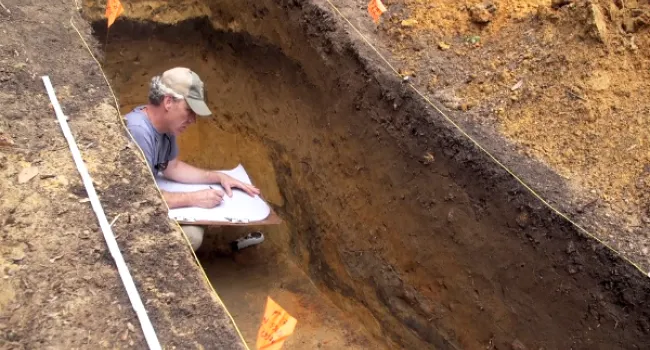
Pottery is one of the most common types of artifacts found in the archaeological record. Students will learn how and why archaeologists study pottery and explore how pottery, along with other objects used in everyday life, reflect cultural norms and social identities. The lesson focuses on colonoware, a type of pottery made and used by enslaved Africans, enslaved and free African Americans, and enslaved and free Native Americans in South Carolina from the colonial period into the nineteenth century. Students will then try their hand at experimental archeology by replicating a surface decoration seen on colonoware sherds from the South Carolina Lowcountry and consider how pottery shows deliberate and specific choices made by a potter.
Lesson Created By: MegGaillard
Lesson Partners: South Carolina Department of Natural Resources
Essential Question
How does the archaeological study of common artifacts like colonoware reveal the social identities, cultural traditions, and deliberate choices made by enslaved and marginalized peoples in the past?
Grade(s):
- 3
- 4
- 6
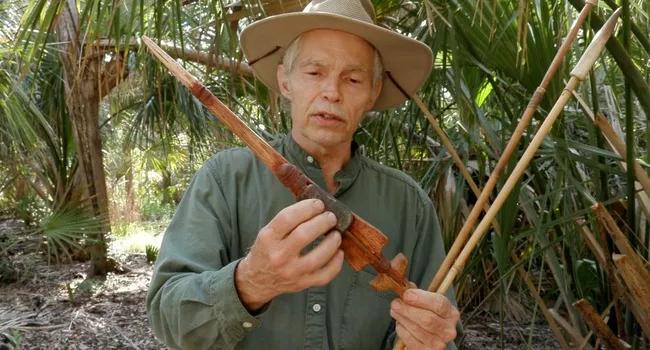
- 8
- 9
- 10
- 11
- 12
Subject(s):
Recommended Technology:
Other Instructional Materials or Notes:
· Examples of colonoware and prehistoric South Carolina pottery o See scpottery.com for more images of prehistoric and historic period Native American ceramics. o See daacs.org for more images of colonoware from Virginia and South Carolina.
· Air drying clay (approximately 1 lb. per student; clay will be divided into two balls)
· Stiff paper plates (students will work with their pottery on this plate)
· Wax paper (placed on top of the plate to keep the clay from sticking)
· Plastic or paper sheets (alternative to paper plates and wax paper to cover desktops or floors for easy clean-up)
· Pottery Decoration Tools:
o Folded Strip Roulettes (made from two palmetto fronds twisted together, although other similar plant material can be used)
o A small object brought from home students can use to decorate the clay with (this could be a coin, a LEGO® piece, the cap to a marker, a key, plant material found around their home, anything that is familiar to the student)
· Water dishes (to help keep the clay moist)
· Activity worksheet (1 per student)
Lesson Progression
1. For 4th, 6th, and 8th grade classes, this lesson can be introduced to explore the emergence and development of social identities in South Carolina and North America as a result of colonialism and slavery. For 3rd grade and Human Geography classes, this lesson plan can be used to introduce the concepts of material culture and cultural patterns across time and space.
2. Prepare clay and supplies before beginning the lesson. Water might need to be added to the air-dry clay, or it might need to be soaked in water overnight in order to be pliable. Tell your students to bring a small object from home with them to class tomorrow (such as a coin, a LEGO® piece, the cap to a marker, a key, etc.).
3. Begin the lesson by asking your students if they know what an artifact is. Have your students brainstorm examples of artifacts they might find in South Carolina. If you are studying colonial America, focus on artifacts that would come from this time period. Take the time to correct students if they propose things that would not be preserved in the archaeological record (like artifacts made of wood or fiber).
4. Tell your students that pottery is an artifact commonly found on archaeological sites, although rarely are pots, jars, bowls, and plates found in one piece. Brainstorm how archaeologists study pottery and what they can learn from it. Stress that archaeologists study artifacts because they want to understand the people that made the artifacts.
5. Show your class photographs of pottery found at archaeological sites. You can show them examples of precontact period Native American pottery and manufactured European ceramics. Have them note the differences between the two. Then transition into a discussion on colonoware. Show your students images of colonoware and discuss who made colonoware and where, and how colonoware is a product of cultural interaction, colonialism, and slavery.
6. Explain that because colonoware was made by and for marginalized people, there are no records or historical documentation on colonoware, making it a bit of a mystery to archaeologists. Importantly, archaeologists want to understand why colonoware was made and what meaning or significance it had to the people who made and used it.
7. Tell your students that archaeologists use a variety of techniques and methods to approach these questions. One way is by analyzing surface decoration. Discuss the use of rouletting on colonoware sherds from a few sites in South Carolina and explain the connection between this decoration method and pottery traditions in West and Central Africa. Show images of this decoration pattern.
8. Instruct your students that they will be engaging in a little experimental archaeology. Explain how experimental archaeology involves recreating and testing the material culture of past people to gain knowledge, data, and a deeper understanding of the processes behind the artifact.
9. Distribute the clay, paper plates, wax paper, pottery decorating tools, and activity worksheet if you have not already done so.
10. Instruct your students to create a folded strip roulette (watch the “Tracing the African Diaspora: Introduction to Colonoware Pottery” video linked in the resources tab for instructions, timestamp: 25:30-27:05).
11. Divide the clay into two equal sized balls and flatten both balls into a disk. Then roll the roulette across one of the flattened disks of clay, as seen in the video. Ask your students observe the pattern made in the clay. Compare their pattern with the pattern seen on the colonoware sherds. Are they similar or are they different?
12. Next, have your students make impressions or patterns on the second disk of clay using the small object they brought from home. Have them write down a description of the pattern they produced and compare this pattern with the pattern produced by the roulette. Ask your students to think about how this decoration reflects who they are and where they come from.
13. Ask your students to consider and discuss what objects are important to them in their everyday lives. Have them share examples of special objects that have meaning or memories associated with them. How might these special objects shape and reflect your identity? And how might the small, everyday object used to decorate the clay do the same?
Teacher Notes
differentiate: Artifact Definition: Provide a simplified definition and visual examples of what will and will not preserve in the archaeological record (e.g., stone/pottery vs. wood/cloth), to help them answer the brainstorming question in step 3.
extend: Cultural Synthesis: Require students to research and present on a second, non-pottery artifact (e.g., shell beads, bone ornaments) found in colonial-era African American contexts and explain how it, too, reflects a syncretic (blended) cultural identity.
Tracing the African Diaspora: Introduction to Colonoware Pottery
View ResourceStandards
- HG.3.5.PR Compare and contrast cultural landscapes in various regions, and analyze the human imprint on different landscapes.
- HG.3.3.PR Analyze and explain the conditions and connections that create ethnic, linguistic, and religious patterns at varying scales.
- HG.3.1.HS Identify the characteristics of popular and folk culture, and explain the factors that influence the location and spatial distribution of these types of culture at the local and global scales using maps and geographic models and representations.
- 8.1.P Summarize major events in the development of South Carolina which impacted the economic, political, and social structure of the colony.
- 8.1.CE Analyze the factors that contributed to the development of South Carolina’s economic system and the subsequent impacts on different populations within the colony.
- 8.1.CO Compare the three British North American colonial regions economically, politically, socially, and in regard to labor development.
- 6.3.E Analyze the short- and long-term impact of the Atlantic World's growth using primary and secondary sources across multiple perspectives.
- 6.3.P Summarize the impact of the Transatlantic Slave Trade on ideological, political, and social systems in the Atlantic World.
- 6.3.CE Explain the impact of increased global exchanges on the development of the Atlantic World.
- 4.1.E Analyze multiple perspectives on the economic, political, and social developments of British North America and South Carolina.
- 4.1.CC Identify patterns of change and continuity in the development of economic systems in British North America.
- 4.1.CX Contextualize the experience of Africans, Europeans, and Native Americans in South Carolina.
- 4.1.CE Identify the effects of changing economic systems on the diverse populations in British North America.
- 4.1.CO Compare the interactions among cultural groups as a result of European colonization.
- 3.5.3.HS Investigate and explain the economic, social, political, and environmental motivations behind human migration and how places can change as a result.
- 3.4.3.AG Research and create a geographic representation of a contemporary or historic group of people to communicate findings about their cultural characteristics and livelihoods.
- 3.4.1.PR Investigate the cultural characteristics of places and regions around the world.
Assessments
Use the performance task linked in the resources tab to assess student learning outcomes.