Freedom Isn't "Free"

Students will explore what it means to be free and have equality for all.
Essential Question
What was the Civil Rights Movement? What does it really mean to have equality for all?
Grade(s):
- 2
- 5
Subject(s):
Recommended Technology:
Chromebooks/Laptops
Other Instructional Materials or Notes:
Journals
Paper
Pencils
Chart Paper
Markers
Picture books on influential African Americans
Lesson Progression
- As students come into the room, have pictures from the civil rights movement on their tables or displayed on the board.
- Allow time for students to view the photos, make observations, and write down any wonderings they may have.
- Display the RAN chart, review what it is used for, and allow students to record their responses on sticky notes and add them to the chart.
- Once everyone has had a chance to view the photos, inform students that these are images from the Civil Rights Movement. See if anyone knows what the Civil Rights Movement is and what it meant for our country. Refer back to RAN chart if necessary.
- Share this scenario with students: Imagine not being able to do something you really wanted to do because your eyes were brown. Would that be fair? How do you think you would feel? What actions would you take? Share with students that this type of treatment was once common in our country. Inform students that the Civil Rights Movement was a "fight" for equality to ensure everyone had the same rights and freedoms including the right to vote and exercise their political voice.
- Share video with students so they have a little more background knowledge on the Civil Rights movement. Once the video is finished, allow students to share any additional wonderings, AHA moments, or questions they have. Record these on the RAN chart.
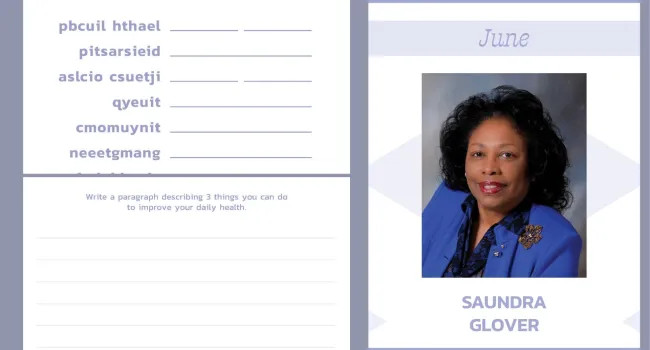
- Afterwards, display a photo of Leola Clement Robinson. Inform students that Ms. Robinson is the June honoree of the SC African American History calendar. She is best known as a champion for civil rights. In fact, she was a champion for civil rights most of her life. Students will watch video on Ms. Robinson to learn more about her life as well as her accomplishments and contributions.
- Following the video, discuss her accomplishments as well as the impact she had as a Civil Rights leader and in the fight for equality.
- Remind students that unfortunately in some ways we are still fighting for equality for all people. Challenge students to think about what it would be like if there was true equality for all people. What do you think that would look like?
- Inform students that they will be writing a letter to a "newspaper editor." In the letter, students will write what they think it means to have true equality for all. What would be the benefits? Are there any Students should also try to "persuade" the newspaper editor and readers of the paper that limiting equality is not fair and also harmful to our community. If necessary, review what it means to "persuade."
- Once everyone has completed their writing, students can read their letters to the class. Allow time for discussion as well as time to share any additional comments, questions, or wonderings students may still have.
Teacher Notes
Students may choose to work in pairs or small groups. Students may also prefer to use technology.
RAN Chart
View ResourceSouth Carolina African American History Calendar
This is a link to the 2024 South Carolina African American History Calendar which celebrates the accomplishments of African Americans in South Carolina.
View ResourceCivil Rights for Kids
This website gives an overview of the civil rights movement for kids. It also highlights men and women who led the fight for civil rights.
View ResourceThe Civil Rights Movement for Kids!
In this video, children will gain an understanding of the Civil Rights Movement and key figures of the movement.
View ResourceStandards
- 2.H.1 Identify and compare significant historical events, moments, and symbols in U.S. history.
- ELA.2.OE.2 Acquire, refine, and share knowledge through a variety of multimedia literacies to include written, oral, visual, digital, and interactive texts.
- ELA.C.1 Write arguments to support claims with clear reasons and relevant evidence.
- 5.4.CC Analyze the continuities and changes of race relations in the United States and South Carolina following the Supreme Court decisions of Briggs v. Elliott and Brown v. Board of Education.
- 5.4.E Analyze multiple perspectives on the economic, political, and social effects of the Cold War, Space Race, and Civil Rights Movement using primary and secondary sources.
- ELA.5.OE.2 Acquire, refine, and share knowledge through a variety of multimedia literacies to include written, oral, visual, digital, and interactive texts.
- ELA.C.1 Write arguments to support claims with clear reasons and relevant evidence.
Assessments
Reflecting on the impact of the Civil Rights Movement, students will write a letter to the "newspaper editor", detailing what they think it means to truly have equality for everyone. Students will be given an opportunity to share their letters with the class.
Remediation-Students who need additional reinforcement could work with a partner or illustrate what they think equality means instead of writing a letter.
Extension-Challenge students who have mastered the concept to think about the life of Leola Clement Robinson. Students will choose another Civil Rights activist and compare their contributions to their community with Leola Clement Robinson's contributions.