Civil Rights Spotlight: Modie Risher and DeLaris Johnson Rischer

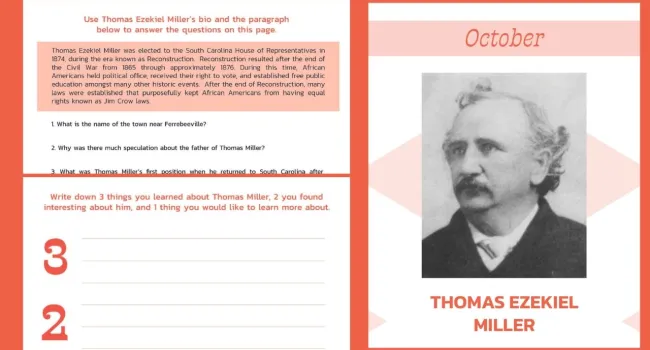
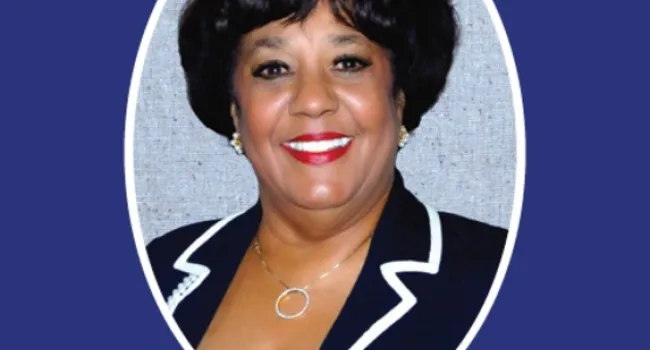
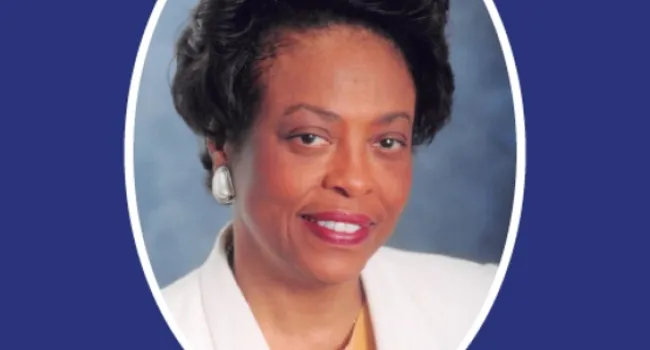
In recognition of October's Honorees for the 2024 South Carolina African American History Calendar, Modie Risher and DeLaris Johnson Rischer, students will discover the contributions and impact the couple made to the Civil Rights Movement and how they can advocate for their rights as a child/student.
Essential Question
How can you advocate for your Civil Rights as a child/student?
Grade(s):
- 5
- 8
Subject(s):
Recommended Technology:
Laptop/Chromebook
Other Instructional Materials or Notes:
Lesson Progression
Introduction
Display the following prompt for students as they enter the classroom:
- What rights are denied to you as a child/student?
Once all students are in their seats and have responded to the prompt, have students compare their responses with a peer. Choose a few pairs to share. When finished, explain to students that today's activity is inspired by the October Honorees of the South Carolina African American History Calendar, Modie Risher and DeLaris Johnson Rischer, a couple who broke barriers in their fight for Civil Rights.
Spotlight Graphic Organizer
Have students watch the video for the South Carolina African American History Calendar October Honorees. As they watch, students should fill out the Spotlight Graphic Organizer.
Students will record information on the following topics:
- Background: Where are Modie Risher and DeLaris Johnson Rischer from? What events led them to a career in education and community work?
- Education: Where did Modie Risher and DeLaris Johnson Rischer attend school? Which degree(s) did they receive?
- Accomplishments: What honors and accomplishments did Modie Risher and DeLaris Johnson Rischer achieve?
- Impact: What impact has Modie Risher and DeLaris Johnson Rischer made in their community as educators and Civil Rights leaders?
Students may research additional information if they cannot answer the questions from the video or calendar excerpt.
Advocating for Civil Rights
Have students review their list of rights denied to them. Students should brainstorm what barriers are in place that denies them their rights. Discuss various barriers with students as a class and have them complete their graphic organizer.
Conclusion
Allow students the opportunity to share with the class how they could break barriers, advocating for their Civil Rights. Students may complete an exit ticket answering the following questions:
- Who are Modie Risher and DeLaris Johnson Rischer and what impact did they make during the Civil Rights?
- How have Modie Risher and DeLaris Johnson Rischer inspired you?
Civil Rights Spotlight: Leola Clement Robinson
In recognition of June's Honoree for the 2024 South Carolina African American History Calendar, Leola Clement Robinson, students will discover the contributions and impact she made to the Cvil Rights...
View LessonCivil Rights Spotlight: Mac Arthur Goodwin and The Fight for Civil Rights Through Music
In recognition of September's Honoree for the 2024 South Carolina African American History Calendar, Mac Arthur Goodwin, students will discover the contributions and impact he made to the Civil Rights...
View LessonCivil Rights Spotlight: Lt. General Arthur J. Gregg
In recognition of August's Honoree for the 2024 South Carolina African American History Calendar, Lt. General Arthur J. Gregg, students will discover the contributions and impact he made to the Civil...
View LessonCivil Rights Spotlight: Dr. Lonnie Randolph
In recognition of July's Honoree for the 2024 South Carolina African American History Calendar,Dr. Lonnie Randolph, students will discover the contributions and impact he made to the Civil Rights...
View LessonMemorializing A'ja Wilson
In celebration of being chosen as the January honoree for the 2024 South Carolina African American History Calendar, this lesson explores the accomplishments and contributions of A'ja Wilson and how...
View LessonBrown v. School District No.20
The month of February in the South Carolina African American History Calendar features the case of Brown v. School District No. 20, Charleston, SC. This lesson explores the issues of the case, the...
View LessonPreserving Our History
In recognition of March's Honoree for the 2024 South Carolina African American History Calendar, Jackie J. Whitmore, students will become historians, conducting research on their family genealogy or...
View LessonJohn L. Scott and The Legislative Process
In recognition of April's Honoree for the 2024 South Carolina African American History Calendar, John L. Scott, students will explore the Legislative Process.
View LessonClifton B. Newman and Brown v. Board of Education in South Carolina
In recognition of May's Honoree for the 2024 South Carolina African American History Calendar, Clifton B. Newman, students will explore the case, Brown v. Board of Education that inspired Judge Newman...
View LessonSOUTH CAROLINA AFRICAN AMERICA HISTORY CALENDAR
View ResourceSOUTH CAROLINA AFRICAN AMERICAN HISTORY CALENDAR VIDEO
View ResourceStandards
- 5.4.CC Analyze the continuities and changes of race relations in the United States and South Carolina following the Supreme Court decisions of Briggs v. Elliott and Brown v. Board of Education.
- 8.5.CX Analyze the correlation between the Modern Civil Rights Movement in South Carolina and the U.S.
- This indicator was designed to foster inquiry into the role of South Carolina in the Modern Civil Rights Movement, to include the influence of court cases such as Briggs v. Elliot and Flemming v. South Carolina Electric and Gas. This indicator was also developed to promote inquiry into the relationship between national leadership, protests, and events and South Carolina leadership, protests and events, such as the Friendship Nine and the Orangeburg Massacre.
- 8.5.CC Analyze the continuities and changes in South Carolina's identity resulting from the civic participation of different individuals and groups of South Carolinians.
- This indicator was developed to encourage inquiry into civic engagement, such as military service, public demonstrations, and political activism, to shape the identity of modern South Carolina. This indicator was also written to encourage inquiry into South Carolinians' use of the court system and legislation to affect South Carolina's post World War II identity.