John L. Scott and The Legislative Process

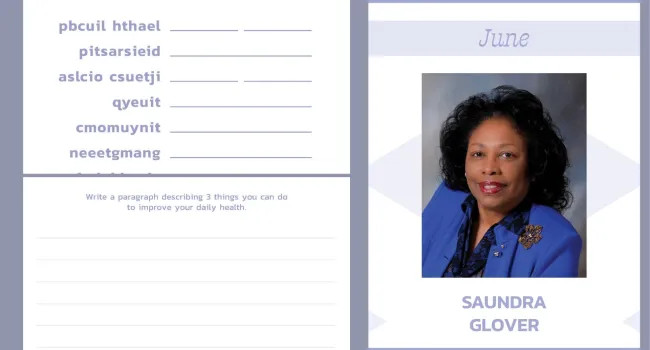
In recognition of April's Honoree for the 2024 South Carolina African American History Calendar, John L. Scott, students will explore the Legislative Process.
Grade(s):
- 8
- 12
Subject(s):
Recommended Technology:
Laptop/Chromebook
Other Instructional Materials or Notes:
Lesson Progression
Introduction
As students enter the classroom, have the following question posted:
“If you could make South Carolina a better place, what rules, laws, or policies would you implement or amend?”
Once all students are in their seat and the teacher is ready to begin the lesson, play the April video for the South Carolina African American History Calendar on John L. Scott. Explain to them that today's lesson is inspired by John L. Scott who worked and made a difference by participating in the legislative process.
Inform students that they can help make South Carolina a better place by proposing legal changes within their communities. Let them know that anyone can propose to make legal changes that will improve their communities by submitting a bill to their local legislative representative. Explain to students that today they will write a bill and go through the legislative process. Students should work with a partner.
Have students share with the class their ideas for rules, laws, or policies that they would implement or amend.
The Legislative Process Part I: Drafting a Bill
Step 1: Define The Issue/Change
Students need to create a rule, law, or policy they would like to see enacted in South Carolina.
Step 2: Research Existing Laws Surrounding Our Issue/Topic
Students should determine if a bill or law has already made its way through Congress. For South Carolina, students can search the South Carolina Code of Laws for their topic.
Step 3: Create a New Law or Modify an Existing Law
If no legislation exists for their topic, students will need to devise a realistic law that could be beneficial in South Carolina. If legislation already exists for their topic, students may decide to amend the bill or law as they see fit.
Step 4: Draft a Bill
Have students complete the bill template.
The Legislative Process Part II
Have students watch a video on the legislative process. The teacher should choose a video that is appropriate for their students.
Once students have completed drafting their bills, bills will move through a mock Congress.
Introduction and Referral of Bills
Students will introduce their bill to a partner. For those who worked with a partner, they will introduce their bill to another pair. Based on the topic of their bills, students will agree on which Committee their bill belongs.
The teacher may create their own committees or use the current South Carolina House Standing Committees. I recommend no more than five committee groups.
Committees (Small Groups)
Students will separate into committees. Within committees, students will present their bills. As students are listening to the bills being presented, they should complete the Committee Worksheet to document questions and their reasoning for being in support of or against a bill being passed. Time should be given (no more than 5 minutes) to openly debate the bills being presented before voting for or against the bill moving forward towards becoming law. Students may also decide that a bill may be revised to make it better. Bills that pass in committees will move on to be presented to the "House Floor."
The House of Representatives
The teacher should create a schedule for student presentations. I would recommend using a spreadsheet to list the bills in the order they will be presented.
The original creators of the bill should present it to the class (on the House Floor). The reading of their bills should take no longer than 2 minutes. Student representatives should have 2 minutes to ask the sponsors non-debatable (yes/no) questions about their bill. Once time is up, representatives should participate in a Pro/Con Debate.
Pro/Con Debate
All students should be prepared to speak in favor of or in opposition of a bill. The teacher should plan for 6 minutes for each bill. Each student may have a maximum of two minutes, time not used may be passed on to the next speaker or reserved for the bill author to summarize their bill.
Students Vote on The Bill
Depending on class size and how the votes will be taken, students can be given 2-5 minutes to vote. Bills that pass would be sent to the Senate.
Senate
The teacher may repeat the same process for the senate or choose to end the lesson.
Teacher Notes
Remediation: Instead of having students draft a bill, students can research a bill that has already been presented in Congress and document how the bill went through the legislative process.
Extension: Once students agree on bills that are worthy to be law, have them write a letter to their local legislators in support of their proposed legislation.
John L. Scott - South Carolina African American History Calendar Video
April video for the South Carolina African American History Calendar on John L. Scott.
View ResourceSC AFRICAN AMERICAN HISTORY CALENDAR
View ResourceHow the US Makes Laws
View ResourceI’m Just a Bill - Schoolhouse Rock
View ResourceSouth Carolina House Standing Committees
View ResourceStandards
- USG.2.ER Explain the authority, organization, purposes, and responsibilities of the three branches of government as enumerated in Articles I–III in the Constitution.
- USG.3.ER Describe the policy making process in the American constitutional government.
- USG.4.IN Distinguish between various economic, personal, and political rights of citizens in the U.S., and how these rights can sometimes conflict with each other.
- 8.5.CC Analyze the continuities and changes in South Carolina's identity resulting from the civic participation of different individuals and groups of South Carolinians.
- This indicator was developed to encourage inquiry into civic engagement, such as military service, public demonstrations, and political activism, to shape the identity of modern South Carolina. This indicator was also written to encourage inquiry into South Carolinians' use of the court system and legislation to affect South Carolina's post World War II identity.
- W.MCC Meaning, Context, and Craft