You Be the Judge!

Students will learn about the role of a judge in government and explore the qualities necessary to be a good judge.
Essential Question
What does it take to be a judge?
Grade(s):
- Kindergarten
- 1
- 2
Subject(s):
Recommended Technology:
Laptops, Chromebooks
Other Instructional Materials or Notes:
Notebook paper, Chart paper, Pencils, Markers
Lesson Progression
Today we will be discussing the role of decision making in government. We will focus on the job of a judge. See if any one can tell you what a judge is/does.
Also, review where judges often work (court). Discuss other terms associated with court such as judge, lawyer, case, plantiff, guilty, etc. and answer any other questions students might have.
Afterwards, share that a judge is a political official who has been appointed to decide cases in a court of law. A judge makes sure everyone follows the rules. For example, if two people have a disagreement and they have to go to court, the judge will decide what the fair decision will be in the case. Remind students that like most government officials/politicians, judges are either elected or appointed.
Introduce and share a photo of Judge Clifton B. Newman. Share with students that he is not only a judge but the May 2024 honoree in the SC African American History Calendar. Share the short video and biography with students so they can learn more about his life and work.
Ask students what they think it takes to be a judge. What qualifications do you think they need? What characteristics (adjectives) would describe them? Remind students that adjectives are words that describe (Share some examples). Create a chart of student responses that they might be able to refer back to later. If students need help, lead them to words such as honest, dependable, loyal, fair, smart, hard working, etc.
Inform students that judges also need to be great readers and writers so they can better understand how to effectively execute the law reasonably and with fairness. Additional information about the role of a judge can be found here.
Finally, ask students to think about a time they had to make a judgment or decision about something. It could have been a very important decision or one that was not as important. What things did you have to consider? Who or what did you have to keep in mind? What helped you to make your decision? How did you feel about your judgement/decision once it was made? Do you think you made a good choice?
Students will record their responses in their notebooks. Students may also choose to display their responses electronically. Once everyone has had a chance to write their reflection, students will have an opportunity to share with the entire class.
Teacher Notes
This assignment will also work well in pairs or small groups. Students may choose to use technology to share their learning.
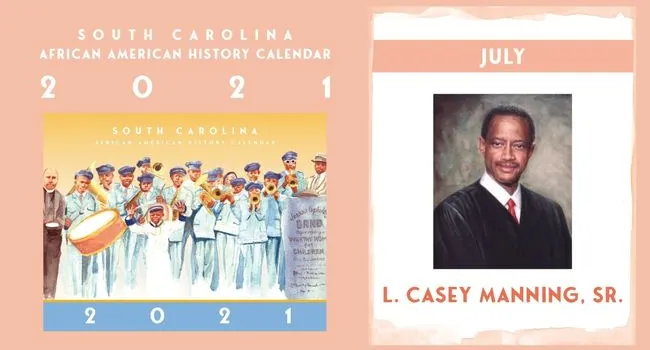
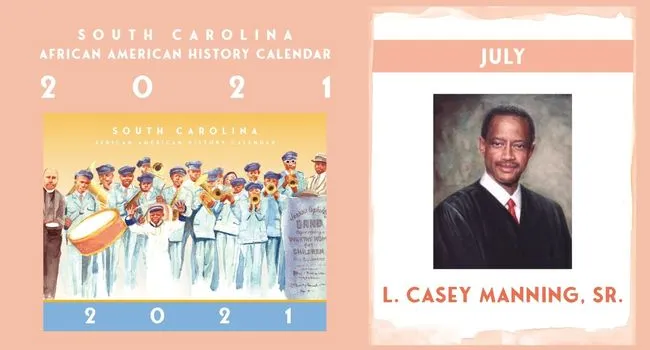
2024 SC African American History Calendar
This is a link to the 2024 SC African American History Calendar where Clifton B. Newman is the May honoree.
View ResourceClifton B. Newman-May 2024 Calendar Honoree
This video shares the life and contributions of the May 2024 Honoree Judge Clifton B. Newman .
View ResourceWhat to know about Judge Clifton B. Newman
Insight into the career of Judge Clifton B. Newman and some of his most prestigious work during his career as a judge.
View ResourceStandards
- K.4 Utilize the college and career skills of a political scientist to understand and display civic dispositions in one’s personal community.
- ELA.C.3 Write narratives to develop real or imagined experiences using effective techniques.
- 1.CG.2 Describe the basic purpose, structure, and functions of South Carolina’s government at both the local and state level.
- ELA.C.3 Write narratives to develop real or imagined experiences using effective techniques.
- 2.CG.2 Use primary and secondary sources to research a national figure who demonstrated civic dispositions.
- ELA.C.3 Write narratives to develop real or imagined experiences using effective techniques.
Assessments
Students will be informally assessed on their reflection regarding a time they had to make an important judgement or decision. Students should include as many details as possible using the questions provided to guide them.

















:max_bytes(150000):strip_icc():focal(1079x318:1081x320)/judge-clifton-newman-030423-2-29bd7065f2bf4c79a5758eca0fd73e1c.jpg)