Learn how to use Spanish when you go shopping.
Vocabulary used in this episode:
- pants/ el pantalón (los pantalones)
- shirt(s) / la camisa (las camisas)
- dress(es)/ el vestido (los vestidos)
- skirt(s)/ la falda (las faldas)
- hat(s)/ el sombrero (los sombreros)
- shorts/ el pantalón corto (los pantalones cortos)
- tie(s)/ la corbata (las corbatas)
- shoes(s)/ el zapato (los zapatos)
- sock(s)/ el calcetín (los calcetines)
- sweater(s)/ el suéter (los suéteres)
- T-shirt(s)/ la camiseta (las camisetas)
- pajamas/ el pijama (los pijamas)
Lesson 5 - Shopping at the Department Store
Objectives
- To learn words for articles of clothing
- To relate the article of clothing to the part of the body on which it is worn
- To learn about the types of clothing worn in Ecuador
Culture
In Ecuador students wear uniforms to school every day. In the cities, most people wear the same kind of clothing as Americans. However in remote mountain towns, women can be seen wearing traditional types of clothing. In the lesson Señora Carnes’ sister wears a Saraguro Indian outfit. This outfit has a bright blue skirt and a white blouse which is worn with a necklace that has many rows of multi-colored beads. Since the mountains are cold, the women wear a black wool shawl and a white sombrero.
Before Viewing the Video Lesson
- Review the vocabulary words from lesson 4 on the parts of the body. Students will need these words in today’s lesson. Review colors and numbers, as well as the words for man, woman, boy, girl.
- What are your students wearing to school today? Tell the students that in today’s lesson they will learn the Spanish words for different items of clothing.
- How many girls are wearing dresses, skirts, pants, or sweaters? How many boys are wearing pants, shirts, sweaters, jeans, or T-shirts? Is anyone wearing his or her pajamas? Is anyone wearing a hat? Count the number wearing these and make graphs on the board for boys and for girls.
- Where did your students get their clothes? Talk about going shopping for clothes. In today’s lesson the students will see a clothing store. Ask them to watch for the things they would buy, if they went shopping. Avoid mixing languages.
Description of the Video Lesson
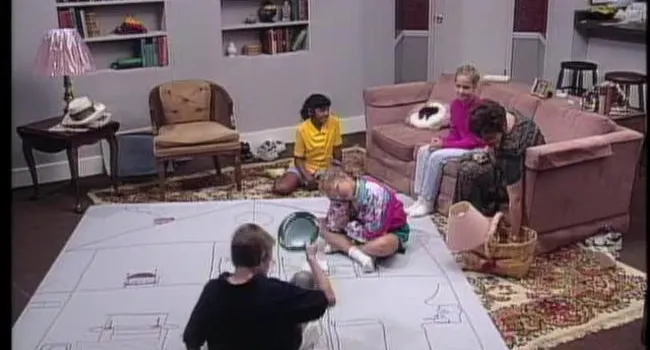
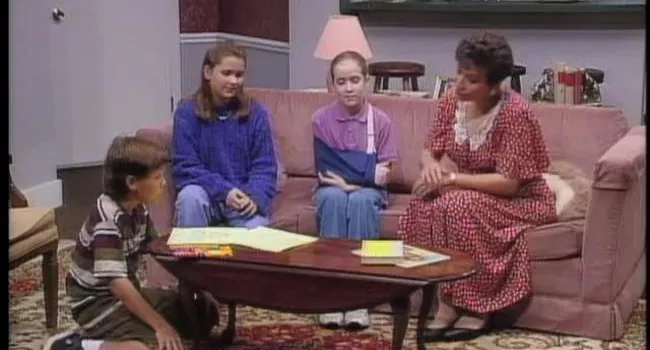
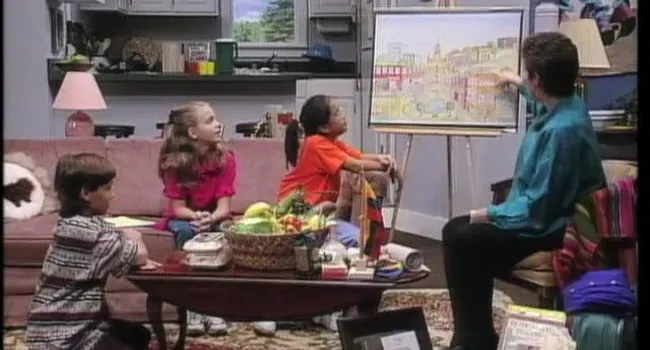
Robin comes in wearing a dressy outfit because she is going to have her picture made. She reviews people by identifying people in a drawing and telling their names. Señora Carnes talks to the children about what they are wearing. (Note: She uses lots of words in this sequence that your students will not recognize. Have them just listen to the words). Janna shows her shoes and Señora Carnes tells about her many, many different pairs of shoes and their colors, even purple.
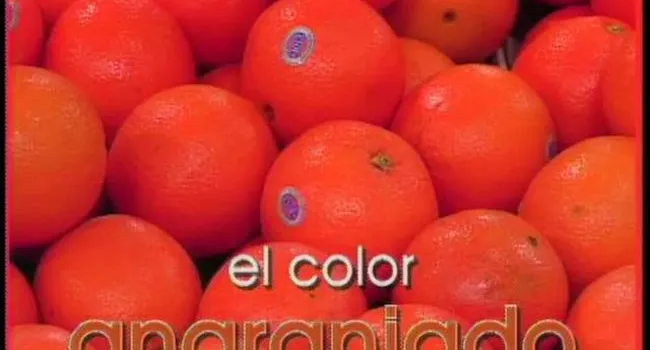
Los colores
morado, amarillo, azul, negro, blanco, café, verde, rojo, rosado, morado
In Ecuador’s large cities the people dress like the children in the lesson. ss. In the mountains of Ecuador many people dress in traditional dress all of the time, not just for special days. Señora Carnes’ sister, Andrea, comes in and shows the children the traditional dress of the Saraguro Indians. She is wearing a blue skirt, rope sandals, a white blouse with many different colors of embroidery work around the neck, a black wool shawl since the mountains are cold, and a white hat.
Shopping
shoes, socks, sweaters, pants, shirts, skirts, hats, dresses
Counting hats
uno, dos, tres, cuatro, cinco, seis, siete, ocho, nueve, diez
Señora Carnes and the children play a game with clothes and the types of activities for which they are worn. After they look at the different types of clothes, she tells them what to find and were to put it: Ponte el sombrero en la mano, ponte el zapato en la cabeza.
Song
The man wants a new tie (la corbata), the woman wants a new dress (el vestido), the boy wants new jeans (el jean or los jeans), the girl wants a skirt (la falda), a shirt (la camisa) and a hat (el sombrero), the baby wants to take off his shoes (los zapatos)
Los colores
verde, rosado, amarillo, morado, blanco, azul, negro, café los zapatos
el sombrero
Follow-up Activities
- Use the First Step Español Again video lesson to review the emphasized vocabulary and conversations.
- Hold up different items of clothing and ask the students for the correct vocabulary word. You may want to use real clothes, baby clothes, or doll clothes. You could even use a paper doll of a boy and a girl, as well as their clothes. Ask the question, “Que es?” as you hold up an item. They would answer, “Es ”.
- Play a game of who needs each item of clothing. Let the students tell you whether a man (el hombre), woman (la mujer), boy (el niño) or girl (la niña) would use the item.
- After these follow-up activities, let students view the video lesson again so they can respond and practice with the children on the lesson.
Supplemental Activities
- Play the game used in the lesson of putting a clothing item on a part of the body. Do some correctly and some silly as was done in the program
- If possible, invite natives of different countries to visit your class. Ask them to wear or tell about traditional dress in their country. If they know the significance of the style, colors, etc., ask them to explain this also. A local college may have an international students association that would be able to assist with this activity.
- Ask the PE teacher to play races with clothes. Use the relay game idea of packing a suitcase and going on vacation. Put three oversize clothing items (shirt, shorts, hat) in each suitcase, put the suitcases at the starting point (home). Runners pick up the suitcase and run to the second point (vacation location). They open the suitcase, put the clothes on as the word is called out in Spanish, close the suitcase, run around the suitcase once, open the suitcase, take off the clothes (others could again call out the Spanish words), put the clothes back into the suitcase and return home with the suitcase. The next team member then does the same process until the entire team has gone on vacation.
Remember to use the vocabulary words in context as much as possible in class during the next week. Review as many words as possible from the first five lessons. Whenever there is a spare minute, even while waiting in line review vocabulary words in fun ways. Continue to add to the First Step Español suitcase folders.
Learn how to use Spanish when you go shopping.
Vocabulary used in this episode:
- pants/ el pantalón (los pantalones)
- shirt(s) / la camisa (las camisas)
- dress(es)/ el vestido (los vestidos)
- skirt(s)/ la falda (las faldas)
- hat(s)/ el sombrero (los sombreros)
- shorts/ el pantalón corto (los pantalones cortos)
- tie(s)/ la corbata (las corbatas)
- shoes(s)/ el zapato (los zapatos)
- sock(s)/ el calcetín (los calcetines)
- sweater(s)/ el suéter (los suéteres)
- T-shirt(s)/ la camiseta (las camisetas)
- pajamas/ el pijama (los pijamas)
Lesson 5 - Shopping at the Department Store
Objectives
- To learn words for articles of clothing
- To relate the article of clothing to the part of the body on which it is worn
- To learn about the types of clothing worn in Ecuador
Culture
In Ecuador students wear uniforms to school every day. In the cities, most people wear the same kind of clothing as Americans. However in remote mountain towns, women can be seen wearing traditional types of clothing. In the lesson Señora Carnes’ sister wears a Saraguro Indian outfit. This outfit has a bright blue skirt and a white blouse which is worn with a necklace that has many rows of multi-colored beads. Since the mountains are cold, the women wear a black wool shawl and a white sombrero.
Before Viewing the Video Lesson
- Review the vocabulary words from lesson 4 on the parts of the body. Students will need these words in today’s lesson. Review colors and numbers, as well as the words for man, woman, boy, girl.
- What are your students wearing to school today? Tell the students that in today’s lesson they will learn the Spanish words for different items of clothing.
- How many girls are wearing dresses, skirts, pants, or sweaters? How many boys are wearing pants, shirts, sweaters, jeans, or T-shirts? Is anyone wearing his or her pajamas? Is anyone wearing a hat? Count the number wearing these and make graphs on the board for boys and for girls.
- Where did your students get their clothes? Talk about going shopping for clothes. In today’s lesson the students will see a clothing store. Ask them to watch for the things they would buy, if they went shopping. Avoid mixing languages.
Description of the Video Lesson
Robin comes in wearing a dressy outfit because she is going to have her picture made. She reviews people by identifying people in a drawing and telling their names. Señora Carnes talks to the children about what they are wearing. (Note: She uses lots of words in this sequence that your students will not recognize. Have them just listen to the words). Janna shows her shoes and Señora Carnes tells about her many, many different pairs of shoes and their colors, even purple.
Los colores
morado, amarillo, azul, negro, blanco, café, verde, rojo, rosado, morado
In Ecuador’s large cities the people dress like the children in the lesson. ss. In the mountains of Ecuador many people dress in traditional dress all of the time, not just for special days. Señora Carnes’ sister, Andrea, comes in and shows the children the traditional dress of the Saraguro Indians. She is wearing a blue skirt, rope sandals, a white blouse with many different colors of embroidery work around the neck, a black wool shawl since the mountains are cold, and a white hat.
Shopping
shoes, socks, sweaters, pants, shirts, skirts, hats, dresses
Counting hats
uno, dos, tres, cuatro, cinco, seis, siete, ocho, nueve, diez
Señora Carnes and the children play a game with clothes and the types of activities for which they are worn. After they look at the different types of clothes, she tells them what to find and were to put it: Ponte el sombrero en la mano, ponte el zapato en la cabeza.
Song
The man wants a new tie (la corbata), the woman wants a new dress (el vestido), the boy wants new jeans (el jean or los jeans), the girl wants a skirt (la falda), a shirt (la camisa) and a hat (el sombrero), the baby wants to take off his shoes (los zapatos)
Los colores
verde, rosado, amarillo, morado, blanco, azul, negro, café los zapatos
el sombrero
Follow-up Activities
- Use the First Step Español Again video lesson to review the emphasized vocabulary and conversations.
- Hold up different items of clothing and ask the students for the correct vocabulary word. You may want to use real clothes, baby clothes, or doll clothes. You could even use a paper doll of a boy and a girl, as well as their clothes. Ask the question, “Que es?” as you hold up an item. They would answer, “Es ”.
- Play a game of who needs each item of clothing. Let the students tell you whether a man (el hombre), woman (la mujer), boy (el niño) or girl (la niña) would use the item.
- After these follow-up activities, let students view the video lesson again so they can respond and practice with the children on the lesson.
Supplemental Activities
- Play the game used in the lesson of putting a clothing item on a part of the body. Do some correctly and some silly as was done in the program
- If possible, invite natives of different countries to visit your class. Ask them to wear or tell about traditional dress in their country. If they know the significance of the style, colors, etc., ask them to explain this also. A local college may have an international students association that would be able to assist with this activity.
- Ask the PE teacher to play races with clothes. Use the relay game idea of packing a suitcase and going on vacation. Put three oversize clothing items (shirt, shorts, hat) in each suitcase, put the suitcases at the starting point (home). Runners pick up the suitcase and run to the second point (vacation location). They open the suitcase, put the clothes on as the word is called out in Spanish, close the suitcase, run around the suitcase once, open the suitcase, take off the clothes (others could again call out the Spanish words), put the clothes back into the suitcase and return home with the suitcase. The next team member then does the same process until the entire team has gone on vacation.
Remember to use the vocabulary words in context as much as possible in class during the next week. Review as many words as possible from the first five lessons. Whenever there is a spare minute, even while waiting in line review vocabulary words in fun ways. Continue to add to the First Step Español suitcase folders.
Resources
First Step en Español 105: Shopping at the Department Store
Learn how to use Spanish when you go shopping for clothes. Reviews parts of the body.
View Lesson