An introduction to speaking Spanish focusing on greetings and introductions to various people and family members.
Vocabulary used in this episode:
- Good Morning / Buenos Dias
- Hello / Hola
- Good Bye / Hasta Luego/Ciao
- Mr. / Señor / Señora
- Mrs. / Señorita / Señorita
- What is your name / ¿Cómo te llamas?
- My name is... / Me llamo...
- Nice to meet you / Mucho gusto
- Yes / Sí
- No / No
- Please / Por favor
- Yes, please / Sí, por favor
- Excuse me / Perdón, Permiso
- Thank you / Gracias
- You’re welcome / De nada
- How are you? / ¿Cómo estás?
- Very well / Muy bien
- So, so / Así, así
- Not well / Mal
- The family / La familia
- Mom / la mamá
- Dad / el papá
- Brother / el hermano (los hermanos)
- Sister / la hermana (las hermanas)
- Grandfather / el abuelo (los abuelos)
- Grandmother / la abuela (las abuelas)
- Boy / el niño (los niños)
- Girl / la niña (las niñas)
- South America / Sudamérica
Lesson 1 - Hola
Objectives
- To motivate the students to learn Spanish
- To learn words of introduction and greetings
- To learn expressions related to members of the family
- To learn about the way Spanish-speaking people greet each other
- To learn in what countries Spanish is spoken
Culture
Spanish is the major language in 20 different countries around the world. Español began in Spain (España). Señora Carnes is from South America (Sudamérica). In Central and South America, Spanish is spoken in the Caribbean (El Caribe), Cuba, Puerto Rico, the Dominican Republic, Guatemala, Honduras, El Salvador, Nicaragua, Costa Rica, Panama, Venezuela, Colombia, Ecuador, Peru, Bolivia, Chile, Argentina, Paraguay, Uruguay, and Mexico.
Names in Spanish-speaking countries are different from names in English-speaking countries.
Friends in Spanish-speaking countries usually greet each other by kissing each other on the cheek.
Information for Teachers
- The letter h, as in Hola, is always silent
- The names of languages, such as español, are not capitalized except at the beginning of a sentence.
- Masculine nouns usually end with an -o and is preceded by the definite article el (the). Los is the definite article use with plural masculine nouns.
- Feminine nouns usually end with an -a and is preceded by the definite article la (the). Las is the definite article use with plural feminine nouns
- There is a formal and a familiar expression when using the word “you”. The formal “you” is “usted” and is used when addressing older people and people who are in authority as a sign of respect. Students should use this with teachers.
- The familiar “you” is “tú” and is used when addressing family members, friends and colleagues. Students should use this with each other.
- The letter ll, as in me llamo, has the sound of y in English, such as in yes and you.
- A special punctuation is used at the beginning of a question (¿ or upside down question mark) or exclamation (¡ or upside down exclamation mark) along with the regular mark at the end of the question or exclamation.
Before Viewing the Video Lesson
Remind the students that they will not understand everything that is said on the video lesson and that this is not important because they are being immersed in the language. Hearing the language being used is very important and that only certain words and phrases will be learned from the program. Today’s program introduces Señora Carnes and the neighborhood children who are leaning Spanish.
Role play an introductory situation in English with your students.
- “Hello, my name is
- What is your name? My name is ____________ .
- Nice to meet you ____________ .
- How are you? Very well, thank you. Good bye”.
Explain that the children on the program and your students will learn introductions, greeting and family names from today’s program. Tell them to watch for these words.
Listen to the audiocassette tape of lesson 1 vocabulary words. Explain that some of these are the same words they used in activity #3. Encourage students to use the words in new situations. You may choose to give the students a copy of this lesson’s vocabulary words found at the back of the teacher’s guide.
Description of the Video Lesson (For teachers)
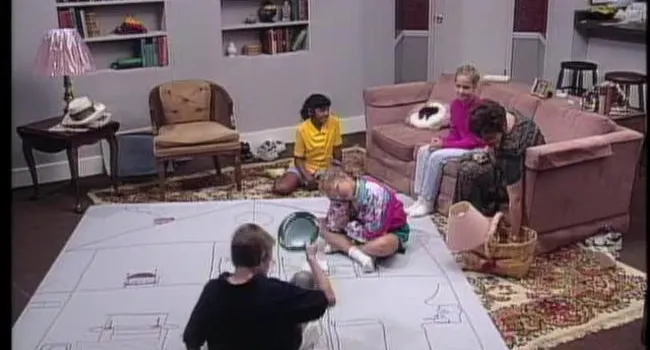
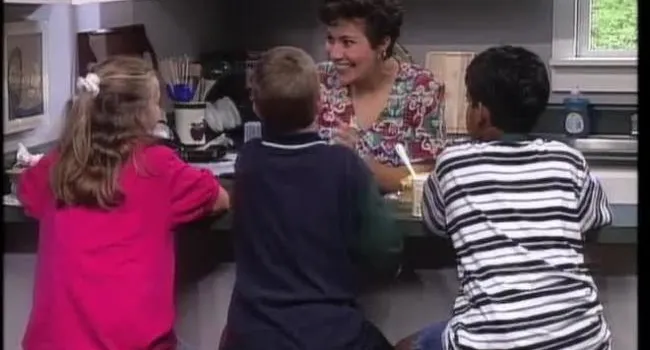
At a neighborhood party some children ask Axa Carnes to teach them Spanish. She agrees and tells them to come to her house the next day to start. When they arrive she speaks only Spanish to them.
Señora Carnes tells them her family lives in Ecuador on the continent of South America. It is a very small country on the Pacific Ocean.
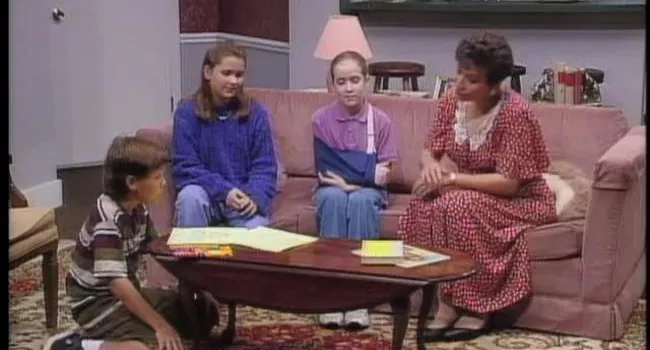
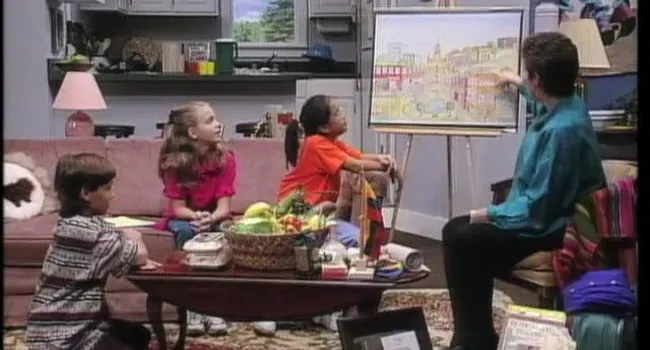
As she shows them pictures of her family (la familia), she tells them who the people are and teaches the words for family members. Her mother (la mamá) and father (el papá) are in her wedding picture. Her two sisters (las hermanas) are in a picture with her at her sister’s wedding. She and one sister are Señoras because they are married but the other sister is a Señorita because she is not married. She also has one brother (el hermano) who is a Señor. She asks the children if they have brothers or sisters. There is also a picture of her grandmother (la abuela) and grandfather (el abuelo) at their wedding.
Kevin says he is Señor Kevin. Señora Carnes explains that a señor is big and that Kevin is a boy (el niño). Grayson and Biaca are girls (las niñas).
Review Sequence
la niña, el niño, la mamá, el papá, la abuela, el abuelo, señora, señorita, señora...el hermano/los hermanos, la hermana/ las hermanas, la hermana, el hermano/los hermanos
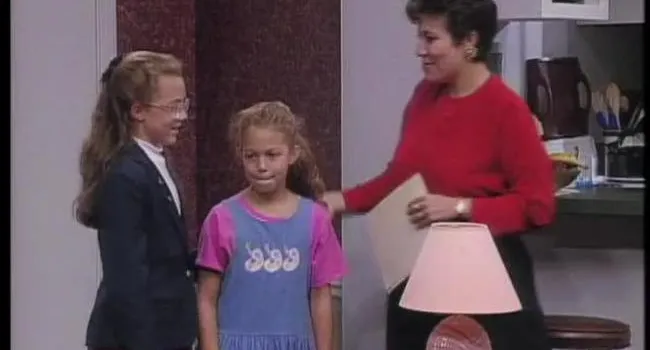
Señora Carnes is bringing cookies for the children and Grayson asks what you say if you are meeting someone for the first time. They do an introduction and greeting sequence. Hello, my name is Axa Carnes (Hola, Me llamo Axa Carnes), what is your name (¿Cómo te llamas?). My name is Grayson (Me llamo Grayson). Nice to meet you (Mucho gusto). She kisses her on the cheek as part of the greeting. She greets the other two children and then asks Bianca, How are you? (¿Cómo estás?) - Very well (muy bien), So so (Así, así) or Not well (Mal). All of the children respond. Kevin is not well (Mal) because he is hungry and wants some cookies.
Song - Buenos Días, Buenos Días, Buenos Días
Review - ¿Como te llamas? Mucho gusto, Me llamo
Señora Carnes offers the children cookies . They learn please (por favor), yes, please (sí, por favor), thank you (gracias), excuse me (permiso/perdón) as they eat cookies.
Song por favor permiso perdón gracias
Señora Carnes tells them it is time to leave and they all say good bye (Hasta Luego).
Follow-up Activities
- Use the First Step Español Again video lesson to review the emphasized vocabulary and conversations.
- Review vocabulary words related to the family. Ask each student to draw a picture of his/her family and label the family members: el papá, la mamá, el hermano, la hermana, el abuelo, la abuela.
- Review Señor, Señora, Señorita, el niño, la niña. Show pictures of each and let students tell which word is correct.
- Do role play situations of greeting and introductions. This could be done in a round robin/circle type game. Do the same with “How are you?” and appropriate responses.
- Review por favor, sí, por favor, perdón, permiso, gracias. Which would be appropriate to use in short role play situations.
- After these follow-up activities, let students view the video lesson again so they can respond and practice with the children on the lesson.
Supplemental Activities
- Let students create a short skit using greetings, introductions, questions about health, and polite words. Invite another class to watch the skit. If they are not studying Spanish in their class, let your students teach those students how to greet and introduce each other. (Remember, avoid mixing English with target language.)
- Make a suitcase type folder from construction paper or a center cut manila file folder. Write First Step Español on the suitcase like that on the series opening logo. Do luggage type name tags for student names. Keep copies of students’ work in this suitcase.
- Do a tally number chart on brothers and sisters (los hermanos / las hermanas).
- Let each child create a collage of family members and words. Ask them to bring in small pictures that can be duplicated on the copier. Copy one page of pictures per child by overlapping pictures. Let the child cut out the pictures and arrange them on a piece of construction paper with already written copies of family words. Let students take turns presenting their families to the class, speaking Spanish.
- Discuss the custom of kissing on the cheek in greeting. What other types of physical contact do people do when greeting each other? Talk about the differences within the United States: Eskimos, Hispanics, Native Americans, etc.
- Señora Carnes is from Ecuador. Find Ecuador on a map of South America. Read about this country and find interesting facts about it to share. (For example: Ecuador is the size of Colorado.)
- Draw a family tree and label each family member with the appropriate Spanish name.
Follow up with an activity that uses words in context. “This is my sister…”, “her name is…”, “she is …”
Remember to use the vocabulary words in context as much as possible in class during the next week. This should be especially easy since there are words of greetings and introductions, questions and answers about how are you, and polite words.