Learn more vocabulary words related to food and shopping by using Spanish to speak about groceries.
Vocabulary used in this episode:
Masculine (Feminine)
Colors / Los colores
- green / verde (verdes)
- red / rojo (rojos) roja (rojas)
- yellow / amarillo (amarillos) amarilla (amarillas)
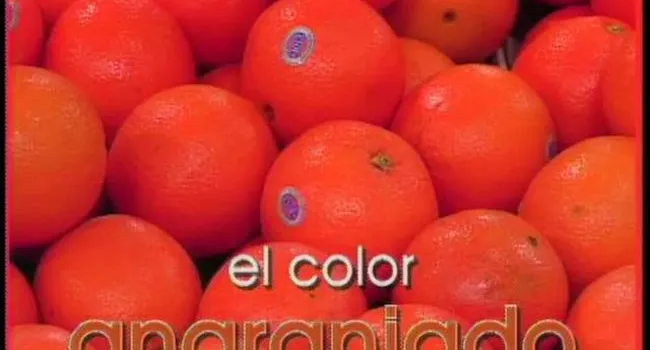
- orange / anaranjado (anaranjados) anaranjada (anaranjadas)
- purple / morado (morados) morada (moradas)
Fruit / La fruta (Las frutas)
- apple / la manzana (las manzanas)
- orange / la naranja (las naranjas)
- banana / la banana (las bananas)
- grape / la uva (las uvas)
Vegetables / Las legumbres
- cabbage / la col (las coles)
- carrots / la zanahoria (las zanahorias)
- tomatoes / el tomate (los tomates)
- potatoes / la papa (las papas)
- beans / los fríjoles
Other Food
- butter / la mantequilla
- milk / la leche
- marmalade / la mermelada
- bread / el pan (los panes)
- avocado / el aguacate (los aguacates)
- cheese / el queso (los quesos)
- coffee / el café
- pineapple / la piña (las piñas)
- plantain / el plátano (los plátanos)
- orange juice / el jugo de naranja
- cake / la torta
- chicken / el pollo
- rice / el arroz
- beef / la carne
- juice / el jugo
Lesson 3 - Shopping at the Grocery Store
Objectives
- To continue learning color names
- To learn the names of fruits and vegetables
- To practice counting
- To learn about meals in Spanish speaking countries
Culture
In this lesson Señora Carnes shares native Ecuadorian meals with the children. Because she is from Ecuador, fruit and yuca root plays an important part in the meals.
The morning meal consists of milk, coffee with lots of sugar, toast, margarine, farmer’s cheese, and fresh fruit juice. The midday meal has a vegetable soup, yellow rice with chicken stew, avocado, and pineapple juice. The evening meal consists of white rice with bean stew, stir fried beef and plantain fritter with milk.
Information for the Teacher
Spanish nouns have a gender and therefore the definite article associated with the noun is either masculine or feminine. The article is taught as part of the noun.
Many of the colors also have a masculine and feminine form, therefore the gender of the noun and the color have to agree. For example: the apple is red (la manzana es roja) and the tomato is red (el tomate es rojo). In English the closest comparison would be with the agreement between masculine and feminine names with pronouns - he/she, him/her, his/hers.
Before Viewing the Video Lesson
- Review previous vocabulary especially numbers since items at the grocery store will be counted.
- Tell students that in today’s lesson they will learn more colors. Review the other colors learned in the last lesson. What other colors do the students think will be included?
- If the students were to go to the grocery store on their way home from school, what would they see? In this lesson the students will learn the names of some fruits and vegetables.
Description of the Video Lesson
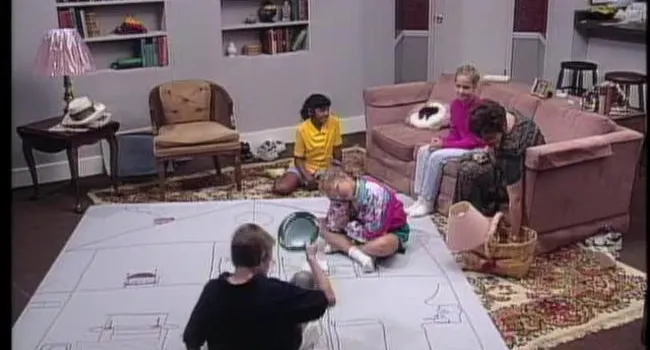
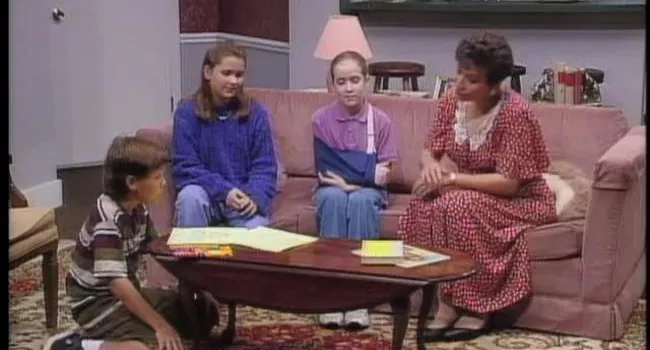
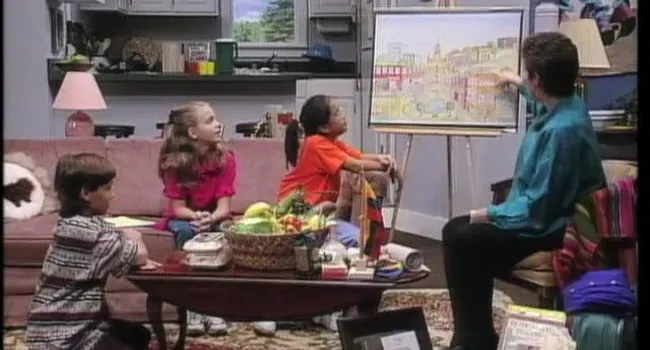
Señora Carnes is returning from the grocery store as the children arrive. As she unloads the groceries she discussed the food and does activities to teach the names of the foods and their colors, She introduces the banana (la banana), apple (la manzana), grapes (las uvas) as she asks whether or not they will float. Then she asks which fruit the children want to eat.
Counting apples / Los números ...las manzanas
What color is the ...?
She teaches the children yellow (amarillo), red (rojo), green (verde), orange (anaranjado), purple (morado).
Song / Las manzanas
They continue discussing the color of fruits by asking questions. At the grocery store Introduce vegetables and other foods
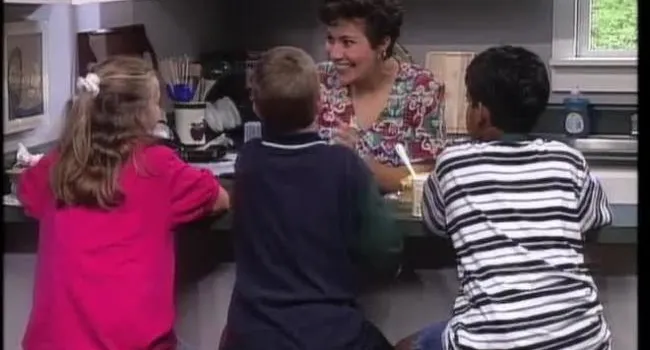
A clock indicates meal times and at 7:30 a.m. Señora Carnes gives the children breakfast foods which consists of a very small amount of coffee (el café) with lots of sugar (el azúcar), bread or toast (el pan) with butter (la mantequilla) and marmalade (la mermelada) or cheese (el queso), and orange juice (el jugo de naranja) and at 1:00 p.m. a main meal with soup made with vegetable (las legumbres) and yuca (la yuca) as the first course, pineapple juice (el jugo de piña) is served with the second course of chicken (el pollo), rice (el arroz), and avocado (el aguacate).
Song / Las legumbres
At 7:00 p.m. for the evening meal Señora Carnes fixes white rice (el arroz blanco), beans (los fríjoles), beef (la carne), and plantain (el plátano) with milk (la leche) and coffee (el café) to drink.
la manzana la leche
Follow-up Activities
- Use the First Step Español Again video lesson to review the emphasized vocabulary.
- 3. Review vocabulary words related to color from this lesson and lesson two. Use color circles like were used in the lesson to name colors. Add labels to things in the room for these colors. Avoid using words in isolation.
- Review names of fruits and vegetables. Use color circles to tell what color these fruits and vegetables are. Take the week’s lunch menu and replace the names of any known Spanish words for the fruits and vegetables offered at lunch.
- Discuss the meals as shown in the program. How are they like the meals served in the students’ homes and how are they different? What would the students have expected as a “typical” Spanish meal? Many students are familiar with Mexican foods and may think all Spanish-speaking people eat this way. Avoid mixing languages.
- After these follow-up activities, let students view the video lesson again so they can respond and practice with the children on the lesson.
Supplemental Activities
- Do the fruit floats game that was used in the program. This would be a good time to discuss why some things float and some do not. Why would these types of fruits float? Are the students surprised at any of the things that float and the things that do not float?
- A Gouin series is an activity used by foreign language teachers where all steps in an activity are given in order. Señora Carnes did this when she made orange juice. Review the section of the video where Señora Carnes motioned for a drink, took an orange, sliced the orange, squeezed the orange, poured the juice into a glass, and drank it.
- Continue the art activity begun last week using the new colors today.
- If possible serve some of the dishes shown as part of these meals. Maybe your room parents would be willing to prepare a typical meal and serve it to your class. Instead of the meal, a tasting party would be fun. Ask each student to bring some-thing that they think is traditionally a food in a Spanish-speaking country. Another alternative is to cook a traditional dish at school using a slow cooker with students bringing the ingredients.
- Students may be surprised to find that different countries have different kinds of traditional foods. Let your students research the traditional foods of different Spanish-speaking countries. Why do they think there would be differences? Would the climate and geographical location of the country play any role in the types of foods eaten? Are specific foods associated with certain holidays?
Remember to use the vocabulary words in context as much as possible in class during the next week. This should be especially easy since these are words related to foods and colors. Add to the First Step Español suitcase folders.
Learn more vocabulary words related to food and shopping by using Spanish to speak about groceries.
Vocabulary used in this episode:
Masculine (Feminine)
Colors / Los colores
- green / verde (verdes)
- red / rojo (rojos) roja (rojas)
- yellow / amarillo (amarillos) amarilla (amarillas)
- orange / anaranjado (anaranjados) anaranjada (anaranjadas)
- purple / morado (morados) morada (moradas)
Fruit / La fruta (Las frutas)
- apple / la manzana (las manzanas)
- orange / la naranja (las naranjas)
- banana / la banana (las bananas)
- grape / la uva (las uvas)
Vegetables / Las legumbres
- cabbage / la col (las coles)
- carrots / la zanahoria (las zanahorias)
- tomatoes / el tomate (los tomates)
- potatoes / la papa (las papas)
- beans / los fríjoles
Other Food
- butter / la mantequilla
- milk / la leche
- marmalade / la mermelada
- bread / el pan (los panes)
- avocado / el aguacate (los aguacates)
- cheese / el queso (los quesos)
- coffee / el café
- pineapple / la piña (las piñas)
- plantain / el plátano (los plátanos)
- orange juice / el jugo de naranja
- cake / la torta
- chicken / el pollo
- rice / el arroz
- beef / la carne
- juice / el jugo
Lesson 3 - Shopping at the Grocery Store
Objectives
- To continue learning color names
- To learn the names of fruits and vegetables
- To practice counting
- To learn about meals in Spanish speaking countries
Culture
In this lesson Señora Carnes shares native Ecuadorian meals with the children. Because she is from Ecuador, fruit and yuca root plays an important part in the meals.
The morning meal consists of milk, coffee with lots of sugar, toast, margarine, farmer’s cheese, and fresh fruit juice. The midday meal has a vegetable soup, yellow rice with chicken stew, avocado, and pineapple juice. The evening meal consists of white rice with bean stew, stir fried beef and plantain fritter with milk.
Information for the Teacher
Spanish nouns have a gender and therefore the definite article associated with the noun is either masculine or feminine. The article is taught as part of the noun.
Many of the colors also have a masculine and feminine form, therefore the gender of the noun and the color have to agree. For example: the apple is red (la manzana es roja) and the tomato is red (el tomate es rojo). In English the closest comparison would be with the agreement between masculine and feminine names with pronouns - he/she, him/her, his/hers.
Before Viewing the Video Lesson
- Review previous vocabulary especially numbers since items at the grocery store will be counted.
- Tell students that in today’s lesson they will learn more colors. Review the other colors learned in the last lesson. What other colors do the students think will be included?
- If the students were to go to the grocery store on their way home from school, what would they see? In this lesson the students will learn the names of some fruits and vegetables.
Description of the Video Lesson
Señora Carnes is returning from the grocery store as the children arrive. As she unloads the groceries she discussed the food and does activities to teach the names of the foods and their colors, She introduces the banana (la banana), apple (la manzana), grapes (las uvas) as she asks whether or not they will float. Then she asks which fruit the children want to eat.
Counting apples / Los números ...las manzanas
What color is the ...?
She teaches the children yellow (amarillo), red (rojo), green (verde), orange (anaranjado), purple (morado).
Song / Las manzanas
They continue discussing the color of fruits by asking questions. At the grocery store Introduce vegetables and other foods
A clock indicates meal times and at 7:30 a.m. Señora Carnes gives the children breakfast foods which consists of a very small amount of coffee (el café) with lots of sugar (el azúcar), bread or toast (el pan) with butter (la mantequilla) and marmalade (la mermelada) or cheese (el queso), and orange juice (el jugo de naranja) and at 1:00 p.m. a main meal with soup made with vegetable (las legumbres) and yuca (la yuca) as the first course, pineapple juice (el jugo de piña) is served with the second course of chicken (el pollo), rice (el arroz), and avocado (el aguacate).
Song / Las legumbres
At 7:00 p.m. for the evening meal Señora Carnes fixes white rice (el arroz blanco), beans (los fríjoles), beef (la carne), and plantain (el plátano) with milk (la leche) and coffee (el café) to drink.
la manzana la leche
Follow-up Activities
- Use the First Step Español Again video lesson to review the emphasized vocabulary.
- 3. Review vocabulary words related to color from this lesson and lesson two. Use color circles like were used in the lesson to name colors. Add labels to things in the room for these colors. Avoid using words in isolation.
- Review names of fruits and vegetables. Use color circles to tell what color these fruits and vegetables are. Take the week’s lunch menu and replace the names of any known Spanish words for the fruits and vegetables offered at lunch.
- Discuss the meals as shown in the program. How are they like the meals served in the students’ homes and how are they different? What would the students have expected as a “typical” Spanish meal? Many students are familiar with Mexican foods and may think all Spanish-speaking people eat this way. Avoid mixing languages.
- After these follow-up activities, let students view the video lesson again so they can respond and practice with the children on the lesson.
Supplemental Activities
- Do the fruit floats game that was used in the program. This would be a good time to discuss why some things float and some do not. Why would these types of fruits float? Are the students surprised at any of the things that float and the things that do not float?
- A Gouin series is an activity used by foreign language teachers where all steps in an activity are given in order. Señora Carnes did this when she made orange juice. Review the section of the video where Señora Carnes motioned for a drink, took an orange, sliced the orange, squeezed the orange, poured the juice into a glass, and drank it.
- Continue the art activity begun last week using the new colors today.
- If possible serve some of the dishes shown as part of these meals. Maybe your room parents would be willing to prepare a typical meal and serve it to your class. Instead of the meal, a tasting party would be fun. Ask each student to bring some-thing that they think is traditionally a food in a Spanish-speaking country. Another alternative is to cook a traditional dish at school using a slow cooker with students bringing the ingredients.
- Students may be surprised to find that different countries have different kinds of traditional foods. Let your students research the traditional foods of different Spanish-speaking countries. Why do they think there would be differences? Would the climate and geographical location of the country play any role in the types of foods eaten? Are specific foods associated with certain holidays?
Remember to use the vocabulary words in context as much as possible in class during the next week. This should be especially easy since these are words related to foods and colors. Add to the First Step Español suitcase folders.