Learn how to speak about basic birthday and outdoor activities in Spanish.
Vocabulary used in this episode:
- Birthday party / la fiesta de cumpleaños cake, la torta
- candles / las velas
- How old are you? / ¿Cuántos años tienes?
- I’m .... years old / Tengo ... años flower, la flor (las flores)
- tree / el árbol (los árboles)
- sun / el sol
- picnic / el picnic
- sports / los deportes
- football / el fútbol americano
- soccer / el fútbol
- basketball / el basketball or el baloncesto
- baseball / el béisbol
- tennis / el tenis
- bicycle / la bicicleta
- tricycle / el triciclo
Lesson 10 - A Birthday Picnic
Objectives
- To learn words related to parks, nature and having fun
- To learn words related to sports
- To learn about celebrations in Spanish-speaking countries
- To learn about sports in Spanish-speaking countries
Culture
Soccer is the most important sport in Spanish-speaking countries. It could be considered the national game, just like baseball is in the United States. The World Cup and other international soccer matches are major sources of national loyalty throughout the world. Soccer players are considered role models and heroes just as sports figures are in this country. However, in Dominican Republic and Cuba, baseball is the most popular sport. Most of the baseball players with Spanish names playing in the major and minor leagues come from these countries.
The piñata is a traditional party favor in Mexico and South America. The piñata is made of wrapped paper and is colorfully decorated to resemble an animal or other design. The inside is hollow so candy and small toys can be added. The children take turns trying to hit the piñata and break it. Since they are blindfolded and turned around several times before they start hitting at the piñata, it is fun to watch them try to find the piñata. Usually the piñata is tied to a rope and can be raised and lowered by an adult while the children are playing. When the piñata breaks, everyone scrambles to get the candy. The original piñatas were made out of clay. Even today, there are many towns in Mexico where they still use clay piñatas.
Information for the Teacher
The Spanish word for soccer is el fútbol. Students may be confused since it is so similar for our word football. Football, as we know it, is called el fútbol americano.
Before Viewing the Video Lesson
- Tell the students that this is the last program in the First Step Español series. Review with them the things they have learned this year. Use the First Step Español suitcase folder for this review. The students will probably be very surprised at all they have learned.
- Ask the students how old they are. What do they think would be the ideal birthday party? Tell them that in today’s lesson it is Grayson’s birthday and her friends are giving her a surprise birthday picnic in Señora Carnes’ living room. Ask the students to listen for birthday words.
- What are your students’ favorite sports? Do a poll and create a graph on the board. Leave this up for a follow-up activity.
Description of the Video Lesson
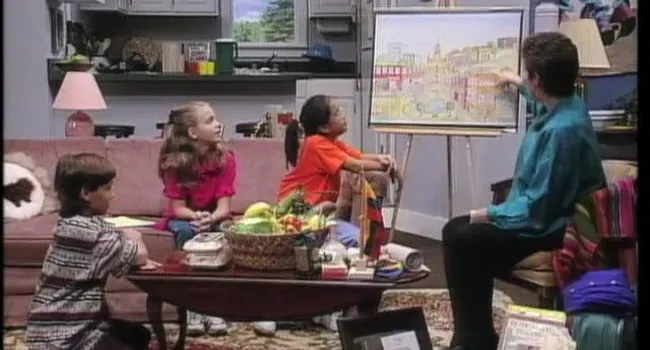
Today is Grayson’s birthday and Señora Carnes is making her a birthday cake. The other children are helping, but Kevin is trying to eat the icing. They talk about how old Grayson will be. Señora Carnes asks the other children how old they are (¿Cuántos años tienes?) They reply by saying I am years old (Tengo años). The other children are all ten years old and they ask Señora Carnes how old she is. She tries 10 plus 10 plus 10, then says it is a secret.
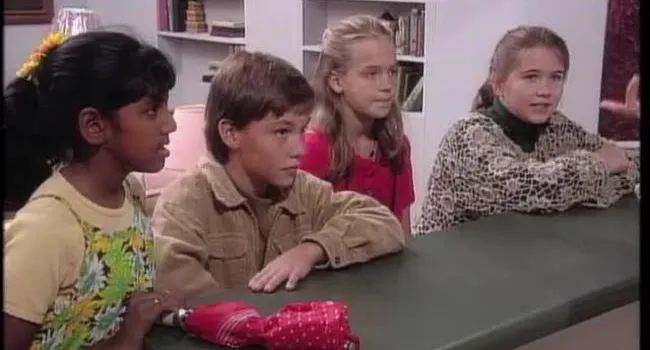
Children answering the question: How old are you?
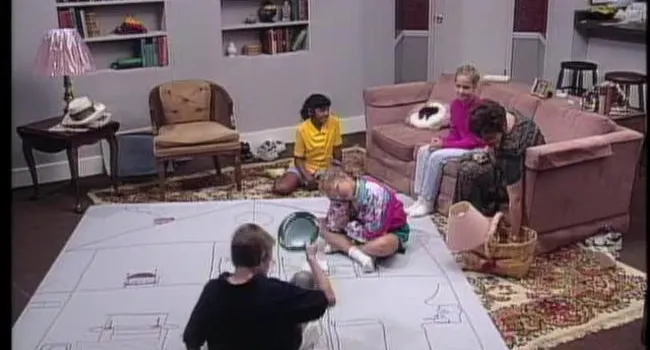
Kevin has the idea to have a birthday picnic in the park for Grayson’s party but they decide to fix up the living room as if it was the park and have the picnic there. They put a blanket on the floor, have gifts and balloons, and even make a tree to put in the park. When Grayson comes in they all hide and say íSorpresa! Feliz Cumpleaños. Grayson is surprised especially at the idea of a picnic. They put ten candles on the birthday cake and light them. They all sing, and Señora Carnes tells Grayson to close her eyes and make a wish, then open her eyes and blow out the candles.
Bikes are everywhere
la bicicleta and el triciclo
They are eating cake and then they give Grayson her presents. She gets some chocolates, a book and pencil, a china dog, and some flowers. Then Señora Carnes tells them that they have to have a piñata at a birthday party. Everyone is very excited and tries to break the piñata.
In the park
Families have fun together: flying kites, playing Frisbee, playing, running and rolling in the grass
After the picnic Señora Carnes asks the children what are their favorite sports. They like riding bikes, basketball, baseball, American football, and soccer. She explains that soccer is called el fútbol in Spanish-speaking countries and that football as we know it is called el fútbol americano. Soccer is extremely popular in South American countries. The children get up and play soccer. Emily makes a goal and says Gol, Sí Gol.
Review
- el fútbol, el futbol americano, el basketball or el baloncesto, el béisbol, el tenis
- el fútbol
- el fútbol americano el baloncesto
- el béisbol la bicicleta
Follow-up Activities
- Use the First Step Español Again video lesson to review the emphasized vocabulary and conversations.
- Who had a birthday party in the program? What kind of party was it? Review the words related to a birthday party. Feliz Cumpleaños is Happy Birthday in Spanish.
- Discuss in Spanish the words related to sports by using different types of balls. Refer back to the graph made before viewing the program and change the sports names to Spanish names for those sports.
- After these follow-up activities, let students view the video lesson again so they can respond and practice with the children on the lesson.
Supplemental Activities
- In PE play the different sports learned in the program. Ask the PE teacher to explain the differences in sports in the United States and in other countries of the world.
- Invite a high school soccer coach to your class to explain the popularity of soccer through out the world. Ask them to talk about some of the players who are known the world over. Why would soccer be so popular in other countries and just growing in popularity here?
- In music sing the Happy Birthday song as it is done in Spanish-speaking countries. Listen to Spanish music and talk about the rhythm and the types of instruments used.
- Have a party to celebrate learning Spanish. Use a piñata as a part of the celebration. It may be best to hang the piñata from a basketball goal in the gym and let someone raise and lower it as students hit at it. This would make the activity last longer and hopefully give everyone a chance before the piñata is broken. Have Spanish foods as part of the celebration and afterwards play a game of soccer.