Beyond Barbados Part 5: A Cultural Hearth Lesson Plan

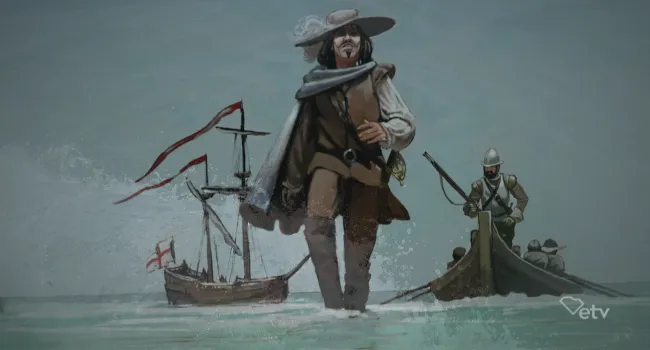
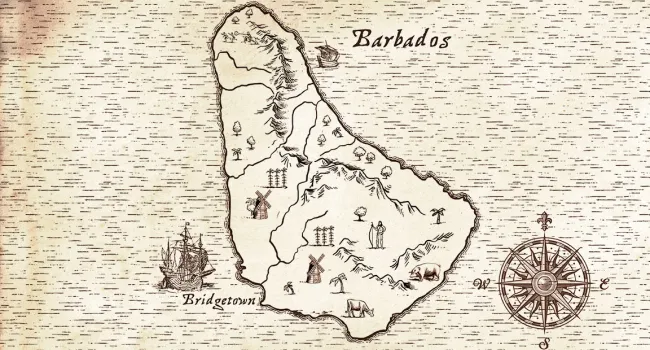
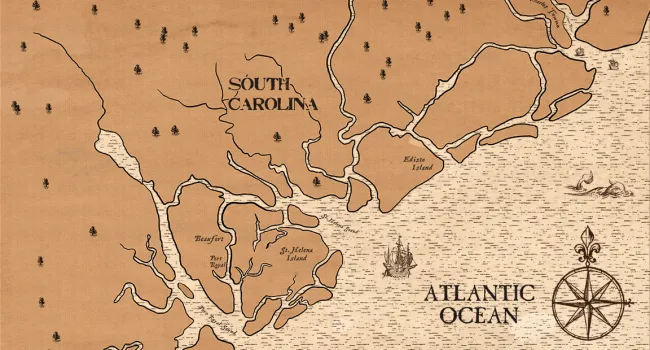
Beyond Barbados Part 5- A Cultural Hearth video segment focuses on the rebellions that took place in Barbados and the false “Emancipation” that was presented to enslaved Africans after the rebellions. Lesson Plan 3 will provide activities that will have an intentional focus on the resistance of Africans in Barbados and how the resistance impacted race relations, plantation life, and the economical factors in Barbados.
Identify and compare significant turning points, including the related causes and effects that affect historical continuity and change.
To demonstrate their ability to use the skill of causation, students should:
● identify significant events that led to change or maintain continuity.
● evaluate the causes of turning points and how they lead to change or continuity.
● evaluate the effects of turning points and how they lead to change or continuity.
● compare the importance of turning points related to causality.
Lesson Created By: FranklinGause
Essential Question
What defines a successful revolution?
Focus Questions:
- How did the economical system in Barbados and South Carolina affect the lives of Africans?
- How did the economical system in Barbados and South Carolina impact the social hierarchy in the colonies?
Grade(s):
- 4
- 6
- 8
- 9
- 10
Subject(s):
Recommended Technology:
Other Instructional Materials or Notes:
Materials for Activities:
Activity #1:
Beyond Barbados: Part 5 A Cultural Hearth video segment
The Last Word strategy activity directions
Activity #2:
Birth of a Nation video clip.
Activity #3:
Harriet Tubman quote (included with lesson plan)
Activity #4:
Denmark Vesey documents (included with lesson plan)
Bussa Rebellion documents (included with lesson plan)
Stono Rebellion documents (included with lesson plan)
David Walker’s Appeal (included with lesson plan)
Claim Statements Reference Page (included with lesson plan)
Claim Statement Cards (included with lesson plan)
Activity #5:
iMovie- Apple devices (iPad, iPhone, etc.)
Windows Moviemaker
Activity #6:
Assessment/Evaluation
The teacher will have students complete a Student Assessment Guide (SAG) to evaluate their engagement and performance during the lesson and their group’s engagement and performance. The SAG will be turned in at the end of class. The assessment should take 5 minutes or less.
Vocabulary:
Slavery, Plantation, Resistance, Bondage, Chattel, Cash Crop, Indentured Servant, Race, Oppression, Social Hierarchy, Revolution
Lesson Progression
Activity #1
The Last Word Activity
The teacher will introduce the lesson and go over the essential question and focus questions for the lesson. The teacher will show students the video segment Beyond Barbados: Part 5 A Cultural Hearth. The teacher will instruct students to complete the Last Word strategy activity, in pairs or groups, after they watch the video. The directions are provided below. The teacher should provide students 5-10 minutes after the video to complete the task. Afterwards, the teacher can invite some students to share their thoughts to facilitate discussion on the topic. The entire activity should take 15-20 minutes.
Last Word (with partner/group)
What: A brainstorming activity where the topic selected or an important term associated with the topic that is being studied is used as an acronym. Students elaborate on the topic using ideas to fit with the acronym.
How: Students select what they feel is an important term or concept from the lesson and write this term down the page vertically.
Students brainstorm all of the things that they can recall about the topic and then use, share and elaborate those ideas with their small group to fit the structure of using the letters of the topic to form the first word in each line.
Students write the word or phrase about the topic being studied using each letter of the term selected about the topic.
Students should self-evaluate for completion by asking themselves “Have I captured all of the most important ideas about the topic?” “Are there any lines that need to be revised because they are not complete, or they are not relevant to the topic?”
Activity #2
Video Analysis
The teacher will show students the Birth of a Nation video clip. The teacher will facilitate a discussion about what students saw in the movie trailer and the details presented about slavery and resistance. This activity should take 5-10 minutes.
Activity #3
Quote Analysis
The teacher will show students the quote by Harriet Tubman. The teacher will ask the students in whole class discussion to analyze the quote and share what they think it means and how it this quote could have impact revolutions in the British colonies. This activity should take 5 minutes.
Activity #4
Article Analysis and Claim Statement
The teacher will setup three station areas with primary source documents and articles on the following topics: Denmark Vesey Plot, Bussa Rebellion, Stono Rebellion, and David Walker’s Appeal. The teacher will group students for rotations to each of the four stations (four total group rotations). The teacher will instruct groups to analyze the documents at each station and create a claim statement about the rebellion or event (One claim statement for each station for a total of four claim statements per group). The teacher will instruct groups to write on the claim statement card. The teacher will need to explain to groups that a claim statement is the perspective they develop about the event based on the information they learn when they analyze the documents. The teacher will inform groups that they should be able to support their perspective with informational facts they gather in their analysis. [Note* The teacher will need to define what a claim statement is for groups and provide examples for clarity if needed. A reference page on claim statements has been included for the teacher as a guide with the lesson plan. The teacher is encouraged to use additional sources to define claim statements for groups before beginning the assignment for clarity purposes.] This activity should take 35-40 minutes.
Activity #5
Movie Proposal and Movie Trailer on Revolutions
The teacher will instruct groups to use their claim statement perspectives and supportive information from the stations to create a two-page movie proposal about the revolutionary movements that developed in the colonies of Barbados and South Carolina covered at the stations. The movie proposal would need to include setting, plot, event causes, event effects, character roles, and outcomes. To accompany the movie proposal, the teacher will instruct groups to create a movie trailer for their proposed movie. The teacher will inform groups that they will present their movie trailer and movie proposal to the class. At the end of the lesson, the teacher will need to review the essential question and the focus questions of the lesson. The teacher will help students synthesize information from the lesson by summarizing the main points and focus of the lesson and the insights shared by students during the lesson. This activity should take 40-45 minutes (time doesn’t include student presentations). The teacher can provide additional time if needed.
Activity #6
Assessment/Evaluation
The teacher will have students complete a Student Assessment Guide (SAG) to evaluate their engagement and performance during the lesson and their group’s engagement and performance. The SAG will be turned in at the end of class. The assessment should take 5 minutes or less.
Teacher Notes
This lesson is approximately 90-120 minutes. This lesson has been prepared to support and enrich the learning experience of students after they have watched Beyond Barbados: Part 5 A Cultural Hearth. A variety of activities have been provided to support student engagement in the learning environment. Some materials needed for this lesson plan are included with the lesson plan document or linked to the lesson plan. The academic vocabulary has been provided. The teacher will need to provide an opportunity for students to learn the vocabulary before beginning the activities included with this lesson plan.
Beyond Barbados | Carolina Stories
A Cultural Hearth The success of Barbados, Carolina, America, the New World for that matter is coterminous with slavery. The labor, the technology, the ingenuity, and the culture that supported this...
View AssetBeyond the Barbados: The Carolina Connection Learning Activity
Sometimes the history of a place begins elsewhere and the colony of South Carolina actually began somewhere else, almost two thousand miles across the sea. The settlement of Charles Towne that would...
View AssetBeyond Barbados | Carolina Stories
The Barbados Adventurers With the success of the sugarcane crop, Barbados quickly became the wealthiest colony in the New World, and the most densely populated place on the planet. Successful...
View AssetBeyond Barbados | Carolina Stories
Colony Of A Colony Most of the colonists who settled in Carolina were wealthy English planters, with names such as Middleton, Drayton, Colleton, and Yeamans. The vast wealth accrued in Carolina was...
View AssetBeyond Barbados | Carolina Stories
From Whence They Came Gullah is the blending of all the cultures that came together during that horrible time in human history called the Transatlantic Slave Trade. The connection between Barbados and...
View AssetBeyond Barbados | Carolina Stories
In The Beginning Most students today understand that the Carolinas were colonized by the English who had come to the Charleston area by way of Caribbean trade routes, primarily Barbados. The story of...
View AssetBeyond Barbados: Sweet Success | Carolina Stories
Sweet Success Dutch Sephardic Jewish colonists moved from Brazil to Barbados to escape the religious persecution of the Spanish Inquisition. These Sephardic Jews brought with them the knowledge to...
View AssetPart 6: From Whence They Came
Look around Charleston, the Barbados-Carolina connection is ever present. How “place”, past and present, changed and molded the connection is explored through various aspects of culture. The mixture...
View LessonPart 4: Colony of a Colony - Beyond Barbados: The Carolina Connection
Power was a commodity in Barbados that easily transferred to Carolina. Cultural beliefs and practices influenced Carolina’s economy and helped shape the “place” that would become South Carolina.
View LessonPart 3: The Barbados Adventurers - Beyond Barbados: The Carolina Connection
Barbados was one of the wealthiest colonies in the New World and one of the most densely populated areas on the planet. Barbados greatly changed from years of settlement and economic pursuits. “Place”...
View LessonBeyond Barbados Part 3: The Barbados Adventures Lesson Plan
Beyond Barbados Part 3- The Barbados Adventures video segment focuses on the growth and wealth of Barbados with sugar cane as the cash crop. It notes that Europeans developed plantations throughout...
View LessonBeyond Barbados Part 2: Sweet Success Lesson Plan
Beyond Barbados Part 2- Sweet Success video segment focuses on Europeans establishing Barbados as a colony. There is an emphasis on identifying how the Europeans sought for a cash crop, sugar cane, to...
View LessonPart 2: Sweet Success - Beyond Barbados: The Carolina Connection
History never really happens in a vacuum. Barbados was an amalgam of many cultures, which was made even more complicated by the social control of those in power over those enslaved. The clash of...
View LessonPart 1: In the Beginning - Beyond Barbados: The Carolina Connection
Most students today understand that the Carolinas were colonized by the English who had come to Charleston by way of the Caribbean trade routes, primarily Barbados. This module describes the...
View LessonA PBL That Explores Beyond Barbados: The Carolina Connection
Sometimes, the history of a place begins elsewhere. It is a complex blending of cultures and place.The history of South Carolina is likewise complex, and it began somewhere else, in a place that many...
View LessonActivity 3 - Quote Analysis
View ResourceActivity 4 Analysis and Claim Statement
View ResourceActivity #6: Student Assessment Guide (SAG)
View ResourceBirth of a Nation Trailer
View ResourceStandards
- 4.1.E Analyze multiple perspectives on the economic, political, and social developments of British North America and South Carolina.
- 6.3.CO Compare European motivations for exploration and settlement.
- This indicator was developed to encourage inquiry into European motivations for exploration and settlement as a result of the closing of the Silk Road. This indicator was also written to foster inquiry into the development of the Atlantic World, and the resulting economic, political, and social transformations in European, American, and African societies.
- 8.1.CE Analyze the factors that contributed to the development of South Carolina’s economic system and the subsequent impacts on different populations within the colony.
- This indicator was designed to encourage inquiry into the geographic and human factors that contributed to the development of South Carolina’s economic system. This indicator was also written to encourage inquiry into South Carolina’s distinct social and economic system as influenced by British Barbados.
- 8.1.P Summarize major events in the development of South Carolina which impacted the economic, political, and social structure of the colony.
- This indicator was designed to encourage inquiry into the development of South Carolina as a result of mercantilist policies, which ranged from the Navigation Acts to trade with Native Americans to the use of enslaved people as labor. This indicator was designed to promote inquiry into agricultural development, using the rice-growing knowledge of the enslaved West Africans.
- 8.1.E Utilize a variety of primary and secondary sources to examine multiple perspectives and influences of the economic, political, and social effects of South Carolina’s settlement and colonization on the development of various forms of government across the colonies.
- HG.3.4.HS Investigate and evaluate the cultural conditions in different regions that play a role in cooperation and conflict over time.
Assessments
Assessment/Evaluation
The teacher will have students complete a Student Assessment Guide (SAG) to evaluate their engagement and performance during the lesson and their group’s engagement and performance. The SAG will be turned in at the end of class. The assessment should take 5 minutes or less.