A PBL That Explores Beyond Barbados: The Carolina Connection

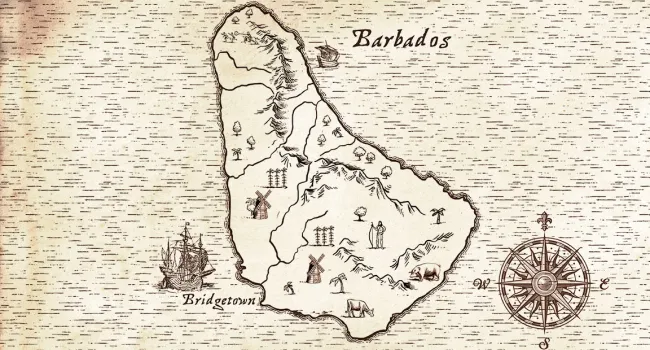
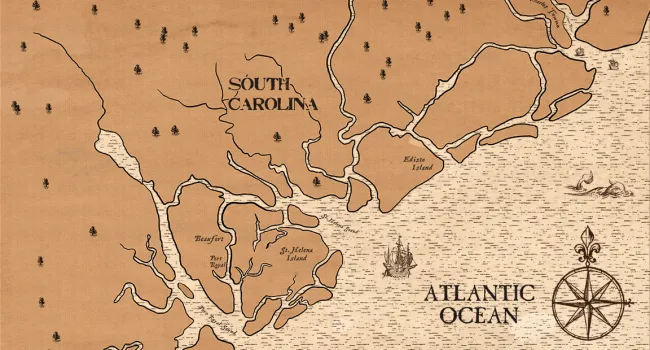
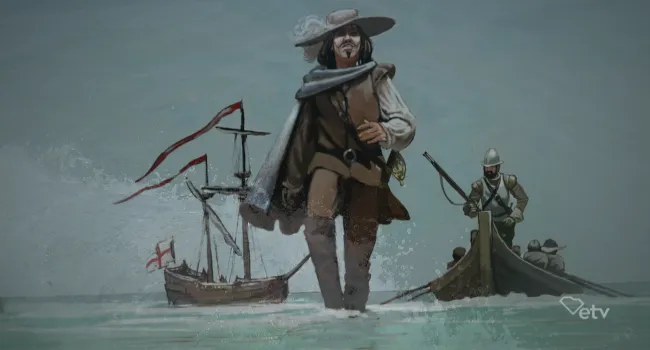
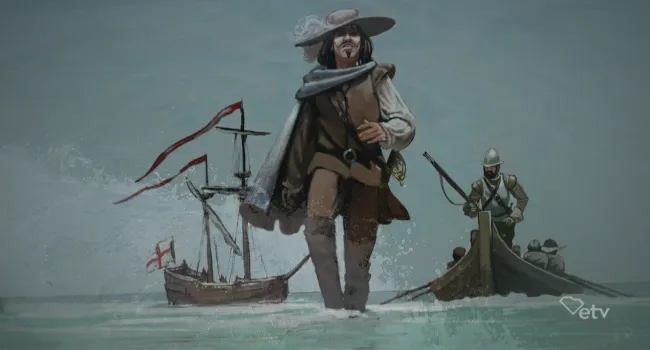
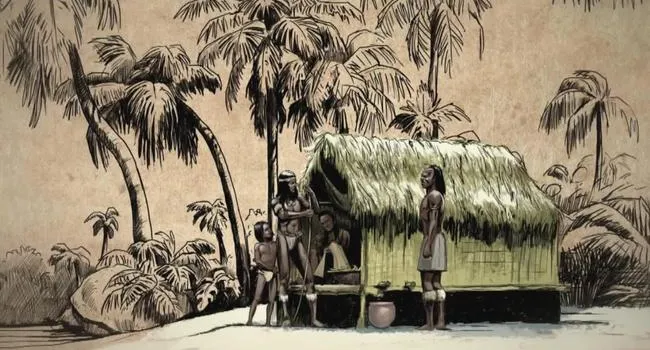
Sometimes, the history of a place begins elsewhere. It is a complex blending of cultures and place.The history of South Carolina is likewise complex, and it began somewhere else, in a place that many South Carolinians know very little about. A place where our culture and our diversity were forged.
Lesson Created By: Lisa Ray and Lewis Huffman
Lesson Partners: SC NATIONAL HERITAGE CORRIDOR, ETV Education
Essential Question
How can the concept of “place” be explained through social interactions?
Grade(s):
- 4
- 6
- 8
Subject(s):
Recommended Technology:
White boards or a projection device
Student tablets/laptops for 1:1 application of resources and group work
Other Instructional Materials or Notes:
Lesson Progression
Step 1: At this point, students have been placed in a variety of groups, with a varied number of students. Groups have been asked to complete some or all of the individual lessons connected with Beyond Barbados - The Carolina Connection (Modules 1-6). The teacher can use his/her discretion in assigning groups for the last task of answering the overarching essential question.
Step 2: Students will be answering the essential question using the resources developed while completing the activities related to the driving questions for Beyond Barbados - The Carolina Connection (Modules 1-6). To help students think conceptually about the information they have gathered, four thematic worksheets are provided. Worksheets are in chronological order, with the intent of scaffolding learning to help students grasp the entirety of the essential question. Students can again share thoughts and ideas within their group using Google Keep. This is a Google application that is part of the Google suite of programs on Google Drive. This is a free application that is an extension of Google Docs and allows students to work collaboratively. It can be accessed through Google Drive, or by going to https://keep.google.com/u/0/.
Worksheet 1 - Geography and Place https://docs.google.com/document/d/1bIh2fPXMDlSLg3Be4JFaIOJmhO3obT8QkYjqwAVQGY8/edit
Worksheet 2 - Group Interactions Over Time https://docs.google.com/document/d/1dZEgNd_YiTa0dpVDSCq_vQGc6dS_y8khHlxFbuDPBlY/edit
Worksheet 3 - Impact of Past Interactions
https://docs.google.com/document/d/19HWsmze71vUqxp_XKAs-TqhMpczS6gvBC7M2GhU0lXM/edit
Worksheet 4 - Continuity and Change
https://docs.google.com/document/d/1i5SkzeJQP8Qvsa75GEZofMNSCwsOXhxZXBVjPDLwkc4/edit
Step 3: Students will be asked to answer the essential question using one of two interactive applications in which they create a multimedia narrative that tells a story and connects “place” as it applies to Barbados and Carolina. Each application is free and is user-friendly with an intuitive approach that students can easily apply to create their final product. Teachers will need to create an account for each site. Students can search for copyright free images, but some images that are applicable, and have no user restrictions, are found in the resources.
https://storymaps.arcgis.com/en/app-list/ - “Esri Story Maps let you combine authoritative maps with narrative text, images, and multimedia content. They make it easy to harness the power of maps and geography to tell your story.”
https://www.thinglink.com/ - “ThingLink’s image interaction technology helps students become fluent in using digital media to express themselves and demonstrate their learning. With ThingLink, teachers and students can easily create interactive infographics, maps, drawings, and engaging 360 documentaries in a classroom setting, at home, or on field trips.”
Step 4: It is important to remember that in answering the essential question students must analyze and interpret data, which can lead to many conclusions. Students are graded on the process and the validity of their conclusions. Each group may infer data differently and therefore reach different conclusions.
Step 5: The teacher will evaluate how well each group answered the essential question using the rubric provided.
Teacher Notes
Included in the resources is a glossary of terms for each module. Please note some terms are repeated from module to module as the glossaries are specific to each particular video. There is also a combined glossary of terms encompassing all vocabulary for modules 1-6. Some terms have embedded links that allow students to further research places, terms, and individuals. Also listed in resources is a link to Discovery Education Puzzlemaker, which teachers can use to create a crossword or word search from the vocabulary. http://puzzlemaker.discoveryeducation.com/
An alternative activity using the vocabulary for each module would be to have students make additions or to rewrite vocabulary definitions from what they glean from the videos. They could then create word maps or some type of visual organizer that shows the connections the vocabulary have to Barbados or Carolina.
https://www.teachervision.com/lesson-planning/graphic-organizer
Beyond Barbados | Carolina Stories
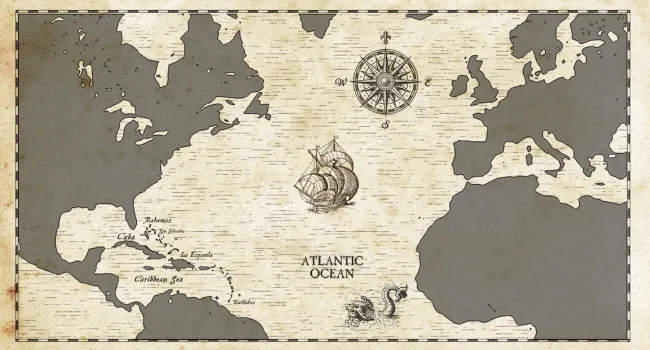
In The Beginning Most students today understand that the Carolinas were colonized by the English who had come to the Charleston area by way of Caribbean trade routes, primarily Barbados. The story of...
View AssetBeyond Barbados: Sweet Success | Carolina Stories
Sweet Success Dutch Sephardic Jewish colonists moved from Brazil to Barbados to escape the religious persecution of the Spanish Inquisition. These Sephardic Jews brought with them the knowledge to...
View AssetBeyond Barbados | Carolina Stories
The Barbados Adventurers With the success of the sugarcane crop, Barbados quickly became the wealthiest colony in the New World, and the most densely populated place on the planet. Successful...
View AssetBeyond Barbados | Carolina Stories
Colony Of A Colony Most of the colonists who settled in Carolina were wealthy English planters, with names such as Middleton, Drayton, Colleton, and Yeamans. The vast wealth accrued in Carolina was...
View AssetBeyond Barbados | Carolina Stories
A Cultural Hearth The success of Barbados, Carolina, America, the New World for that matter is coterminous with slavery. The labor, the technology, the ingenuity, and the culture that supported this...
View AssetBeyond Barbados | Carolina Stories
From Whence They Came Gullah is the blending of all the cultures that came together during that horrible time in human history called the Transatlantic Slave Trade. The connection between Barbados and...
View AssetWorksheet 1 - Geography and Place
To help students think conceptually about the information they have gathered, four thematic worksheets are provided. Worksheets are in chronological order, with the intent of scaffolding learning to help students grasp the entirety of the essential question.
View ResourceWorksheet 2 - Group Interactions Over Time
To help students think conceptually about the information they have gathered, four thematic worksheets are provided. Worksheets are in chronological order, with the intent of scaffolding learning to help students grasp the entirety of the essential question.
View ResourceWorksheet 3 - Impact of Past Interactions
To help students think conceptually about the information they have gathered, four thematic worksheets are provided. Worksheets are in chronological order, with the intent of scaffolding learning to help students grasp the entirety of the essential question.
View ResourceWorksheet 4 - Continuity and Change
To help students think conceptually about the information they have gathered, four thematic worksheets are provided. Worksheets are in chronological order, with the intent of scaffolding learning to help students grasp the entirety of the essential question.
View ResourceGlossary - Modules 1-6
Glossary for Modules 1-6 of Beyond Barbados: The Carolina Connection
View ResourceGoogle Keep
This is a Google application that is part of the Google suite of programs in Google Drive. This is a free application that is an extension of Google Docs and allows students to work collaboratively.
View ResourceEsri Story Maps
“Esri Story Maps let you combine authoritative maps with narrative text, images, and multimedia content. They make it easy to harness the power of maps and geography to tell your story.”
ThingLink
With ThingLink, teachers and students can easily create interactive infographics, maps, drawings, and engaging 360 documentaries in a classroom setting, at home, or on field trips.”
Standards
- 4.1.CC Identify patterns of change and continuity in the development of economic systems in British North America.
- 4.1.E Analyze multiple perspectives on the economic, political, and social developments of British North America and South Carolina.
- 6.3.CE Explain the impact of increased global exchanges on the development of the Atlantic World.
- This indicator was developed to encourage inquiry into the growing interconnectedness between Europe, Africa, and the Americas which led to increased global exchanges throughout the Atlantic World. The indicator also encourages inquiry into the development of human labor systems, cultural interactions, and the growth of economic markets.
- 6.3.CO Compare European motivations for exploration and settlement.
- This indicator was developed to encourage inquiry into European motivations for exploration and settlement as a result of the closing of the Silk Road. This indicator was also written to foster inquiry into the development of the Atlantic World, and the resulting economic, political, and social transformations in European, American, and African societies.
- 8.1.CE Analyze the factors that contributed to the development of South Carolina’s economic system and the subsequent impacts on different populations within the colony.
- This indicator was designed to encourage inquiry into the geographic and human factors that contributed to the development of South Carolina’s economic system. This indicator was also written to encourage inquiry into South Carolina’s distinct social and economic system as influenced by British Barbados.
- 8.1.CX Contextualize the development of South Carolina’s political institutions during the colonization of British North America.
- This indicator was designed to encourage inquiry into the development of the political structure of the South Carolina colony from the development of Charles Towne under English control to the movement toward self-rule.
Assessments
Group work can be evaluated using the Interactive Image Rubric-Beyond Barbados
https://docs.google.com/document/d/123mNW-eyJvlKgpvapuLPqoMxeF6NnFZi/edit#heading=h.gjdgxs