Part 1: In the Beginning - Beyond Barbados: The Carolina Connection

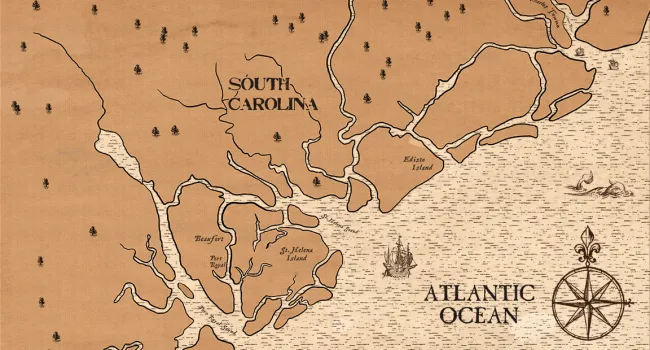
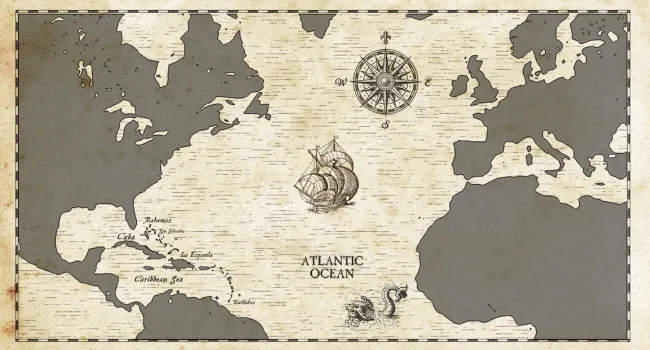
Most students today understand that the Carolinas were colonized by the English who had come to Charleston by way of the Caribbean trade routes, primarily Barbados. This module describes the beginnings of Barbados and how the concept of “place” helped to shape it economically and culturally.
Lesson Created By: Lisa Ray and Lewis Huffman
Lesson Partners: ETV Education, SC NATIONAL HERITAGE CORRIDOR
Essential Question
How can the concept of “place” be explained through social interactions?
Driving Question: Place can have many definitions. How did the unique blend of location, geography, and economic factors make Barbados an attractive “place” for colonization?
Grade(s):
- 6
- 8
Subject(s):
Recommended Technology:
- White board or projection device for whole class participation
- tablets/laptops for student use
- internet access
Other Instructional Materials or Notes:
Lesson Progression
- The teacher will divide the class into working groups of five students. Each student will be assigned a topic about which they will take notes.
- Students within the group will share information discerned and discovered in “real time” using Google Keep. This is a Google application that is part of the Google suite of programs on Google Drive. This is a free application that is an extension of Google Docs and allows students to work collaboratively. It can be accessed through Google Drive, or by going to https://keep.google.com/u/0/.
- Beyond Barbados: The Carolina Connection is divided into six individual short modules. The modules show a connection that is chronological and will help students answer a driving question that is connected to the individual modules. Collaborative work on the six modules will lead to overall conclusions that can be made about an overarching essential question.
- Each module is a separate lesson with an individual driving question and evaluation. Each separate module will include a grading rubric for ease of assessment. https://docs.google.com/document/d/151kwN3DXhWGd1vV40tAcQwY7bZsntdJuuerdt8ya0GQ/edit
- The work of each module is meant to be completed within a class period. (45 to 50 min.)
- Each of the driving questions is intended to help students answer the essential question.
- It is important to remember that with both the driving and essential questions, students must analyze and interpret data, which can lead to many conclusions. Students are graded on the process and the validity of their conclusions. Each group may infer data differently and therefore reach different conclusions.
- Students will be asked to use Google Keep so that they can take/share notes within their group.
- Once all notes are taken, each group member will be expected to share a “topic discovery” with the class, as prompted by their teacher. The teacher will create a slide of each topic, listing student observations and notes taken from the video. The teacher will add to the notes if appropriate.
- The slide presentation will be shared with students for their review and to help answer the driving question..
- Once the teacher is satisfied that students understand expectations, the teacher will show the first module to the whole class. Each module will be shared with the groups so that students can review and take notes based on their individual topics. Notes taken by students will be shared within their group and with the teacher.
- Modules are designed to be shown chronologically.
- Notes taken for each topic, from each group, will be shared with the class.
- The groups will be asked to answer the driving question based on the total information, from each topic which has been shared with the class. Each group will post their answer on a slide, which can be added to the class presentation of topic notes.
Teacher Notes
When grouping, it is not always possible to have equal groups of five students to cover each topic. To help teachers make pertinent decisions concerning topics and group composition, we have provided bullet points about each topic which is intended for teacher use. This information is a teaching tool to help you, the teacher, decide how groups should be arranged and how topics can be divided among students and/or groups. The answers provided are suggestions, teachers can add to, or take away from, the bullets provided. All information can be changed to fit teacher and student needs.
Amerindians
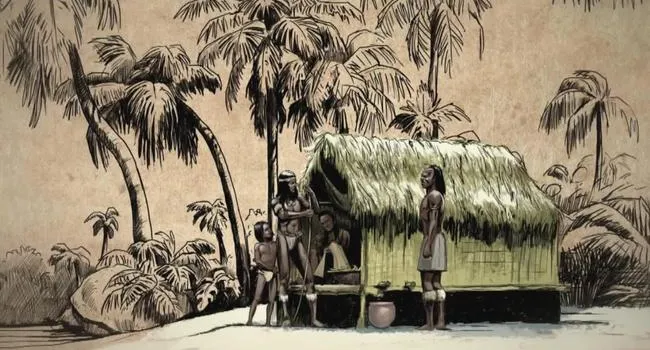
- First inhabitants - 3,000 years of occupation
- Possibly chased from Barbados by the Spaniards
- Possibly enslaved by the Spaniards who resided in the Greater Antilles
- By 1500 no more Amerindians inhabited Barbados
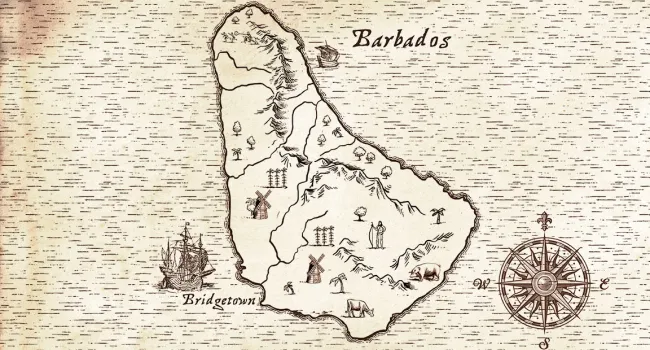
Geographic Location and Features
- 166 square miles
- Most easterly of the West Indian islands
- Technically not in the Caribbean
- Situated in the Western Atlantic Ocean
- 500 miles from South America
- Bearded fig trees once covered the island
- Most windward of all the Caribbean islands
- Formed from geological uplift of the ocean floor
- Giant coral rock
- Equatorial currents
- Northeast trade winds
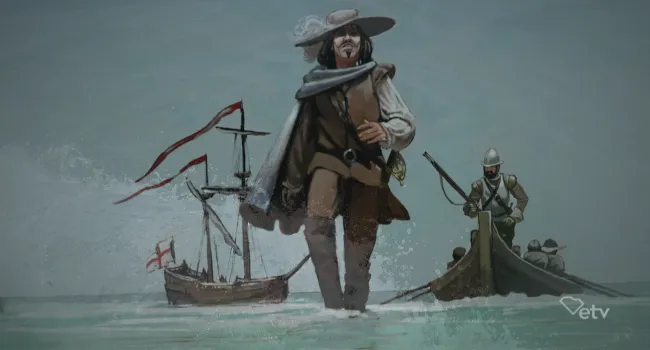
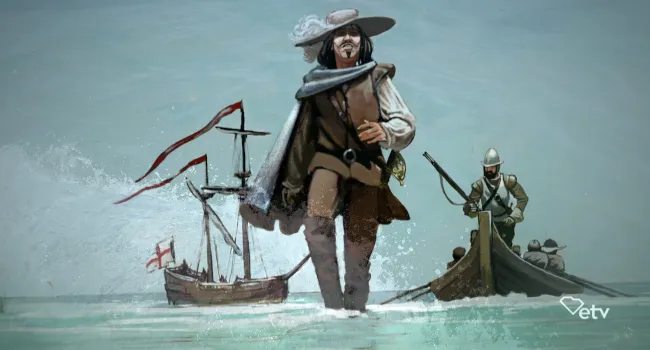
English Settlement
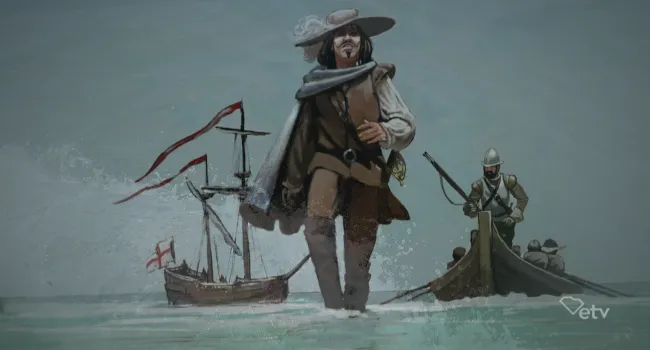
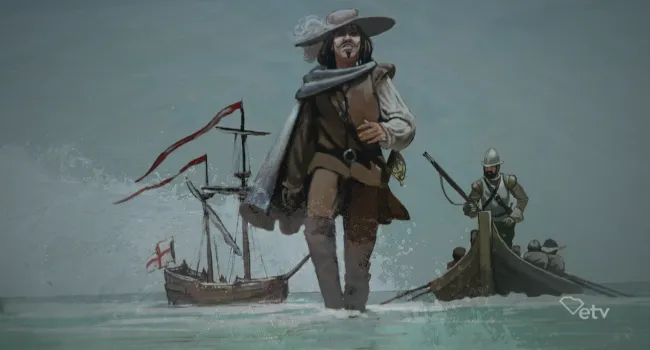
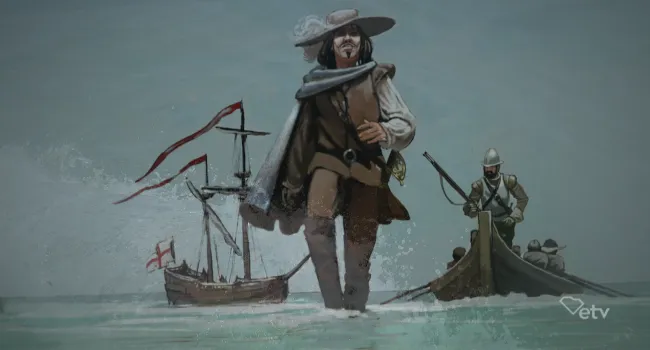
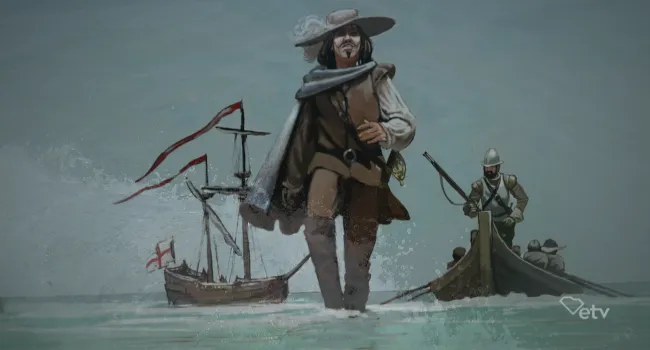
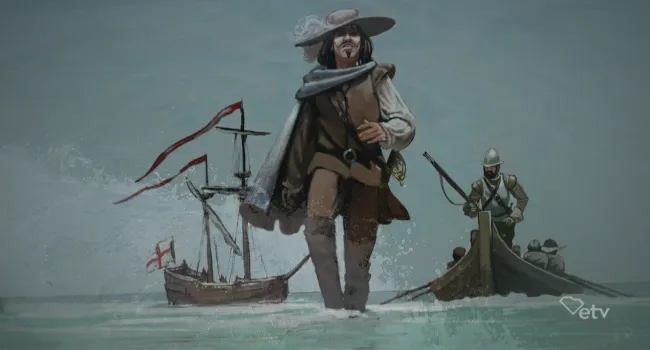
- 1627
- 80 persons were on the first ship to Barbados - 30 were crew members and 50 stayed to colonize the island
- 100 years passed between Europeans first visiting the island and English settlement
- English were escaping the civil war in Britain
- Saw settlement as a way of increasing family fortunes
- Settlers nailed a cross to a tree and claimed it in the name of King James I
- Number of Bearded Fig trees made settlement difficult
- A society comprised of a small number of wealthy, privileged people who were given land grants
- Settlements were along the western and southern coast
- Settlements provided landowners with one and a quarter mile of land inland and a quarter mile of land at the sea
- Settlers could produce and ship goods from their land grants
- For 300 years Barbados remained a commonwealth of the United Kingdom
- Barbados gained independence in 1966
Enslaved People
- The first ships to Barbados had English, Scottish, Irish indentured servants, and enslaved Africans
- The ships heading to Barbados also stopped at Surinam to bring enslaved Native
- Americans with them
- The English knew they needed enslaved people who could help them survive on Barbados
- Enslaved people provided labor to help the English reach their goal of financial success
Crop Experimentation
- Settlers began experimenting with crops, looking for something to yield a financial return
- They experimented with cotton, indigo, ginger, and tobacco
- Tobacco grown was not high quality and competition of other growers in northern colonies was high
- It would take another group of transplants to help colonist to finally find a crop that made a profit
An alternative site to Google Slides which students can use to share and post information is Scrumblr. Scrumblr is a site that provides an online space to create and share sticky notes with a group. Please note, teachers will have to create a separate board for each class with a specific class URL. This allows students to use a common board and share information. A board has been created as an example. The link is listed in the resources.

Beyond Barbados | Carolina Stories
In The Beginning Most students today understand that the Carolinas were colonized by the English who had come to the Charleston area by way of Caribbean trade routes, primarily Barbados. The story of...
View AssetBeyond Barbados | Carolina Stories
From Whence They Came Gullah is the blending of all the cultures that came together during that horrible time in human history called the Transatlantic Slave Trade. The connection between Barbados and...
View AssetBeyond Barbados | Carolina Stories
Colony Of A Colony Most of the colonists who settled in Carolina were wealthy English planters, with names such as Middleton, Drayton, Colleton, and Yeamans. The vast wealth accrued in Carolina was...
View AssetBeyond Barbados | Carolina Stories
A Cultural Hearth The success of Barbados, Carolina, America, the New World for that matter is coterminous with slavery. The labor, the technology, the ingenuity, and the culture that supported this...
View AssetBeyond Barbados | Carolina Stories
The Barbados Adventurers With the success of the sugarcane crop, Barbados quickly became the wealthiest colony in the New World, and the most densely populated place on the planet. Successful...
View AssetBeyond Barbados Glossary
Part 1: In the Beginning ( CLICK FOR VIDEO ) Amalgam – A mixture or blend Amerindians – A member of the indigenous peoples of the Americas Barbados – An island country in the Lesser Antilles of the...
View AssetBeyond the Barbados: The Carolina Connection Learning Activity
Sometimes the history of a place begins elsewhere and the colony of South Carolina actually began somewhere else, almost two thousand miles across the sea. The settlement of Charles Towne that would...
View AssetBeyond Barbados Part 2: Sweet Success Lesson Plan
Beyond Barbados Part 2- Sweet Success video segment focuses on Europeans establishing Barbados as a colony. There is an emphasis on identifying how the Europeans sought for a cash crop, sugar cane, to...
View LessonBeyond Barbados Part 3: The Barbados Adventures Lesson Plan
Beyond Barbados Part 3- The Barbados Adventures video segment focuses on the growth and wealth of Barbados with sugar cane as the cash crop. It notes that Europeans developed plantations throughout...
View LessonBeyond Barbados Part 5: A Cultural Hearth Lesson Plan
Beyond Barbados Part 5- A Cultural Hearth video segment focuses on the rebellions that took place in Barbados and the false “Emancipation” that was presented to enslaved Africans after the rebellions...
View LessonA PBL That Explores Beyond Barbados: The Carolina Connection
Sometimes, the history of a place begins elsewhere. It is a complex blending of cultures and place.The history of South Carolina is likewise complex, and it began somewhere else, in a place that many...
View LessonPart 2: Sweet Success - Beyond Barbados: The Carolina Connection
History never really happens in a vacuum. Barbados was an amalgam of many cultures, which was made even more complicated by the social control of those in power over those enslaved. The clash of...
View LessonPart 3: The Barbados Adventurers - Beyond Barbados: The Carolina Connection
Barbados was one of the wealthiest colonies in the New World and one of the most densely populated areas on the planet. Barbados greatly changed from years of settlement and economic pursuits. “Place”...
View LessonPart 4: Colony of a Colony - Beyond Barbados: The Carolina Connection
Power was a commodity in Barbados that easily transferred to Carolina. Cultural beliefs and practices influenced Carolina’s economy and helped shape the “place” that would become South Carolina.
View LessonScrumblr
Scrumblr is a site that provides an online space to create and share sticky notes with a group.
View ResourceScrumblr Board Example
This is an example of a Scrumblr board using the topics that are specific to Part 1.
View ResourceBeyond Barbados:Part 1-In the Beginning - Notes
Slide presentation for whole-class group work to share information on the specified topics
View ResourceBeyond Barbados:Part 1-In the Beginning - Driving Question
Slide presentation for whole-class group work to share information the answer to the driving question.
View ResourceGlossary - Part 1
Glossary - Part 1: In the Beginning - vocabulary terms that are important and specific to Part 1: In the Beginning.
Standards
- 6.3.CE Explain the impact of increased global exchanges on the development of the Atlantic World.
- This indicator was developed to encourage inquiry into the growing interconnectedness between Europe, Africa, and the Americas which led to increased global exchanges throughout the Atlantic World. The indicator also encourages inquiry into the development of human labor systems, cultural interactions, and the growth of economic markets.
- 8.1.CE Analyze the factors that contributed to the development of South Carolina’s economic system and the subsequent impacts on different populations within the colony.
- This indicator was designed to encourage inquiry into the geographic and human factors that contributed to the development of South Carolina’s economic system. This indicator was also written to encourage inquiry into South Carolina’s distinct social and economic system as influenced by British Barbados.
Assessments
Driving Question Rubric:
https://docs.google.com/document/d/1FGUlheyTE_XlH2FzRlIayKEykyXYn24RJMc4I1dudV8/edit