Beyond Barbados Part 2: Sweet Success Lesson Plan

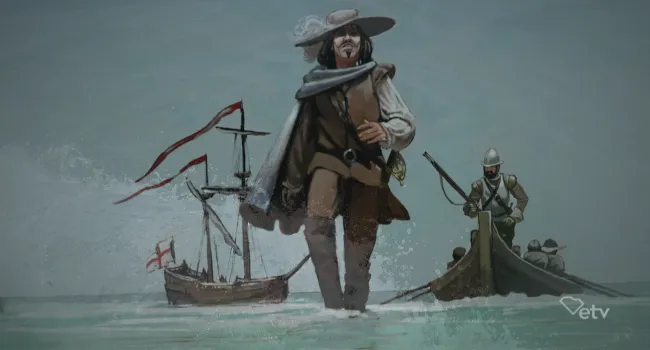
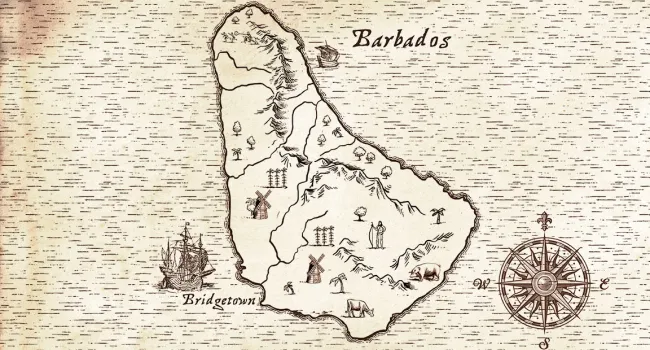
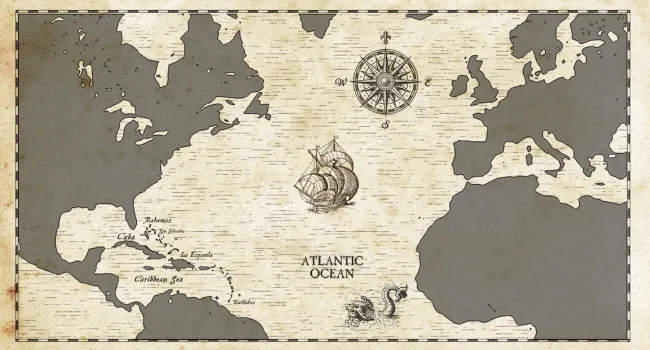
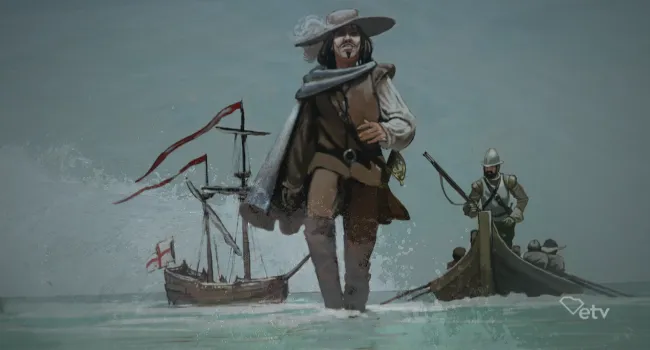
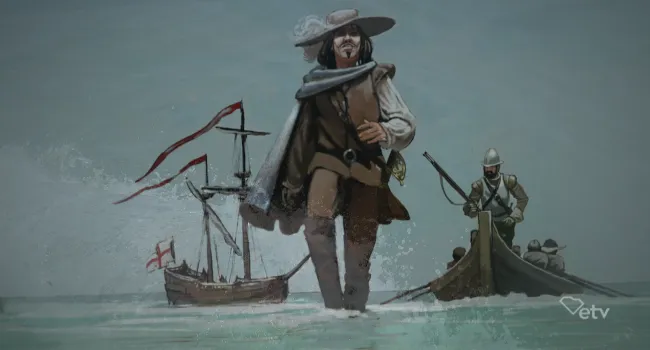
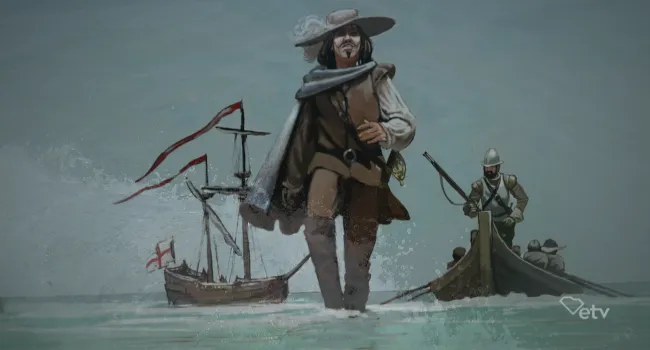
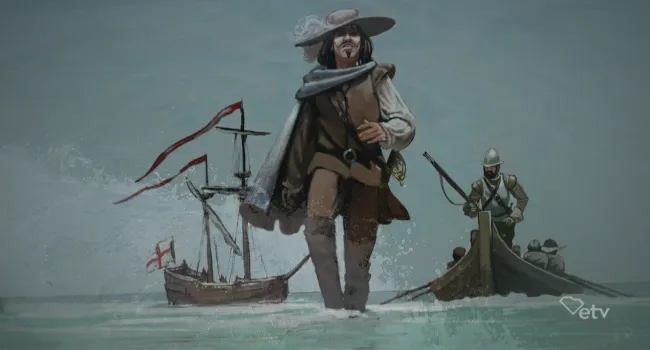
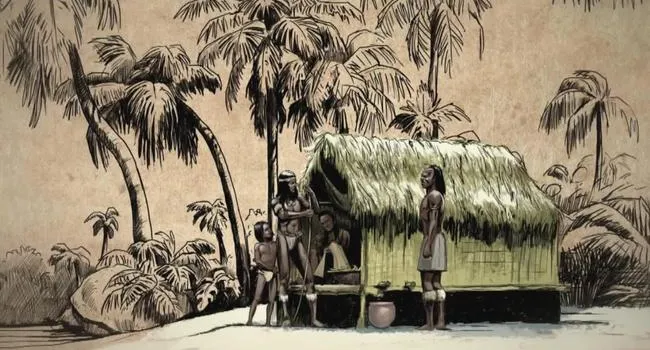
Beyond Barbados Part 2- Sweet Success video segment focuses on Europeans establishing Barbados as a colony. There is an emphasis on identifying how the Europeans sought for a cash crop, sugar cane, to facilitate an economical base and source to generate wealth and opportunity. The segment mentions the development of the plantation system to grow sugar cane and a need for a labor force to meet the growing demand for sugar.
Identify and compare significant turning points, including the related causes and effects that affect historical continuity and change.
To demonstrate their ability to use the skill of causation, students should:
● identify significant events that led to change or maintain continuity.
● evaluate the causes of turning points and how they lead to change or continuity.
● evaluate the effects of turning points and how they lead to change or continuity.
● compare the importance of turning points related to causality
Lesson Created By: FranklinGause
Essential Question
How can greed and wealth lead to the destruction of families, race relations, and the environment?
Grade(s):
- 6
- 8
Subject(s):
Recommended Technology:
Other Instructional Materials or Notes:
This lesson is approximately 90-120 minutes. This lesson has been prepared to support and enrich the learning experience of students after they have watched Beyond Barbados: Part 2 Sweet Success (Note* Teacher should have shown this video clip to students in class and asked them to take notes on the video or discussed with the students what was covered in the video prior to beginning this lesson plan). A variety of activities have been provided to address to support student engagement in the learning environment. Some materials needed for this lesson plan are included with the lesson plan document or linked to the lesson plan. The academic vocabulary has been provided. The teacher will need to provide an opportunity for students to learn the vocabulary before beginning the activities included in this lesson plan.
Materials for Activities:
Activity #1:
Slave ship picture (attached to lesson plan)
Index cards (or notebook paper)
Activity #2:
Olaudah Equiano's Account of the Middle Passage (excerpt of Equiano’s account hyperlinked)
5 Senses chart (attached to lesson plan)
Activity #3:
Tom Feelings- Middle Passage (video clip hyperlinked)
5 Senses chart (attached to lesson plan)
Activity #4:
Trans-Atlantic Slave Trade Simulation Map
Index cards (or notebook paper)
Activity #5:
Africa before Transatlantic Slavery Article (#1)
Rice in the Lowcountry (#2)
Slavery in Barbados Article (#3)
Slavery in Charleston Article (#4)
Beyond Barbados Video Clip Part 2
Notes/information gathered from other activities
Legal size copy paper (poster)
Color pencils/markers
Activity #6:
Exit Slip (attached to lesson plan)
Student Assessment Guide (SAG) (attached to lesson plan)
Lesson Progression
Activity #1
Picture Analysis
Students will analyze a diagram drawing of a slave ship depicting how Africans were stowed like cargo. The teacher will use the Five Words – Three Words strategy below for their analysis.
Strategy: Five Words – Three Words
What: This activity will assist students with summarizing their thoughts after viewing the picture.
How: On an index card (or sheet of paper), students (working on their own) should list five words that come to
mind when they look at the picture. Students then get into pairs, trios or groups of four to share and discuss their words. Finally, each small group selects three words to share and explain to the entire class. The teacher facilitates a conversation about the students’ analysis and the picture.
Activity #2
The teacher does a read-aloud of Olaudah Equiano’s account of the Middle Passage. Students will use their imagination, as they listen, to complete the “5 Senses” to record what they hear, what they see, what they taste, what they touch, and what they smell. The teacher asks if a few students would like to share what they wrote to facilitate discussion.
Activity #3
The teacher will show students Tom Feelings- Middle Passage video clip. Students will continue adding to their 5 Senses chart while watching the video clip. Students will record what they hear, what they see, what they taste, what they touch, and what they smell. The teacher can prompt students to draw from their imagination if they are unable to come up with every example. The teacher asks if a few students would like to share what they wrote to facilitate discussion.
Note* The teacher may also want to check out Tom Feelings' book, The Middle Passage, from the library or purchase their own copy to show and share with the students after the completion of the lesson.
Activity #4
Atlantic Slave Trade Map Simulation with Analysis
The teacher will show a map simulation of the Trans-Atlantic slave trade. The simulation covers a span of 315 years and 20,528 voyages transporting millions of Africans to the Americans, many to Barbados. During the 2:00 minute simulation, the teacher needs to pause the simulation, then click on three dots headed to the Caribbean Islands to learn the following: The name of the ship, the country the ship sailed for, its destination, how many Africans it carried, and any additional information disclosed. The pause should be done two more times and the teacher needs to click on three dots each of the following times to learn more about the voyages. Afterward, the teacher will ask the students to respond to the following questions on the back of the index card (or sheet of paper). The teacher can ask if a few students would like to share what they wrote to facilitate discussion.
- What were two things you learned about the Transatlantic slave trade?
- What is one question you now have about the Transatlantic slave trade?
Activity #5
The teacher will facilitate a jigsaw activity for the students. There are four articles for the jigsaw activity. The directions are below. The teacher can have groups present for the class.
1. Preparation
Divide room into four areas and place copies of each jigsaw article in each section. Each section should have a number tent: 1,2,3,4. Then, place students into four groups, then number students 1,2,3,4. The groups will be the “home groups” of the jigsaw. Students will start the activity in this group and finish the activity in this group. Put students into groups of four.
2. Introduce to Home Groups
Explain the jigsaw strategy and the topic of each article. Tell students that they are going to be responsible for teaching their home group about the article you will be assigned.
3. Break into Expert Groups
Now students will leave their home group to sit with a group of students assigned to the same article, their “expert group.” Ask students to begin reading to themselves, or have them take turns reading aloud. When students are finished reading, the group should discuss their segment and complete their notes section of the jigsaw activity sheet. Everyone in the group should have the same information before they leave to go back to their homegroup.
4. Regroup with "Home Groups"
Students regroup with their home groups. Each student is responsible for teaching their article to their homegroup. All students are responsible for learning all the material. Determine how you’d like students to organize and summarize all the information they’ve learned.
5. Culminating Group Activity
Students must complete all four sections of the Notes Organizer. Upon completion, in your groups, use the notes on your organizer to identify the causes which led to the growth and development of the colony of Charles Towne, the colony of Barbados, and the expansion of the Trans-Atlantic slave trade. Your group can choose one of the following to identify these causes:
A) Create a 6-box comic strip (with caption bubbles) that identifies the factors that led to the growth of Barbados and Charles Towne and explains the role of the slave trade. Add color
B) Write a 1-2 page essay that identifies in 5-7 paragraphs the factors that led to the growth of Barbados and Charles Towne and explains the role of the slave trade.
C) Create a poem or rap that identifies the factors that led to the growth of Barbados and Charles Towne and explains the role of the slave trade.
D) Create a 3-page journal log documenting the life of an African captured and enslaved. Identify the factors that led to the growth of Barbados and Charles Towne and explains the role of the slave trade through your journal logs.
E) Create a poster that identifies the factors that led to the growth of Barbados and Charles Towne and explains the role of the slave trade. Include pictures. Add color.
Note* Teacher needs to encourage students to also use the information they learned from Beyond Barbados video Part 2 and the other activities from the lesson with this culminating activity.
Activity #6
Assessment/Evaluation
The teacher will have students complete an Exit Slip at the end of class. The teacher will also have students complete a Student Assessment Guide (SAG) to evaluate their engagement and performance during the lesson and their group’s engagement and performance. The Exit Slip and the SAG will be turned in at the end of class.
Teacher Notes
Academic Vocabulary:
Transatlantic Slave Trade, Middle Passage, Slavery, Plantation, Resistance, Bondage, Chattel, Cash Crop, Indentured Servant, Race, Immunity, Yellow Fever, Malaria, Oppression, Mercantilism, Social Hierarchy.
Beyond Barbados: Sweet Success | Carolina Stories
Sweet Success Dutch Sephardic Jewish colonists moved from Brazil to Barbados to escape the religious persecution of the Spanish Inquisition. These Sephardic Jews brought with them the knowledge to...
View AssetBeyond Barbados | Carolina Stories
In The Beginning Most students today understand that the Carolinas were colonized by the English who had come to the Charleston area by way of Caribbean trade routes, primarily Barbados. The story of...
View AssetBeyond Barbados | Carolina Stories
The Barbados Adventurers With the success of the sugarcane crop, Barbados quickly became the wealthiest colony in the New World, and the most densely populated place on the planet. Successful...
View AssetBeyond Barbados | Carolina Stories
Colony Of A Colony Most of the colonists who settled in Carolina were wealthy English planters, with names such as Middleton, Drayton, Colleton, and Yeamans. The vast wealth accrued in Carolina was...
View AssetBeyond Barbados | Carolina Stories
A Cultural Hearth The success of Barbados, Carolina, America, the New World for that matter is coterminous with slavery. The labor, the technology, the ingenuity, and the culture that supported this...
View AssetBeyond Barbados | Carolina Stories
From Whence They Came Gullah is the blending of all the cultures that came together during that horrible time in human history called the Transatlantic Slave Trade. The connection between Barbados and...
View AssetBeyond Barbados Glossary
Part 1: In the Beginning ( CLICK FOR VIDEO ) Amalgam – A mixture or blend Amerindians – A member of the indigenous peoples of the Americas Barbados – An island country in the Lesser Antilles of the...
View AssetPart 6: From Whence They Came
Look around Charleston, the Barbados-Carolina connection is ever present. How “place”, past and present, changed and molded the connection is explored through various aspects of culture. The mixture...
View LessonBeyond Barbados Part 5: A Cultural Hearth Lesson Plan
Beyond Barbados Part 5- A Cultural Hearth video segment focuses on the rebellions that took place in Barbados and the false “Emancipation” that was presented to enslaved Africans after the rebellions...
View LessonPart 5: A Cultural Hearth
Historians refer to Barbados as the cultural hearth of the Americas. This cultural hearth resulted in a cultural transference. As demographics changed and power shifted, so did perceptions of “place”...
View LessonPart 4: Colony of a Colony - Beyond Barbados: The Carolina Connection
Power was a commodity in Barbados that easily transferred to Carolina. Cultural beliefs and practices influenced Carolina’s economy and helped shape the “place” that would become South Carolina.
View LessonBeyond Barbados Part 3: The Barbados Adventures Lesson Plan
Beyond Barbados Part 3- The Barbados Adventures video segment focuses on the growth and wealth of Barbados with sugar cane as the cash crop. It notes that Europeans developed plantations throughout...
View LessonPart 3: The Barbados Adventurers - Beyond Barbados: The Carolina Connection
Barbados was one of the wealthiest colonies in the New World and one of the most densely populated areas on the planet. Barbados greatly changed from years of settlement and economic pursuits. “Place”...
View LessonBeyond Barbados Part 2: Sweet Success Lesson Plan
Beyond Barbados Part 2- Sweet Success video segment focuses on Europeans establishing Barbados as a colony. There is an emphasis on identifying how the Europeans sought for a cash crop, sugar cane, to...
View LessonPart 2: Sweet Success - Beyond Barbados: The Carolina Connection
History never really happens in a vacuum. Barbados was an amalgam of many cultures, which was made even more complicated by the social control of those in power over those enslaved. The clash of...
View LessonPart 1: In the Beginning - Beyond Barbados: The Carolina Connection
Most students today understand that the Carolinas were colonized by the English who had come to Charleston by way of the Caribbean trade routes, primarily Barbados. This module describes the...
View LessonA PBL That Explores Beyond Barbados: The Carolina Connection
Sometimes, the history of a place begins elsewhere. It is a complex blending of cultures and place.The history of South Carolina is likewise complex, and it began somewhere else, in a place that many...
View LessonThe Abolition Project [Jigsaw #1] Africa before Transatlantic Slavery
View ResourceRice in the Lowcountry [Jigsaw #2]
View ResourceBBC Website- History [Jigsaw #3] Slavery and Economy in Barbados
View ResourceSlavery in Charleston: A Chronicle of Human Bondage in the Holy City [Jigsaw #4]
View ResourceStudent Assessment Guide (SAG): Activity #6
View ResourceExit Slip: Activity #6
View ResourceWatch Beyond Barbados: The Carolina Connection
The colony of South Carolina actually began somewhere else, almost two thousand miles across the sea. The settlement of Charles Towne that would grow into the colony of South Carolina owes its origins and success to a tiny island in the West Indies.
View ResourceTom Feelings- Middle Passage
View ResourceTrans-Atlantic Slave Trade Simulation Map
View ResourceStandards
- 6.3.CE Explain the impact of increased global exchanges on the development of the Atlantic World.
- This indicator was developed to encourage inquiry into the growing interconnectedness between Europe, Africa, and the Americas which led to increased global exchanges throughout the Atlantic World. The indicator also encourages inquiry into the development of human labor systems, cultural interactions, and the growth of economic markets.
- 8.1.CE Analyze the factors that contributed to the development of South Carolina’s economic system and the subsequent impacts on different populations within the colony.
- This indicator was designed to encourage inquiry into the geographic and human factors that contributed to the development of South Carolina’s economic system. This indicator was also written to encourage inquiry into South Carolina’s distinct social and economic system as influenced by British Barbados.
- 8.1.P Summarize major events in the development of South Carolina which impacted the economic, political, and social structure of the colony.
- This indicator was designed to encourage inquiry into the development of South Carolina as a result of mercantilist policies, which ranged from the Navigation Acts to trade with Native Americans to the use of enslaved people as labor. This indicator was designed to promote inquiry into agricultural development, using the rice-growing knowledge of the enslaved West Africans.
- 8.1.E Utilize a variety of primary and secondary sources to examine multiple perspectives and influences of the economic, political, and social effects of South Carolina’s settlement and colonization on the development of various forms of government across the colonies.
Assessments
Assessment/Evaluation
The teacher will have students complete an Exit Slip at the end of class. The teacher will also have students complete a Student Assessment Guide (SAG) to evaluate their engagement and performance during the lesson and their group’s engagement and performance. The Exit Slip and the SAG will be turned in at the end of class.