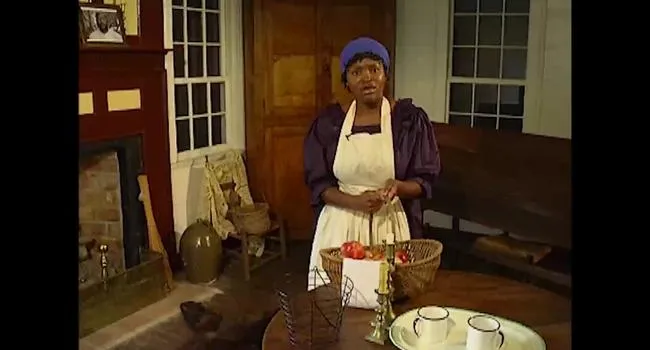
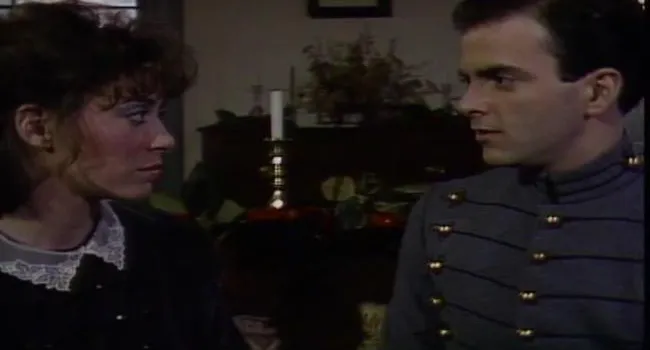
This reenactment is based on excerpts from Emma LeConte’s diary. Emma, then seventeen years old, kept a diary for several months in 1865 chronicling the approach, occupation and burning of the city of Columbia by General Sherman's troops. On February 16, Sherman issued an order giving instructions for the occupation of Columbia. The Confederate forces in South Carolina were no match for Sherman's troops and upon his approach Columbia's Mayor Goodwyn surrendered the city. Panic and confusion, however, reigned. By the morning hours of February 17 much of the city was in flames, accompanied by a riot that had built steadily so that most control was lost over the city. By February 18,1865 over one third of the city lay in black, burnt ruins.
This reenactment is based on excerpts from Emma LeConte’s diary. Emma, then seventeen years old, kept a diary for several months in 1865 chronicling the approach, occupation and burning of the city of Columbia by General Sherman's troops. On February 16, Sherman issued an order giving instructions for the occupation of Columbia. The Confederate forces in South Carolina were no match for Sherman's troops and upon his approach Columbia's Mayor Goodwyn surrendered the city. Panic and confusion, however, reigned. By the morning hours of February 17 much of the city was in flames, accompanied by a riot that had built steadily so that most control was lost over the city. By February 18,1865 over one third of the city lay in black, burnt ruins.
Standards
- 4.4.CE Explain the effects of military strategies utilized by the Union and the Confederacy.
- This indicator was developed to encourage inquiry into the effects of military strategies to include but not limited to : wartime technologies, the Anaconda Plan, conscription, and Sherman's March to Sea.
- 4.4.CC Identify and evaluate the economic, political, and social changes experienced throughout the Civil War.
- 8.3.CE Examine consequences of the major Civil War military strategies.
- This indicator was designed to encourage inquiry into the Civil War focusing on the impacts of military strategies and major turning points on South Carolina and the U.S.
- 8.3.E Utilize a variety of primary and secondary sources to analyze multiple perspectives on the effects of the Civil War within South Carolina and the United States.
Resources
Battle of King's Mountain | Palmetto Heritage
In this program, Lord Cornwallis has ordered Major Patrick Ferguson, a Scotsman, to form the Loyalists into a strong royal militia. In late September 1780, Ferguson took up post near present day...
View AssetBrooks-Sumner Affair | Palmetto Heritage
In 1857 during the heated debate on Kansas in the Senate, Charles Sumner delivered a two-day speech entitled "The Crime Against Kansas," which contained an insulting denunciation of Senator Andrew...
View AssetCharleston Tea Party | Palmetto Heritage
Following the Tea Act of 1773 many colonial citizens refused to pay the duty and boycotted British tea. This video portrays actions taken by some citizens of Charleston in November and December, 1774...
View AssetCherokees | Palmetto Heritage
The story of the Cherokees is told through scenes from "lJnto These Hills" the outdoor drama in Cherokee, North Carolina that depicts the story of the Cherokees. The video centers around an Indian...
View AssetJohn C. Calhoun | Palmetto Heritage
It is the summer of 1829 and Vice-President Calhoun is spending the Congressional recess at his home near Pendleton, South Carolina. His youngest daughter, Cornelia is helping her father with his...
View AssetLegend of Isaqueena | Palmetto Heritage
The Legend of Isaqueena blends fact with fantasy. An Indian trade based out of Ninety Six in the early 1750's grew to become the largest business operating outside of Charleston. Alan assisted with...
View AssetPickens, Marion, Sumter, Part 1 | Palmetto Heritage
Hosts Ellen Rodillo-Fowler and Nathan Dawson guide viewers through this edition of Palmetto Heritage, which spotlights three significant South Carolina figures: Thomas Sumter (The Fighting Gamecock)...
View AssetPickens, Marion, Sumter, Part 2 | Palmetto Heritage
While the British tangled with Andrew Pickens in South Carolina’s upstate, Francis Marion’s patriots fought the British in the Pee Dee region. Marion was known as “The Swamp Fox” due to his effective...
View AssetPickens, Marion, Sumter, Part 3 | Palmetto Heritage
Thomas Sumter was determined to drive the British out from South Carolina. “The Fighting Gamecock” earned his moniker due to his tenacity in battle. A band of British assassins attempted to sneak into...
View AssetReconstruction | Palmetto Heritage
This show explains the importance of the election of 1876 and as a result how SC at one time had 2 governors from different political parties, who tried to rule the state at the same time...
View AssetSecession, Part 1 | Palmetto Heritage
The story begins in 1858 in South Carolina. William Taylor's cousin Allen is visiting from Connecticut. Secession "fever" is rapidly engulfing the state. The scene shifts to West Point where the...
View AssetSecession, Part 2 | Palmetto Heritage
Back in South Carolina in December 1860 for a short Christmas break, Allen finds the Secession convention in session at the First Baptist Church in Columbia. He then accompanies his father, who is a...
View Asset