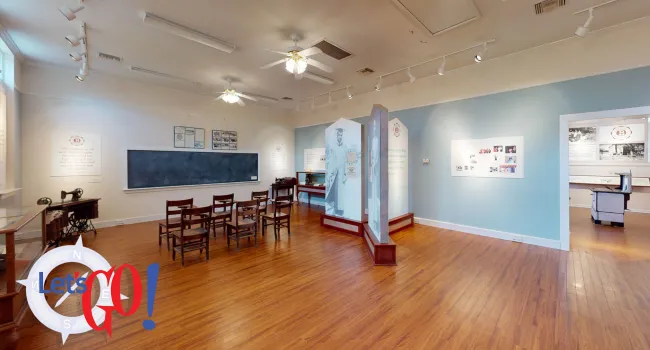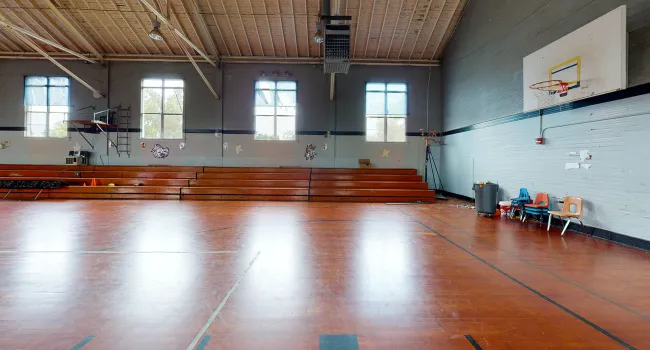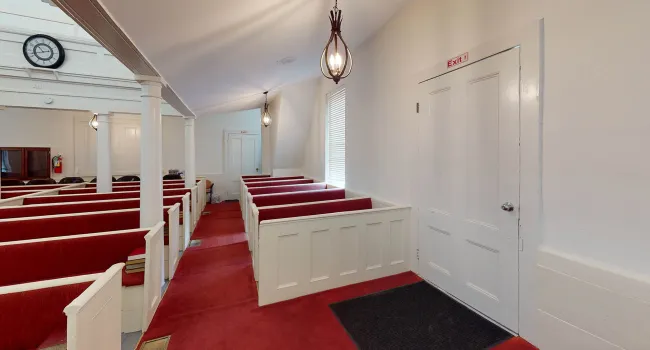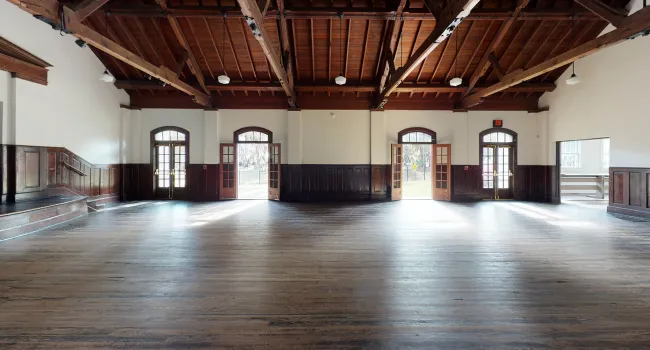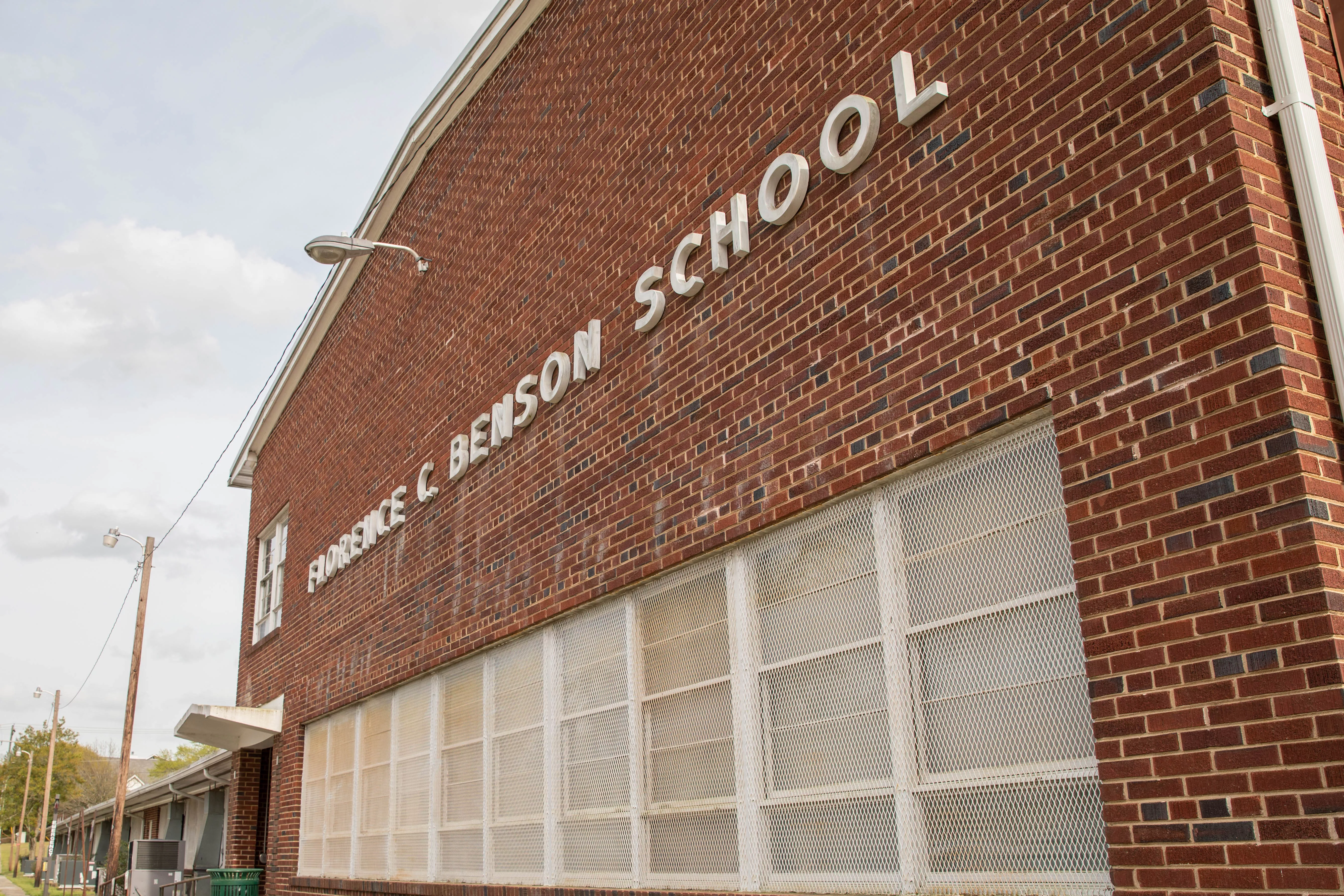
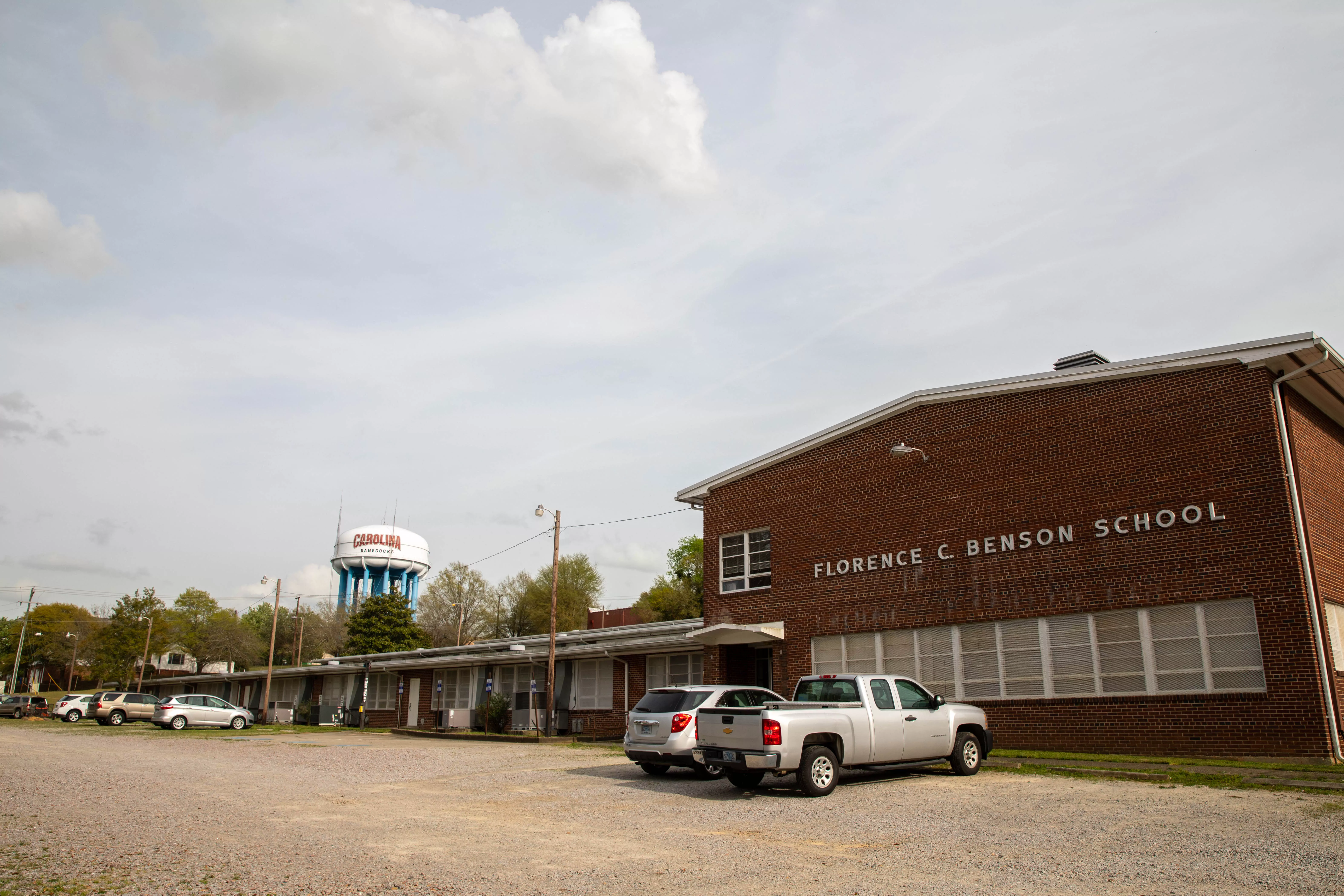
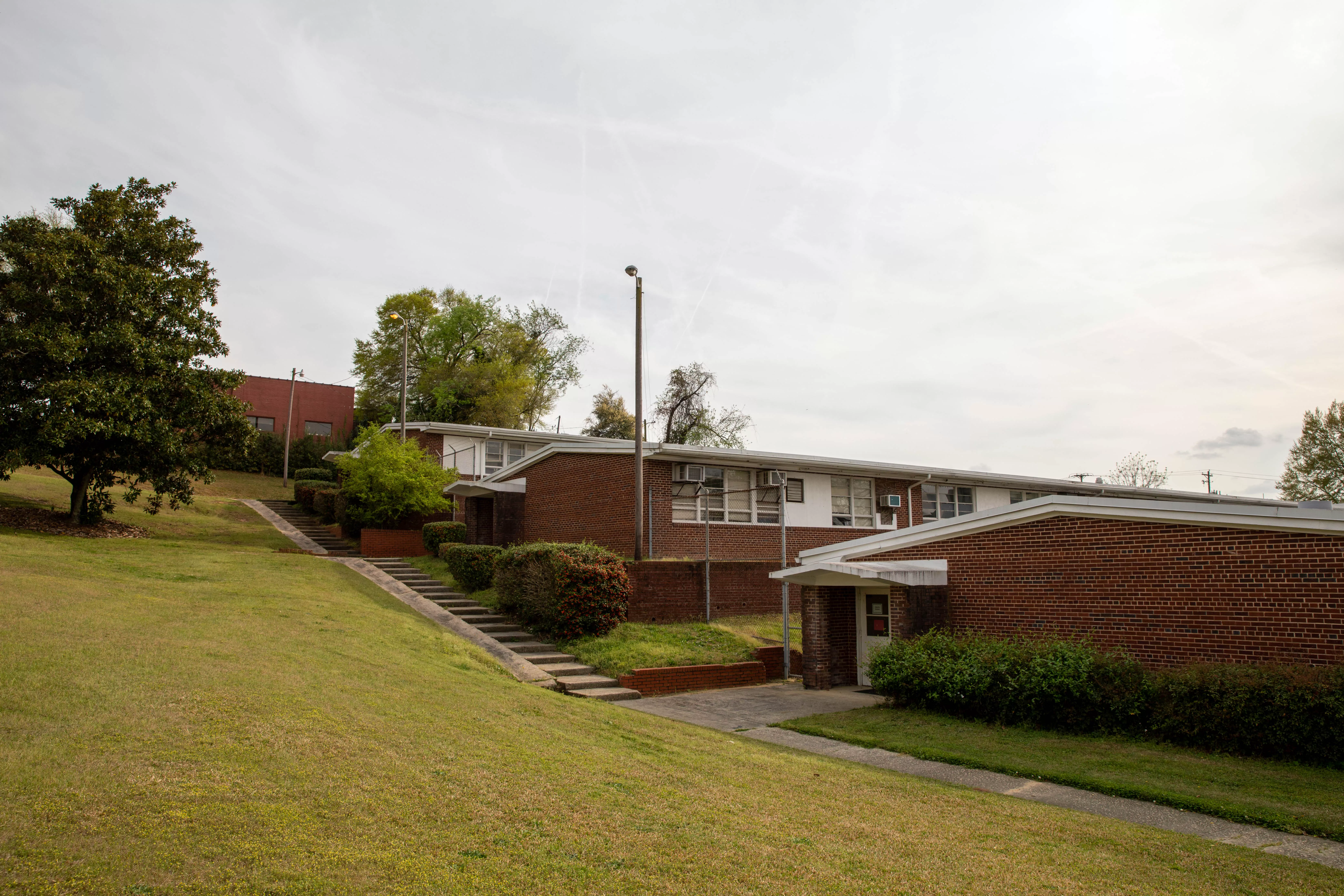

The Wheeler Hill Elementary school replaced the Celia Dial Saxon Negro Elementary School, which was overcrowded and needed rehabilitation. The neighborhood’s new elementary school was designed by local white architect James B. Urquhart.
Five houses fronting Catawba Street and a house and a store fronting Pickens Street were demolished to make way for the new construction, and extensive preliminary earthwork made the slope of the hill more uniform. With its one-story classroom wings and rows of interior and exterior windows, the building was a typical equalization school. Comprising eighteen classrooms, a library, a nurse’s office, a large modern kitchen, and a combined cafeteria and auditorium, the school served approximately five hundred students. The funds also paid for desks, tables, visual aid and music equipment, maps, and cafeteria equipment.
The facility opened as the Wheeler Hill School in 1955 for 270 African American students in the first through sixth grades. In 1958, it was renamed in honor of Florence Corinne Benson, a former teacher at the school. A native of Union, South Carolina, and a graduate of Benedict College in Columbia, Benson taught in the African-American schools of Columbia from 1918 until her death in 1956. Florence C. Benson Elementary served the Wheeler Hill community until 1975, when the school closed its doors due to declining enrollment.
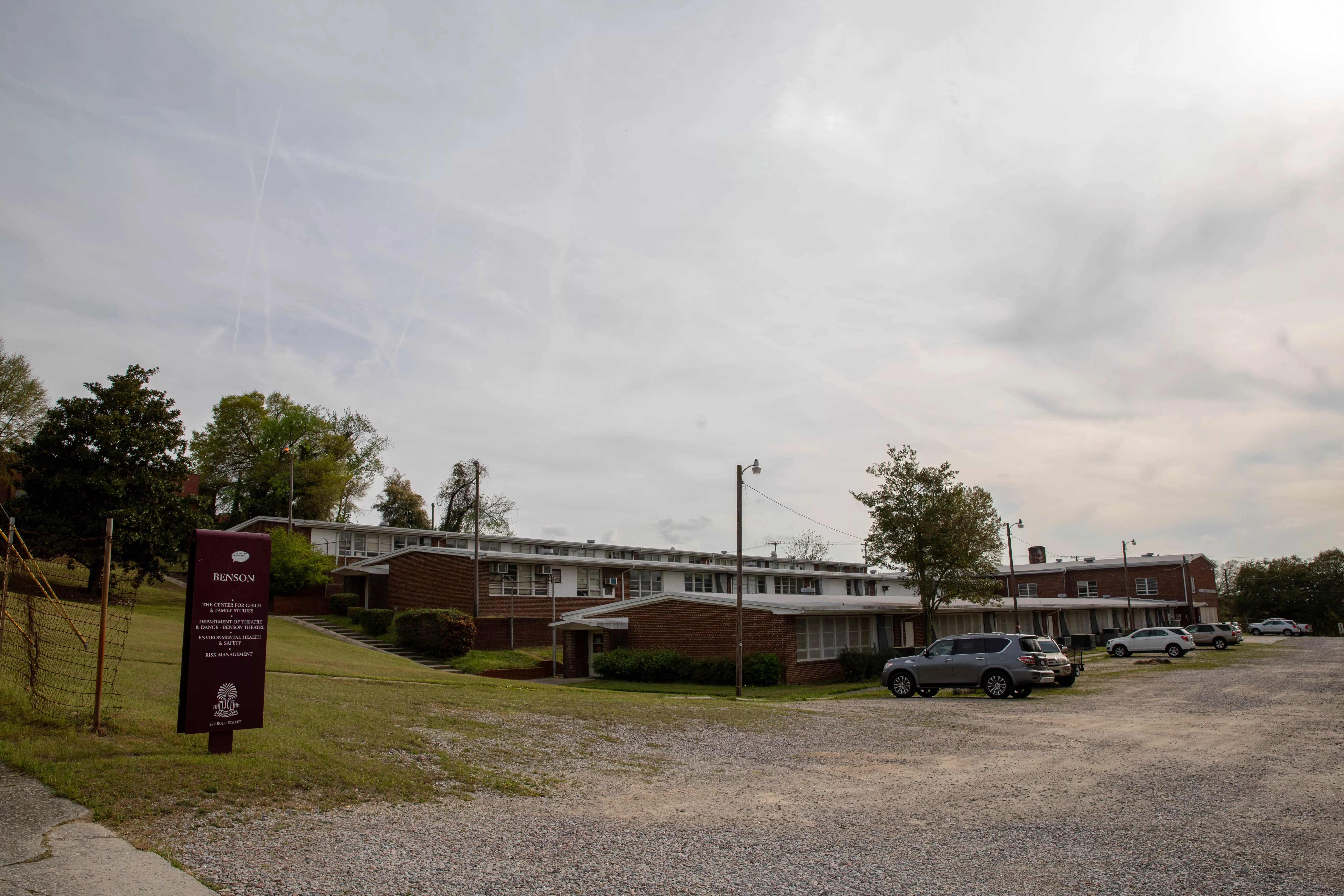
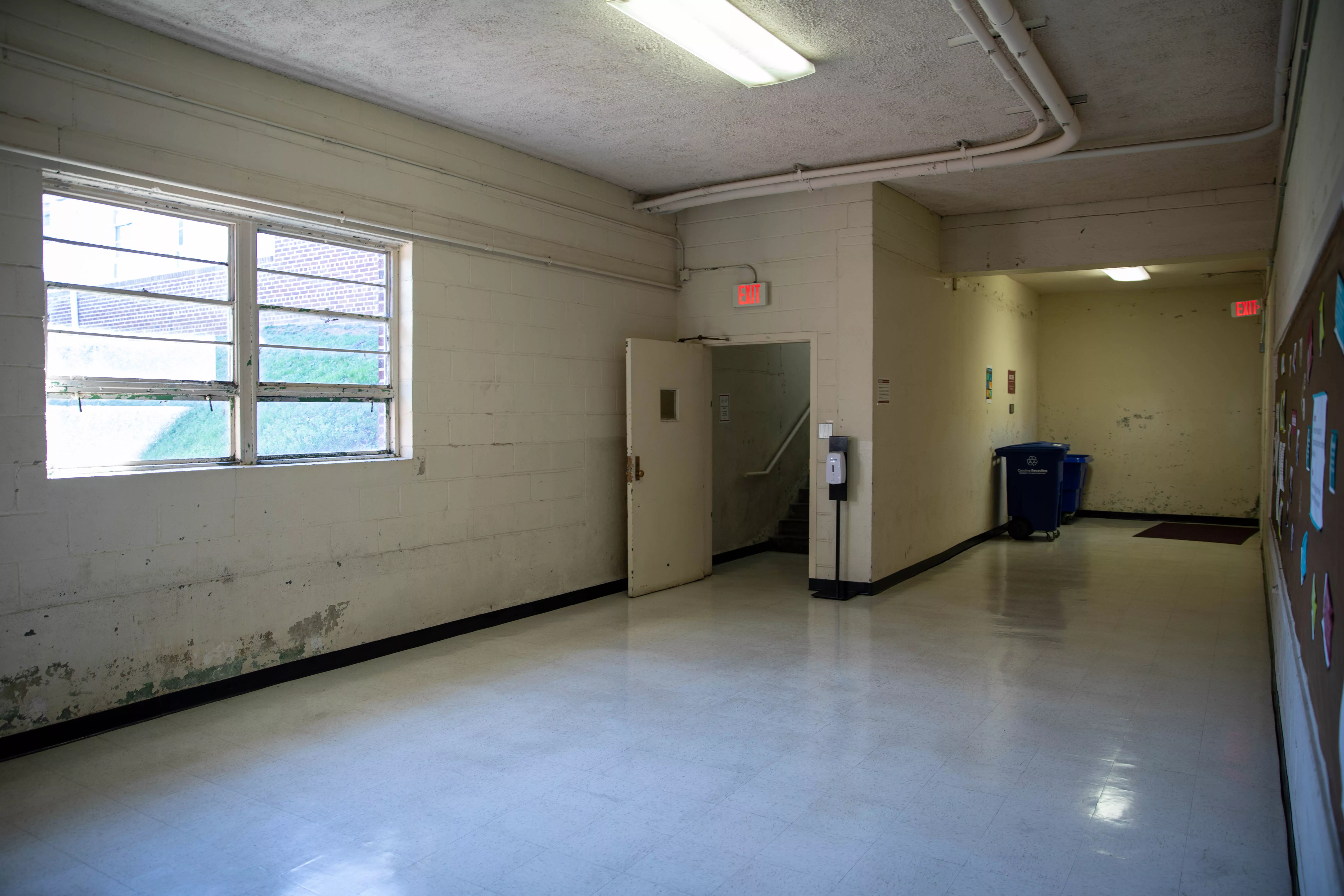
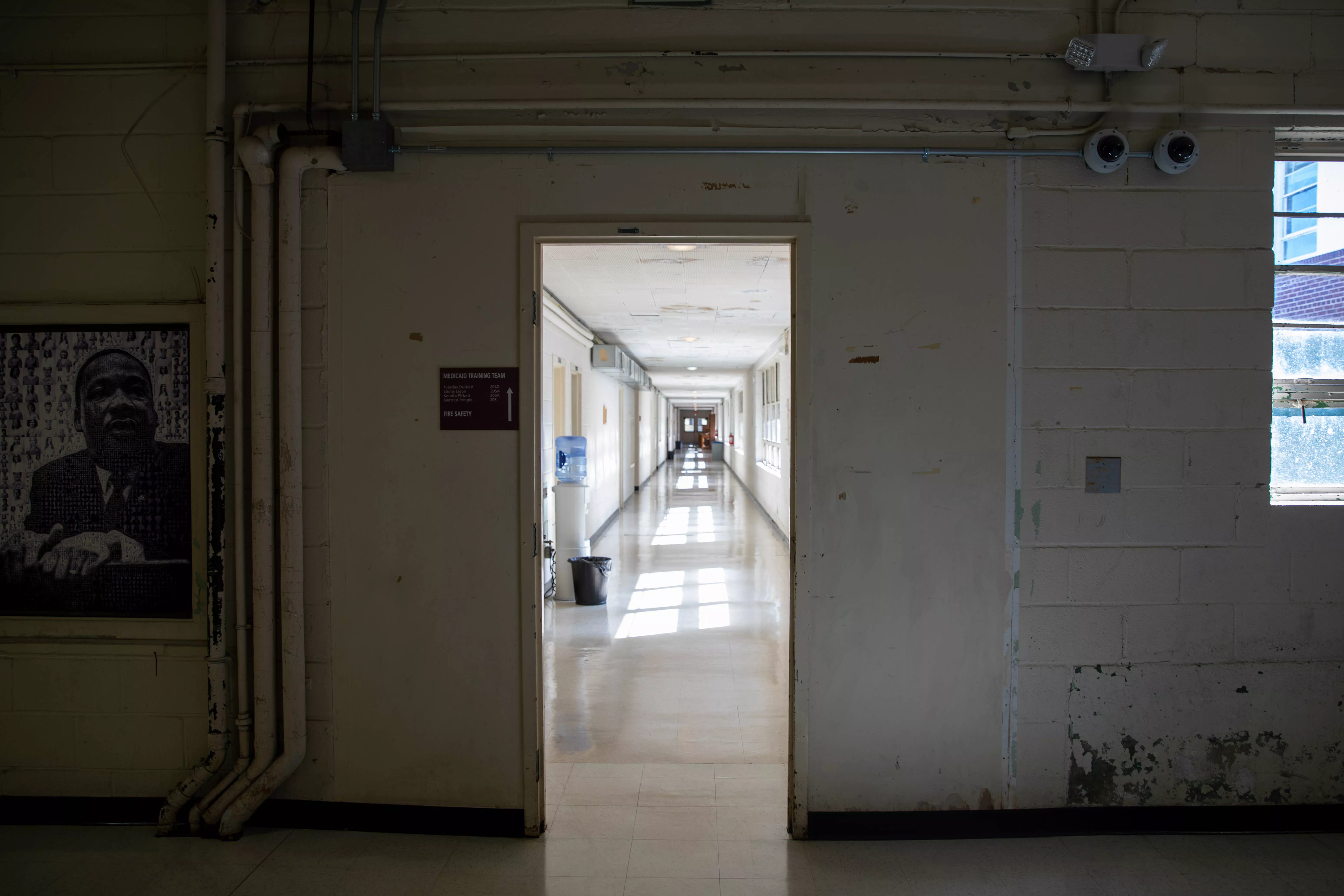
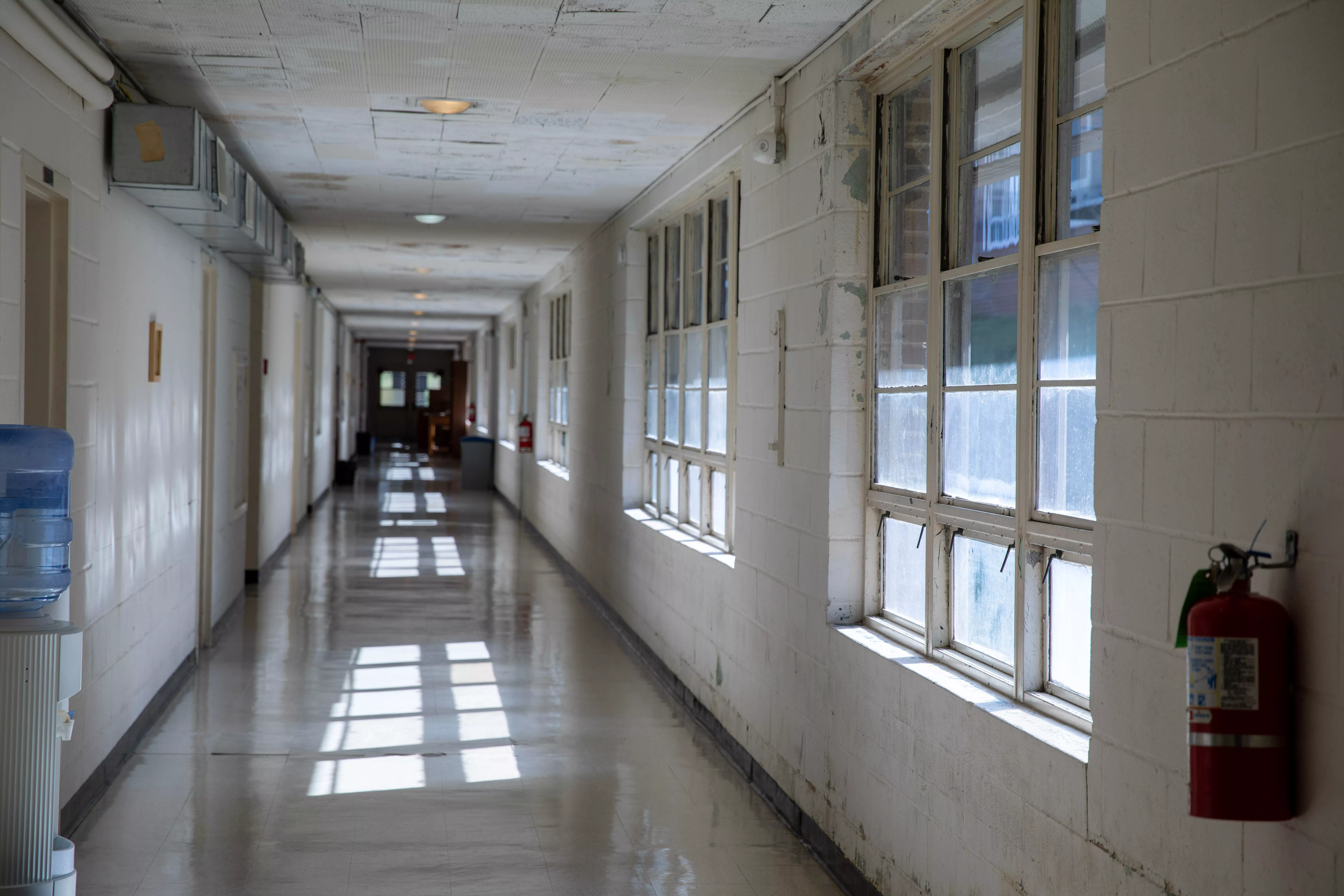
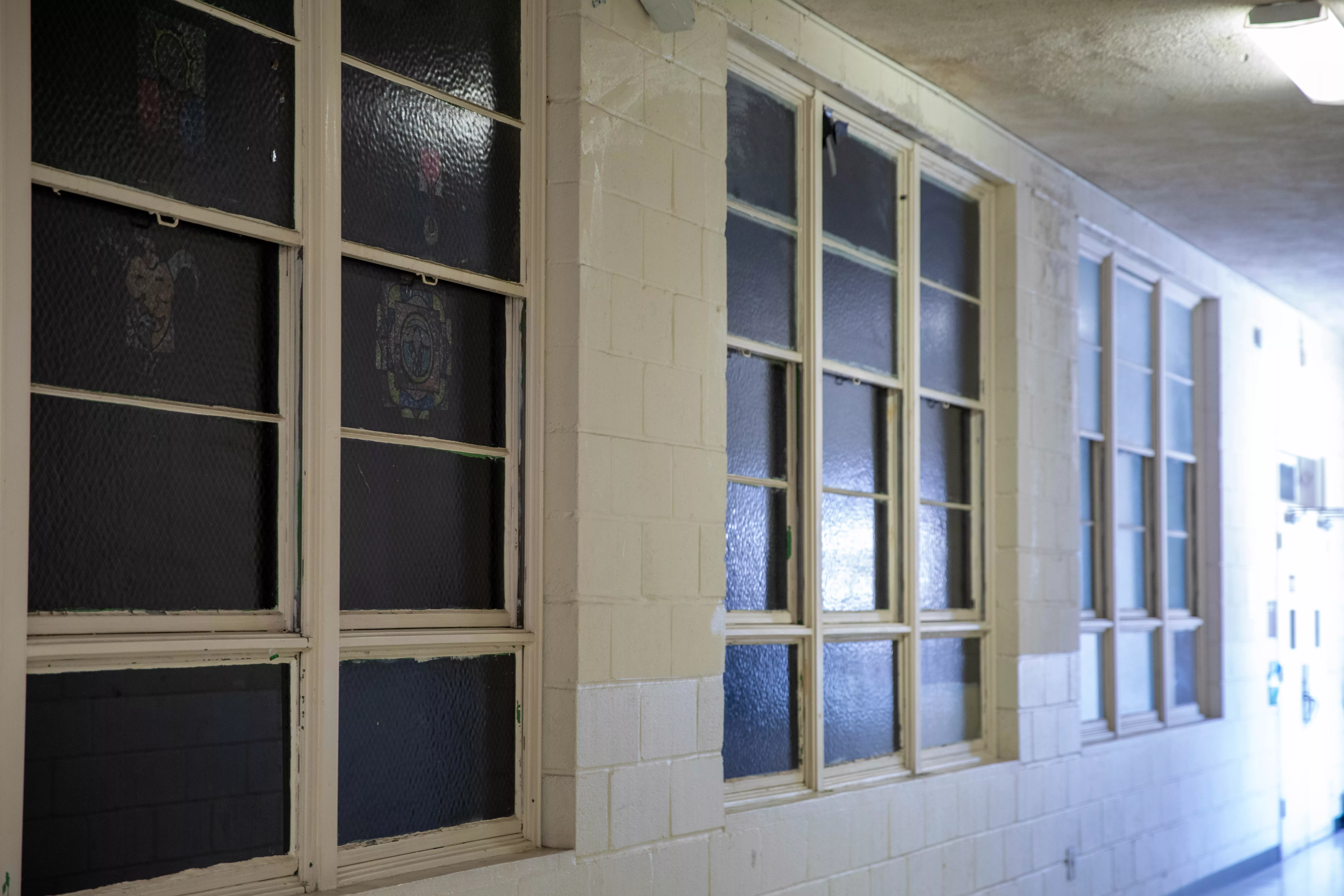
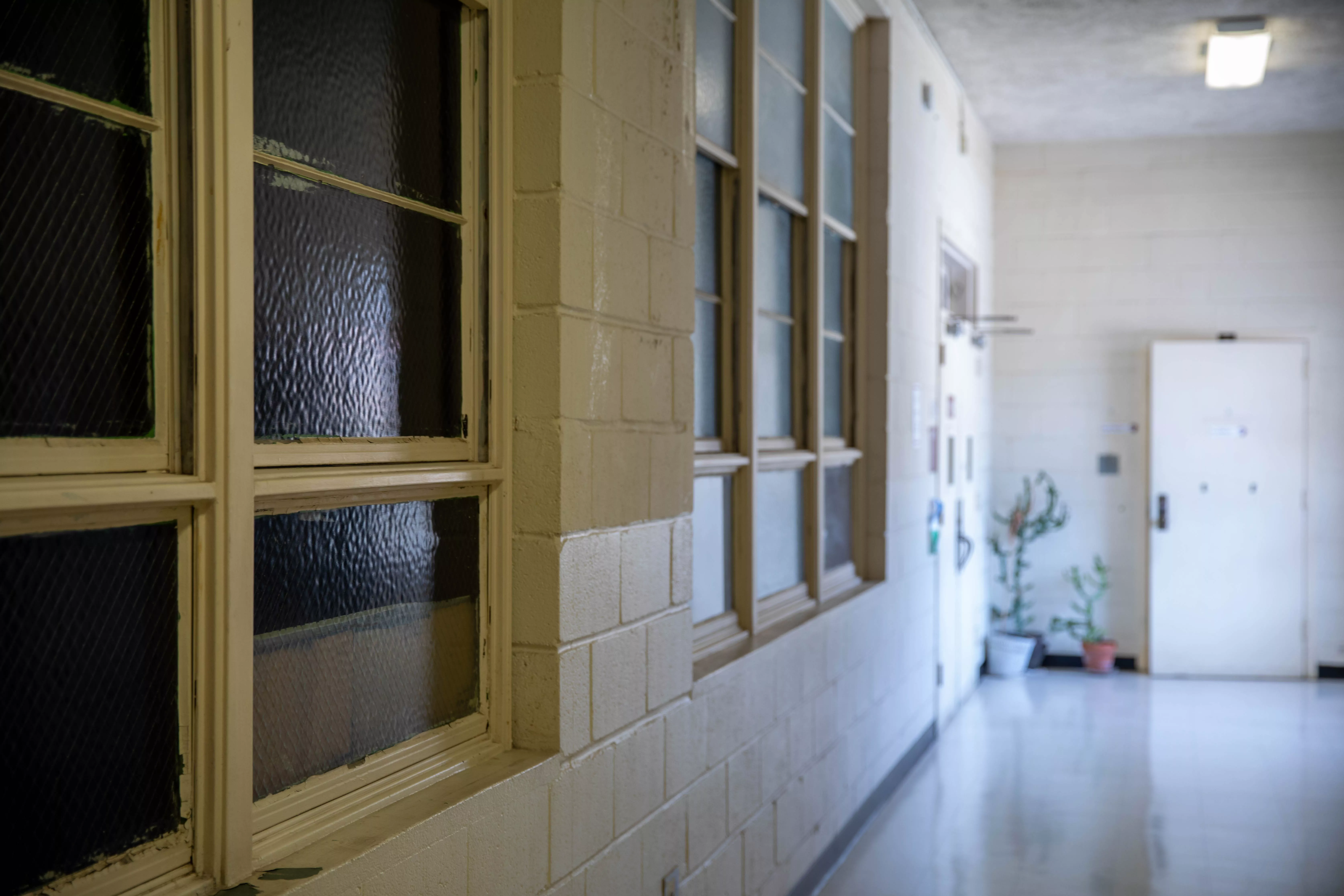
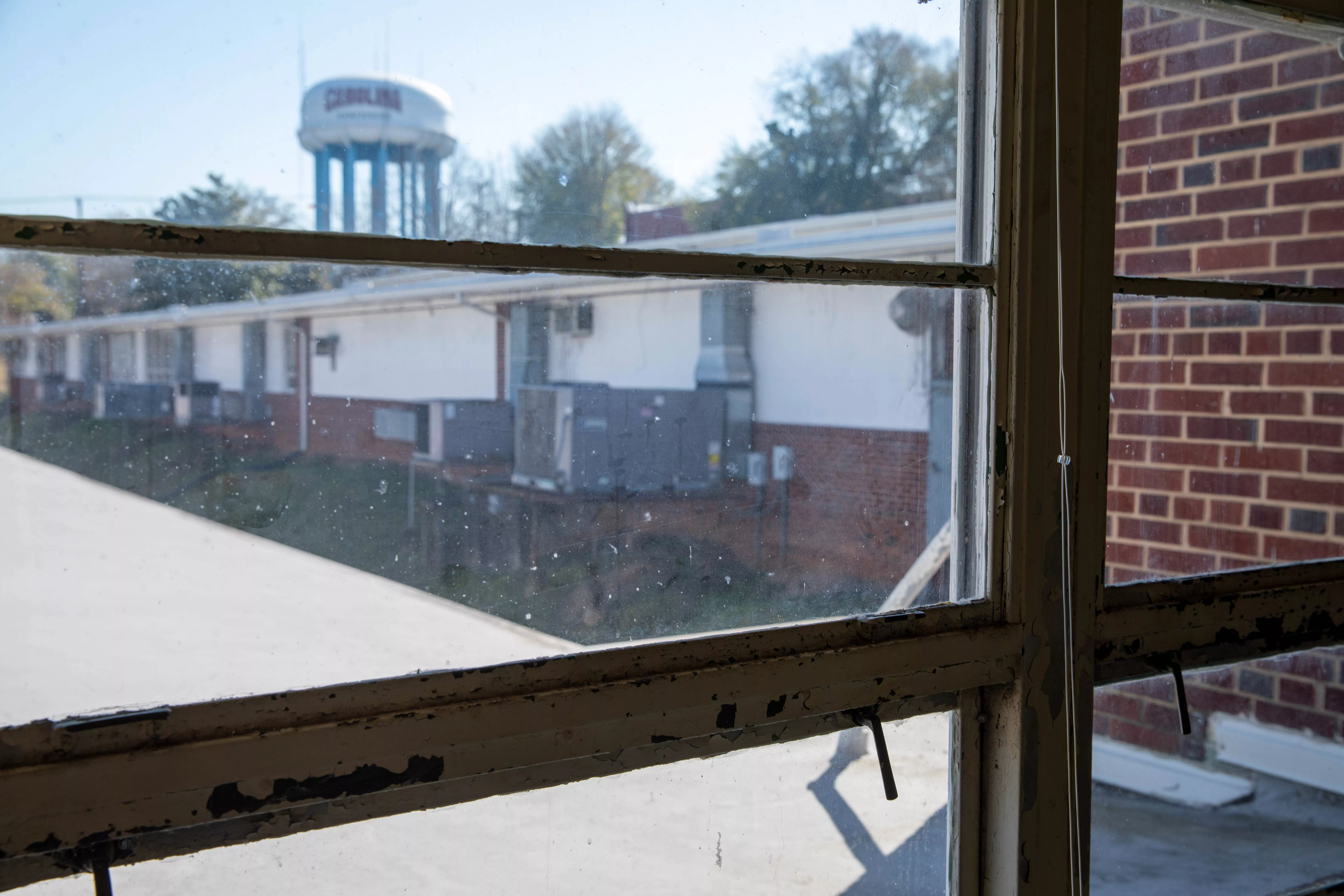
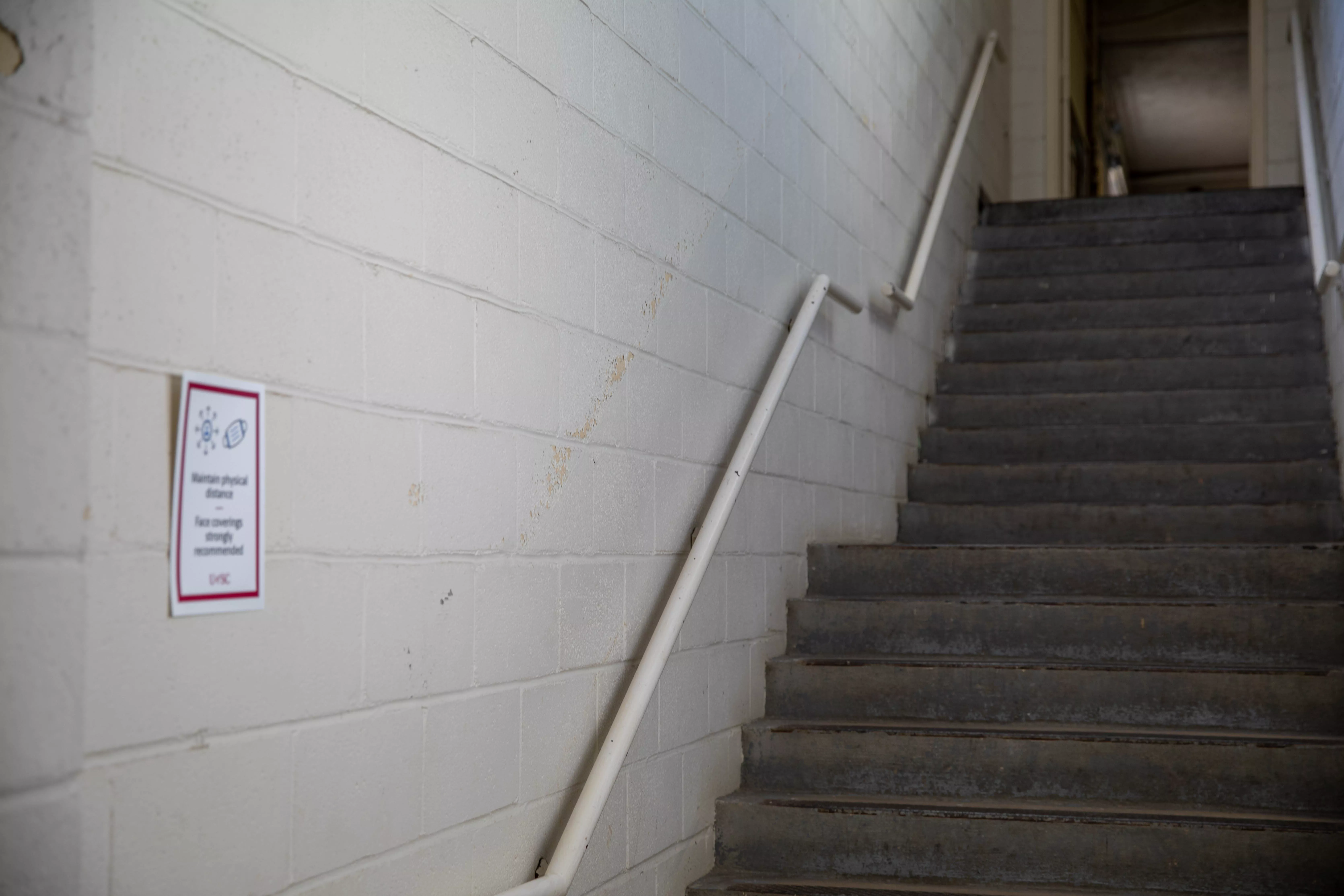
This photo gallery features the following:
- Florence C. Benson Elementary School sign
- Exterior views of Florence C. Benson Elementary School
- Glimpses down the hallways
- Orignal windows located inside the school
Standards
- 5.4.CC Analyze the continuities and changes of race relations in the United States and South Carolina following the Supreme Court decisions of Briggs v. Elliott and Brown v. Board of Education.
- 8.5.CX Analyze the correlation between the Modern Civil Rights Movement in South Carolina and the U.S.
- This indicator was designed to foster inquiry into the role of South Carolina in the Modern Civil Rights Movement, to include the influence of court cases such as Briggs v. Elliot and Flemming v. South Carolina Electric and Gas. This indicator was also developed to promote inquiry into the relationship between national leadership, protests, and events and South Carolina leadership, protests and events, such as the Friendship Nine and the Orangeburg Massacre.
- 8.5.E Utilize a variety of primary and secondary sources to analyze multiple perspectives on the cultural changes in South Carolina and the U.S.
- USHC.5.CC Evaluate continuities and changes during the Civil Rights Movement and other subsequent movements for equal rights.
- This indicator was developed to promote inquiry into thematic continuities and changes into how marginalized groups sought and won legal rights. Inquiry into the leadership, methods, and outcomes of modern equal rights movements are supported by this indicator.
Resources
Booker T. Washington High School and Florence Benson Elementary School: A Perspective of Brown Vs. Board of Education
Students will understand and analyze the impact of the Brown vs. Board of Education court case and how it changed the lives of American citizens and public schools.
View LessonBooker T. Washington H.S. & Florence C. Benson Elementary Overview | Let's Go!
From 1915-1974, Booker T. Washington High School served as a separate educational system for young African-Americans in Columbia, South Carolina. The school began with elementary grades and became a...
View Asset3D VR - Florence C. Benson Elementary School | Let's Go!
"The Florence C. Benson Elementary School was built in 1953-55 as Wheeler Hill School to serve African American students of the community and as a replacement for the overcrowded Celia Dial Saxon...
View Asset