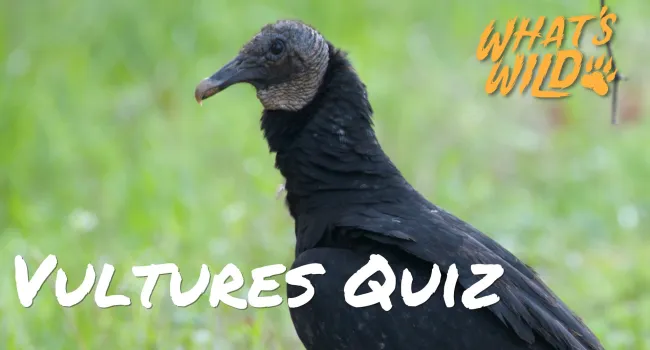
Investigating Adaptations: Turkey Vultures and Their Role in Ecosystems

Performance Expectation:
B-LS2-7: Design, evaluate, and refine a solution for reducing the impacts of human activities on the environment and biodiversity.
Objective:
Students will investigate the behavioral and physiological adaptations of turkey vultures (Cathartes aura) that enable them to fulfill their ecological role as scavengers. By the end of the lesson, students will be able to explain how turkey vultures contribute to ecosystem health and demonstrate an understanding of the interconnectedness of organisms within an ecosystem.
Essential Question
1. How do the behavioral adaptations of turkey vultures contribute to their success as scavengers in their ecosystem?
2. What physiological adaptations do turkey vultures possess that enable them to efficiently digest carrion and thrive in their environment?
3. How do turkey vultures contribute to ecosystem health, and what role do they play in maintaining ecological balance?
4. In what ways are turkey vultures interconnected with other organisms within their ecosystem, and how does their presence impact the overall biodiversity of the ecosystem?
5. What human activities pose threats to turkey vultures and other scavengers, and how can we mitigate these impacts to support their populations and ecosystem health?
Grade(s):
- 9
- 10
- 11
Subject(s):
Recommended Technology:
Other Instructional Materials or Notes:
Materials Needed:
1. Pictures or videos of turkey vultures in their natural habitat- What’s Wild- Turkey Vultures Video
2. Text resources about turkey vultures and their adaptations
3. Drawing materials (paper, colored pencils, markers)
4. Computers or tablets for research
5. Worksheet or graphic organizer for students to record their observations and findings
Lesson Progression
Lesson Procedure:
1. Introduction (15 minutes):
• Begin the lesson by showing What’s Wild Turkey Vultures
• Ask students what they know about turkey vultures and their role in ecosystems.
• Introduce the concept of adaptations and explain that today they will be exploring the adaptations of turkey vultures that enable them to thrive in their environment.
2. Research and Exploration (15 minutes):
• Divide students into small groups and provide them with text resources about turkey vultures and their adaptations.
• Instruct students to research and make notes on the behavioral and physiological adaptations of turkey vultures.
• Encourage students to focus on adaptations related to feeding, digestion, flight, and thermoregulation.
3. Discussion and Analysis (15 minutes):
• Bring the class back together and facilitate a discussion about the adaptations of turkey vultures.
• Encourage students to share their findings and observations.
• Discuss how these adaptations help turkey vultures fulfill their ecological role as scavengers and contribute to ecosystem health.
• Emphasize the interconnectedness of organisms within ecosystems and the importance of scavengers like turkey vultures in maintaining balance.
4. Application and Solution Design (15 minutes):
• Challenge students to think about how human activities impact turkey vultures and other scavengers.
• In small groups, have students brainstorm and design solutions for reducing these impacts and supporting turkey vulture populations.
• Solutions could include reducing littering, implementing wildlife corridors, or raising awareness about the importance of scavengers.
5. Presentation and Reflection (10 minutes):
• Have each group present their solution to the class.
• Encourage students to reflect on what they’ve learned about turkey vultures, adaptations, and the importance of biodiversity.
• Facilitate a discussion about the feasibility and effectiveness of the proposed solutions.
6. Conclusion (5 minutes):
• Summarize the key points of the lesson, emphasizing the role of turkey vultures as scavengers and the importance of biodiversity conservation.
• Encourage students to continue exploring and appreciating the natural world around them.
Assessment:
• Assess students based on their participation in discussions, the accuracy of their research findings, the creativity and feasibility of their proposed solutions, and their ability to articulate the importance of biodiversity conservation.
Turkey Vultures
One of twenty-six North American raptors, turkey vultures are scavengers that can be found in almost any habitat, from coasts to deserts to plains. Learn about the misunderstood Turkey Vulture, their...
View AssetTurkey Vultures Trivia Quiz - Teacher Resource | What's Wild
This edition of What's Wild is all about the misunderstood turkey vulture, their necessary role in ecosystems, and the man-made threats they face, like car strikes. It then looks at a Lowcountry...
View AssetTurkey Vultures Trivia Quiz | What's Wild
This edition of What's Wild is all about the misunderstood turkey vulture, their necessary role in ecosystems, and the man-made threats they face, like car strikes. It then looks at a Lowcountry...
View Asset