Acting like Ants

This lesson is written for first grade science students. It meets the performance expectations for the South Carolina College- and Career- Ready Science Standards 2021: 1-LS1-1. Use materials to design a solution to a human problem by mimicking how plants and/or animals use their external parts to help them survive, grow, and meet their needs.
After a read aloud and brainstorming real life problems, students will view the Are You an Ant? video and design a solution to a problem by mimicking how an ant uses their external parts to help them survive, grow, and meet their needs.
Essential Question
- Describe a human problem that can be solved by designing a solution using scientific information about plants and animals.
- Describe features of the solution they designed such as how it fixes the human problem and how it mimics the plant/animal external parts.
- Evaluate potential solutions for the same problem to determine which solution is best.
Grade(s):
- 1
Subject(s):
Recommended Technology:
Other Instructional Materials or Notes:
Picture Book: Nature Did It First: Encourage Problem-Solving and Exploration Through Nature with a Science Book for Kids About Biomimicry and Engineering by Karen Ansberry.
Velcro (1-2 pieces)
Picture of Common Burr stuck in Animal’s fur
Chart Paper
Materials for designing solution to problem (dependent on teacher to decide how final product will be formatted)
Lesson Progression
Engage:
Show the class a piece of Velcro and a picture of a burr stuck in an animal’s fur. Ask them to make observations about the two items to determine how they are similar. After they have made their observations, explain that Velcro was invented after a man named George De Mestral was walking through the woods and noticed burrs had stuck to his pants and his dog’s fur (Smithsonian Institution, 2014). According to the Smithsonian Institution (2014), the hooks from the burr attached onto anything that had a loop like fibers from clothing, animal fur, or human hair. This inspired De Mestral to invent Velcro® to fasten fabric together (Smithsonian Institution, 2014).
Explore:
Explain to class that scientists and engineers observe animals and plants to design solutions to problems that humans face. Just as De Mestral used the common burr to design Velcro®, many living things in nature have inspired inventions. This is called biomimicry. Read the picture book Nature Did It First: Encourage Problem-Solving and Exploration Through Nature with a Science Book for Kids About Biomimicry and Engineering by Karen Ansberry. Ask class if they have ever had a problem that they created a way to solve it. Create list of class answers on chart paper to display in class.
Explain
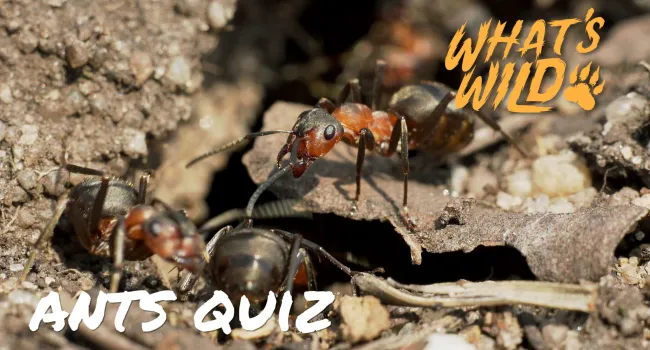
Explain to students that they are going to watch a video of ants in their natural habitat. Let the students know they are going to take on the role of scientists and engineers while watching this video. They will be observing ants using their mandibles and determine how they can solve a human problem using this technique. Tell them to pay attention to how the ant uses their mandible to build tunnels.
Evaluate
Have students design an invention based on the mandibles of an ant that can solve an identified human problem. Students may need assistance with this brainstorming process to truly think through their invention. This activity can also be completed in pairs or a small group. It is suggested to set up this as a station activity with the teacher and arrange the room with other learning stations the students could visit in groups. Invention could be designed on paper, constructed with recycled materials/craft materials, or explained on video.
Students who are successful in completing the learning intentions of this performance target will be able to:
- Describe a human problem that can be solved by designing a solution using scientific information about plants and animals.
- Describe features of the solution they designed such as how it fixes the human problem and how it mimics the plant/animal external parts.
- Evaluate potential solutions for the same problem to determine which solution is best.
Teacher Notes
Smithsonian Institution, (2014, April 15). George De Mestral: Velcro Inventor. https://invention.si.edu/george-de-mestral-velcro-inventor
Ants | What's Wild
Ants are some of the most fascinating and complex insects in the world. These tiny creatures are known for their remarkable social behavior and their ability to build intricate underground colonies...
View AssetAnts Trivia Quiz | What's Wild
Discover the remarkable lives of these complex insects that play a crucial role in ecosystems worldwide in the latest episode of What's Wild. From their extraordinary social behavior to their...
View Asset