Upstate Visit to Walnut Grove Plantation
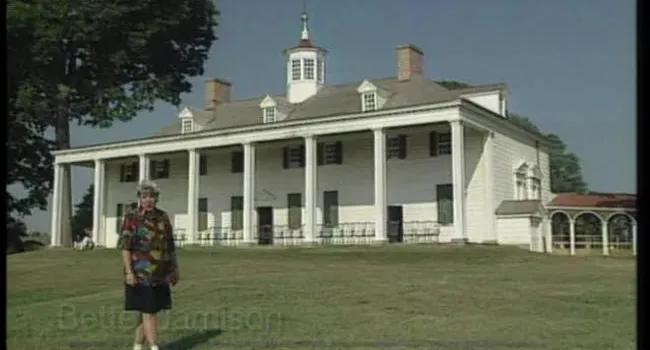
Walnut Grove Plantation is located near Spartanburg, South Carolina. In the mid 1700s, it was the home of the Moore family, a family with 10 children. Walnut Grove, so named because daughter Kate planted the walnut trees, consisted of a well house, blacksmith house, doctor’s office, smokehouse, wheat house, cellar/refrigerator, and horse barn.
During the Revolutionary War, more battles were fought on South Carolina land than anywhere else in the United States. Margaret Kathryn Moore, who married General Andrew Barry, was considered a heroine for the role she played in the war. A scout and a horsewoman, she would spy on the Tories and report back to her husband. Kate gathered troops to fight for her husband, and chased away the Tories so they wouldn’t burn down the house. She was very brave.
To get a land grant in the early years of this country, a person had to have a profession. Mr. Moore was a teacher. The name of his school, the first in Spartanburg County, was the Rocky Spring Academy. In his school for boys only, the students wore uniforms and wrote on slate boards. Ink was made from vinegar and walnuts, and pens were made from quills. Students studied nature, math, and animals. The school, which also served as a weaving shop, contained a loom and a spinning wheel. They dyed their own fabrics. Snakeskins were used as bandages for wounds.
Candles were dipped on cold days because they were made of fat. To make the candles, animal fat, or tallow, was mixed with beeswax. Left over linen was used to make the wicks. Fifty to 80 dips were required to make one candle.
Upstate Visit to Walnut Grove Plantation
Walnut Grove Plantation is located near Spartanburg, South Carolina. In the mid 1700s, it was the home of the Moore family, a family with 10 children. Walnut Grove, so named because daughter Kate planted the walnut trees, consisted of a well house, blacksmith house, doctor’s office, smokehouse, wheat house, cellar/refrigerator, and horse barn.
During the Revolutionary War, more battles were fought on South Carolina land than anywhere else in the United States. Margaret Kathryn Moore, who married General Andrew Barry, was considered a heroine for the role she played in the war. A scout and a horsewoman, she would spy on the Tories and report back to her husband. Kate gathered troops to fight for her husband, and chased away the Tories so they wouldn’t burn down the house. She was very brave.
To get a land grant in the early years of this country, a person had to have a profession. Mr. Moore was a teacher. The name of his school, the first in Spartanburg County, was the Rocky Spring Academy. In his school for boys only, the students wore uniforms and wrote on slate boards. Ink was made from vinegar and walnuts, and pens were made from quills. Students studied nature, math, and animals. The school, which also served as a weaving shop, contained a loom and a spinning wheel. They dyed their own fabrics. Snakeskins were used as bandages for wounds.
Candles were dipped on cold days because they were made of fat. To make the candles, animal fat, or tallow, was mixed with beeswax. Left over linen was used to make the wicks. Fifty to 80 dips were required to make one candle.
Standards
- 4.2.CX Contextualize South Carolina’s role in the development of the new nation.
- 4.2.CO Compare the roles of marginalized groups during the American Revolution.
- 4.2.CE Examine the economic and political motivations for colonists to declare independence from Great Britain.
- 8.2.CO Compare the motives and demographics of loyalists and patriots within South Carolina and the colonies.
- This indicator was developed to encourage inquiry into the economic, political, and social motivations of the patriots and the loyalists in the era of the American Revolution.
- 8.2.CX Contextualize the roles of various groups of South Carolinians as the colonies moved toward becoming an independent nation.
- This indicator was developed to encourage inquiry into the motivations of colonists during the American Revolution and the progression of conflict and failed compromise that ultimately led to revolution.
- 8.2.CE Explain the economic, political, and social factors surrounding the American Revolution.
- This indicator was developed to encourage inquiry into how the colonies began to unify to create a distinctive American identity over the course of events of the American Revolution.
Resources
Around Alone, Part 1 | Project Discovery Revisited
A race around the world . . . in a boat 40 to 60 feet in length . . . ALONE. This event, which began in 1982, occurs every four years and starts in Charleston, South Carolina. The course consists of...
View AssetAround Alone, Part 2 | Project Discovery Revisited
Students at Laing Middle School followed the progress of the race. They used the Internet to track the skippers. They learned about oceans, stopovers, satellite photography, weather, geography, and...
View AssetAvery Research Center | Project Discovery Revisited
Charleston, South Carolina, is a city rich in African American culture. Sullivan’s Island, once an entry port from Africa for the slave trade, was considered the gateway to the United States. The...
View AssetButterflies at Riverbanks Zoo | Project Discovery Revisited
In their new exhibit at Riverbanks Zoo and Botanical Garden, butterflies are the “jewels of the sky.” A cloth-covered display lets in sun and rain, but doesn’t let the butterflies out. The plants in...
View AssetCharlesfort | Project Discovery Revisited
Archaeologists with the South Carolina Institute of Archaeology and Anthropology are working to uncover the site formerly known as Charlesfort, the settlement established by Huguenots seeking refuge...
View AssetColonial Williamsburg, Part 1 | Project Discovery Revisited
Williamsburg is a real town in Virginia that has been restored to the condition it was in over 200 years ago. Buildings of interest in this town include the courthouse, governor’s house, capitol, jail...
View AssetColonial Williamsburg, Part 2 | Project Discovery Revisited
The location where the filming takes place is considered the ultimate set because it consists of restored Colonial buildings. Archaeologists find and uncover the sites of these historic buildings, and...
View Asset