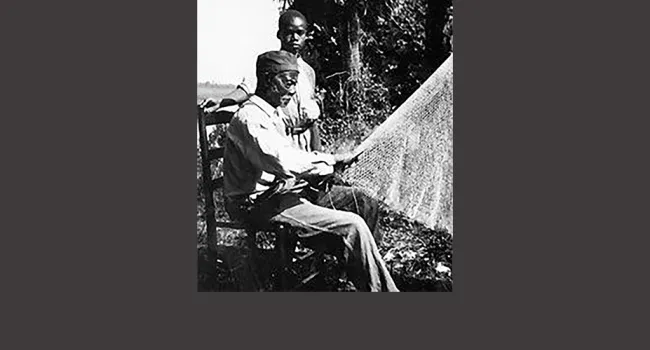
In the video, St. Helena resident Frank Brown weaves a net while singing a song rich in the Gullah dialect. This clip was extracted from Palmetto Places - St. Helena Island.
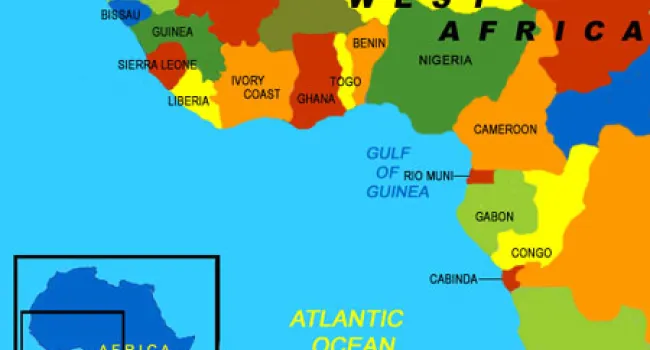
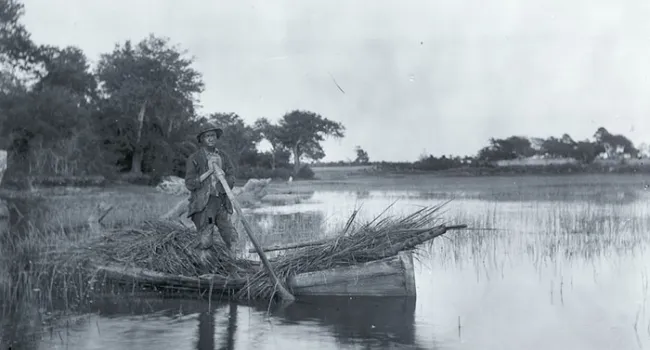
After the Civil War and through the early 1900s, many Native Islanders farmed the land for themselves and fished in surrounding waters to make a living. Gullah fishermen knitted their own fishing nets with a needle that was often made of palmetto wood. The art of making and casting these fishing nets came from West Africa.
Before the islands were developed, Native Islanders used their casting nets to catch fish and shrimp. They also gathered oysters and caught crabs to sell at the local markets. Some islanders still use their fishing nets to provide food for their families. The catch is used to prepare traditional Gullah recipes, such as stewed shrimp, oyster dressing, boiled crabs and fried fish.
Word Bank
Civil War (civ.il war) n. - the war in the United States between the Union and Confederacy that lasted from 1861 to 1865; also, any war within a country.
Native Islander (na.tive is.land.er) n. - one of the original inhabitants or lifelong residents of the Sea Islands.
Gullah (gul.lah) n. - one of a group of people of African ancestry that live in the Sea Islands and coastal areas of South Carolina, Georgia, and northern Florida; the creolized language of the Gullahs, based on English and several other African languages and spoken in Sea Island communities.
West Africa (west af.ri.ca) - the region of western Africa between the Sahara Desert and the Gulf of Guinea.
en Espanol
En el video, Frank Brown, residente de Santa Elena, teje una red mientras canta una canción enriquecida en el dialecto Gullah. Este clip fue extraído de Palmetto Places - Isla de Santa Elena.
Después de la Guerra Civil y a principios de 1900, muchos Nativos de las Islas cultivaron la tierra para sí mismos y pescaron en las aguas circundantes para ganarse la vida. Los pescadores de Gullah tejían sus propias redes de pesca con una aguja que a menudo estaba hecha de madera de palmetto. El arte de fabricar y lanzar estas redes de pesca vino de África Occidental.
Antes de que las islas fueran desarrolladas, los Nativos de Las Islas utilizaban sus redes de fundición para capturar peces y camarones. También recolectaron ostras y cangrejos capturados para vender en los mercados locales. Algunos isleños siguen utilizando sus redes de pesca para proporcionar alimentos a sus familias. La captura se utiliza para preparar recetas tradicionales de Gullah, como camarones estofados, aliño de ostras, cangrejos hervidos y pescado frito.
In the video, St. Helena resident Frank Brown weaves a net while singing a song rich in the Gullah dialect. This clip was extracted from Palmetto Places - St. Helena Island.
After the Civil War and through the early 1900s, many Native Islanders farmed the land for themselves and fished in surrounding waters to make a living. Gullah fishermen knitted their own fishing nets with a needle that was often made of palmetto wood. The art of making and casting these fishing nets came from West Africa.
Before the islands were developed, Native Islanders used their casting nets to catch fish and shrimp. They also gathered oysters and caught crabs to sell at the local markets. Some islanders still use their fishing nets to provide food for their families. The catch is used to prepare traditional Gullah recipes, such as stewed shrimp, oyster dressing, boiled crabs and fried fish.
Word Bank
Civil War (civ.il war) n. - the war in the United States between the Union and Confederacy that lasted from 1861 to 1865; also, any war within a country.
Native Islander (na.tive is.land.er) n. - one of the original inhabitants or lifelong residents of the Sea Islands.
Gullah (gul.lah) n. - one of a group of people of African ancestry that live in the Sea Islands and coastal areas of South Carolina, Georgia, and northern Florida; the creolized language of the Gullahs, based on English and several other African languages and spoken in Sea Island communities.
West Africa (west af.ri.ca) - the region of western Africa between the Sahara Desert and the Gulf of Guinea.
en Espanol
En el video, Frank Brown, residente de Santa Elena, teje una red mientras canta una canción enriquecida en el dialecto Gullah. Este clip fue extraído de Palmetto Places - Isla de Santa Elena.
Después de la Guerra Civil y a principios de 1900, muchos Nativos de las Islas cultivaron la tierra para sí mismos y pescaron en las aguas circundantes para ganarse la vida. Los pescadores de Gullah tejían sus propias redes de pesca con una aguja que a menudo estaba hecha de madera de palmetto. El arte de fabricar y lanzar estas redes de pesca vino de África Occidental.
Antes de que las islas fueran desarrolladas, los Nativos de Las Islas utilizaban sus redes de fundición para capturar peces y camarones. También recolectaron ostras y cangrejos capturados para vender en los mercados locales. Algunos isleños siguen utilizando sus redes de pesca para proporcionar alimentos a sus familias. La captura se utiliza para preparar recetas tradicionales de Gullah, como camarones estofados, aliño de ostras, cangrejos hervidos y pescado frito.
Standards
- 3-2 The student will demonstrate an understanding of the exploration and settlement of South Carolina.
- RI.MC Meaning and Context
- RI.MC Meaning and Context
- 3.4.1.PR Investigate the cultural characteristics of places and regions around the world.
- 3.4.2.HS Investigate the economic and land use characteristics of places and regions around the world.
- This indicator was written to promote inquiry into the unique development of ethnic, political, and religious identities in the New England, Mid-Atlantic, and Southern colonies.
Resources
Gullah Glossary | GullahNet
benne wafer (ben.ne wa.fer) n. - a cookie made with sesame seeds and eaten for good luck; introduced by slaves from West Africa. / cast (cast) v. - to throw or fling. chaff (chaff) n. - lightweight...
View Asset