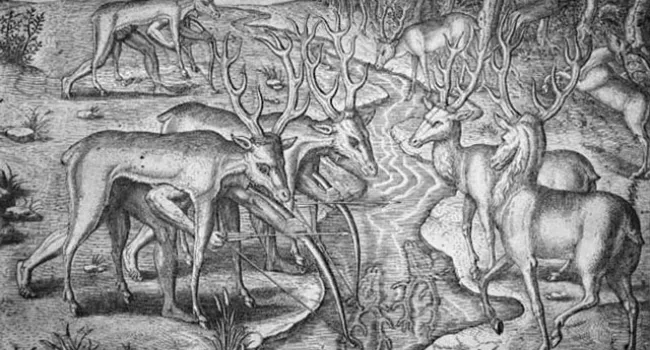
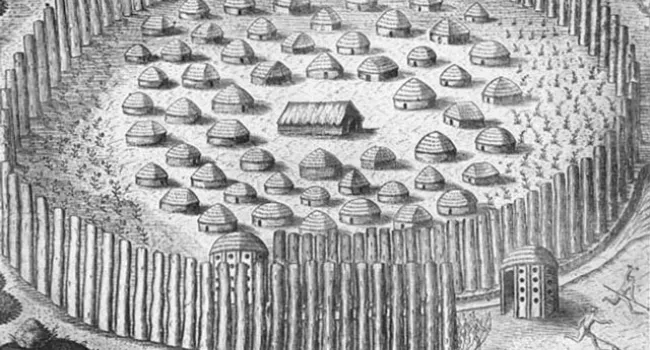
This indicator was written to promote inquiry into the unique development of ethnic, political, and religious identities in the New England, Mid-Atlantic, and Southern colonies.

Grade(s): 4

Subject(s): Social Studies

Year: 2019

Content Type
Learning About Gullah Culture

Lesson

Grades

  • 4
Learning About Gullah Culture

During this lesson, students will explore and learn from different resources regarding Gullah culture to support their comprehension of the African experience in South Carolina during the colonial...

 Anita Singleton-Prather | Women Vision SC

Video

Grades

  • 4
  • 6
  • 7
  • 8
  • 9
  • 10
  • 11
  • 12
Anita Singleton-Prather | Women Vision SC
Anita Singleton-Prather grew up thinking she would study law and become a civil rights attorney. Instead she became a master storyteller, author and educator. Her work has influenced civil rights and...
Building The Home And Move To Clemson | Hanover House
   - Episode 2 The French Huguenot Exodus | Hanover House 1

Video

Grades

  • 3
  • 4
  • 8
The French Huguenot Exodus | Hanover House
Episode 1
The beginning is about the house’s original owner, Paul de St. Julien’s family, and their French Huguenot origins. They moved to Charleston, S.C. to escape religious and political persecution, when...
Building The Home And Move To Clemson | Hanover House
   - Episode 2 African American Contributions | Hanover House 3

Video

Grades

  • 3
  • 4
  • 8
African American Contributions | Hanover House
Episode 3
William Hiott and Patrick McMillan discuss the contributions made by African Americans. When Paul de St. Julien died in 1741, he owned forty-five slaves. Most of the profit which came from St. Julien...
The Waccamaw Indian People | Between the Waters Between The Waters, Part 2 2

Video

Grades

  • 3
  • 4
  • 5
Between The Waters, Part 2
Episode 2
In the 16th century, Spanish and English settlers came to colonize Hobcaw Barony. This was a dark time for the Waccamaw people, for Spaniards colonized Waccamaw land without regard for the natives...
The Waccamaw Indian People | Between the Waters Between The Waters, Part 3 3

Video

Grades

  • 3
  • 4
  • 5
Between The Waters, Part 3
Episode 3
In the 18th and 19th centuries, rice was the most produced crop in the United States, and provided the most wealth. Historian Daniel Littlefield, and botanist Richard Porcher, discuss rice’s African...
Gullah Glossary | GullahNet

Document

Grades

  • 4
  • 8
Gullah Glossary | GullahNet
benne wafer (ben.ne wa.fer) n. - a cookie made with sesame seeds and eaten for good luck; introduced by slaves from West Africa. / cast (cast) v. - to throw or fling. chaff (chaff) n. - lightweight...
Man Playing the Fiddle | History Of SC Slide Collection

Photo

Grades

  • 3
  • 4
  • 5
  • 6
  • 7
  • 8
  • 9
  • 10
  • 11
  • 12
Man Playing the Fiddle | History Of SC Slide Collection
Episode 3
An unknown man, Charleston County, playing the fiddle, around 1900. By rights this photograph should be of a banjo, whose origins are indisputably African. As early as the late 17th century, records...
Denmark Vesey's Plot | Palmetto Special Carolina Indians  | Palmetto Special

Video

Grades

  • 3
  • 4
  • 5
  • 6
  • 7
  • 8
Carolina Indians | Palmetto Special
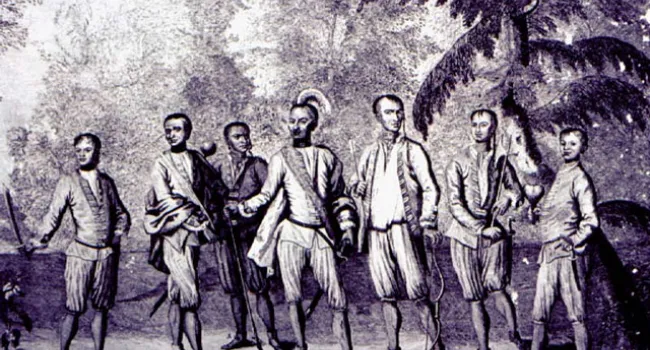
The lesson consists of the host and three students visiting Keowee-Toxaway State Park in Pickens County. The story of the Cherokee is told there through drawings and artifacts in a series of display...
Landrum Blockhouse | History of SC Slide Collection

Photo

Grades

  • 4
  • 8
Landrum Blockhouse | History of SC Slide Collection
Episode 20
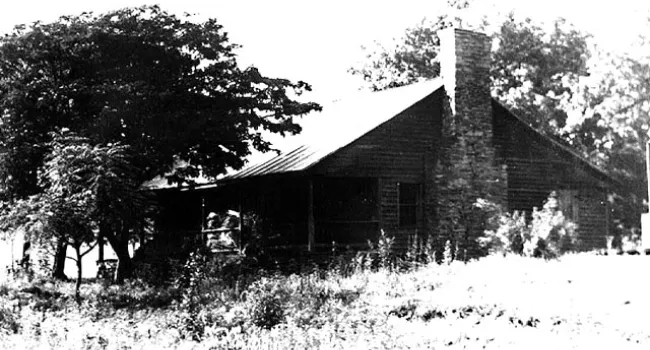
Landrum Blockhouse on the South Carolina and North Carolina line, near Tryon, North Carolina. This was one of a series of blockhouses built for protection against the Native Americans. A WPA photo...
Bill of Exchange | History of SC Slide Collection

Photo

Grades

  • 4
  • 8
Bill of Exchange | History of SC Slide Collection
Episode 3
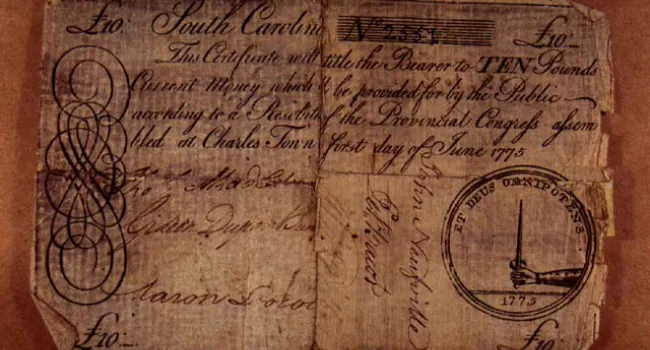
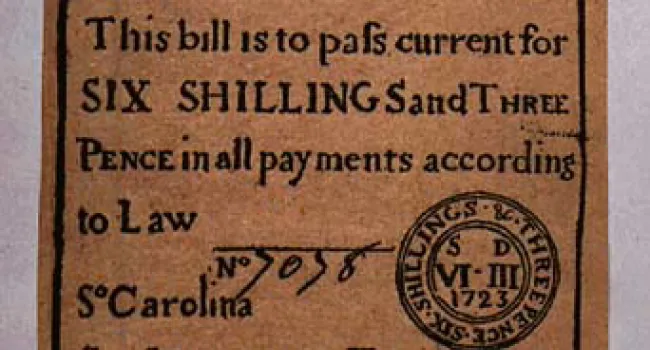
The availability of "real" money, in the form of coins made of gold and silver, was a constant problem in all of the English colonies. Their need to purchase manufactured goods from Europe meant that...
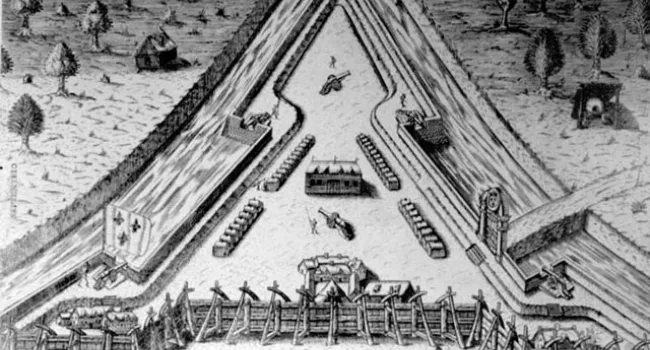
Fort San Filipe | History of SC Slide Collection

Photo

Grades

  • 4
Fort San Filipe | History of SC Slide Collection
Episode 5
The Spanish made two attempts to settle a permanent community in South Carolina. The first in 1526, led by a wealthy lawyer from Santo Domingo, Lucas Vasquez de Ayllon, failed in less than a year. The...
 Lemmon Hill Plantation, Part 6 6

Video

Grades

  • 3
  • 4
  • 5
Lemmon Hill Plantation, Part 6
Episode 6
Project Discovery visits a restored plantation from the 1790s, built in Winnsboro, in Fairfield County.