Reflections of Columbia, Part 5 - The Great Depression | Carolina Stories - Episode 5

Kaltura

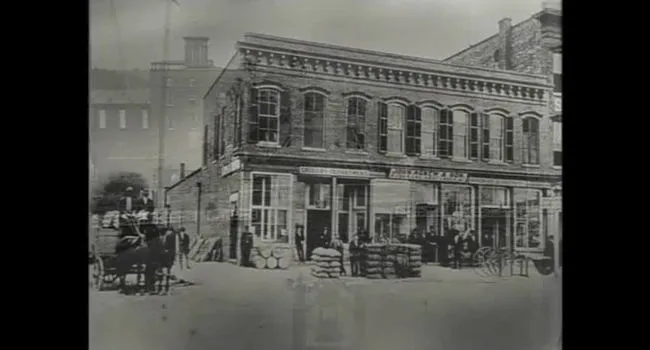
The first sign of the Great Depression in South Carolina was the drastic drop in cotton prices. While the rest of the country was hit hard by the depression, those living in Columbia had an economic cushion of sorts, with one of the largest construction projects in S.C. history, the building of the Lake Murray Dam. The Lake Murray Dam became not only a major source for hydro-electric power, but also opened up numerous recreational opportunities.

President Franklin D. Roosevelt’s “New Deal” program changed Columbia. More dormitories, the new football stadium, and renewed Columbia’s capacity to handle farm produce. The Farmer’s Market was an important part of Columbia’s economy, and the “New Deal” helped rejuvenate Columbia farmers, who had been suffering during the depression. 

The first sign of the Great Depression in South Carolina was the drastic drop in cotton prices. While the rest of the country was hit hard by the depression, those living in Columbia had an economic cushion of sorts, with one of the largest construction projects in S.C. history, the building of the Lake Murray Dam. The Lake Murray Dam became not only a major source for hydro-electric power, but also opened up numerous recreational opportunities.

President Franklin D. Roosevelt’s “New Deal” program changed Columbia. More dormitories, the new football stadium, and renewed Columbia’s capacity to handle farm produce. The Farmer’s Market was an important part of Columbia’s economy, and the “New Deal” helped rejuvenate Columbia farmers, who had been suffering during the depression. 

La primera señal de la Gran Depresión en Carolina del Sur fue la drástica caída de los precios del algodón. Mientras que el resto del país se vio muy afectado por la depresión, quienes vivían en Columbia tenían una especie de colchón económico, con uno de los proyectos de construcción más grandes en la historia de Carolina del Sur, la construcción de la presa del lago Murray. La presa del lago Murray se convirtió no solo en una fuente importante de energía hidroeléctrica, sino que también abrió numerosas oportunidades recreativas. 

El programa "New Deal" del presidente Franklin D. Roosevelt cambió a Columbia. Más dormitorios, el nuevo estadio de fútbol y la capacidad renovada de Columbia para manipular productos agrícolas. El Mercado de Agricultores era una parte importante de la economía de Columbia, y el "New Deal" ayudó a rejuvenecer a los agricultores de Columbia, que habían estado sufriendo durante la depresión.

More in this Series

Carolina Stories / Reflections of Columbia

Reflections of Columbia, Part 2 - Civil War And Reconstruction | Carolina Stories
   - Episode 2 Reflections of Columbia, Part 1 1

Video

Grades

  • 9
  • 10
  • 11
  • 12
  • Higher Education
Reflections of Columbia, Part 1
Episode 1
Sitting on the Congaree River, Columbia, South Carolina has a rich, diverse, and celebrated history. Columbia was founded on what was once a plantation owned by Colonel Thomas Taylor. The “back...
 Reflections of Columbia, Part 2 2

Video

Grades

  • 4
  • 8
Reflections of Columbia, Part 2
Episode 2
In 1860, roughly 60% of the population in Columbia were slaves. 60% of the gross economic capital in South Carolina was in human property. With the growing popularity of the Republican Party, and...
 Reflections of Columbia, Part 3 3

Video

Grades

  • 4
  • 8
Reflections of Columbia, Part 3
Episode 3
After Reconstruction, the local business community thrived in the 1880s. Horse-drawn trollies became common-place in the streets of Columbia, and the Columbia Canal was completed in 1882. “Mill...
 Reflections of Columbia, Part 4 4

Video

Grades

  • 8
  • 9
  • 10
  • 11
  • 12
  • Higher Education
Reflections of Columbia, Part 4
Episode 4
The 1920s was a prosperous time for Columbia. The city experienced a cultural renaissance, even though the rural areas were feeling early pings of the oncoming depression. Dance clubs for both Whites...
 Reflections of Columbia, Part 6 6

Video

Grades

  • 5
Reflections of Columbia, Part 6
Episode 6
The addition of Columbia’s new Army training ground, Camp Jackson, would have a significant impact on the city. The U.S. was being drawn into World War Two, and many of the Army’s soldiers would come...
 Reflections of Columbia, Part 7 7

Video

Grades

  • 6
  • 7
  • 8
  • 9
  • 10
  • 11
  • 12
  • Higher Education
Reflections of Columbia, Part 7
Episode 7
The 1950s signaled a decade of prosperity for Columbia, including drive-ins, drug-stores, hot cars, and rock and roll. Columbia residents recall their memories of the 1950s. Throughout the 50s and 60s...
 Reflections of Columbia, Part 8 8

Video

Grades

  • 8
Reflections of Columbia, Part 8
Episode 8
In the 1970s, the growth of state government jobs and light industry began to draw people from outside the midlands into Columbia. New generations of residents moved back into Downtown Columbia, and...