Life Science

Life Science is the study of living organism which include micro-organisms, plants, animals and humans. 
Toggle Filters

Filter By:

Clear Filters

Grade Levels

close

Grade

Resource Type

close

Resource Type

Downloadable Content

close

Downloadable Content
 Savannah River Site (S.C.) Stop 4 6

Video

Grades

  • 3
  • 4
  • 5
  • 6
  • 7
  • 8
  • 9
  • 10
  • 11
  • 12
Savannah River Site (S.C.) Stop 4
Episode 6
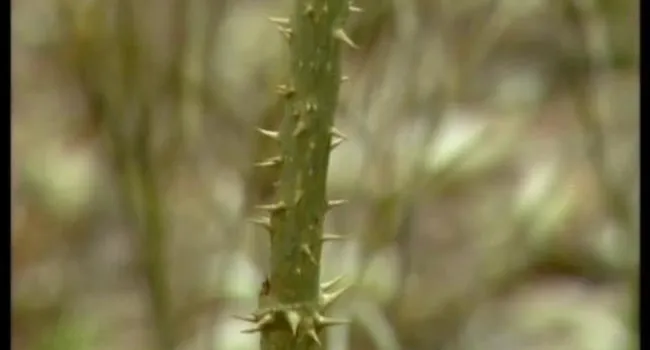
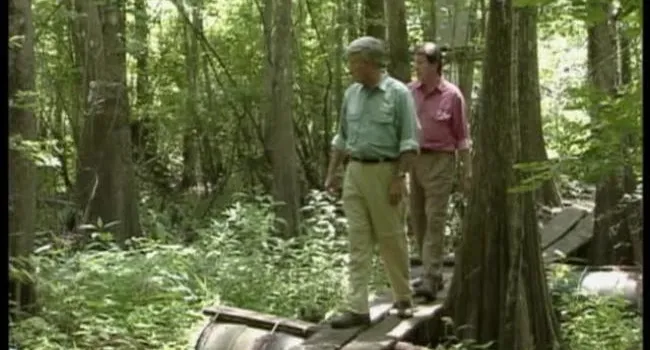
A boardwalk takes Rudy and Jim from the hardwood area of the previous stop into a swamp forest. Here, Bald Cypress trees and Tupelo trees dominate. Lizard Tail, commonly found in this area, gets its...
 Savannah River Site (S.C.) Stop 5 7

Video

Grades

  • 3
  • 4
  • 5
  • 6
  • 7
  • 8
  • 9
  • 10
  • 11
  • 12
Savannah River Site (S.C.) Stop 5
Episode 7
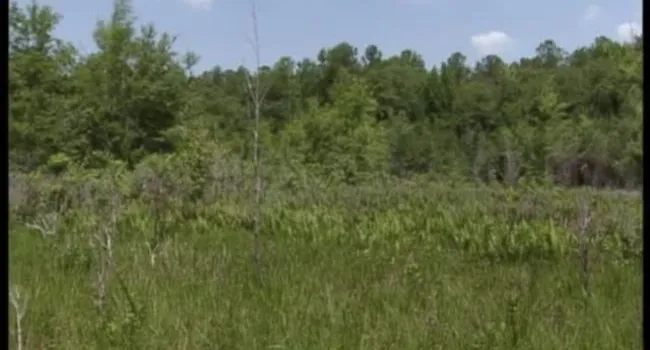
This area is known as a “dry wetland” Here, Button bush, and Red maple trees thrive here. Under a nearby wooden board, Rudy and Jim find a Mole salamander, and a Ring-Neck snake. And in a nearby tree...
 Savannah River Site (S.C.) Stop 6 8

Video

Grades

  • 3
  • 4
  • 5
  • 6
  • 7
  • 8
  • 9
  • 10
  • 11
  • 12
Savannah River Site (S.C.) Stop 6
Episode 8
Rudy and Jim stop by another wetland, filled with Sphagnum moss, Swamp Tupelo trees, Sweet Bay trees, and Virginia Chain fern. All these plants thrive in areas such as this one, with increased...
Flowering Dogwood in Bloom | The Cove Forest

Photo

Grades

  • 6
  • 7
  • 8
  • 9
  • 10
  • 11
  • 12
Flowering Dogwood in Bloom | The Cove Forest
Episode 4
Flowering dogwood is an ecologically important understory tree in eastern forests. Today, large numbers of flowering dogwoods are dying due to an introduced parasitic fungus that causes dogwood...
Japanese Stilt Grass | The Cove Forest

Photo

Grades

  • 6
  • 7
  • 8
  • 9
  • 10
  • 11
  • 12
Japanese Stilt Grass | The Cove Forest
Episode 3
Seeds of this plant were apparently introduced from Asia into Tennessee in the early 1900s via packing material. The plant escaped and has now spread into forests throughout the eastern United States...
European Wild Boar | The Cove Forest

Photo

Grades

  • 6
  • 7
  • 8
  • 9
  • 10
  • 11
  • 12
European Wild Boar | The Cove Forest
Episode 2
Wild boar eat, trample, uproot, and kill large numbers of plants. They also compete with native animals for acorns, nuts and berries. Because the availability of fruits can vary dramatically from year...
Dying Hemlock | The Cove Forest

Photo

Grades

  • 6
  • 7
  • 8
  • 9
  • 10
  • 11
  • 12
Dying Hemlock | The Cove Forest
Episode 1
The hemlock wooly adelgid (HWA) is an aphid-sized insect that feeds on sap of the Canada hemlock, a widespread tree of eastern North American forests. The HWA causes Canada hemlock trees to drop their...
 Santee National Wildlife Refuge (S.C.) Stop 3 4

Video

Grades

  • 3
  • 4
  • 5
  • 6
  • 7
  • 8
  • 9
  • 10
  • 11
  • 12
Santee National Wildlife Refuge (S.C.) Stop 3
Episode 4
The Marsh – Here, Rudy and Jim come across a marsh area, and discuss some of the plant and animal life which live in this habitat: Cattail plants, a Great Egret bird, Lily pads, Coot, Northern...
 Santee National Wildlife Refuge (S.C.) Stop 4 5

Video

Grades

  • 3
  • 4
  • 5
  • 6
  • 7
  • 8
  • 9
  • 10
  • 11
  • 12
Santee National Wildlife Refuge (S.C.) Stop 4
Episode 5
Dingle Pond is one of the thousands of “mysterious Carolina bays” found throughout the Carolinas. The pond is home to many species of ducks, and a woodpecker can be heard out in the distance. Little...
 Santee National Wildlife Refuge (S.C.) Stop 5 6

Video

Grades

  • 3
  • 4
  • 5
  • 6
  • 7
  • 8
  • 9
  • 10
  • 11
  • 12
Santee National Wildlife Refuge (S.C.) Stop 5
Episode 6
Cuddo Unit is a great place for birders, and people who just want to enjoy the nature in the area. Pond cypress trees with Spanish Moss dominate the area, along with Ash trees and willows. On the...