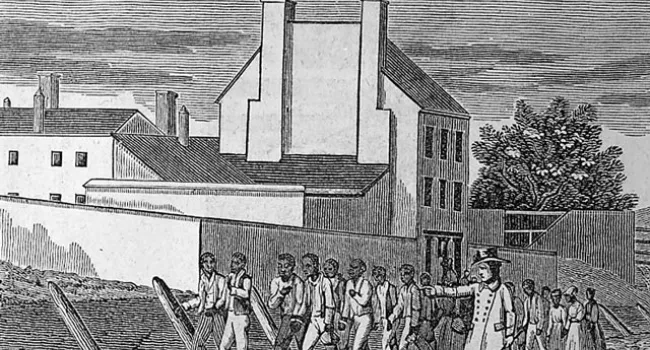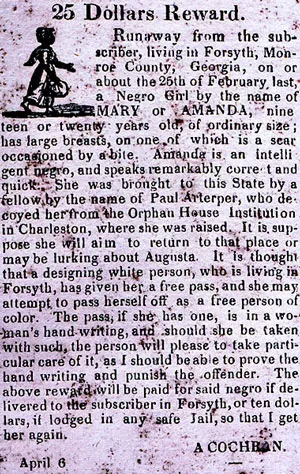
Runaway slaves were a constant problem in maintaining a workforce of unfree laborers. Slaves ran away because of mistreatment, out of a desire for freedom, or often simply to be reunited with husbands, wives, children or other family. The newspapers of the antebellum period were filled with advertisements seeking to return these runaways to their masters. This detailed description of a determined and resourceful young woman who had been carried out of state to Georgia by her master appeared in the Charleston papers on May 4, 1827.
Courtesy of the South Caroliniana Library.
Standards
- This indicator was developed to encourage inquiry into how land acquisition and the resulting border changes of the U.S. impacted the people of the western territories prior to Westward Expansion.
- This indicator was developed to encourage inquiry into the continuities and changes experienced by Americans of various genders, positions, races, and social status during the Civil War.
- This indicator was designed to encourage inquiry into the continuities and changes of the experiences of marginalized groups such as African Americans, Native Americans and women, as the U.S. expanded westward and grappled with the development of new states.
- This indicator was developed to encourage inquiry into the debates, heightened by Westward Expansion, over federal and state power concerning slavery, and the government’s role in protecting and securing natural rights.
- This indicator was designed to encourage inquiry into the economic implications of the expansion of the rice and cotton industries. This indicator was also developed to promote inquiry into Westward Expansion, the mutually beneficial impact of cotton
- USHC.2.CE Evaluate the causes and consequences of economic and geographic expansion through significant turning points from 1803–1865.