This indicator was designed to encourage inquiry into the economic implications of the expansion of the rice and cotton industries. This indicator was also developed to promote inquiry into Westward Expansion, the mutually beneficial impact of cotton on Northern factories and Southern plantations, and the emerging national and international markets.

Grade(s): 8

Subject(s): Social Studies

Year: 2019

Content Type
Runaway Slaves | History of SC Slide Collection

Photo

Grades

  • 4
  • 8
  • 9
  • 10
  • 11
  • 12
Runaway Slaves | History of SC Slide Collection
Episode 14
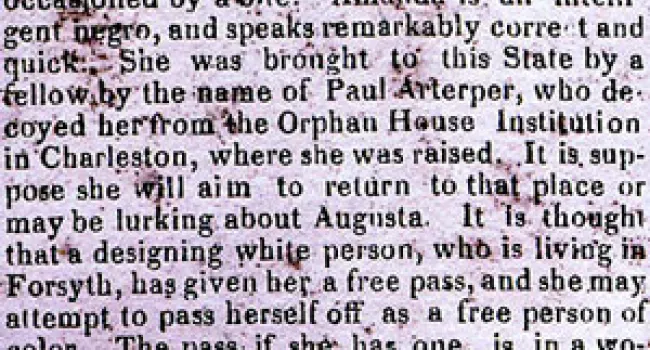
Runaway slaves were a constant problem in maintaining a workforce of unfree laborers. Slaves ran away because of mistreatment, out of a desire for freedom, or often simply to be reunited with husbands...
 Lemmon Hill Plantation, Part 1 1

Video

Grades

  • 3
  • 4
  • 5
  • 6
  • 7
  • 8
  • 9
  • 10
  • 11
  • 12
Lemmon Hill Plantation, Part 1
Episode 1
Project Discovery visits a restored plantation from the 1790s, built in Winnsboro, in Fairfield County.
 Tenant Farmers | Pee Dee Explorer

Video

Grades

  • 6
  • 7
  • 8
Tenant Farmers | Pee Dee Explorer
Learn the history of African-American tenant farmers during the era of reconstruction as Karl McAlis ter , Francis Marion University Librarian, takes us on a tour of the two remaining hewn timber...
 When Rice Was King

Video

Grades

  • 6
  • 7
  • 8
When Rice Was King
Discusses the significance of rice to Georgetown, South Carolina
 A Living Farm Museum | Pee Dee Explorer

Video

Grades

  • 3
  • 4
  • 5
  • 6
  • 7
  • 8
A Living Farm Museum | Pee Dee Explorer
Learn about the significance of farming in the lives of African Americans. As the only African American historical living farm museum in the United States, Freewoods Farm is devoted to recognizing the...