In the 1950s, Dr. Martin Luther King, Jr. became known as the leader of the civil rights movement. More than 20 years before Dr. King, Modjeska Simkins began her own work for the civil rights of African Americans.
Modjeska was born in Columbia, South Carolina in 1899. When she was a child, her father took a temporary job in El Dorado, Arkansas. The Simkins found that some people in their new town did not want African Americans living there. Violence and threats were used to scare the Simkins family into leaving. Modjeska's father remained to finish the job, but had to send his family back to South Carolina for their safety. Modjeska had learned at a young age that African Americans were often treated unfairly.
In 1921, Modjeska graduated from Benedict College in Columbia. A year later she began teaching at Booker T. Washington High School. Modjeska had to quit her teaching position when she married in 1929. At the time, South Carolina schools could not employ married women. Looking for ways to continue serving the community, in 1931, Modjeska took a job with the South Carolina Tuberculosis Association. The job required her to work in poor African American neighborhoods. At work, she observed poverty first hand. She found that there were few health care services being provided to African Americans. Modjeska helped to establish health clinics in these neighborhoods. As she began to make a difference through her job, Modjeska became known for representing the needs of the African American community.
In the 1930s, the government offered jobs to people affected by a poor economy. Some higher-paying jobs that were being offered to white people were not being offered to African Americans. Modjeska worked to change the federal government's policy. As a result of her efforts, many African Americans were offered jobs as teachers and professionals.
In the 1940s and 1950s, Modjeska helped create over a hundred branches of the National Association for the Advancement of Colored People (NAACP) around South Carolina. The group worked to integrate schools, improve jobs and housing, and encourage political participation for African Americans. Modjeska believed one of the best ways to make change was to vote. She made sure that African-Americans knew their voting rights and participated in elections. For the rest of her life, Modjeska dedicated herself to the idea of civil rights and opportunity for all people.
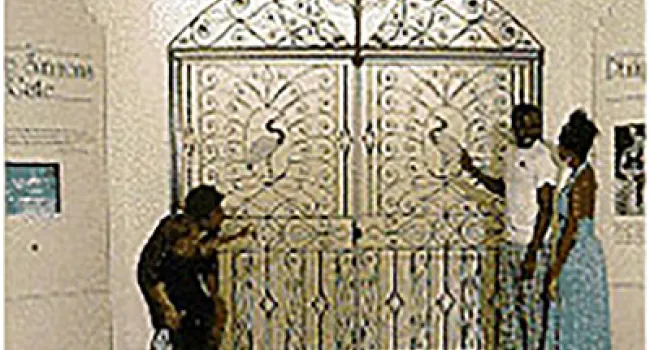
After Modjeska Simkins' death in 1992, her home in Columbia, South Carolina, was preserved and opened to the public. Today, it serves as a reminder of the woman who devoted over 60 years of her life to education and civil rights.
En la década de 1950, el Dr. Martin Luther King, Jr. se hiso conocido como el líder del movimiento de los Derechos Civiles. Unos 20 años antes que Dr. King, Modjeska Simkins, comenzó su propio trabajo por los Derechos Civiles de los Afroamericanos.
Modjeska nació en Columbia, Carolina del Sur en 1899. Cuando era niña, su padre tomo un trabajo temporal en El Dorado, Arkansas. Los Simkins descubrieron que algunas personas en su nueva cuidad no querían que los Afroamericanos vivieran allí. La violencia y las amenazas se utilizaron para asustar a la familia Simkins y así dejaran la cuidad. El padre de Modjeska se quedo para terminar el trabajo, pero tuvo que enviar a su familia de regreso a Carolina del Sur por su seguridad. Modjeska aprendió a una edad temprana que los Afroamericanos eran tratados injustamente.
En 1921. Modjeska se graduó del Benedict College en Columbia. Un año después comenzó a enseñar en Booker T, Washington High School. Modjeska tubo que dejar su puesto de maestra cuando se casó en 1929. En ese momento, las escuelas de Carolina Del sur no podían emplear a mujeres casadas. Buscando formas de continuar sirviendo a la comunidad, en el año 1931 Modjeska tomo un trabajo en la Asociación de Tuberculosis de Carolina del Sur. El trabajo la obligaba a trabajar en barrios pobres de Afroamericanos. A través de su trabajo, ella de primera mano pudo observar la pobreza. Descubrió que se brindaban pocos servicios de atención medica a los Afroamericanos. Modjeska se hizo conocida por representar las necesidades de la comunidad Afroamericana.
En las décadas de 1930, el gobierno ofreció trabajos a personas afectadas por la economía pobre. Algunos trabajos bien pagados que se ofrecían a los Blancos no se le ofrecían a los Afroamericanos. Modjeska trabajo para cambiar la política del gobierno federal. Como resultado de sus esfuerzos, a muchos Afroamericanos se les ofrecieron trabajos como maestros y profesionales.
En las décadas de 1940 y 1950, Modjeska ayudo a crear más de cien sucursales del National Association for the Advancement of Colored People (NAACP) (Asociación Nacional para el Avance de la Gente De Color). El grupo trabajo para integrar escuelas, ofrecer mejores trabajos y viviendas, y alentar a la participación política de los Afroamericanos. Modjeska creía que el votar eran una de las mejores formas de hacer cambios. Se aseguro que los Afroamericanos conocieran sus derechos de voto y participaran en las elecciones. Por el resto de su vida, Modjeska se dedico a la idea de los Derechos Civiles y las oportunidades para todas las personas.
Después de la muerte de Modjeska Simkins en 1992, su casa en Columbia, Carolina del Sur, se conservó y se abrió al público. Hoy, sirve como recordatorio de la mujer que dedico más de 60 años de su vida a la educación y los Derechos Civiles.