No Fear for Freedom: The Story of the Friendship 9
By: Kimberly P Johnson
Illustrations By: Vanessa J. Thompson
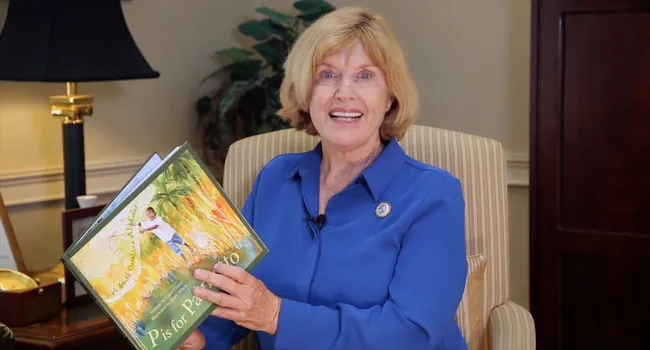
Read by: Dr. Rosalyn Clark Artis, President of Benedict College
Many of the icons of the Civil Rights Movement will never be forgotten. However, we must also make sure that the work of other activists will be remembered too. They were ordinary people who fought against discrimination and prejudice. Unfortunately, they may never find their names in a history book, on a display board or in a museum. As communities, we must discover these amazing citizens and honor them. The Friendship 9, a group of college students and activists in Rock Hill, South Carolina, claimed a rightful place in history by challenging inequality and unfair laws. In 1961, their decision to help place into motion the Jail, No Bail strategy empowered many communities. As we continue to learn from our struggles and most importantly create a world free of racism and social injustice, we will inspire our future generations to do the same!
No Fear for Freedom: The Story of the Friendship 9
By: Kimberly P Johnson
Illustrations By: Vanessa J. Thompson
Read by: Dr. Rosalyn Clark Artis, President of Benedict College
Many of the icons of the Civil Rights Movement will never be forgotten. However, we must also make sure that the work of other activists will be remembered too. They were ordinary people who fought against discrimination and prejudice. Unfortunately, they may never find their names in a history book, on a display board or in a museum. As communities, we must discover these amazing citizens and honor them. The Friendship 9, a group of college students and activists in Rock Hill, South Carolina, claimed a rightful place in history by challenging inequality and unfair laws. In 1961, their decision to help place into motion the Jail, No Bail strategy empowered many communities. As we continue to learn from our struggles and most importantly create a world free of racism and social injustice, we will inspire our future generations to do the same!
Standards
- ELA.AOR.2 Evaluate and critique the development of themes and central ideas within and across texts.
- ELA.AOR.2 Evaluate and critique the development of themes and central ideas within and across texts.
- 1.H.3 Evaluate different sources of evidence used in historical inquiry, such as art, artifacts, digital sources, graphs, maps, oral histories, photographs/images, and texts.
- 1.4 Utilize the college and career skills of a political scientist to understand and display civic dispositions about contemporary South Carolina.
- 2.H.1 Identify and compare significant historical events, moments, and symbols in U.S. history.
- ELA.AOR.2 Evaluate and critique the development of themes and central ideas within and across texts.
- ELA.3.OE.3 Make inferences to support comprehension.
- ELA.AOR.6 Summarize and paraphrase text to support comprehension and understanding.
- 4.4.CO Compare the economic and political causes of the Civil War.
- ELA.AOR.2 Evaluate and critique the development of themes and central ideas within and across texts.
- ELA.F.4 Read and reread grade-appropriate texts with accuracy and expression at an appropriate rate to support comprehension.
- ELA.AOR.6 Summarize and paraphrase text to support comprehension and understanding.