A trip to the grocery store teaches students a variety of food-related vocabulary words.
Vocabulary used in this episode:
- I’m hungry / j’ai faim
- I’m thirsty / j’ai soif
- It was good / c’était bon
- It was bad / c’était mauvais
- soup / la soupe
- ice cream / la glace
- cake / le gâteau
- lemon / le citron
Adjectives
- red / rouge
- green / vert(e)
- dirty / sale
- clean / propre
- warm/hot / chaud(e)
- cold / froid(e)
- sweet / sucré(e)
- bitter / amer(e)
Numbers
- eleven (11) / onze
- twelve (12) / douze
- thirteen (13) / treize
- fourteen (14) / quatorze
- fifteen (15) / quinze
Ingredients
- flour / la farine
- sugar / le sucre
- milk / le lait
Shapes
- triangle / le triangle
- circle / le cercle
Silverware, etc.
- fork / la fourchette
- spoon / la cuillère
- knife / le couteau
- plate / l’assiette
- napkin / la serviette de table
Lesson 3 - Buying Groceries
Objectives
- To learn the names of ingredients to make a pie
- To learn words for silverware pieces
- To learn how to say “I’m hungry, I’m thirsty"
- To learn numbers eleven through fifteen
Culture
French people love to eat. Their biggest meal is lunch. Most people go home for lunch since they have a two hour break.
They eat “French bread” with every meal. They buy it fresh daily at the bakery. Many people also drink a glass of red wine with their lunch and dinner.
In France, people eat a light breakfast, a big lunch, and a smaller dinner. They usually don’t snack between meals.
Before Viewing the Video Lesson
- Have apple cut outs or real apples. Do addition and subtraction activities with the apples. You would say “deux et deux font quatre” (two and two is four) or “quatre moins deux égale deux” (four minus two equals two). If this is too complicated for you to do in French, you can do it in English, but don’t mix the languages.
- Take an apple and split it into ½, then ¼ and put it back together.
Description of the Video Lesson
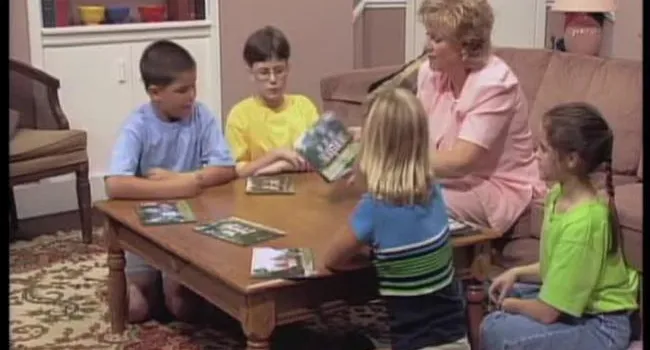
Mme. Dubois is in the kitchen. Amy brought in her apple pie recipe. They are all at the counter talking about what you need to make an apple pie. The teacher checks what she already has and what they need to buy. She also gives them fifteen dollars for the groceries. Jay asks for a glass of milk, which gives him a milk mustache.
Song
Les pommes (apples)
Video clips
Counting apples (11-15)
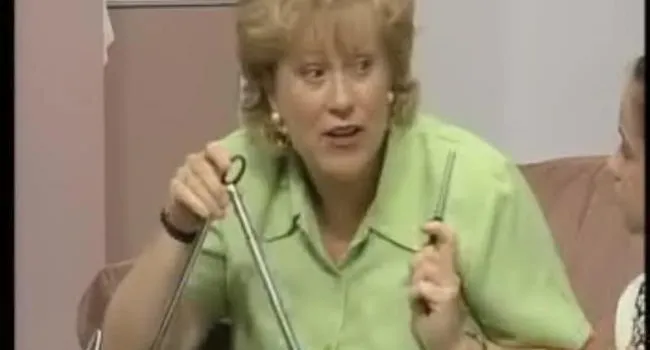
The pie is made and in the oven. The teacher cleans the counter top. The pie is now ready. She takes out plates, forks, and napkins for the children. She then goes over the shape of different items in front of the students.
She then cuts a piece of pie for each student and tells them it is sweet. She asks the children if they prefer sweet or salty food.
Video clips
At the restaurant
Mme. Dubois goes over the months of the year with the students. She also introduces the seasons and talks about characteristics of certain months and seasons.
Video clips
Food
les pommes grand(e) petit(e)
Follow-up Activities
- Use the Next Step French Again video lesson to review the emphasized vocabulary.
- Go over the culture section. Make comparisons between meal customs in the US and French speaking countries. You may want to make a Venn Diagram and compare meal customs, schedules and briefly touch on the number of after school activities.
- After these follow-up activities, let students view the video lesson again so they can respond and practice with the children on the lesson.
Supplemental Activities
- Ask for volunteers to participate in a taste test. Blindfold a child, and give him samples of sweet/salty items to taste – allowing class to view items. These items can be those the children have just learned: soup (la soupe), ice cream (la glace) and cake (le gateau. Ask child if what he tastes is “sucré” (sweet) or “salé” (salty).
- You could role-play a restaurant situation. Have 3 or 4 children up front sitting at a table with some eating utensils but missing others. The child would ask "Où est...” (Where is...) mon couteau? (my knife?); mon assiette? (my plate?); ma fourchette? (my fork); ma cuillère? (spoon); ma serviette? (napkin). Another child (as a waiter) gives it to them. If they want to say "Here," ask them to say "Voilà." Then the “customer” would say “Merci beaucoup”.
- Create a big graph on the board with a row for each month of the year. Give each child a post-it note and have them write in the number and month when they were born (or their birthday). Then have them come to board and stick their post-it note under the right month. The teacher could ask the children “Combien d’enfants sont en month? (How many children are in ?) the children can count them and give you the answers.
Remember to use the vocabulary words as much as possible in class during the next week. This should be especially easy since these are words related to foods and colors. Add to the Next Step French suitcase folders.