Life Science

Life Science is the study of living organism which include micro-organisms, plants, animals and humans. 
Toggle Filters

Filter By:

Clear Filters

Grade Levels

close

Grade

Resource Type

close

Resource Type

Downloadable Content

close

Downloadable Content
 Great Egret | The Salt Marsh

Video

Grades

  • 6
  • 7
  • 8
  • 9
  • 10
  • 11
  • 12
Great Egret | The Salt Marsh
The great egret is a large white wading bird. Unlike the snowy egret, the great egret has a yellow bill and black legs and feet. This bird is the symbol of the National Audubon Society. Their long...
Oystercatchers | The Salt Marsh

Photo

Grades

  • 6
  • 7
  • 8
  • 9
  • 10
  • 11
  • 12
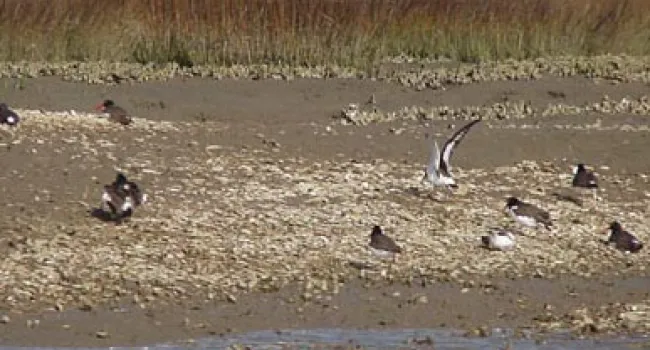
Oystercatchers | The Salt Marsh
Boldly patterned in black and white, the stocky American oystercatcher is hard to mistake. It has long red legs and a large red bill. As the name suggests, they feed mainly on oysters, although they...
Fungi | The Salt Marsh

Photo

Grades

  • 6
  • 7
  • 8
  • 9
  • 10
  • 11
  • 12
Fungi | The Salt Marsh
Fungi are the only kingdom of life not represented in the plankton. Bacteria have only recently been demonstrated to exist in great abundance as our sampling gear has improved enough to capture these...
Snowy Egret | The Salt Marsh

Photo

Grades

  • 6
  • 7
  • 8
  • 9
  • 10
  • 11
  • 12
Snowy Egret | The Salt Marsh
Snowy egrets are smaller versions of the great egret. They have white feathers, black legs with yellow feet, and a black bill. Snowies sometimes wade slowly through shallow water, stirring the mud...
 Mud Snail | The Salt Marsh

Video

Grades

  • 6
  • 7
  • 8
  • 9
  • 10
  • 11
  • 12
Mud Snail | The Salt Marsh
The mud snail is black, with a very strong shell, and is about 1/2 inch in length. It is an effective scavenger and hundreds of snails will collect around a dead fish or shrimp bait until they...
Bay Anchovy | The Salt Marsh

Photo

Grades

  • 6
  • 7
  • 8
  • 9
  • 10
  • 11
  • 12
Bay Anchovy | The Salt Marsh
The bay anchovy is the most numerous fish in the estuaries of South Carolina. They are food to larger fish and to many birds. Anchovies are specialized to feed on plankton. They have a huge mouth and...
Spot & Croaker | The Salt Marsh

Photo

Grades

  • 6
  • 7
  • 8
  • 9
  • 10
  • 11
  • 12
Spot & Croaker | The Salt Marsh
Spot and croaker are closely related fish. They look alike, with light vertical bands, but the spot is named for a dark spot just behind its gill cover. All members of this group of fish make noises...
Shrimp | The Salt Marsh

Photo

Grades

  • 6
  • 7
  • 8
  • 9
  • 10
  • 11
  • 12
Shrimp | The Salt Marsh
Three different species of shrimp are collected commercially from offshore and from the salt marsh. They are the pink shrimp, the brown shrimp, and the white shrimp. They are large, up to 10 inches in...
Blue Crabs | The Salt Marsh

Photo

Grades

  • 6
  • 7
  • 8
  • 9
  • 10
  • 11
  • 12
Blue Crabs | The Salt Marsh
Blue crabs are active predators and effective scavengers. They occur throughout the estuary. They can swim by using their last pair of legs, which have been modified into paddles instead of walking...
Periwinkle | The Salt Marsh

Photo

Grades

  • 6
  • 7
  • 8
  • 9
  • 10
  • 11
  • 12
Periwinkle | The Salt Marsh
At low tide, the periwinkles crawl down to the base of the stem, where algae grow best, and graze the algae off the stems. When the tide rises, however, the periwinkles crawl up the stems. Why don't...