Carnivorous Plants

Carnivorous plants capture and digest unsuspecting insects, and then absorb their nutrients for energy. They grow on every continent except Antarctica. In the United States, carnivorous plants can be found in every state, although some species are rare or endangered, and some are specific to certain regions. Many carnivorous plants grow well in the semi-tropical climate of the Southeastern United States.
Toggle Filters

Filter By:

Clear Filters

Grade Levels

close

Grade

Resource Type

close

Resource Type

Downloadable Content

close

Downloadable Content
Carnivorous Plants in South Carolina

Document

Grades

  • 3
  • 4
  • 5
  • 6
  • 7
  • 8
Carnivorous Plants in South Carolina
Students will watch the What's Wild video about carnivorous plants in the South Carolina. They will do research and then create their own plant using available supplies and materials.
Carnivorous Plants Trivia Quiz | What's Wild

Interactive

Grades

  • 3
  • 4
  • 5
  • 6
  • 7
  • 8
  • 9
  • 10
  • 11
  • 12
  • Higher Education
Carnivorous Plants Trivia Quiz | What's Wild
Episode 5 of What's Wild looked at a particular group of flora that calls South Carolina home. If you caught episode five that looked at these plants with a big appetite, this quiz is for you. Scroll...
Ants | What's Wild Carnivorous Plants | What's Wild

Video

Grades

  • Kindergarten
  • 1
  • 2
  • 3
  • 5
  • 7
  • 8
  • 9
  • 10
Carnivorous Plants | What's Wild
In this edition of What's Wild, we'll be taking a look at some native South Carolina plants with a big appetite! There are approximately thirty-one species of carnivorous plants throughout the state...
Pond Cypress Savannah | Expeditions Shorts Venus Fly Trap | Expeditions Shorts

Video

Grades

  • 3
  • 4
  • 5
  • 6
  • 7
  • 8
  • 9
  • 10
  • 11
  • 12
Venus Fly Trap | Expeditions Shorts
Patrick McMillan visits Apalachicola National Forest, in Florida, where he showcases a Venus Flytrap. The Flytrap, described by Charles Darwin as “the most amazing plant on earth,” is a carnivorous...
 Sandy Island (S.C.) Stop 4 5

Video

Grades

  • 3
  • 4
  • 5
  • 6
  • 7
  • 8
  • 9
  • 10
  • 11
  • 12
Sandy Island (S.C.) Stop 4
Episode 5
Rudy and Jim visit an ecotone, which is a line between two different habitats: one more dry, and one moister. Here we see a fetterbush, the inkberry or gallberry, which is another species of holly...
Venus Flytrap | Cartwheel Bay (S.C.)

Photo

Grades

  • 3
  • 4
  • 5
  • 6
  • 7
  • 8
  • 9
  • 10
  • 11
  • 12
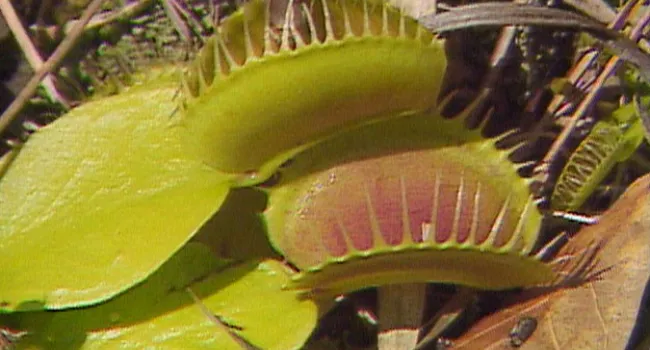
Venus Flytrap | Cartwheel Bay (S.C.)
Dionaea muscipula Unique to the two Carolinas Endangered Carnivorous plant 10 - 30 cm (4 - 12 inches) tall with white flowers cluster atop leafless stalk Stalk rises above rosette of bristly, folded...
Trumpet Pitcher Plant | Cartwheel Bay (S.C.)

Photo

Grades

  • 3
  • 4
  • 5
  • 6
  • 7
  • 8
  • 9
  • 10
  • 11
  • 12
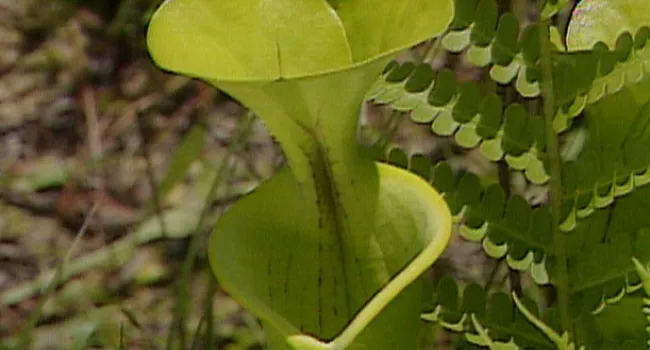
Trumpet Pitcher Plant | Cartwheel Bay (S.C.)
Sarracenia flava Carnivorous plant 60 - 90 cm (2 - 3 feet) with nodding, brown-red flowers Clusters of erect, hollow, pitcher-like leaves Leaves colored at top with red-purple veins on white...
Sweet Pitcher Plant | Carthweel Bay (S.C.)

Photo

Grades

  • 3
  • 4
  • 5
  • 6
  • 7
  • 8
  • 9
  • 10
  • 11
  • 12
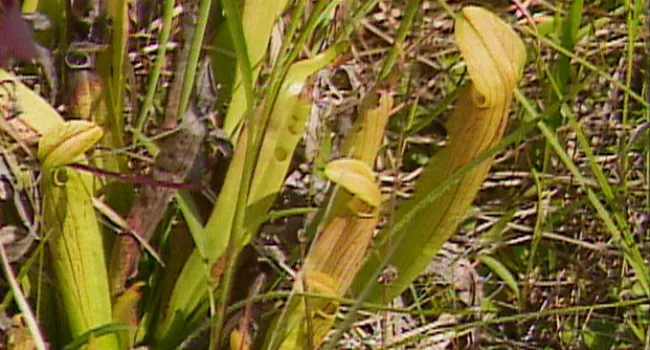
Sweet Pitcher Plant | Carthweel Bay (S.C.)
Sarracenia rubra • Carnivorous plant • Slender, erect trumpet • 10 - 50 cm (4 - 20 inches) tall • Foliage green-veined with red • Very fragrant flowers like English Violets • Habitats include sandy...