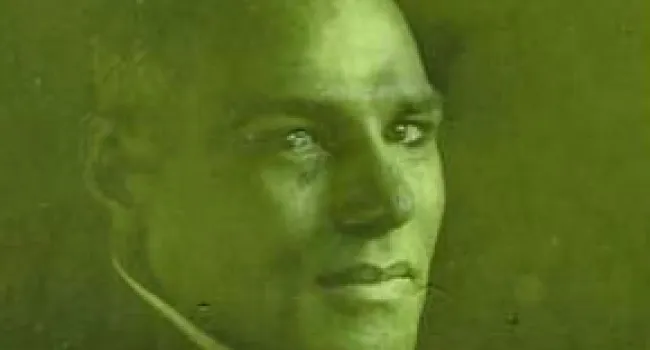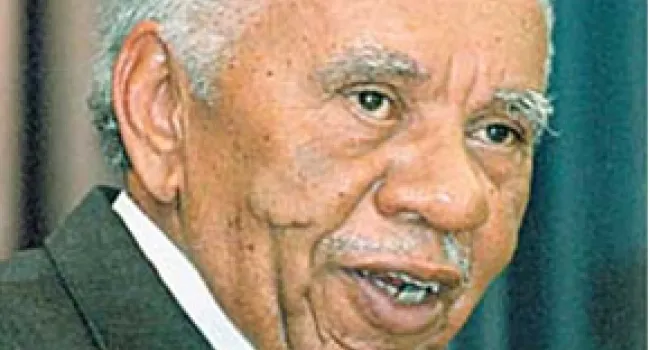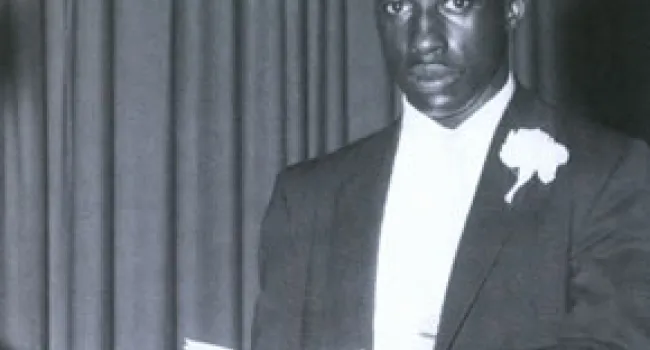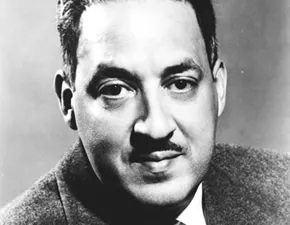
Thurgood Marshall's entire legal career was devoted to pursuing equal justice for all. He argued 32 cases before the Supreme Court and won 29 of those cases, including his most significant, Brown v Board of Education in 1954.
In 1962, President John F. Kennedy appointed Marshall to the U.S. Second Circuit Court of Appeals. In 1965, President Lyndon B. Johnson appointed him U. S. Solicitor General. Two years later, President Johnson appointed him to the U.S. Supreme Court where he served until 1992.
Standards
- 5.4.CC Analyze the continuities and changes of race relations in the United States and South Carolina following the Supreme Court decisions of Briggs v. Elliott and Brown v. Board of Education.
- 8.5.CX Analyze the correlation between the Modern Civil Rights Movement in South Carolina and the U.S.
- This indicator was designed to foster inquiry into the role of South Carolina in the Modern Civil Rights Movement, to include the influence of court cases such as Briggs v. Elliot and Flemming v. South Carolina Electric and Gas. This indicator was also developed to promote inquiry into the relationship between national leadership, protests, and events and South Carolina leadership, protests and events, such as the Friendship Nine and the Orangeburg Massacre.
- USHC.5.CC Evaluate continuities and changes during the Civil Rights Movement and other subsequent movements for equal rights.
- This indicator was developed to promote inquiry into thematic continuities and changes into how marginalized groups sought and won legal rights. Inquiry into the leadership, methods, and outcomes of modern equal rights movements are supported by this indicator.
Resources
Clifton B. Newman and Brown v. Board of Education in South Carolina
In recognition of May's Honoree for the 2024 South Carolina African American History Calendar, Clifton B. Newman, students will explore the case, Brown v. Board of Education that inspired Judge Newman...
View LessonBooker T. Washington High School and Florence Benson Elementary School: A Perspective of Brown Vs. Board of Education
Students will understand and analyze the impact of the Brown vs. Board of Education court case and how it changed the lives of American citizens and public schools.
View LessonLamar High School: A Perspective of Brown Vs. Board of Education
Students will understand and analyze the impact of the Brown vs. Board of Education court case and how it changed the lives of American citizens and public schools.
View LessonBrown v. Board of Education | Road Trip
The Plessy v. Ferguson decision set the precedent that "separate" facilities for blacks and whites were constitutional as long as they were "equal." In 1954, the Brown v. Board of Education case...
View AssetBriggs v. Elliott | Road Trip
The Briggs v. Elliott case began as a simple request to provide bus transportation. In addition to having separate and very inferior facilities, black children had to walk to school, sometimes many...
View AssetBriggs v. Elliott | The World of Cecil
This segment explores the early 1950s and the significant role South Carolina, particularly Clarendon County, played in the civil rights movement. It discusses Thurgood Marshall's arrival in South...
View AssetBriggs v. Elliot Case | The World of Cecil -Shorts
Learn about the Briggs v. Elliott court case - The first in history to challenge segregation in public education. Joseph DeLaine, Levi Pearson, and Harry Briggs all played pivotal roles in this...
View Asset