Greenville

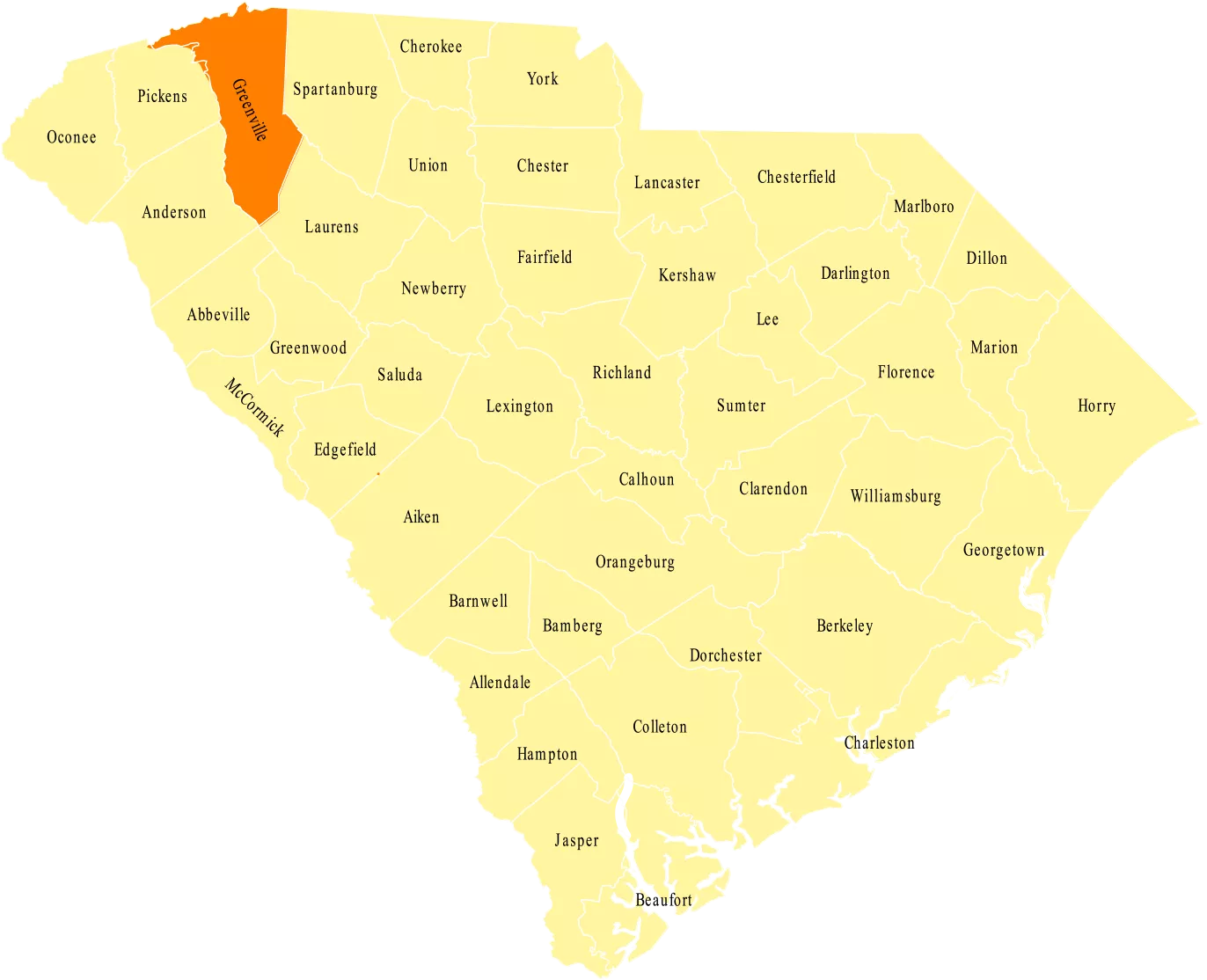
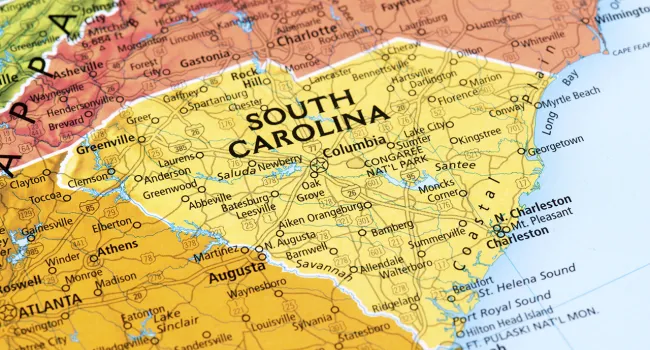
Greenville County, South Carolina’s most populous county, lies in the Upstate.

Greenville County, South Carolina’s most populous county, lies in the Upstate. Two popular opinions exist on the origin of the name of Greenville County and its county seat: Revolutionary War general Nathanael Greene or area local Isaac Green.

Cherokee Indians lived in the area first, but they eventually gave up control of the land to South Carolina in a 1777 treaty. After the signing of this treaty, a fair number of Scotch-Irish and English settlers came to the region. Soon after, in 1786, Greenville District was founded. However, this district existed within the Washington District from 1791 to 1800.

 Although historically a vacation area for coastal South Carolina planters, the county’s rivers powered the majority of the county’s early economy. The river gave rise to iron works, cotton mills, and Greenville’s textile industry. From the Reconstruction Era until the late 20th century, the textile industry defined Greenville County’s economy, at one point so much so that the county earned the title of “Textile Capital of the World.”

Modern Greenville County’s economy has transitioned away from textiles. Over the last few decades the county has been the answer for many corporations wondering where to relocate. Greenville County’s economy now centers around technology, manufacturing, engineering, and business.

History of Greenville County. Accessed June 03, 2016.
http://www.greenvillecounty.org/

South Carolina Counties by Population. Accessed June 08, 2016.
ttp://www.southcarolina-demographics.com/counties_by_population

Content Type
Greenville Women's College | History of SC Slide Collection

Photo

Grades

  • 3
  • 4
  • 5
  • 6
  • 7
  • 8
  • 9
  • 10
  • 11
  • 12
Greenville Women's College | History of SC Slide Collection
Episode 34
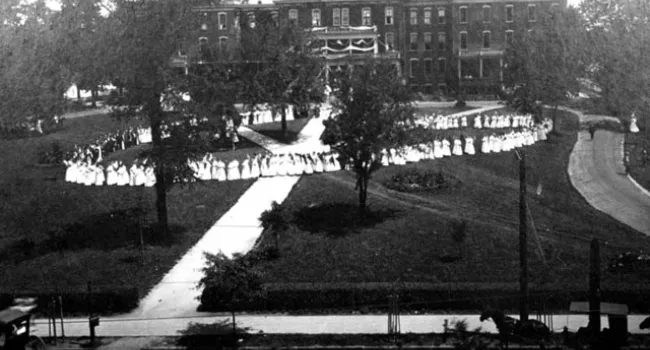
Greenville Women's College, photographed on May 15th, 1908. Established in 1854 by the South Carolina Baptist Convention, Greenville Baptist Female College opened in February 1856, on this site...
Chicora College | History of SC Slide Collection

Photo

Grades

  • 3
  • 4
  • 5
  • 6
  • 7
  • 8
  • 9
  • 10
  • 11
  • 12
Chicora College | History of SC Slide Collection
Episode 21
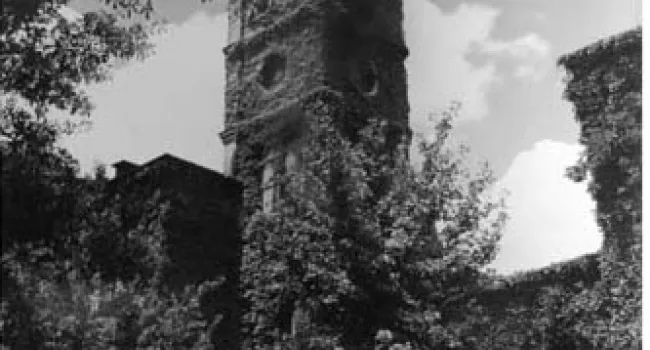
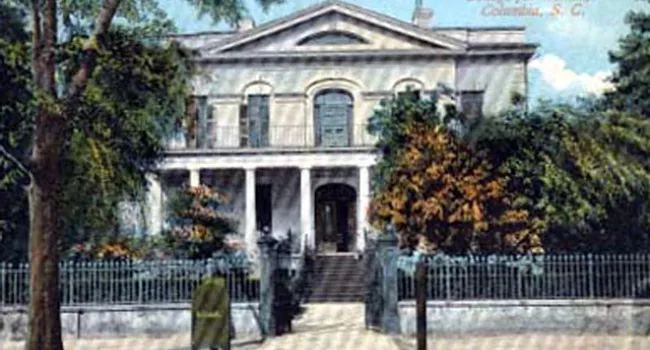
In 1890, the Presbyterian Synod of South Carolina purchased the Hampton-Preston Mansion on Blanding Street from the Ursuline Sisters who had used it as a convent since the end of the war, and...
Charles Hard Townes | History of SC Slide Collection

Photo

Grades

  • 3
  • 4
  • 5
  • 6
  • 7
  • 8
  • 9
  • 10
  • 11
  • 12
Charles Hard Townes | History of SC Slide Collection
Episode 138
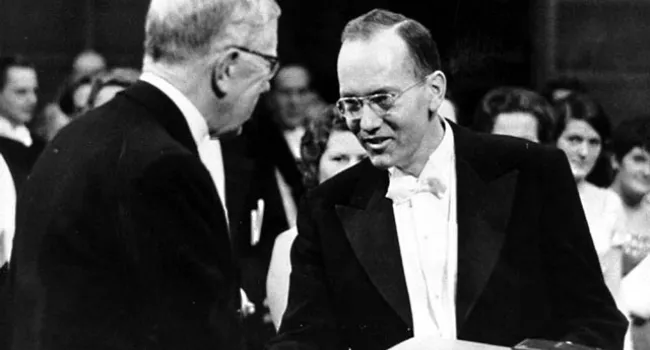
Charles Hard Townes (1915-2015 ) is South Carolina's only Nobel Prize winner, an honor he was awarded for his development of the laser. This photograph shows him accepting that award in Stockholm...
Waddy Thompson, Jr. | History of SC Slide Collection

Photo

Grades

  • 3
  • 4
  • 5
  • 6
  • 7
  • 8
  • 9
  • 10
  • 11
  • 12
Waddy Thompson, Jr. | History of SC Slide Collection
Episode 136
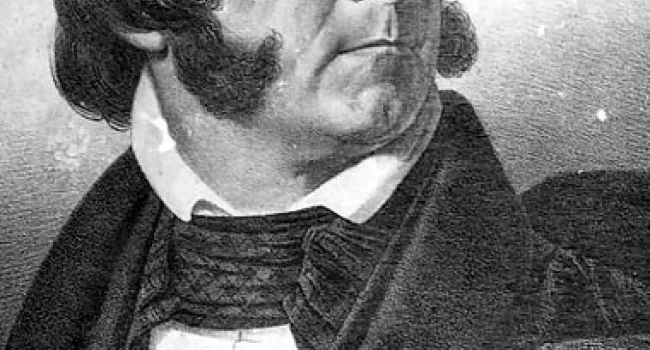
Waddy Thompson (1798-1868), Jr., served as a Whig member of the U.S. House of Representatives from the backcountry from 1835 to 1841. Born in Pickens, in Ninety-Six District, he graduated from South...
Vardry McBee | History of SC Slide Collection

Photo

Grades

  • 3
  • 4
  • 5
  • 6
  • 7
  • 8
  • 9
  • 10
  • 11
  • 12
Vardry McBee | History of SC Slide Collection
Episode 95
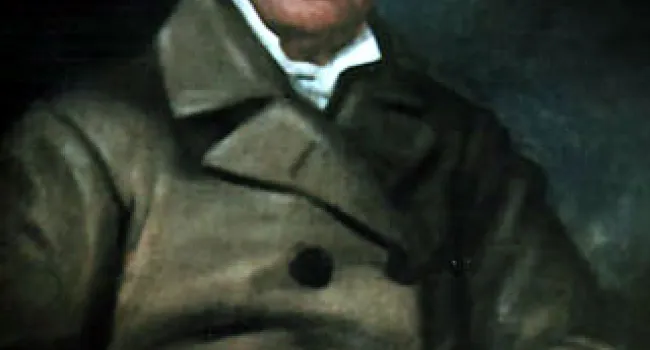
Vardry McBee ( -1864) is known as the Father of Greenville, in spite of his living in North Carolina until 1834. In 1815, McBee purchased extensive properties in Greenville, and established flour...
Basil Manly, Sr. | History of SC Slide Collection

Photo

Grades

  • 3
  • 4
  • 5
  • 6
  • 7
  • 8
  • 9
  • 10
  • 11
  • 12
Basil Manly, Sr. | History of SC Slide Collection
Episode 91
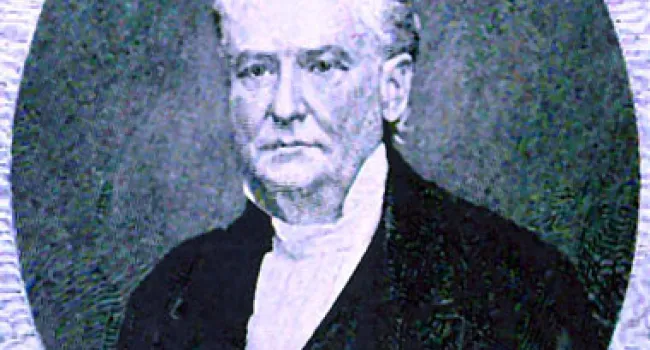
Basil Manly, Sr. (1798-1868), was the author of the resolutions leading to cleavage of the Baptist Church in 1844 into northern and southern branches. He was influential in securing the establishment...
Mary Camilla Judson | History of SC Slide Collection

Photo

Grades

  • 3
  • 4
  • 5
  • 6
  • 7
  • 8
  • 9
  • 10
  • 11
  • 12
Mary Camilla Judson | History of SC Slide Collection
Episode 81
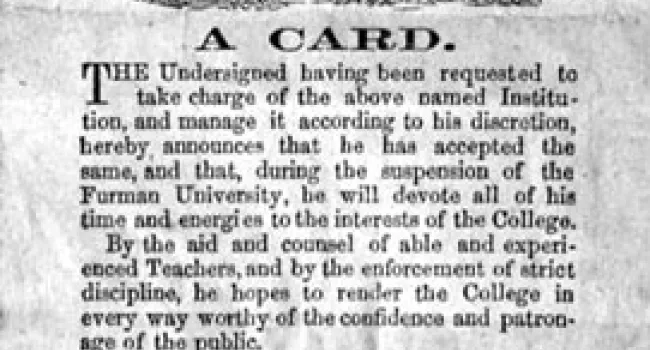
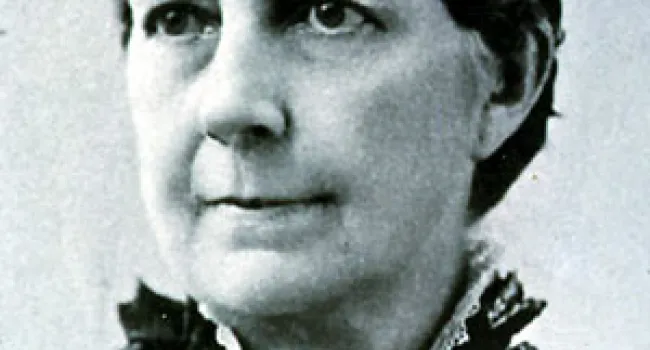
Mary Camilla Judson (1828-1920), the sister of Charles H. Judson (see Charles Hallette Judson), was for 46 years connected with the Greenville Female College (see A Card Advertising "The Greenville...
Charles Hallette Judson | History of SC Slide Collection

Photo

Grades

  • 3
  • 4
  • 5
  • 6
  • 7
  • 8
  • 9
  • 10
  • 11
  • 12
Charles Hallette Judson | History of SC Slide Collection
Episode 80
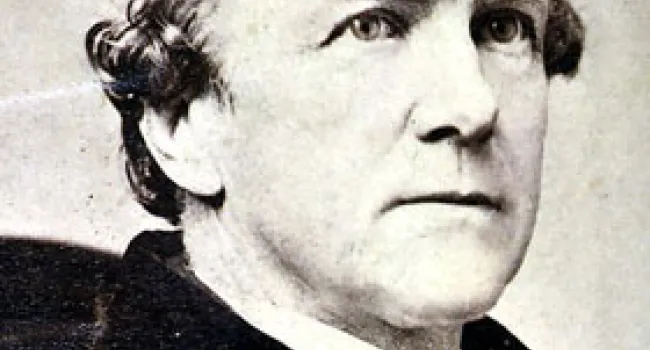
Charles Hallette Judson (1820-1898), a leading Baptist educator, came to South Carolina in 1857 as a professor of mathematics and mechanics at Furman University. During the Civil War he also took...
Perry D. Gilreath | History of SC Slide Collection

Photo

Grades

  • 3
  • 4
  • 5
  • 6
  • 7
  • 8
  • 9
  • 10
  • 11
  • 12
Perry D. Gilreath | History of SC Slide Collection
Episode 61
Perry D. Gilreath was elected Sheriff of Greenville County in 1877, a position he held until his retirement in 1900. He was particularly noted, in an era when many South Carolina politicians were...
 Carolina Style | Palmetto Special

Video

Grades

  • 3
  • 4
  • 5
Carolina Style | Palmetto Special
This lesson is a brief survey of the art, architecture, literature and theatre of South Carolina. It opens with a series of skits where "comedic characters" "put down" South Carolina's interest in...
William Watts Ball | History of SC Slide Collection

Photo

Grades

  • 3
  • 4
  • 5
  • 6
  • 7
  • 8
  • 9
  • 10
  • 11
  • 12
William Watts Ball | History of SC Slide Collection
Episode 12
William Watts Ball (1868-1952) was the long-time editor of the Charleston "News and Courier." Born in Laurens County, he grew up during Reconstruction, and, according to legend, held Wade Hampton's...
Camp Sevier | History of SC Slide Collection

Photo

Grades

  • 8
Camp Sevier | History of SC Slide Collection
Episode 6
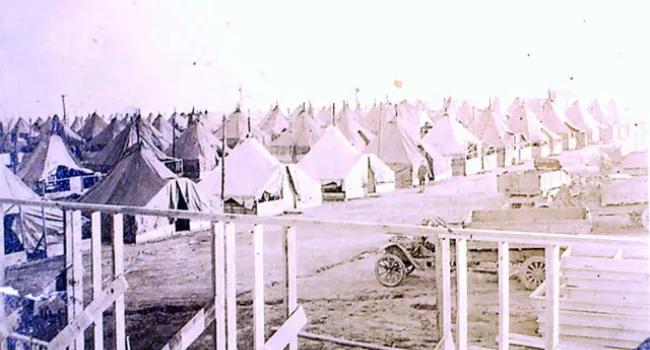
Many young men recruited into the army were trained at Camp Sevier, near Greenville. Motor Truck Companies 101 and 218 lived in this tent city. Courtesy of the South Caroliniana Library.