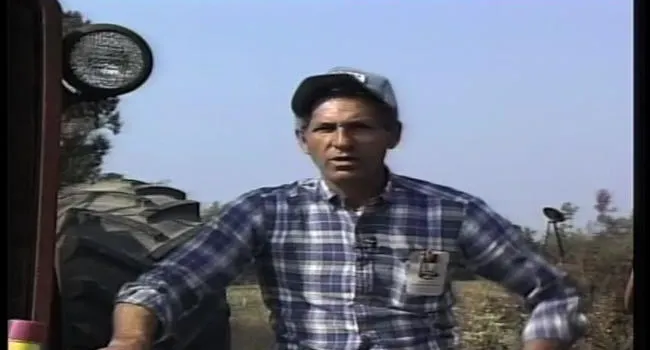
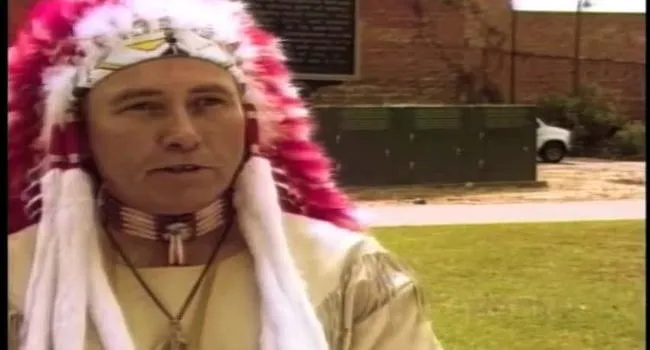
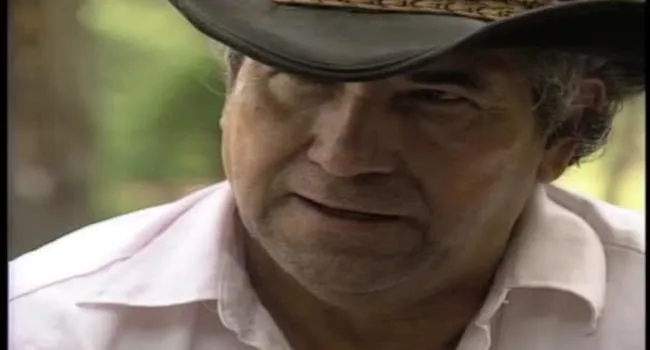
In this segment, Herb McAmis, an adopted member of the Edisto-Kusso-Natchez people of Dorchester and Colleton Counties, explains that some are genetic Indians and some are Indians in their hearts. He sees nothing useful in identifying which are which because they all respect the customs and the culture of their forefathers. He explains the beliefs of their forefathers and the ancient ritual of dancing in a circle, derived from the culture of the Western Plains Indians. Theirs is a struggle for identity and respect in a world that barely acknowledges their existence. From the first contacts with Spanish explorers in the 1520s until the founding of the United States, the population along the lower coast declined frm 1,750 to less than 250 Indians, according to an account by Lt.Governor William Bull in 1770.
In this province, settled in 1670, there remains now, except a few Catawbas, nothing but their names—Kiawah, Wando, Wateree, Congaree, Oconee and dozens more. They are the rivers, islands, creeks and lands where these nations once flourished. Each nation possessed distinct dialects, beliefs and cultures, of which only the smallest fragments remain. Yet, some claim that they have survived and may be reasserting themselves. Those claiming American Indian as their race include Catawba, some Cherokee, and members of other tribes transplanted here. They also include other groups claiming indigenous and unique South Carolina roots. Along with the Catawba, they make upt the vast majority of Indians in South Carolina and include the Santee, Pee Dee, Chicora, and the Edisto.
(Produced in 1993 by South Carolina ETV)
In this segment, Herb McAmis, an adopted member of the Edisto-Kusso-Natchez people of Dorchester and Colleton Counties, explains that some are genetic Indians and some are Indians in their hearts. He sees nothing useful in identifying which are which because they all respect the customs and the culture of their forefathers. He explains the beliefs of their forefathers and the ancient ritual of dancing in a circle, derived from the culture of the Western Plains Indians. Theirs is a struggle for identity and respect in a world that barely acknowledges their existence. From the first contacts with Spanish explorers in the 1520s until the founding of the United States, the population along the lower coast declined frm 1,750 to less than 250 Indians, according to an account by Lt.Governor William Bull in 1770.
In this province, settled in 1670, there remains now, except a few Catawbas, nothing but their names—Kiawah, Wando, Wateree, Congaree, Oconee and dozens more. They are the rivers, islands, creeks and lands where these nations once flourished. Each nation possessed distinct dialects, beliefs and cultures, of which only the smallest fragments remain. Yet, some claim that they have survived and may be reasserting themselves. Those claiming American Indian as their race include Catawba, some Cherokee, and members of other tribes transplanted here. They also include other groups claiming indigenous and unique South Carolina roots. Along with the Catawba, they make upt the vast majority of Indians in South Carolina and include the Santee, Pee Dee, Chicora, and the Edisto.
(Produced in 1993 by South Carolina ETV)
Standards
- This indicator was written to promote inquiry into the unique development of ethnic, political, and religious identities in the New England, Mid-Atlantic, and Southern colonies.
- This indicator was designed to encourage inquiry into the geographic and human factors that contributed to the development of South Carolina’s economic system. This indicator was also written to encourage inquiry into South Carolina’s distinct social and economic system as influenced by British Barbados.
- 8.1.CC Analyze the changes and continuities of the Native Americans' experiences prior to and as a result of settlement and colonization.
- This indicator was developed to encourage inquiry into Native American civilizations and cultures prior to European contact and their interactions with Europeans during the period of settlement and colonization, including their efforts to preserve their cultures.
- 8.5.CC Analyze the continuities and changes in South Carolina's identity resulting from the civic participation of different individuals and groups of South Carolinians.
- This indicator was developed to encourage inquiry into civic engagement, such as military service, public demonstrations, and political activism, to shape the identity of modern South Carolina. This indicator was also written to encourage inquiry into South Carolinians' use of the court system and legislation to affect South Carolina's post World War II identity.
- 8.5.CX Analyze the correlation between the Modern Civil Rights Movement in South Carolina and the U.S.
- This indicator was designed to foster inquiry into the role of South Carolina in the Modern Civil Rights Movement, to include the influence of court cases such as Briggs v. Elliot and Flemming v. South Carolina Electric and Gas. This indicator was also developed to promote inquiry into the relationship between national leadership, protests, and events and South Carolina leadership, protests and events, such as the Friendship Nine and the Orangeburg Massacre.
- 8.5.E Utilize a variety of primary and secondary sources to analyze multiple perspectives on the cultural changes in South Carolina and the U.S.
- USHC.5.CC Evaluate continuities and changes during the Civil Rights Movement and other subsequent movements for equal rights.
- This indicator was developed to promote inquiry into thematic continuities and changes into how marginalized groups sought and won legal rights. Inquiry into the leadership, methods, and outcomes of modern equal rights movements are supported by this indicator.
- USHC.5.E Utilize primary and secondary sources to judge the impact of evolving American foreign policy on American identity and capitalism.