Part 2 of the Modjeska Simkins story.
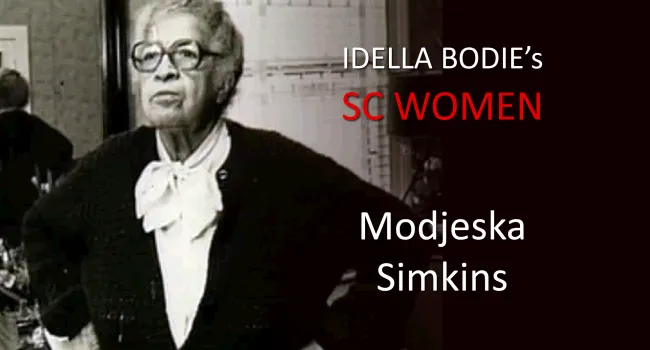
An African American girl born to a half-white, half-black brick mason, Modjeska came from relative wealth and married into wealth, but dedicated her life to helping the disadvantaged to be treated equally.
Classroom Activities
Research: Individual or small groups. Students utilize a variety of research materials to create a short presentation about different stages of Modjeska Simkin’s life: as a child living in Arkansas and South Carolina, as a young lady going to college, as an important figure in the process of equality for all, and as the leader in the lawsuit against Clarendon County. Explain why Modjeska was important to the state and nation. Reports should be presented to the class or larger group.
Character Education: Class Discussion. After researching Modjeska Simkins, the students should list the qualities that enabled her to achieve her goal as a leader in the fight for equality for all. List the many obstacles that Modjeska Simkins had to overcome to pursue her goal.
Compare and Contrast: Individual or small groups. Through Internet Websites and Media Center resources, students research and document information on the Clarendon County lawsuit that was spearheaded by Modjeska Monteith Simkins and others for equality in education. Compare information obtained on the Clarendon County lawsuit to the Brown vs. Board of Education lawsuit.
Analysis: What risks did Modjeska Monteith Simkins face by fighting for equal rights for all? What consequences might have occurred in this process?
Interview: Interview community members that attended different types of schools in the area during the 1950’s and 60’s to find out what impact the phrase “separate but equal” had on the school system. What differences were found in the physical plant of schools, materials and equipment as well as instructional qualifications of staff? Compare and contrast the differences.
Field Trip: Take a field trip to the Modjeska Monteith Simkins House located at 2025 Marion Street, Columbia, South Carolina. Historic Columbia Foundation manages the Modjeska Simkins House and also manages four historic house museums and their associated artifacts, and tells the stories of people, places and progress in Columbia and Richland County. For more information call 803-252-7742 or visit Historic Columbia Foundation’s website at http://www.historiccolumbia.org.
Part 2 of the Modjeska Simkins story.
An African American girl born to a half-white, half-black brick mason, Modjeska came from relative wealth and married into wealth, but dedicated her life to helping the disadvantaged to be treated equally.
Classroom Activities
Research: Individual or small groups. Students utilize a variety of research materials to create a short presentation about different stages of Modjeska Simkin’s life: as a child living in Arkansas and South Carolina, as a young lady going to college, as an important figure in the process of equality for all, and as the leader in the lawsuit against Clarendon County. Explain why Modjeska was important to the state and nation. Reports should be presented to the class or larger group.
Character Education: Class Discussion. After researching Modjeska Simkins, the students should list the qualities that enabled her to achieve her goal as a leader in the fight for equality for all. List the many obstacles that Modjeska Simkins had to overcome to pursue her goal.
Compare and Contrast: Individual or small groups. Through Internet Websites and Media Center resources, students research and document information on the Clarendon County lawsuit that was spearheaded by Modjeska Monteith Simkins and others for equality in education. Compare information obtained on the Clarendon County lawsuit to the Brown vs. Board of Education lawsuit.
Analysis: What risks did Modjeska Monteith Simkins face by fighting for equal rights for all? What consequences might have occurred in this process?
Interview: Interview community members that attended different types of schools in the area during the 1950’s and 60’s to find out what impact the phrase “separate but equal” had on the school system. What differences were found in the physical plant of schools, materials and equipment as well as instructional qualifications of staff? Compare and contrast the differences.
Field Trip: Take a field trip to the Modjeska Monteith Simkins House located at 2025 Marion Street, Columbia, South Carolina. Historic Columbia Foundation manages the Modjeska Simkins House and also manages four historic house museums and their associated artifacts, and tells the stories of people, places and progress in Columbia and Richland County. For more information call 803-252-7742 or visit Historic Columbia Foundation’s website at http://www.historiccolumbia.org.
Standards
- 3-5 The student will demonstrate an understanding of the major developments in South Carolina in the late nineteenth and the twentieth century.
- 5-5 The student will demonstrate an understanding of the social, economic and political events that influenced the United States during the Cold War era.
- 8-7 The student will demonstrate an understanding of the impact on South Carolina of significant events of the late twentieth and early twenty-first centuries.