Edwin Wales Robertson | Legacy of Leadership Profile

Kaltura

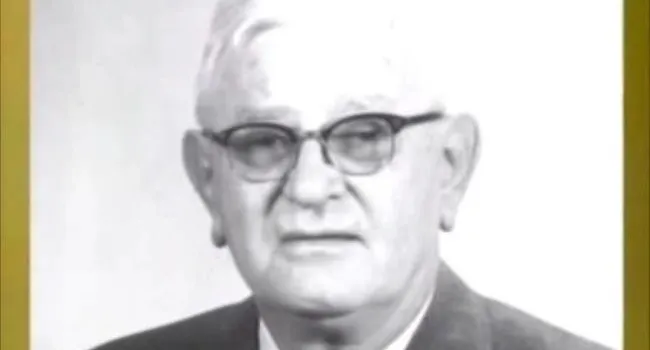
Edwin Wales Robertson

(1863–1928)

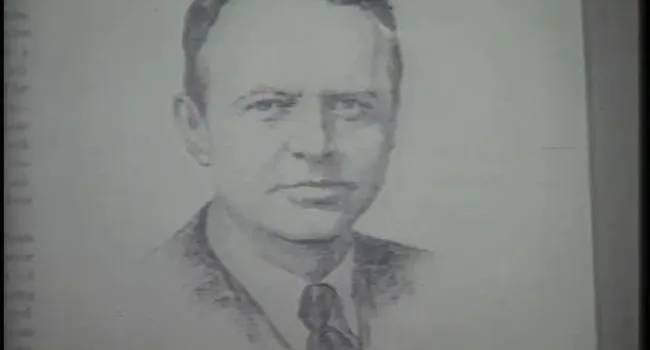
When he died of a heart attack, at age 65, on a business trip to New York City on November 20, 1928,  The New York Times published a column-long story with the headline, "E. W. ROBERTSON, CAPITALIST, DEAD" In his home city,  The Columbia Record reported Edwin Wales Robertson's death in an eight-column banner headline on Page 1, displaying three full stories of his accomplishments as a lawyer, banker, pioneer in public utilities, builder, and leader of civic and charitable causes.   

The term capitalist is little used today unless juxtaposed with the term communist. Capitalist, however, fit Robertson precisely. He accumulated wealth privately, devoting his intellect and energy to imaginative, profitable enterprises that greatly benefited his community as well.   

Robertson was born September 3, 1863, in Columbia, the son of Thomas J. and Mary O. Caldwell Robertson. He graduated from Yale University in 1885 and received a degree in 1887 from the law department of South Carolina College, now the University of South Carolina.   

Robertson was a visionary, who in his time was acknowledged and honored as a builder of Columbia, literally and figuratively. As a Columbia native, he knew the economic and political toll of Southern Reconstruction. 

A biography published by The Columbia Record said that after five lucrative years in the "lawless science of the law," Robertson "recognized that finance would afford a wider and more important field for his talents and restless energy. He saw the trend of the industrial revolution southward and determined to establish in his native city the strongest and most conservative bank in South Carolina."

In May 1892, he and an associate founded the Canal Dime Savings Institute with capital of $30,000. In the next 11 years, Robertson bought controlling interest in, merged with, and became the Loan and Exchange Bank, capitalized at $150,000; bought and merged with the Central National Bank, with capital stock of $300,000; and in 1903 became a national bank, capitalized at $500,000—the largest then in South Carolina. 

That year, Robertson astonished the community by constructing South Carolina's first "skyscraper," a 12-story banking and office building, now known as the Barringer Building, at Main and Washington streets. Some conservative citizens declared the building a very hazardous and foolish venture.

Robertson was a mild-mannered person but a commanding presence when an occasion required decisive action. He was the first to contact United States Army authorities in 1915 to locate a military camp in Columbia—now Fort Jackson. He was an early promoter of the automobile and was president of the South Carolina Automobile Association in 1911. Professionally, he also headed the South Carolina Bar Association and the South Carolina State Bankers Association.   

An achievement that had a lasting effect on Columbia's future development was in public utilities, which brought him national attention. In 1904, Columbia's electric and gas systems were insolvent and in poor condition. Robertson knew the capital city could not progress without sound utilities, so he secured control of the Columbia Electric Street Railway, Light, and Power Co., the Columbia Gas Light Company, and the Columbia Water Power Company. He consolidated them to form the Columbia Railway, Gas & and Electric Company, an efficient and profitable utility.

Foreseeing the need for electric power for industrial, commercial, and residential expansions, Robertson acquired control of the Parr Shoals Power Company 27 miles north of Columbia and constructed a large dam and powerhouse in 1912— a state-of-the-art hydroelectric facility.

Columbia Railway, Gas & Electric Company and Parr Shoals Power Company would later become parts of South Carolina Electric & Gas Company. 

Robertson was sought by ailing textile companies for his business acumen. In 1905, he reorganized mills and subsidiaries in Union and became president of the Buffalo Cotton Mills and the Union Manufacturing and Power Company and receiver of the Union and Glenn Springs Railroad.

In 1913, he introduced what is today a standard promotion technique for a state's economic development: He sponsored a visit to South Carolina by Yale classmates and Northern financiers to show them investment opportunities.

He pioneered in fireproofing cotton warehouses, installing in Columbia the first standard sprinklered warehouse in the Southeast. He also was a builder and developer. He organized Wales Realty Company, which developed Wales Garden; he built the Arcade between Main and Washington streets; and he built the structure now occupied by Republic Bank.

Among Robertson's favorite charities was the Salvation Army, and his generosity built the Army citadel that until recent years was in the 100 block of Lady Street. During World War I, he headed the Liberty Bond campaigns in South Carolina, and at war's end headed the Victory Bonds campaign in the Fifth Federal Reserve District.

He was married to Evelyn Perkins Titcomb, and they had a son, Thomas J. Robertson, and three daughters, Evelyn, Helen, and Frances.. Edwin Robertson died November 20, 1928.

He was inducted into the South Carolina Business Hall of Fame in 1990.

© 1999 South Carolina Business Hall of Fame

More in this Series

Legacy of Leadership / Finance

R. Roy Pearce | Legacy of Leadership Profile A. Lee M. Wiggins | Legacy of Leadership Profile

Video

Grades

  • 6
  • 7
  • 8
  • 9
  • 10
  • 11
  • 12
A. Lee M. Wiggins | Legacy of Leadership Profile
A. Lee M. Wiggins (1891–1980) When Lee Wiggins graduated from the University of North Carolina in 1913, he moved to Hartsville to become secretary to David R. Coker, managing partner of J. L. Coker...
W. W. "Hootie" Johnson | Legacy of Leadership Profile Bernard M. Baruch | Legacy of Leadership Profile

Video

Grades

  • 6
  • 7
  • 8
  • 9
  • 10
  • 11
  • 12
Bernard M. Baruch | Legacy of Leadership Profile
1870–1965 Bernard M. Baruch, the "Park Bench Statesman," made his fortune on Wall Street, but his greatest challenge and his greatest satisfaction were his service to his country as an economic...
 Edwin F. Averyt | Legacy of Leadership Profile

Video

Grades

  • 6
  • 7
  • 8
  • 9
  • 10
  • 11
  • 12
Edwin F. Averyt | Legacy of Leadership Profile
Edwin F. Averyt (1903–1978) In 1937, Edwin F. Averyt and a partner, J. C. Judy, with no experience in the insurance business, opened an accident insurance company in Columbia with only $5,000 capital...
 Edwin G. Seibels | Legacy of Leadership Profile

Video

Grades

  • 6
  • 7
  • 8
  • 9
  • 10
  • 11
  • 12
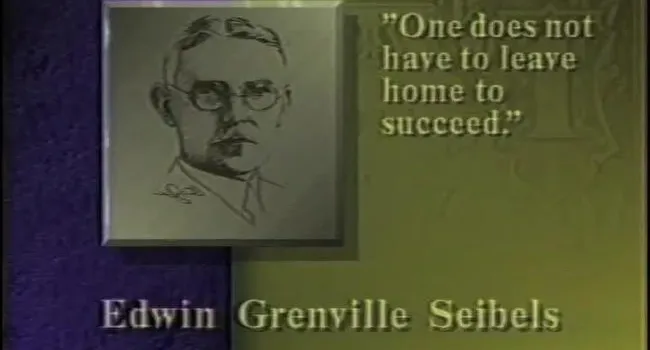
Edwin G. Seibels | Legacy of Leadership Profile
Edwin G. Seibels (1866–1954) "That I was not born on my father's plantation, Mount Willing in Edgefield County, S.C., in the midst of the fields of ripening cotton, was only due to the fact that there...
 Francis M. Hipp | Legacy of Leadership Profile

Video

Grades

  • 6
  • 7
  • 8
  • 9
  • 10
  • 11
  • 12
Francis M. Hipp | Legacy of Leadership Profile
Francis M. Hipp (1911–1995) Known as "the master of the soft sell" for his artful leadership and participatory management style, Francis M. Hipp built Greenville-based The Liberty Corporation into one...
 Gayle O. Averyt | Legacy of Leadership Interview

Video

Grades

  • 6
  • 7
  • 8
  • 9
  • 10
  • 11
  • 12
Gayle O. Averyt | Legacy of Leadership Interview
Gayle O. Averyt (Born October 13, 1933) In 1995, Gayle Averyt retired as chairman of Colonial Life & Accident Insurance Company, a company his father co-founded, ending an active career that began...
 Gayle O. Averyt | Legacy of Leadership Profile

Video

Grades

  • 6
  • 7
  • 8
  • 9
  • 10
  • 11
  • 12
Gayle O. Averyt | Legacy of Leadership Profile
Gayle O. Averyt (Born October 13, 1933) In 1995, Gayle Averyt retired as chairman of Colonial Life & Accident Insurance Company, a company his father co-founded, ending an active career that began...
 Hugh C. Lane | Legacy of Leadership Profile

Video

Grades

  • 6
  • 7
  • 8
  • 9
  • 10
  • 11
  • 12
Hugh C. Lane | Legacy of Leadership Profile
Hugh C. Lane (1914-2005) For 38 years, Hugh C. Lane was the driving force behind the growth of the Citizens and Southern National Bank of South Carolina, years that spanned the upheaval of the New...
 Hugh L. McColl, Jr. | Legacy of Leadership Interview

Video

Grades

  • 6
  • 7
  • 8
  • 9
  • 10
  • 11
  • 12
Hugh L. McColl, Jr. | Legacy of Leadership Interview
Hugh L. McColl, Jr. (Born June 18, 1935) In 1886, Hugh McColl's great-grandfather organized the Bank of Marlboro, the county's first bank. His grandfather was president of the bank, and McColl's...
 Hugh L. McColl, Jr. | Legacy of Leadership Profile

Video

Grades

  • 6
  • 7
  • 8
  • 9
  • 10
  • 11
  • 12
Hugh L. McColl, Jr. | Legacy of Leadership Profile
Hugh L. McColl, Jr. (Born June 18, 1935) In 1886, Hugh McColl's great-grandfather organized the Bank of Marlboro, the county's first bank. His grandfather was president of the bank, and McColl's...
 Hugh M. Chapman | Legacy of Leadership Interview

Video

Grades

  • 6
  • 7
  • 8
  • 9
  • 10
  • 11
  • 12
Hugh M. Chapman | Legacy of Leadership Interview
Hugh M. Chapman (1932–2007) Hugh Chapman's decision not to enter the family textile business, Inman Mills, was of little importance to his parents and four older brothers. Whatever career path he...
 Hugh M. Chapman | Legacy of Leadership Profile

Video

Grades

  • 6
  • 7
  • 8
  • 9
  • 10
  • 11
  • 12
Hugh M. Chapman | Legacy of Leadership Profile
Hugh M. Chapman (1932–2007) Hugh Chapman's decision not to enter the family textile business, Inman Mills, was of little importance to his parents and four older brothers. Whatever career path he...
 Irwin Kahn | Legacy of Leadership Profile

Video

Grades

  • 6
  • 7
  • 8
  • 9
  • 10
  • 11
  • 12
Irwin Kahn | Legacy of Leadership Profile
A profile of Irwin Kahn. Irwin Kahn (1912–1990) Irwin Kahn was a builder of buildings and community. Columbia's skyline, the University of South Carolina campus, the Midlands, and the state of South...
 J. Willis Cantey | Legacy of Leadership Profile

Video

Grades

  • 6
  • 7
  • 8
  • 9
  • 10
  • 11
  • 12
J. Willis Cantey | Legacy of Leadership Profile
J. Willis Cantey (1917–1986) J. Willis Cantey distinguished himself as a soldier, businessman, and banker. But what his family, friends, and acquaintances remember most about him was his spontaneous...
 J. Wilson Newman | Legacy of Leadership Profile

Video

Grades

  • 6
  • 7
  • 8
  • 9
  • 10
  • 11
  • 12
J. Wilson Newman | Legacy of Leadership Profile
J. Wilson Newman (1909-2003) Growing up in Clemson (pop. 400), J. Wilson Newman earned his first money in agricultural pursuits, such as counting squares at the Experiment Station's test plots for...
 John H. Lumpkin, Sr. | Legacy of Leadership Profile

Video

Grades

  • 6
  • 7
  • 8
  • 9
  • 10
  • 11
  • 12
John H. Lumpkin, Sr. | Legacy of Leadership Profile
John H. Lumpkin, Sr. (1916-1999) John Lumpkin knows about challenge and hard work and what it takes to be successful, but to hear him tell it, no one has enjoyed life more than he has. "I have been...
 John M. Rivers | Legacy of Leadership Profile

Video

Grades

  • 6
  • 7
  • 8
  • 9
  • 10
  • 11
  • 12
John M. Rivers | Legacy of Leadership Profile
John M. Rivers (1903–1988) After 12 years in banking and two successful years as vice president of a securities firm, John M. Rivers surprised the Charleston business community. He accepted a job as...
 Robert V. Royall, Jr. | Legacy of Leadership Profile

Video

Grades

  • 6
  • 7
  • 8
  • 9
  • 10
  • 11
  • 12
Robert V. Royall, Jr. | Legacy of Leadership Profile
Robert V. Royall (1934 - ) After David Beasley was elected governor of South Carolina in 1994, his first priority was choosing a secretary to head the Department of Commerce, a new Cabinet post that...
 W. W. "Hootie" Johnson | Legacy of Leadership Interview

Video

Grades

  • 6
  • 7
  • 8
  • 9
  • 10
  • 11
  • 12
W. W. "Hootie" Johnson | Legacy of Leadership Interview
W. W. "Hootie" Johnson (Born February 16, 1931) On the desk of Hootie Johnson, there is a small plaque, given to him years ago. It is an eloquent statement of Theodore Roosevelt, which says, in part...
 W. W. "Hootie" Johnson | Legacy of Leadership Profile

Video

Grades

  • 6
  • 7
  • 8
  • 9
  • 10
  • 11
  • 12
W. W. "Hootie" Johnson | Legacy of Leadership Profile
A profile of W. W. "Hootie" Johnson. W. W. "Hootie" Johnson (Born February 16, 1931) On the desk of Hootie Johnson, there is a small plaque, given to him years ago. It is an eloquent statement of...

Legacy of Leadership / Architecture & Construction

James C. "Jim" Self | Legacy of Leadership Buck Mickel | Legacy of Leadership Profile

Video

Grades

  • 6
  • 7
  • 8
  • 9
  • 10
  • 11
  • 12
Buck Mickel | Legacy of Leadership Profile
Buck Mickel (1925–1998) Buck Mickel, retired chairman of Daniel International Corporation and retired vice chairman and president of Fluor Corporation, was respected as a giant in the Greenville...
 Charles E. Daniel | Legacy of Leadership Profile

Video

Grades

  • 6
  • 7
  • 8
  • 9
  • 10
  • 11
  • 12
Charles E. Daniel | Legacy of Leadership Profile
Charles E. Daniel (1895–1964) Charles E. Daniel, founder of Daniel International Corporation, is credited with not only building many of the industrial plants that located in South Carolina during its...
James C. "Jim" Self | Legacy of Leadership Charles S. Way | Legacy of Leadership Profile

Video

Grades

  • 6
  • 7
  • 8
  • 9
  • 10
  • 11
  • 12
Charles S. Way | Legacy of Leadership Profile
Charles S. Way (Born December 18, 1937) It usually takes a hurricane or some other force of nature to change the face of a city, but if a single individual can accomplish such a feat, then surely...
Guy F. Lipscomb, Jr. | Legacy of Leadership Profile George William Rogers | Legacy of Leadership Profile

Video

Grades

  • 6
  • 7
  • 8
  • 9
  • 10
  • 11
  • 12
George William Rogers | Legacy of Leadership Profile
George William "Bill" Rogers (Born February 8, 1925) ​Bonitz, Inc., and Consolidated Systems, Inc., are hardly household names in Columbia, where they were established in the 1950s, but both are well...
 Ira M. Koger | Legacy of Leadership Profile

Video

Grades

  • 6
  • 7
  • 8
  • 9
  • 10
  • 11
  • 12
Ira M. Koger | Legacy of Leadership Profile
Ira M. Koger (1912-2004) Ira Koger has enjoyed success in many endeavors, but real estate development has brought him fame and fortune and the opportunity to serve the communities he has called home...
 Irwin Kahn | Legacy of Leadership Profile

Video

Grades

  • 6
  • 7
  • 8
  • 9
  • 10
  • 11
  • 12
Irwin Kahn | Legacy of Leadership Profile
A profile of Irwin Kahn. Irwin Kahn (1912–1990) Irwin Kahn was a builder of buildings and community. Columbia's skyline, the University of South Carolina campus, the Midlands, and the state of South...
 J. Roy Pennell | Legacy of Leadership

Video

Grades

  • 6
  • 7
  • 8
  • 9
  • 10
  • 11
  • 12
J. Roy Pennell | Legacy of Leadership
J. Roy Pennell (1888–1971) James Roy Pennell’s road to success was literally of his own making. He built many of the roads and bridges he traveled on and even manufactured many of the materials from...
Guy F. Lipscomb, Jr. | Legacy of Leadership Profile James C. "Jim" Self | Legacy of Leadership

Video

Grades

  • 6
  • 7
  • 8
  • 9
  • 10
  • 11
  • 12
James C. "Jim" Self | Legacy of Leadership
James C. "Jim" Self (1919–1998) James C. Self and his son, Jim, were the first father-son laureates of the South Carolina Business Hall of Fame. Jim Self's father took over a run-down, 10-year-old...
James C. "Jim" Self | Legacy of Leadership Joseph H. Williams | Legacy of Leadership Profile

Video

Grades

  • 6
  • 7
  • 8
  • 9
  • 10
  • 11
  • 12
Joseph H. Williams | Legacy of Leadership Profile
Joe Williams never intended to get involved in the family-owned Williams Brothers pipeline construction business. He had other plans. Fate stepped in, however, and he spent 35 years with the...